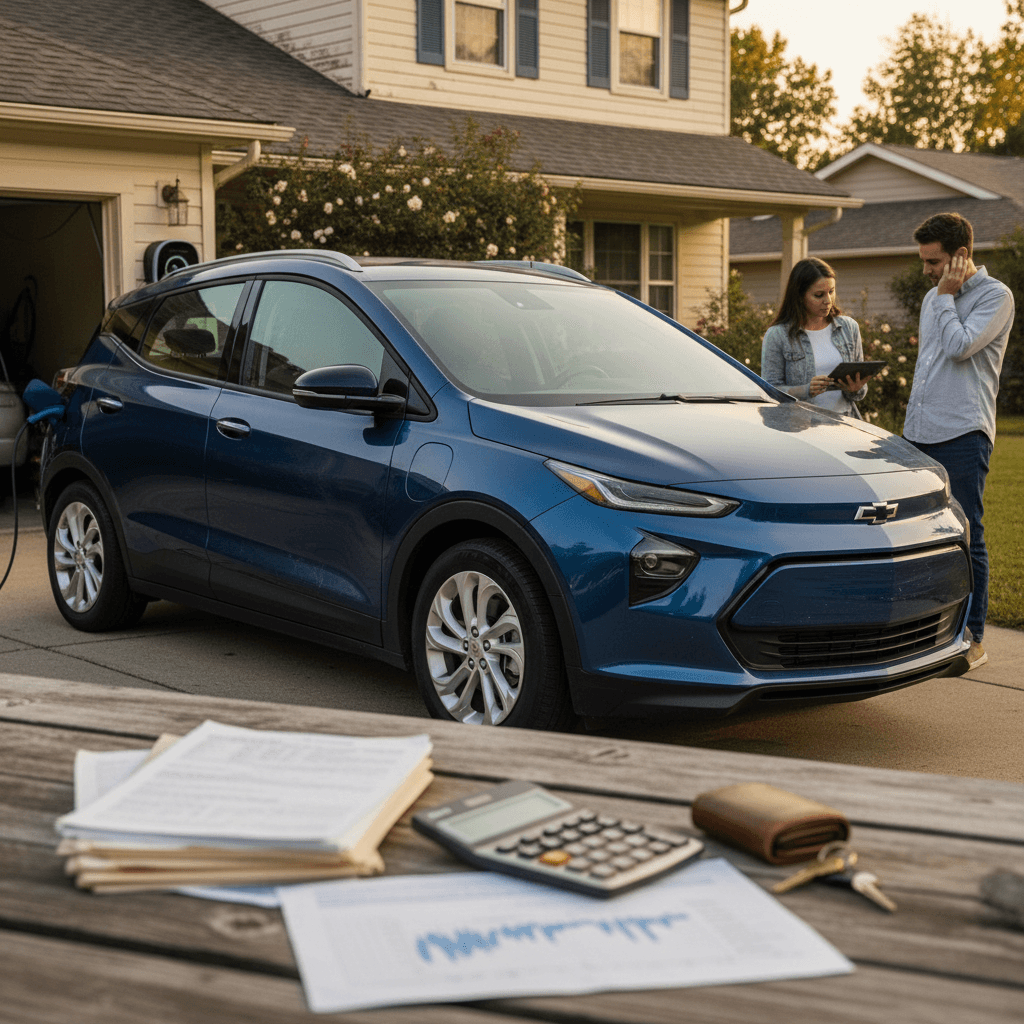
If you’re eyeing a Chevy Bolt EUV, you’re probably not just asking, “What’s the price?” You want to know the **Chevy Bolt EUV long term ownership cost**, what it really takes to live with one for five, eight, even ten years: electricity, maintenance, insurance, depreciation, and that big one everyone worries about, the battery.
At a glance
Why Chevy Bolt EUV long-term costs matter
The Bolt EUV sits in a sweet spot: relatively affordable to buy, genuinely efficient, and sized like the compact crossovers many people already drive. But it also carries the baggage of GM’s earlier Bolt battery recalls and the uncertainty around an **out-of-production EV** (Chevy stopped building the current Bolt/Bolt EUV after the 2023 model year, with a new generation promised later). That makes understanding total cost of ownership even more important, especially if you’re shopping used.
- You want to know if a Bolt EUV will **actually save money** vs a gas SUV or hybrid.
- You’re wondering if a used Bolt EUV is a smart buy or a ticking time bomb.
- You’re trying to budget realistically for **charging, maintenance, and insurance** over several years.
Used is where the value is
Bolt EUV specs that shape ownership costs
Before we talk dollars, it helps to anchor the basics that drive cost of ownership for a Chevy Bolt EUV:
Key Chevy Bolt EUV specs that affect your wallet
These fundamentals drive charging cost, maintenance, and resale value.
Battery & range
- ~65 kWh usable battery (officially 65 kWh pack)
- EPA range around 247 miles
- Real‑world highway range often 200–230 miles depending on speed and weather
Efficiency
- Roughly 3.0–3.5 miles per kWh in mixed driving
- That’s about **0.28–0.33 kWh per mile**
Charging hardware
- Standard DC fast charging (up to ~55 kW peak)
- AC charging up to 11 kW on Level 2
- No engine, no transmission, no oil changes
Those numbers are what we’ll use to build realistic **per‑mile and per‑year cost estimates**, using current U.S. electricity prices and typical U.S. driving habits.
Electricity price backdrop (United States, early 2026)
What you’ll pay to charge a Bolt EUV
Let’s turn those specs into something you can feel in your budget. For the **Chevy Bolt EUV long term ownership cost**, electricity is often the single biggest lever you control.
Approximate Bolt EUV electricity cost (per mile & per year)
Assumes 3.2 miles per kWh, 12,000 miles per year. Numbers are rounded and illustrative, your actual costs will depend on your local rates and driving style.
| Scenario | Electricity price (¢/kWh) | Cost per mile | Annual cost (12,000 mi) | Gas-car equivalent (at $3.50/gal) |
|---|---|---|---|---|
| Low-cost state | 13¢ | ~4.1¢ | ~$490 | Comparable to a 90+ mpg gas car |
| Average U.S. rate | 18¢ | ~5.6¢ | ~$675 | Comparable to a ~65 mpg gas car |
| High-cost state | 30¢ | ~9.4¢ | ~$1,130 | Still like a 39 mpg gas car |
How your utility rate changes what you pay to drive a Bolt EUV.
Think in ranges, not one number
Home charging: your cheapest fuel
If you can charge at home on a standard Level 2 setup, your Bolt EUV becomes a **high‑mpg car with a fixed electric bill**. Many utilities offer time‑of‑use plans that make overnight charging significantly cheaper than daytime rates. Over 5–8 years, that discount can easily add up to **hundreds or thousands of dollars** saved compared with public fast charging.
Public DC fast charging: convenience tax
On many public networks, DC fast charging costs are structured like gasoline: you pay a premium for speed and convenience. It’s common to see per‑kWh prices that work out closer to **15–25¢ per mile** in a Bolt EUV, still competitive with an inefficient gas SUV, but far more than home charging. For long‑term budgeting, try to keep fast charging for road trips and emergencies, not daily use.
Watch your local rates
Maintenance and repair costs over the long haul
One of the brightest spots in **Chevy Bolt EUV long term ownership cost** is maintenance. An electric powertrain strips out many of the parts that routinely fail or wear out on a gas crossover.
What you don’t service on a Bolt EUV
Fewer moving parts mean fewer surprise bills.
No engine work
- No oil changes
- No spark plugs or timing belts
- No exhaust system or catalytic converter
No conventional transmission
- Single‑speed drive unit
- No multi‑gear transmission to service
- No transmission fluid changes like most gas cars
Less routine wear
- Regenerative braking reduces brake wear
- No fuel system or emissions hardware
- Fewer fluids overall
You’ll still have normal car stuff, tires, cabin air filters, wiper blades, brake fluid flushes, alignment, and suspension wear. Budget something like **$400–$700 a year on average** over several years, depending on mileage, tire choice, and how religiously you follow maintenance schedules. That’s usually **less than a comparable gas SUV**, especially once you hit years 5–10 when big-ticket items start haunting internal-combustion cars.
Plan ahead for tires
Once you’ve lived through a decade of oil changes, spark plug jobs, and check‑engine‑light drama, driving something that mostly just needs tires and brake fluid starts to feel like cheating.
Battery health, warranty, and replacement risk
The elephant in the room for any EV cost-of-ownership discussion is the **high‑voltage battery**. The Bolt EUV had a well‑publicized recall related to battery fire risk in earlier Bolt models, and many packs were replaced under warranty. That history can actually work in your favor, if you know what you’re looking at.
- GM’s traction battery warranty for Bolt/Bolt EUV has typically been **8 years / 100,000 miles** (check the exact terms for the model year you’re considering).
- Many recalled vehicles received **brand-new battery packs**, effectively resetting the clock on the most expensive component in the car.
- Like all lithium‑ion packs, Bolt batteries **lose some capacity over time**, especially in hot climates or with frequent fast charging.
Why battery replacement dominates risk
How to manage Bolt EUV battery risk
1. Verify recall status and pack history
Ask for documentation showing whether the car had its battery replaced under recall or warranty. A newer pack is a huge win for long‑term ownership cost.
2. Look at real-world range
On a full charge, does the indicated range roughly match expectations for that model year and your climate? A significantly lower estimate can be a red flag for degradation, or simply very inefficient recent driving.
3. Get a professional battery health report
Tools like the **Recharged Score** go beyond the dash guess-o-meter, using diagnostic data to measure usable capacity and battery condition. That’s the difference between hoping a pack is healthy and knowing.
4. Consider your time horizon
If you expect to own the car for 3–5 years and mostly drive moderate miles, battery risk is lower, especially if you’re still inside factory warranty. Planning to keep it for 10+ years or piling on miles? Battery condition becomes a much bigger lever in your total cost.
Insurance, taxes, and registration fees
Insurance is the quiet line item that can tilt the **Chevy Bolt EUV long term ownership cost** equation. Insurers look at replacement cost, repair complexity, safety ratings, and claim history for a given model.
Where Bolt EUV tends to land
- Often similar to or slightly higher than a compact gas crossover of the same value.
- Higher trims or pricey new‑replacement EVs can push premiums up, but the Bolt EUV’s **modest price tag** keeps it grounded.
- Strong crash test performance and active safety tech (like automatic emergency braking) help balance repair cost.
How to keep premiums in check
- Shop quotes that **specifically support EVs**; some carriers price them more competitively than others.
- Higher deductibles, telematics/usage‑based programs, and bundling home + auto can cut monthly cost.
- If you’re choosing between a new and a used Bolt EUV, remember: a lower purchase price often means lower comprehensive and collision premiums, too.
Taxes and EV fees
Depreciation and resale value of the Bolt EUV
Depreciation, the slow (and sometimes not-so-slow) slide in value, is the **single biggest cost** for most new vehicles. The Bolt EUV has taken a double hit: first from early battery concerns, then from Chevrolet announcing the end of the current Bolt/Bolt EUV line. The upside is that you, as a used buyer, get to benefit from someone else’s depreciation bill.
Simplified Bolt EUV depreciation picture
Illustrative numbers only, assuming typical U.S. market behavior before incentives or tax credits.
| Stage | Approx age/miles | Ballpark value vs original MSRP | What it means for cost |
|---|---|---|---|
| New to 3 years | 0–36 months / up to ~36k–45k miles | ~55–65% of original MSRP | First owner eats the steepest curve, especially on EVs. |
| 3 to 6 years | 36–72 months / ~40k–80k miles | ~45–55% of original MSRP | Often the value sweet spot: much lower price, plenty of life left. |
| 6 to 10 years | 72–120 months / 80k+ miles | Highly dependent on battery health and market | A well‑documented car with a healthy pack can still be a strong value; a tired battery drags price down. |
Depreciation is bad news for the first owner, and often very good news for the second.
Why used Bolt EUVs can be screaming deals
New vs used Chevy Bolt EUV: which is the better deal?
If you’re thinking long term, the numbers often favor **buying used**, especially with cars like the Bolt EUV that have already finished their production run.
Buying new (or nearly new)
- Pro: You start at **zero miles** with the full new‑car warranty timeline ahead of you.
- Pro: You know the car’s complete history from day one.
- Con: You absorb the steepest years of depreciation yourself.
- Con: If the model line is ending, future resale demand can be harder to predict.
Buying used (3–5 years old)
- Pro: Someone else already took the biggest depreciation hit.
- Pro: You can target cars that had **battery pack replacements** under recall, effectively resetting that clock.
- Pro: A good used‑EV marketplace with tools like the Recharged Score gives you visibility into battery health, price fairness, and condition.
- Con: You need to do more homework on history, battery condition, and remaining warranty coverage.
How Recharged fits in
How a Bolt EUV compares to a similar gas SUV
Let’s put the Bolt EUV next to a typical compact gas crossover, something with, say, 28 mpg combined. We’ll use 12,000 miles per year and the **average U.S. electricity price** to get a feel for long‑term fuel cost differences.
Bolt EUV vs gas crossover: 5-year running-cost snapshot
Simplified comparison; excludes purchase price, financing, and major unexpected repairs.
| Item (5 years, 12k mi/yr) | Bolt EUV (average electricity) | 28 mpg gas crossover (at $3.50/gal) |
|---|---|---|
| Fuel/energy cost | ~$3,375 (about $675/yr) | ~$7,500 (about $1,500/yr) |
| Routine maintenance | ~$2,000–$3,000 total | ~$3,000–$4,500 total |
| Oil, belts, exhaust, etc. | $0 | $1,000+ likely over 5 years |
| Total running cost (fuel + maintenance) | Roughly $5,400–$6,400 | Roughly $11,500–$13,000 |
Even with rising electricity prices, a Bolt EUV usually wins on fuel and routine maintenance.
Apples-to-apples matters
Practical ways to lower your Bolt EUV ownership cost
Once you understand the big levers, electricity, depreciation, and battery health, you can actually shape your **Chevy Bolt EUV long term ownership cost** instead of just hoping for the best.
6 smart moves to shrink your total cost of ownership
1. Maximize home charging
If possible, install or use an existing Level 2 charger and enroll in a time‑of‑use plan. Shifting most charging to off‑peak hours can shave real money off every mile you drive.
2. Keep an eye on efficiency
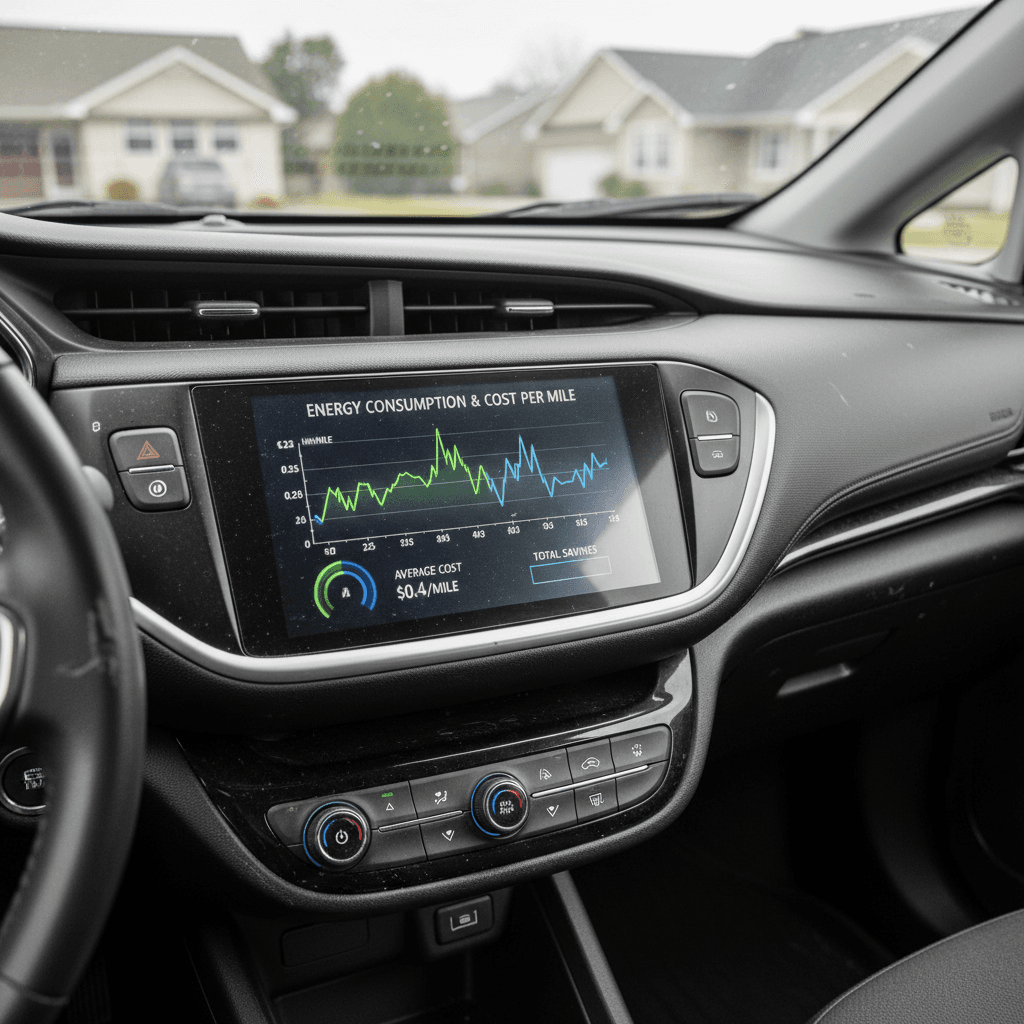
Use the Bolt EUV’s energy screens to see how speed, climate control, and driving style affect consumption. Nudging your average from 3.0 to 3.5 miles per kWh is like giving yourself a permanent fuel discount.
3. Choose tires wisely
Low‑rolling‑resistance tires can improve efficiency, while ultra‑aggressive performance rubber may cost you both in range and replacement frequency. Balance grip with longevity and efficiency.
4. Stay ahead on simple maintenance
Brake fluid flushes, cabin filters, alignments, and basic inspections are cheap insurance against nasty surprises. EVs don’t eliminate maintenance; they just make it simpler.
5. Buy the right car, not just the right price
A bargain Bolt EUV with an unknown or tired battery can get expensive fast. Paying a little more for a verified‑healthy car, with documentation and a clear battery health report, often wins over the long haul.
6. Consider total package financing
If you’re financing, include charging upgrades (like a Level 2 installation) in your budget. At Recharged, you can explore financing options and monthly payments tailored to your real‑world costs, not just the purchase price.
Don’t budget on best-case scenarios
Chevy Bolt EUV ownership cost: FAQ
Frequently asked questions about Bolt EUV ownership costs
Bottom line: Is a Chevy Bolt EUV worth it long term?
Look at the whole picture and the Chevy Bolt EUV comes into focus as one of the **better long‑term value plays** in the EV world, especially if you buy used, charge mostly at home, and go in with clear eyes about battery health. Your electricity bill becomes your fuel bill, your maintenance calendar gets lighter, and your five‑year fuel‑and‑service total often ends up thousands below a similar gas SUV.
The trade‑offs are real: depreciation hits first owners hard, long‑term battery replacement would be expensive, and high electricity rates in some states eat into savings. But if you pick the right car, verified battery health, solid history, fair price, and you’re honest about your driving and charging habits, a Bolt EUV can be a **quiet, efficient, budget‑friendly companion** deep into the second hundred thousand miles.
If you’re ready to run the numbers on an actual car, not just the averages, start with a used Bolt EUV listing that includes a **Recharged Score Report** and explore financing and trade‑in options that match your real monthly budget. That’s how you turn a spreadsheet exercise into an ownership experience you actually enjoy living with.