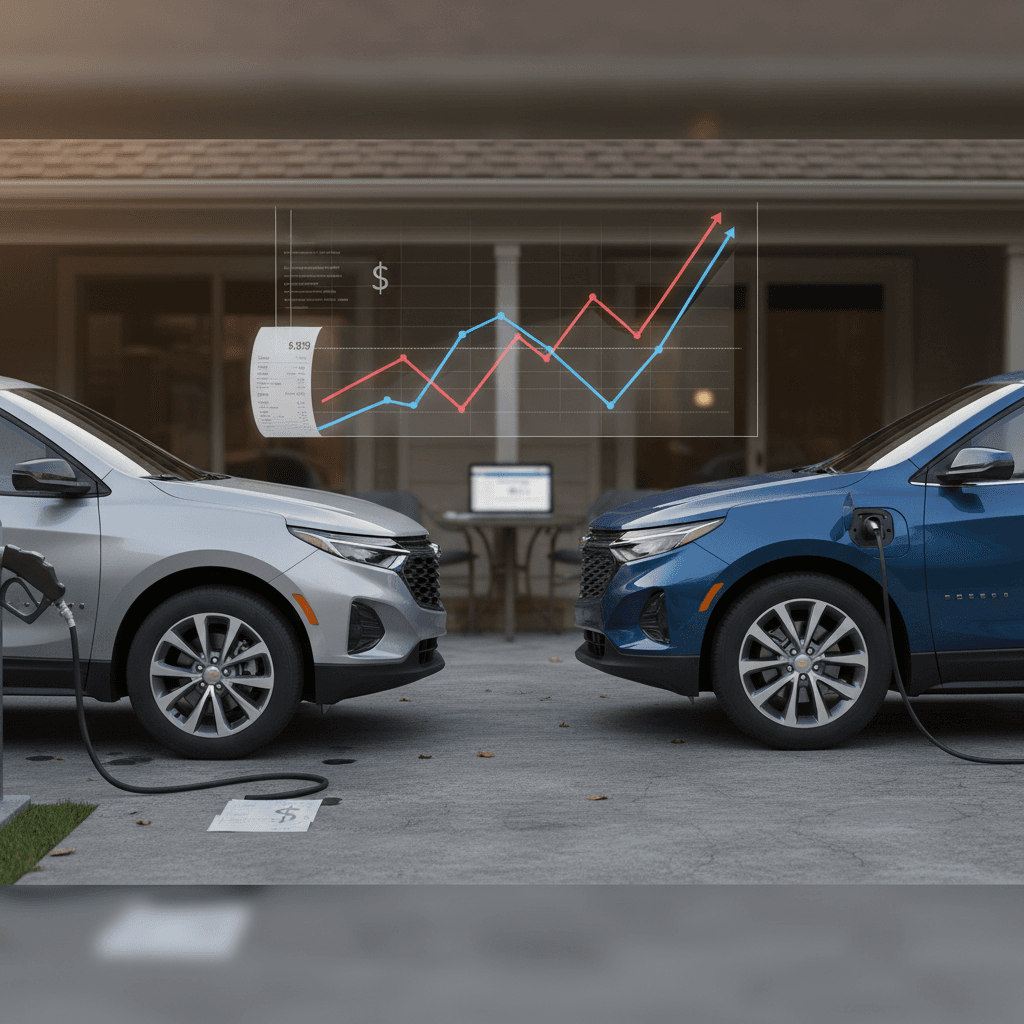
If you’re cross‑shopping the **Chevrolet Equinox** and the **Chevrolet Equinox EV**, sticker price is only part of the story. The real question is total cost of ownership: once you factor in fuel or electricity, maintenance, insurance, and resale, which Equinox actually costs less to own over time?
Gas vs. electric… in the same family
Why Chevrolet Equinox vs Equinox EV total cost of ownership matters
You can walk into a showroom today and see a **gasoline Equinox** sitting just down the row from an **Equinox EV**. The gas model often looks cheaper at first glance, while the EV dangles lower running costs and federal tax credits. If you only look at monthly payments, it’s easy to miss thousands of dollars in hidden savings, or hidden costs, over 5 to 10 years.
In this guide, we’ll compare **Chevrolet Equinox vs Chevrolet Equinox EV total cost of ownership** using realistic U.S. averages for fuel, electricity, and insurance. We’ll also walk through what it’s like to own each day‑to‑day, and how shopping used, especially through a marketplace like Recharged, can tilt the math even more in the EV’s favor.
Key cost-of-ownership insights for Equinox vs Equinox EV
Assumptions matter
Quick takeaway: Which Equinox is cheaper to own?
In most cases, the Equinox EV wins
For a typical U.S. driver putting 12,000–15,000 miles a year on the odometer and doing most charging at home, the Equinox EV usually costs less to own over 5–10 years, even if you pay more up front.
- Lower energy cost per mile
- Less routine maintenance
- Potential federal and state incentives
When the gas Equinox can make sense
A gasoline Equinox can be cheaper to own if:
- You can’t easily charge at home and rely heavily on paid DC fast charging
- You drive relatively few miles per year
- You find a steeply discounted used gas Equinox vs a newer EV
In those edge cases, the EV’s efficiency advantage shrinks against a lower purchase price.
Purchase price, incentives, and financing
Let’s start where most shoppers start: the price on the window sticker. Recent model years of the **gasoline Chevrolet Equinox** typically come in several thousand dollars below a similarly equipped **Equinox EV** when new. That’s not surprising, the EV packs a large battery and more complex electronics.
Equinox vs Equinox EV: price and incentives snapshot
Approximate U.S. new‑vehicle positioning as of 2025–2026
Gasoline Chevrolet Equinox
- Lower MSRP than Equinox EV for comparable trims
- Often eligible for dealer discounts and incentives
- No federal EV tax credit, but traditional rebates or low‑APR deals may apply
Chevrolet Equinox EV
- Higher MSRP, but often offset by federal and state EV incentives
- May qualify for up to several thousand dollars in tax credits, depending on configuration and rules when you buy
- Some lenders offer EV‑specific financing programs
Why used makes this more interesting
However, total cost of ownership is where the EV starts to claw back that higher sticker. To see how, you have to follow the money into **fuel vs electricity, maintenance, and resale value**.
Gasoline vs electricity: what it really costs to drive
Fuel or electricity is usually the **single biggest day‑to‑day cost** of owning either Equinox. So we’ll start with a simple model you can adjust for your situation.
- Assume a typical gas Equinox averages about 28 mpg combined in real‑world driving.
- Assume the all‑electric Equinox EV averages around 3.0 miles per kWh in mixed use (a conservative estimate).
- Use a U.S. average residential electricity price of roughly $0.17 per kWh and gasoline at $3.50 per gallon as long‑term ballpark numbers.
Estimated energy cost: Chevrolet Equinox vs Equinox EV
Modeled at 12,000 miles per year on typical U.S. prices
| Gas Equinox | Equinox EV (mostly home charging) | |
|---|---|---|
| Energy economy | 28 mpg | 3.0 mi/kWh |
| Price assumption | $3.50/gal | $0.17/kWh |
| Energy used per year (12,000 miles) | ≈429 gallons | ≈4,000 kWh |
| Annual energy cost | ≈$1,500 | ≈$680 |
| Cost per mile | ≈$0.13/mi | ≈$0.06/mi |
Your numbers will vary based on local fuel and electricity rates, driving style, and how often you use DC fast charging.
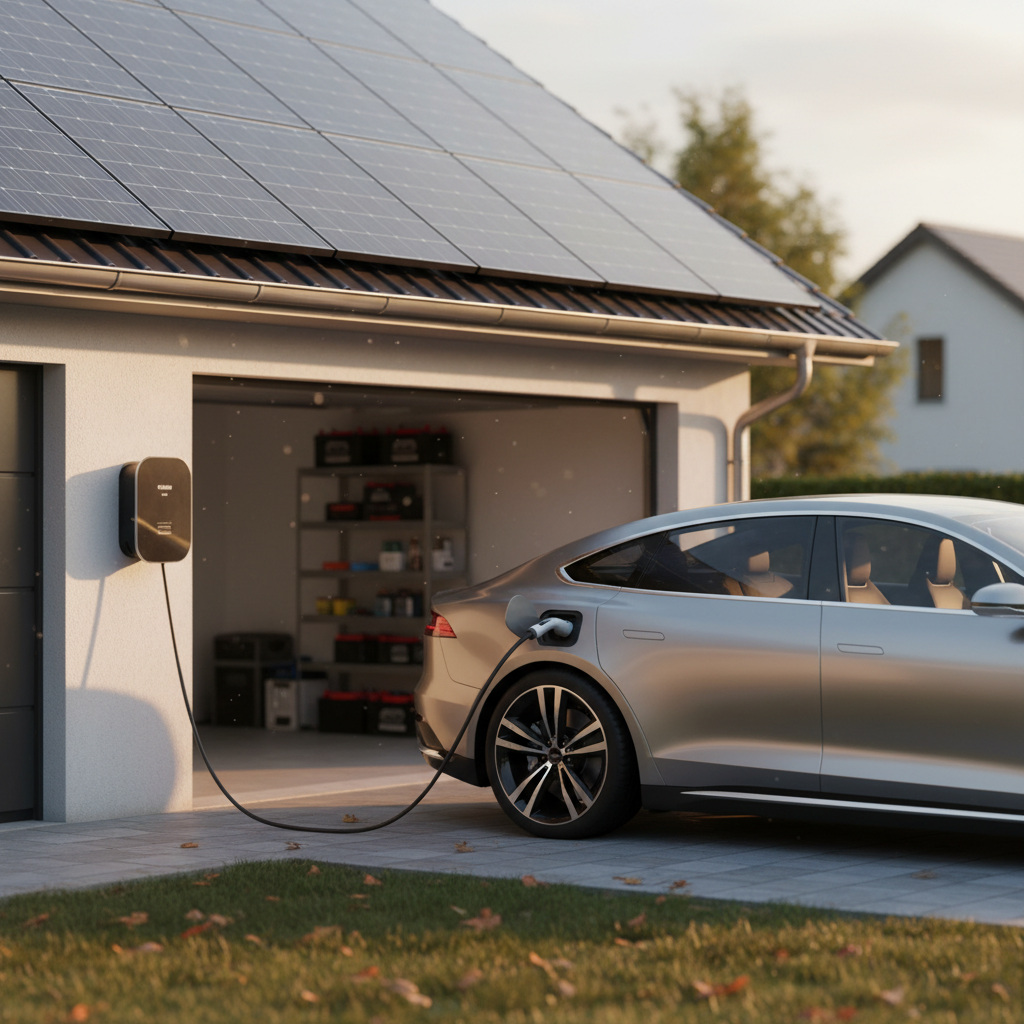
Home charging is the secret weapon
Public DC fast charging changes the math. Those stations often price electricity closer to road‑trip convenience store gas: you’re paying for speed and infrastructure. If most of your charging is on expensive DC fast chargers, your cost per mile can creep toward gas‑SUV territory, especially in higher‑cost electricity markets.
Maintenance, repairs, and downtime
Owning a gas Equinox means owning everything that goes with a modern internal‑combustion powertrain: oil changes, filters, spark plugs, exhaust components, complex transmissions, and more. The Equinox is a mainstream crossover, not a high‑maintenance luxury SUV, but it still has the usual wear‑and‑tear that comes with moving parts and heat.
Where the Equinox EV saves you time and money
Fewer moving parts, fewer service visits
Gasoline Equinox maintenance
- Regular oil and filter changes
- Transmission fluid and possible repairs
- Exhaust and emissions system components
- Engine cooling system service
Industry data suggests total maintenance and repair can run hundreds of dollars more per year than a comparable EV over the first 5–10 years.
Equinox EV maintenance
- No oil changes or exhaust system
- Far fewer fluids and filters
- Brake wear reduced by regenerative braking
- Battery and electric drivetrain covered by long warranties
Studies of EV ownership consistently show 30–40% lower maintenance spend vs similar gas vehicles over time.
The elephant in the room: battery anxiety
In short: routine maintenance will typically cost you **more** in a gas Equinox, while the EV concentrates risk in one big component: the battery. If you’re buying used, having verified battery health information takes a lot of stress out of that equation.
Insurance, taxes, and fees
Insurance and registration rarely make or break the decision, but they do nudge total cost of ownership in one direction or the other.
- Because it’s more expensive to replace and packed with electronics, an **Equinox EV may cost more to insure** than a comparable gas Equinox, especially while it’s newer.
- Some states add **small annual registration fees for EVs** to replace lost gas‑tax revenue, which eats slightly into your fuel savings.
- On the flip side, several states and local utilities offer **rebates for home charger installation** or lower off‑peak EV charging rates, which help offset those extra fees.
Factor insurance quotes into your shopping
Depreciation and resale value
Depreciation, the silent budget killer, matters as much as fuel or maintenance. It’s the difference between what you pay to get in and what you get back out when you sell or trade.
Gasoline Equinox depreciation
- Follows a fairly predictable curve as a mainstream compact SUV
- Resale value supported by broad shopper familiarity with the model
- Less exposed to rapid technology change
Over 5 years, a gas Equinox will still lose a big chunk of its value, typical of mass‑market crossovers, but the pattern is well understood.
Equinox EV depreciation
- Early EVs depreciated quickly as tech improved and incentives changed
- Newer EVs, including the Equinox EV, are starting from lower MSRPs and better ranges
- Resale value is tied closely to battery health and charging performance
The upside: as EV ownership normalizes, long‑range crossovers with healthy batteries should hold value better than the first wave of short‑range EVs.
Why EV depreciation can be your friend as a buyer
5‑year Chevrolet Equinox vs Equinox EV cost comparison
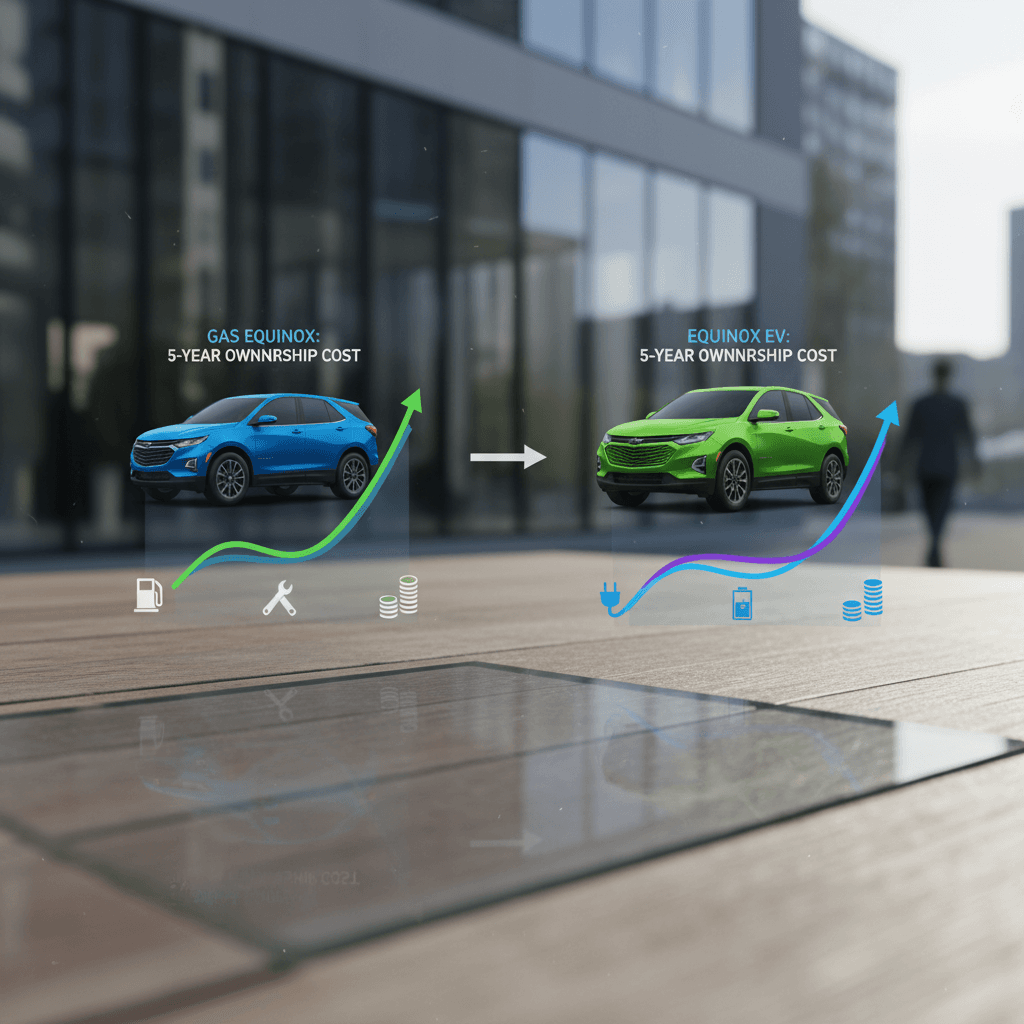
Let’s put the pieces together into a simple, 5‑year ownership snapshot. These are directional numbers using U.S. averages, your specific results will vary, but they illustrate how the gas vs EV trade‑offs stack up.
Illustrative 5‑year total cost of ownership
12,000 miles/year, mostly home charging for EV, typical U.S. prices
| 5‑year ownership line item | Gas Equinox (example) | Equinox EV (example) |
|---|---|---|
| Estimated purchase price (new) | $31,000 | $37,000 |
| Estimated incentives/tax credits | N/A | −$3,750 (example) |
| Effective upfront cost | $31,000 | $33,250 |
| Fuel/charging (≈$0.13 vs $0.06/mi) | ≈$7,800 | ≈$3,400 |
| Maintenance/repairs | ≈$4,000 | ≈$2,500 |
| Insurance, taxes, fees (incremental) | Baseline | + modestly higher |
| Estimated resale value after 5 years | ~$15,000 | ~$17,000 |
| Very rough 5‑year net cost | Low‑$30Ks | High‑$20Ks to low‑$30Ks |
Numbers are rounded and simplified to show trends; they’re not quotes. Purchase prices assume similar trim levels, before taxes and fees.
The pattern is consistent: EV usually comes out ahead
How the math changes over 10 years and for used buyers
Stretch the ownership window to **10 years**, and the Equinox EV’s advantage usually widens. That’s because every extra year you keep the vehicle lets the lower per‑mile energy and maintenance costs compound, while both vehicles experience depreciation either way.
- Over 10 years and 120,000–150,000 miles, the EV’s **fuel and maintenance savings** can stack into the **five‑figure range** compared with a gas Equinox, assuming home charging.
- If you buy a **3‑ to 5‑year‑old Equinox EV** instead of new, you let the first owner absorb steep early depreciation but still enjoy many years of low running costs and remaining battery warranty.
- A used gas Equinox can be attractive if it’s significantly cheaper to buy and you drive fewer miles per year, keeping fuel and maintenance from piling up as fast.
Where battery health really matters
Home vs public charging: impact on Equinox EV ownership costs
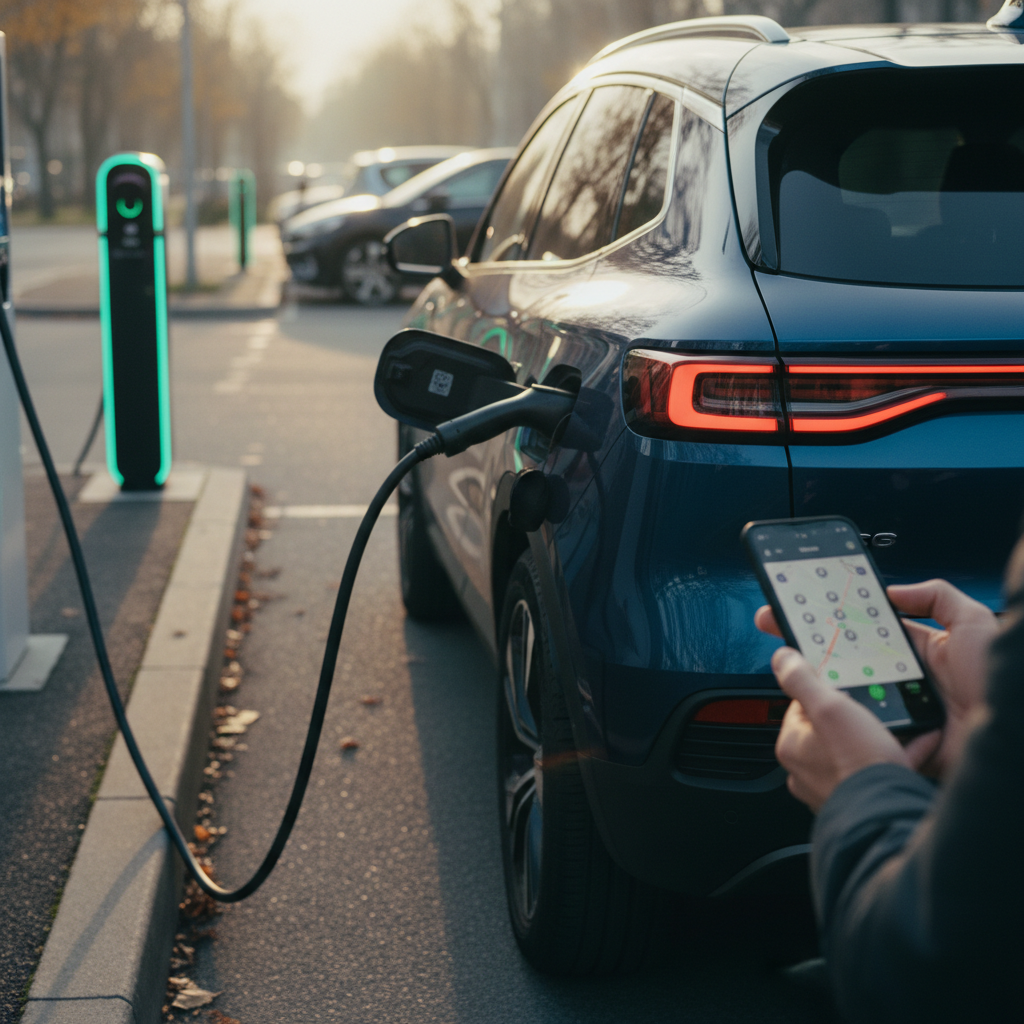
Charging patterns can make or break the Equinox EV’s cost advantage. If you mostly plug in at home and occasionally use public fast charging, you’re sitting in the sweet spot. If your lifestyle forces you onto high‑priced DC fast chargers multiple times a week, costs rise and convenience may fall.
How your charging pattern affects Equinox EV costs
Three common scenarios
Mostly home charging
- Overnight Level 2 or even Level 1 at home
- Occasional public Level 2 or DC fast charging on road trips
- Best‑case scenario for low cost per mile
Mixed home and public
- Apartment or condo with some access to workplace or community chargers
- Regular use of paid Level 2 in public
- Still generally cheaper than gas, but savings shrink
Mostly DC fast charging
- Little to no access to home charging
- Frequent use of pricey DC fast chargers
- Per‑mile costs can approach or even exceed a gas Equinox
Run your own numbers before you commit
How Recharged helps you shop smart for an Equinox EV
Moving from a familiar gas SUV to an EV with a big battery and fast‑charging capability is a leap, especially on the used market. You’re juggling questions about battery life, charging habits, and long‑term costs that just don’t exist in the same way with a gas Equinox.
What you get when you shop an Equinox EV through Recharged
Verified battery health with the Recharged Score
Every EV on Recharged comes with a <strong>Recharged Score Report</strong>, including battery diagnostics, so you know how much usable capacity and range you’re truly buying, crucial for a model like the Equinox EV.
Transparent, fair‑market pricing
Recharged benchmarks each vehicle against the broader EV market, so you can see how a specific Equinox EV is priced relative to others, and where the total cost of ownership advantage really kicks in.
EV‑specialist guidance
EV‑savvy specialists walk you through questions like home charging setup, local incentives, and how your driving pattern affects the math between gas and electric Equinox models.
Financing and trade‑in options
You can <strong>finance your Equinox EV</strong>, get an instant offer for your current vehicle, or use consignment, without setting foot in a traditional showroom.
Nationwide delivery and an Experience Center
Browse and buy fully online from anywhere in the U.S., or visit Recharged’s Experience Center in Richmond, VA if you’d rather get a feel for EVs in person.
FAQ: Chevrolet Equinox vs Equinox EV total cost of ownership
Frequently asked questions
Bottom line: Should you choose the Equinox or Equinox EV?
When you add up **purchase price, fuel or electricity, maintenance, insurance, and resale**, the **Chevrolet Equinox EV usually wins the total cost of ownership race**, especially if you drive a normal‑to‑high annual mileage and can charge at home. The gas Equinox fights back with a lower sticker and easier road‑trip refueling, and it may pencil out better if you don’t drive much or have poor access to charging.
If you’re EV‑curious and want your next compact SUV to be cheaper to live with, quieter, and cleaner to drive, the Equinox EV is a strong candidate. And if you’re shopping used, tools like Recharged’s **battery‑health‑driven Recharged Score**, transparent pricing, and EV‑specialist guidance can tilt the odds squarely in your favor. Run your numbers honestly, then pick the Equinox that matches your life, not just the one that looks cheapest on the window sticker today.