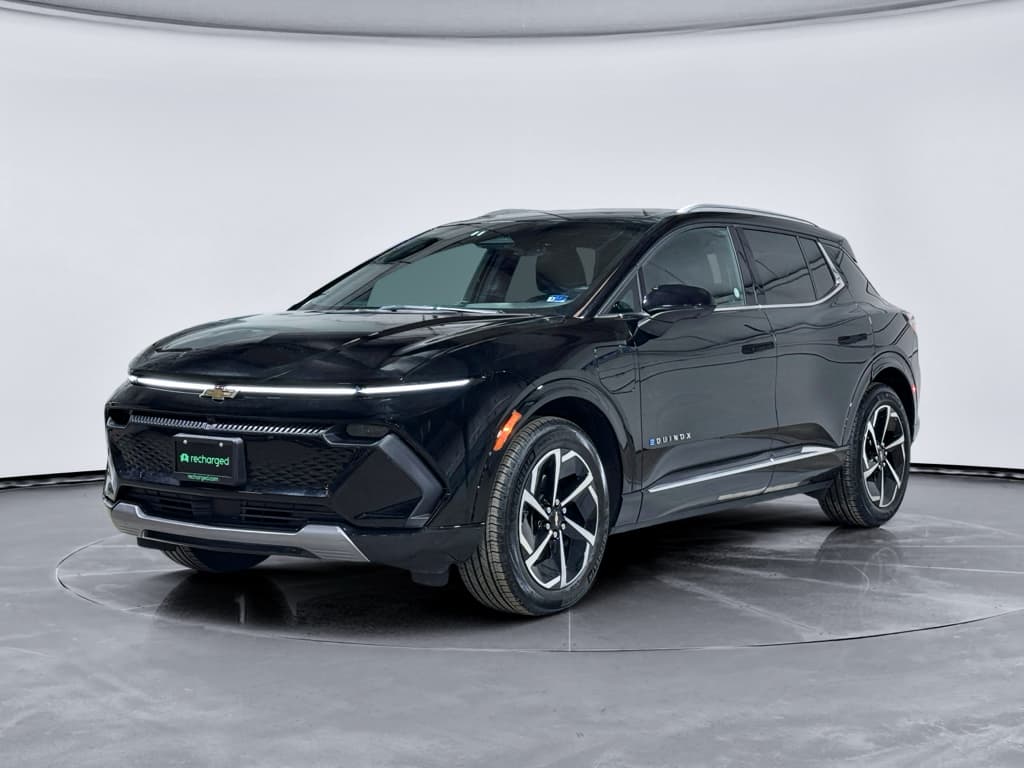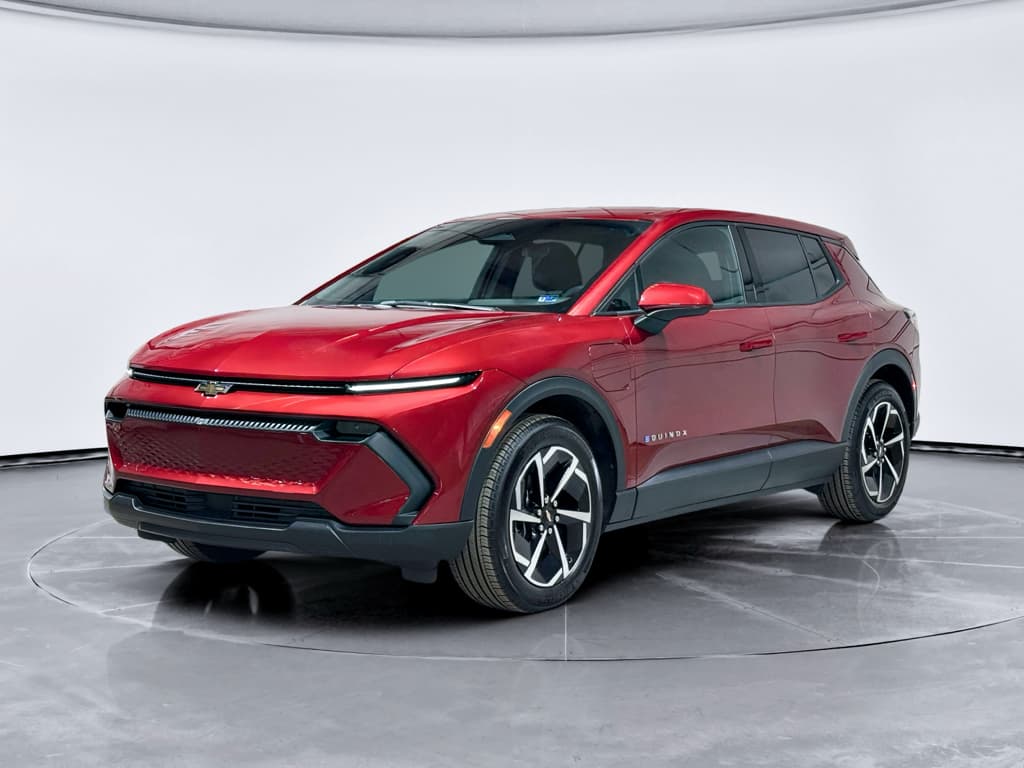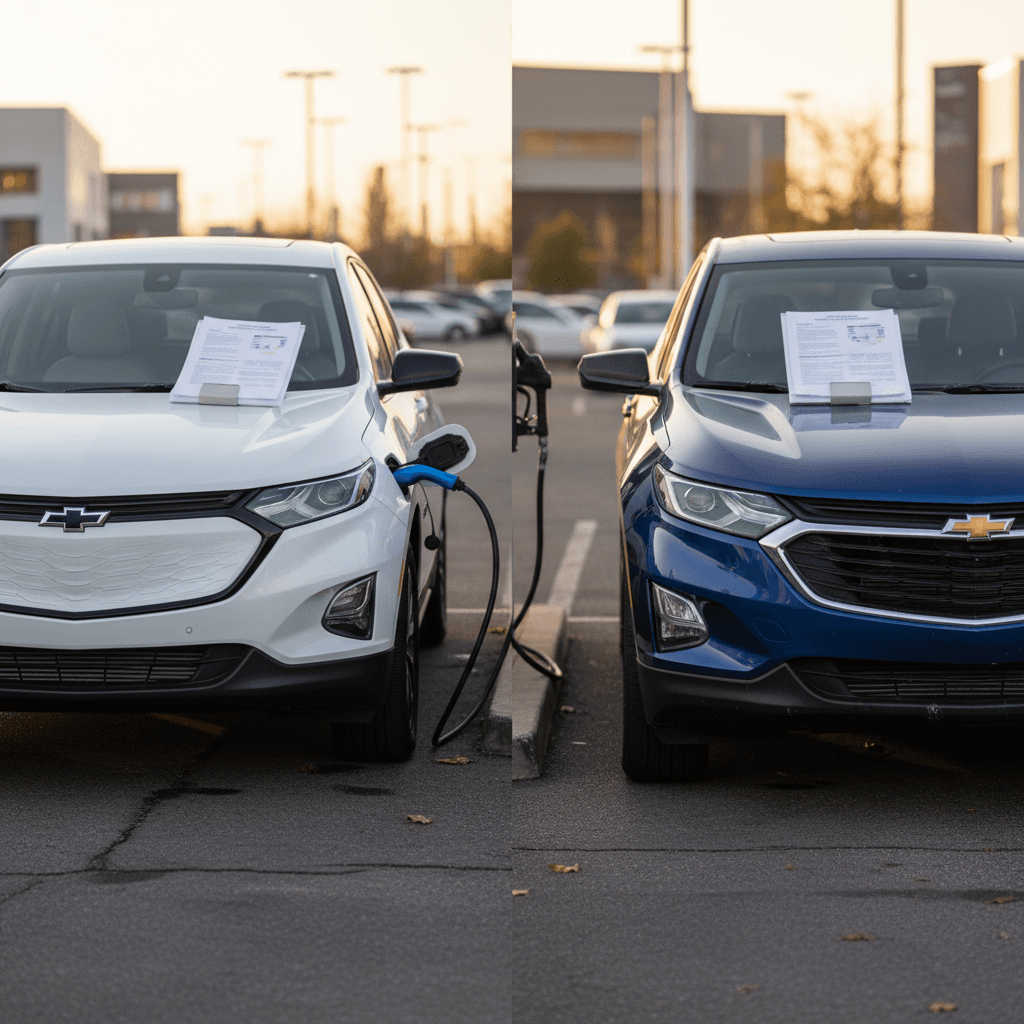
If you’re torn between the **Chevrolet Equinox EV** and the gasoline **Chevrolet Equinox** in 2026, you’re really asking one question: which one will hurt your wallet less over the years you own it? This Equinox EV vs Chevrolet Equinox cost comparison for 2026 walks through sticker price, fuel or electricity, maintenance, insurance, and resale so you can see how the numbers stack up, especially if you’re shopping the growing used EV market.
Quick takeaway
Why Compare the Equinox EV vs Gas Equinox in 2026?
The compact SUV segment is crowded, but Chevrolet did something clever: it put the **Equinox nameplate on both a traditional gas crossover and a dedicated electric SUV**. That makes the Equinox family a perfect A/B test for what owning an EV vs a gas SUV actually costs in the real world.
By April 2026, the **gas Equinox** is a familiar sight, thousands of them on the road, plenty on used lots, while the **Equinox EV** is still newer but finally showing up used, often with generous discounts compared to brand‑new prices. At the same time, federal EV tax credits for new purchases ended on September 30, 2025, which means **you can’t count on a $7,500 federal discount** to close the price gap on a 2026 purchase. That makes this a straight-up cost comparison, not a tax-credit story.
About prices and incentives
Sticker Price: Equinox EV vs. Gas Equinox
Let’s start where every deal starts: the window sticker. Chevrolet positions the Equinox EV as a relatively affordable electric SUV, but it still sits above the gas version in most trims.
Typical New 2025–2026 MSRP Ranges (Before Discounts)
Approximate starting MSRPs in the U.S. for comparable trims as of early 2026.
| Model | Example Trim | Approx. Starting MSRP | Drivetrain |
|---|---|---|---|
| Equinox EV | LT FWD | $35,000–$37,000 | Single-motor FWD |
| Equinox EV | RS AWD | $45,000+ | Dual-motor AWD |
| Gas Equinox | LT FWD | $30,000–$32,000 | 1.5L turbo FWD |
| Gas Equinox | RS AWD | $34,000–$36,000 | 1.5L turbo AWD |
Always check your local dealer or Chevrolet’s site for up‑to‑the‑day pricing.
Real-world buyers rarely pay pure MSRP. In 2025 and early 2026, we’ve seen **Equinox EVs discounted heavily** in some regions, especially leftover 2025 inventory, while gas Equinox models sometimes carry modest discounts or dealer add‑ons depending on supply. In practice, a well‑negotiated **Equinox EV LT might land in the low‑$30,000s**, while a comparable gas LT could still undercut it by a few thousand.
Used pricing sweet spot
Fuel vs. Electricity Costs in 2026
Over time, what you pay to move a 3,500‑ to 4,500‑pound SUV down the road is where EVs usually shine. To make this practical, we’ll look at a **typical U.S. driver putting 12,000 miles a year** on an Equinox, then you can scale up or down.
Key assumptions (you can tweak yours)
- Annual miles: 12,000
- Gas price (2026 national ballpark): $3.75/gal
- Average electricity rate at home: $0.16/kWh
- Driving mix: Mostly commuting and errands, some highway
Efficiency estimates
- Equinox EV: roughly 2.8–3.0 mi/kWh (call it 2.9)
- Gas Equinox: real‑world combined ~27 mpg
- Numbers vary with weather, driving style, and load, but these are realistic everyday figures.
Sample Annual Energy Cost: Equinox EV vs Gas Equinox
Estimated annual energy costs for 12,000 miles driven in 2026, using national‑average fuel and electricity prices.
| Model | Efficiency Assumption | Energy Needed for 12,000 Miles | Energy Price | Estimated Annual Cost |
|---|---|---|---|---|
| Equinox EV | 2.9 mi/kWh | ~4,140 kWh | $0.16/kWh | ≈ $660/year |
| Gas Equinox | 27 mpg | ~445 gallons | $3.75/gal | ≈ $1,670/year |
Your actual costs will depend on local gas and electricity prices and how you drive.
What That Means Over Time
Fast charging can change the math
Maintenance and Repairs: Where EVs Pull Ahead
If you’ve ever paid for a turbocharged gas SUV’s out‑of‑warranty repair, you know the sting. The Equinox EV dodges a lot of those line items: **no oil changes, no spark plugs, no exhaust, no transmission fluid service**. Over time, that calm service schedule adds up.
Typical Maintenance Differences: Equinox EV vs Gas Equinox
Same nameplate, very different service stories.
Gas Equinox: What you’re paying for
- Oil and filter changes every ~5,000–7,500 miles
- Spark plugs, ignition components
- Transmission fluid service
- Emissions equipment and exhaust repairs
- More frequent brake work (no regen)
Equinox EV: What drops off the list
- No engine oil, spark plugs, or exhaust
- Far fewer fluids overall
- Brake pads often last much longer thanks to regen
- Software updates can fix issues without a wrench
Estimated maintenance savings
Big ticket items are different, too. On the gas Equinox, you worry about engine or transmission repairs once you’re deep into six‑figure mileage. On the EV, the **battery pack is the expensive component**, but it carries an 8‑year/100,000‑mile warranty on most major defects. That doesn’t mean batteries never degrade, they do, but catastrophic failures within the warranty window are rare.
Used EV buyer alert: check battery health
Insurance, Taxes, and Fees
Insurance is where the picture gets fuzzier. In many states, **insuring an Equinox EV costs slightly more** than a comparable gas Equinox, think $10–$30 more per month, because the EV’s parts (and especially its battery pack) are more expensive to repair or replace after a crash.
- Some states and utilities still offer EV perks in 2026, reduced registration fees, HOV lane access, or discounted electricity rates for overnight charging.
- Other states have begun adding **extra annual fees on EVs** to make up for lost gas tax revenue, which can nibble away at your savings.
- Federal new‑EV tax credits ended on September 30, 2025, so there’s no national incentive lowering the price of a brand‑new 2026 Equinox EV. State or local incentives may still exist, especially for used EVs.
Net‑net, once you balance slightly higher insurance with modest state‑level perks, **insurance and fees are usually a smaller swing factor** than fuel and maintenance in the Equinox EV vs gas comparison, but they’re worth pricing out with your own ZIP code and driving record.
Resale Value and Depreciation
If you buy new and sell after three years, depreciation is your single biggest cost, no matter what powers the car. Historically, many EVs have **depreciated faster** than their gas counterparts, in part because technology is moving quickly and early buyers chased the latest range and charging improvements.
Gas Equinox depreciation pattern
- Steady, predictable resale curves
- Huge base of used‑car shoppers who understand and trust the model
- After 3–5 years, resale value is often **higher** than a comparable‑age Equinox EV, relative to original MSRP.
Equinox EV depreciation pattern
- Steeper first‑owner drop in value, painful if you bought new, **great if you’re buying used**.
- Range and charging specs matter: shoppers will pay more for trims with longer range or faster charging.
- Battery health and warranty remaining are critical for price.
Why used EV shoppers win here
5‑Year Cost Comparison: Equinox EV vs Gas Equinox
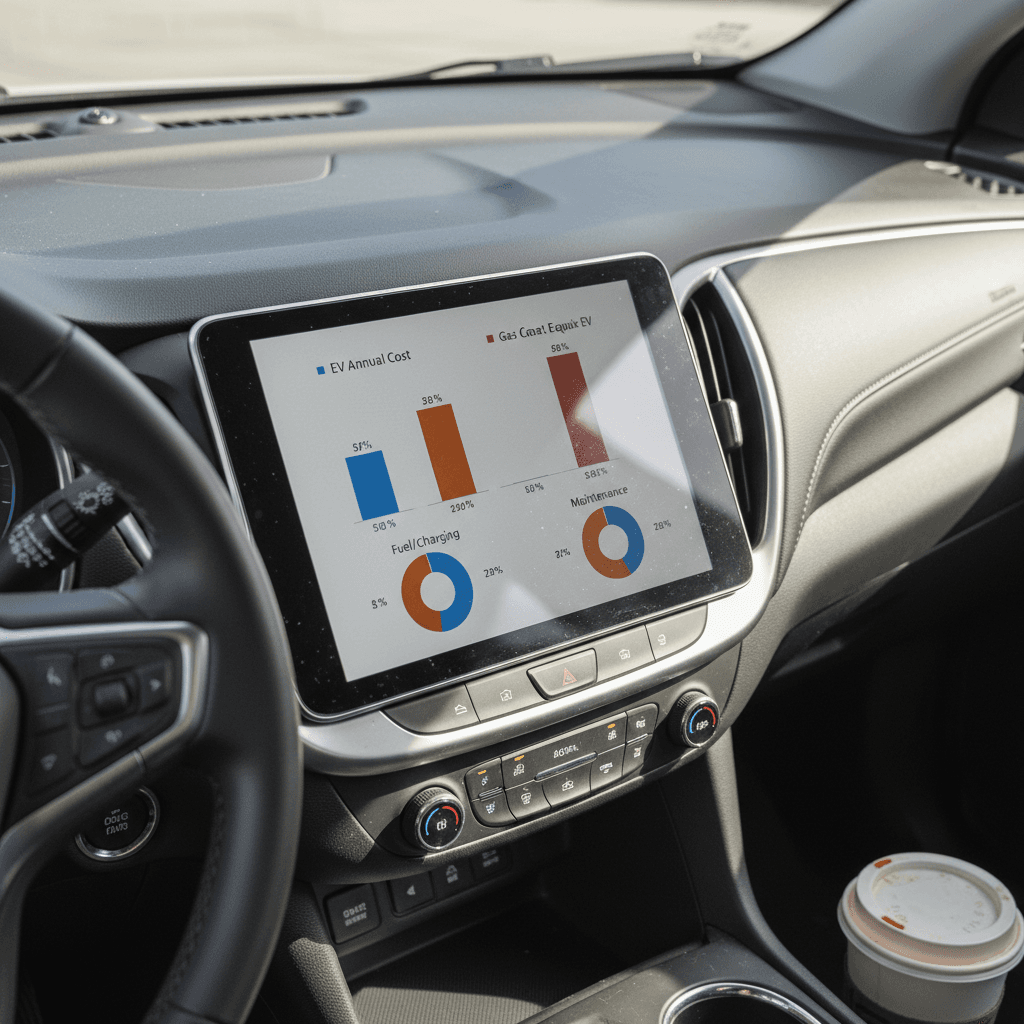
Let’s put this into a simple 5‑year, 60,000‑mile scenario to see how an Equinox EV and a gas Equinox might compare if you bought them new in 2026. These are **illustrative numbers**, but they line up with independent 2025 analyses that found the Equinox EV around 15–20% cheaper to own over 5–7 years when you include everything.
Illustrative 5‑Year Cost of Ownership (New Purchase, 12,000 Miles/Year)
Approximate totals for a mid‑trim Equinox EV vs gas Equinox bought new in 2026. Numbers rounded for clarity.
| Cost Category (5 Years) | Equinox EV (New) | Gas Equinox (New) | What’s Going On |
|---|---|---|---|
| Purchase price (out the door, after typical discounts) | $36,000 | $32,000 | EV starts higher, no 2026 federal tax credit to close the gap. |
| Fuel or electricity (5 years / 60,000 miles) | ≈ $3,300 | ≈ $8,350 | EV saves roughly $5,000 at typical U.S. energy prices. |
| Maintenance & repairs (routine + minor fixes) | ≈ $2,000 | ≈ $3,000 | Fewer fluids and wear parts on the EV. |
| Insurance, taxes, fees (5‑year estimate) | ≈ $9,000 | ≈ $8,500 | EV runs a bit higher in many zip codes; some states add EV fees. |
| Total cash outlay before resale | ≈ $50,300 | ≈ $51,850 | Despite higher sticker price, EV pulls nearly even after 5 years. |
| Estimated resale value at year 5 | ≈ $18,000 | ≈ $20,000 | Gas Equinox holds a somewhat stronger resale position. |
| Net 5‑year cost (outlay minus resale) | ≈ $32,300 | ≈ $31,850 | Pretty much a wash at 12,000 miles/year. Drive more, EV wins; drive less, gas may edge it. |
Your mileage (and costs) will vary, but this shows the direction of the math.
Drive more? The EV pulls ahead faster
New vs. Used: Which Equinox Makes More Sense?
In 2026, you’re not just choosing between powertrains, you’re also choosing **where on the depreciation curve** you want to jump in. Here’s how the math looks if you’re shopping new vs used.
Buying Scenarios: Where Each Version Shines
Match the Equinox to your budget and driving pattern.
1. New Gas Equinox
- Lower upfront price than a new Equinox EV.
- Predictable tech and strong resale base.
- Best fit if you drive fewer miles and value simplicity over fuel savings.
2. New Equinox EV
- Higher sticker price, no 2026 federal credit, but big fuel and maintenance savings.
- Great if you drive a lot and can charge at home.
- More future‑proof in cities tightening emissions rules.
3. Used Equinox EV (2–4 years old)
- Often priced similarly to, or lower than, a same‑year gas Equinox.
- You skip the steepest depreciation years.
- Biggest win if you can **verify battery health** with a trusted report.
Where Recharged fits in
Ready to find your next EV?
Browse VehiclesHow to Choose the Right Equinox for You
6 Questions to Decide: Equinox EV or Gas?
1. How many miles do you drive each year?
If you’re under 8,000 miles a year, fuel savings from the Equinox EV are smaller. Over 12,000–15,000 miles, the EV’s lower energy and maintenance costs start to dominate the math.
2. Can you reliably charge at home or work?
Home Level 2 charging (or a workplace option) is a huge lever. It keeps your energy costs low and your daily routine simple. If you’ll rely mostly on DC fast charging, model your costs carefully.
3. How long will you keep the vehicle?
The longer you keep an Equinox EV, 7–10 years instead of 3–4, the more those lower running costs work in your favor. Short‑term leases favor gas a bit more, especially with no new‑EV tax credits in 2026.
4. What’s your budget for the purchase itself?
If your top priority is lowest upfront cost, a **used gas Equinox** or a heavily discounted **used Equinox EV** will usually beat a brand‑new EV. If you can handle a slightly higher payment, the EV can pay you back over time.
5. How sensitive are you to fuel price swings?
If you hate surprises at the pump, the Equinox EV’s electricity costs are usually more stable. Even when electricity prices climb, they rarely spike like gasoline does.
6. Do you live in an area adding EV fees, or offering perks?
Some states add $100–$200 per year in EV registration fees. Others offer cheap overnight charging or HOV access. Take a minute to look up your state’s rules before you decide.
Frequently Asked Questions: Equinox EV vs Gas
Common Questions About Equinox EV vs Gas Costs
Bottom Line: Which Equinox Costs Less to Own?
When you line up every dollar, the **Chevrolet Equinox EV and gas Equinox land surprisingly close** for a typical 5‑year, 12,000‑miles‑per‑year owner in 2026. The gas Equinox usually **wins on sticker price and short‑term resale**, while the Equinox EV counters with **cheaper energy and lower maintenance**, and the more you drive, the more those EV advantages matter.
If your life is mostly commuting, kid‑hauling, and weekend errands with a place to charge at home, the Equinox EV is a strong bet to **cost less over the long haul**, especially if you buy it used. If you’re more occasional‑miles, road‑trip heavy, or you just need the lowest possible payment, a gas Equinox is still an honest, familiar choice.
Either way, don’t guess at the math. Run your own fuel and electricity numbers, check real insurance quotes, and, if you’re shopping used, make sure you see **hard data on battery health**. That’s exactly what Recharged is built for: transparent used EV listings with verified battery diagnostics, expert guidance, and nationwide delivery so you can choose the **right Equinox for your budget and your life**, not just the one that happens to be sitting on the closest lot.