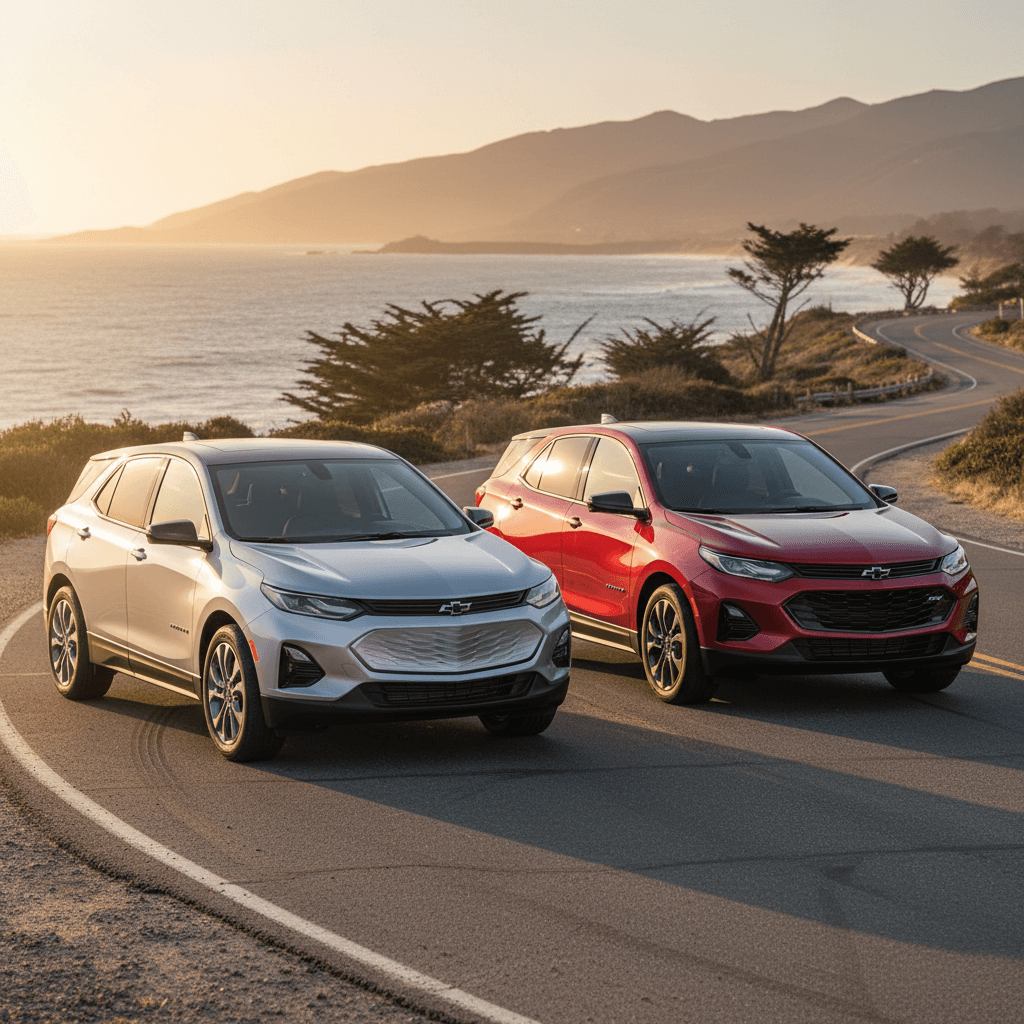
You’re staring at two spec sheets for the Chevrolet Equinox EV and they look nearly identical, same Ultium battery, similar range, same big touchscreen, but one says LT and the other says RS, with a price gap that makes you pause. If you’re wondering “Chevrolet Equinox EV LT vs RS, which trim should I actually buy?” you’re exactly who this guide is for.
Gas Equinox vs Equinox EV trims
Equinox EV LT vs RS: Quick Overview
Chevrolet Equinox EV LT vs RS: key numbers
At a high level, the Equinox EV LT is the value and comfort play: clean design, essential tech, and the full Ultium experience at the lowest price. The Equinox EV RS is the style and equipment upgrade: sportier look, bigger wheels, more standard convenience features, and usually the options you’d end up adding to an LT anyway.
LT vs RS at a glance
Same EV bones, different personality and equipment
Equinox EV LT
- Lower starting price and better value play
- Clean, understated styling with smaller standard wheels
- Same Ultium battery, range, and charging performance
- Great if you prioritize comfort, price, and efficiency
Equinox EV RS
- Sportier exterior with aggressive fascias and larger wheels
- More standard comfort & convenience features
- Available extras like enhanced driver assist packages
- Best if you want the “loaded” look and feel
Pricing and value: how much more is the RS really?
Chevrolet positions the Equinox EV LT as the price leader and the RS as the step‑up, higher‑content trim. Exact MSRPs move around with model year, destination fees, and options, but dealer guides and early 2025 pricing put the LT in the low–mid $30,000s and the RS roughly $8,000–$10,000 higher when similarly equipped.
Typical LT vs RS pricing and content differences
Approximate new‑vehicle pricing spread and what you gain by stepping up to RS.
| Trim | Typical starting price (new) | Positioning | What you’re paying for |
|---|---|---|---|
| Equinox EV LT | ≈$33,000–$36,000 | Value / volume trim | Lower price, same battery and range, simpler styling, fewer standard luxury touches. |
| Equinox EV RS | ≈$41,000–$45,000 | Sport / premium trim | Sportier exterior, larger wheels, more standard convenience and appearance features, and usually better standard driver‑assist content. |
Always check current dealer pricing and incentives, especially EV‑specific offers in your state.
Think in monthly payment, not just sticker price
If you’re budget‑sensitive or planning to keep the car a long time, the LT’s lower purchase price often makes more sense. The RS holds most of its extra cost in appearance and convenience gear, not in additional performance or range, so you’re not giving up core EV capability by choosing the LT.
Powertrain, range, and charging: LT vs RS
Under the skin, the Equinox EV is refreshingly simple to understand. Whether you choose LT or RS, you’re getting the same Ultium architecture, the same approximate 85 kWh battery pack, and the same charging hardware. The differences are in equipment and styling, not what’s happening between the battery and the wheels.
- Battery: all Equinox EV trims use GM’s Ultium pack around 85 kWh usable, rather than different sizes by trim.
- Drivetrain: single‑motor front‑wheel drive (~213 hp, 236 lb‑ft) or dual‑motor eAWD (~288 hp, 333 lb‑ft) on both LT and RS.
- Range: Chevy quotes up to ~319 miles FWD and ~285 miles eAWD on a full charge, regardless of LT or RS badging.
- DC fast charging: up to 150 kW peak; real‑world testing typically averages mid‑90 kW from 10–90% state of charge, adding around 100 miles of highway range in roughly 15–20 minutes.
- Level 2 charging: 11.5 kW onboard charger; expect roughly 30–36 miles of range per hour on a 48‑amp home station.
Good news: the LT isn’t the “slow” one
When FWD makes sense
- You live in a milder climate or mostly in cities/suburbs.
- You want maximum range and efficiency.
- You’re watching budget and don’t need 0–60 bragging rights.
When eAWD is worth it
- You deal with snow, steep driveways, or unpaved roads.
- You frequently load the car with people and cargo.
- You value the stronger acceleration and all‑weather traction.
Features and tech differences between LT and RS
This is where the trims finally part ways. While equipment can vary by model year and individual option packages, the pattern is consistent: the LT gives you the essentials, the RS layers on appearance, convenience, and tech upgrades.
Major feature differences: Equinox EV LT vs RS
Exact equipment can vary, but here’s how most LTs and RSs are configured.
Infotainment & tech
- Both: large 17.7‑inch touchscreen, wireless Apple CarPlay/Android Auto, over‑the‑air updates.
- RS: more likely to include higher‑end audio, extra USB‑C ports, and convenience tech bundled standard.
Driver assistance
- Both: Chevy Safety Assist with features like Automatic Emergency Braking, Lane Keep Assist, and more.
- RS: more commonly paired with enhanced driver‑assist packages and options like hands‑free liftgate and additional parking aids.
Comfort & convenience
- LT: cloth or mixed upholstery, manual seats on lower builds, basic ambient lighting.
- RS: sportier seats, more standard power adjustability and heating, upgraded trim materials in many builds.
Watch the option packages, not just the trim name
Design, interior, and comfort: subtle but real differences
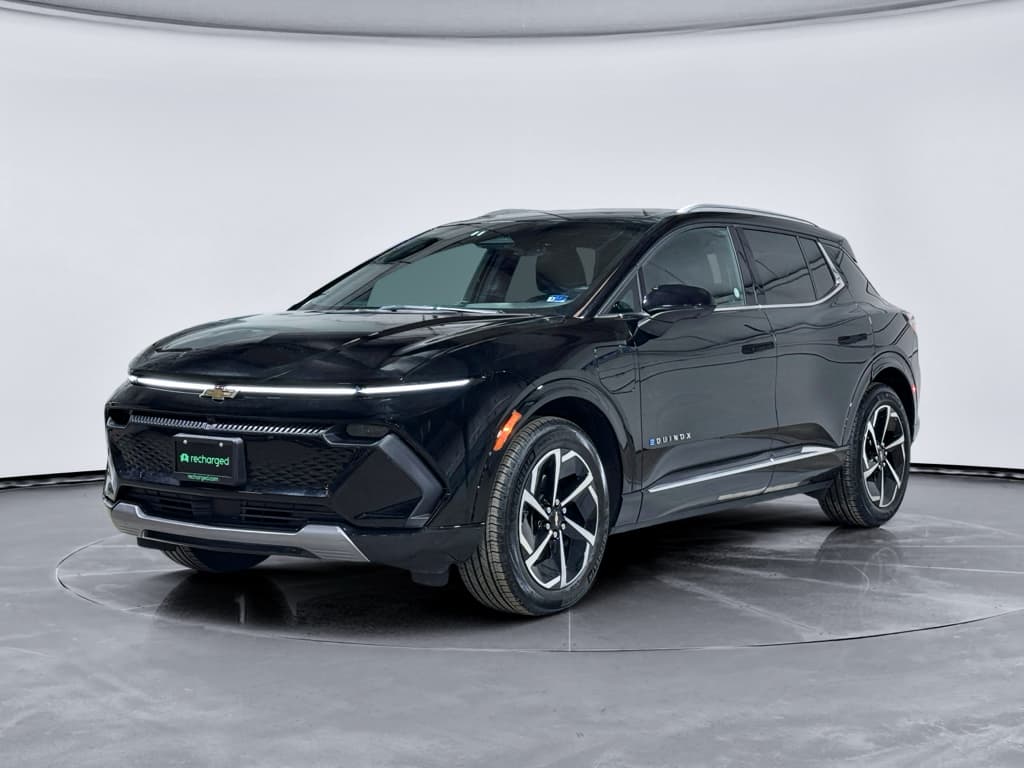
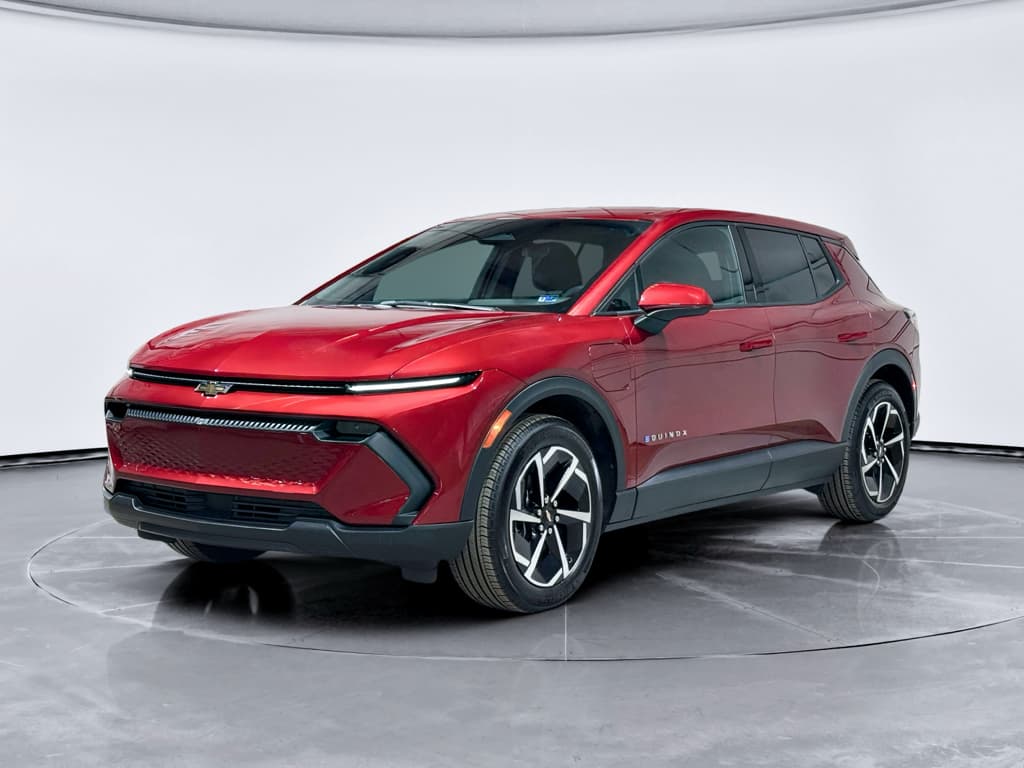
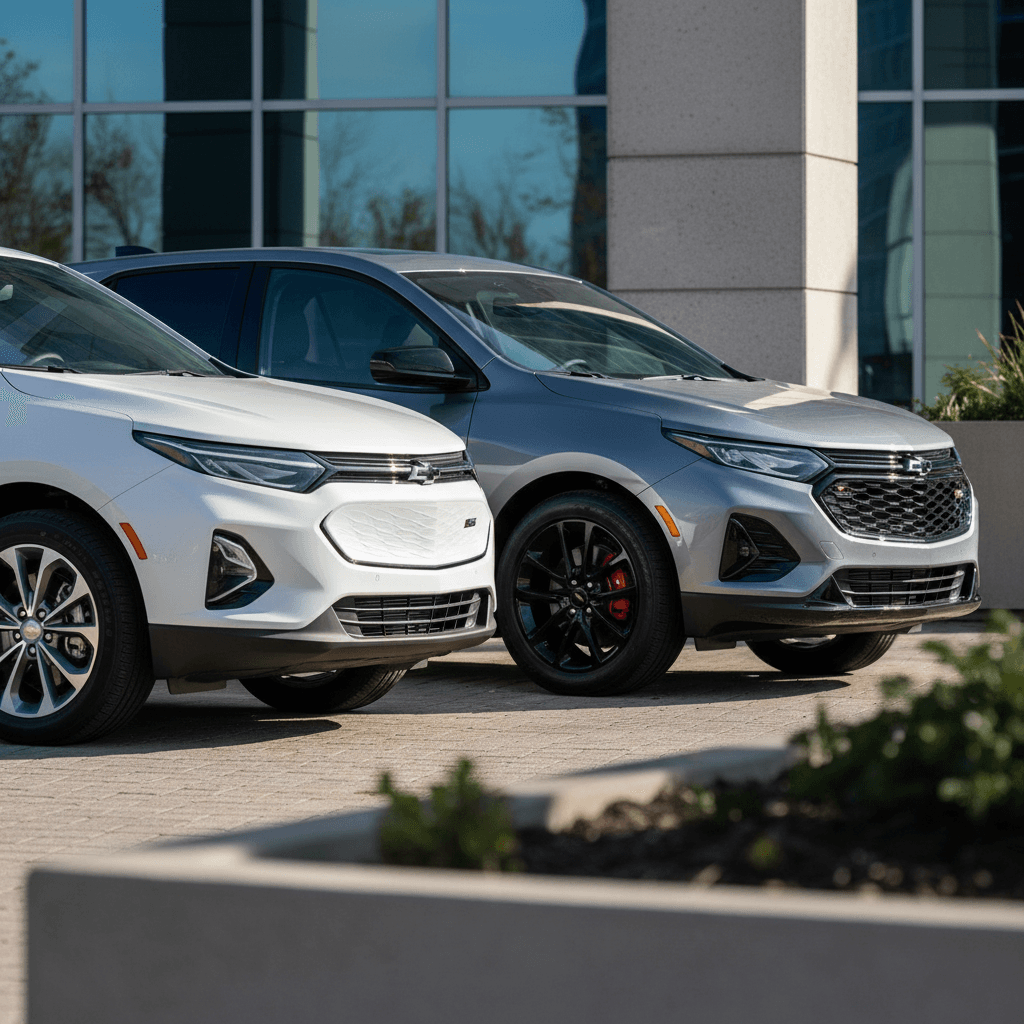
In person, LT and RS look more different than the spec sheet suggests. The RS leans into the compact‑SUV‑with‑attitude vibe, darker trim, more aggressive front and rear fascias, and larger, more stylized wheels. The LT keeps a cleaner, friendlier look that some buyers actually prefer, especially in lighter colors.
- Exterior styling: RS adds gloss‑black accents, sportier fascias, and unique wheel designs that visually lower the car and give it more presence.
- Wheel size: RS trims typically wear larger wheels, which sharpen appearance and handling feel but can slightly impact ride comfort and range compared with smaller LT wheels.
- Interior feel: RS cabins pick up sportier trim bits, contrasting stitching, and a darker, more driver‑focused feel. LT cabins skew lighter and more open, with simpler lines.
- Noise and ride: The Equinox EV is quiet and comfortable in both trims. RS’s larger wheels and lower‑profile tires can transmit a little more road texture on broken pavement.
RS looks great in photos, but try it on real roads
Which Equinox EV trim fits your lifestyle?
Choosing between the Equinox EV LT and RS is less about right or wrong and more about how you actually live with a car. Here’s how to think about it by use case instead of by spec sheet.
Match the trim to your real life
Daily commuter or first EV
If you’re replacing a gas compact SUV and just want a comfortable, efficient EV with modern tech, the <strong>LT</strong> is usually the smarter buy. It keeps the payment lower without giving up battery size, range, or charging speed.
Style‑conscious urban driver
If curb appeal matters, you love a darker, sportier look, and you’d end up adding appearance packages anyway, the <strong>RS</strong> makes sense. You’re paying for the look you actually want to see every day.
Family hauler with kids and gear
Either trim works, but many families are better served by a well‑equipped <strong>LT with options</strong>: smaller wheels for a more compliant ride, plus added driver‑assist and comfort packages if budget allows.
Snow‑belt or mountain driver
Here the choice is less LT vs RS and more <strong>FWD vs eAWD</strong>. Decide on drivetrain first, then pick the trim that fits your budget and styling taste.
Road‑tripper
Since battery, range, and charging are shared, focus on <strong>seats, storage, and driver‑assist features</strong>. An LT with the right packages can be just as relaxing on a 700‑mile day as an RS.
Resale‑value watcher
Historically, sport trims like RS can attract more attention on the used market, but value‑focused buyers often hunt for clean, lower‑miles LTs. Either can do well, condition and battery health will matter more than the badge.
New vs used Equinox EV LT and RS: what to expect
As Equinox EVs begin showing up in the used market, the LT vs RS question gains another wrinkle: the Recharged Score and real‑world battery health. Unlike a new‑car lot, where everything is theoretically fresh, a used EV is all about how it’s been treated and how its battery is holding up.
Shopping new
- Transparent pricing can be harder with high‑demand EVs, watch for markups and mandatory add‑ons.
- You can order the exact LT or RS build you want, with your preferred color and options.
- Federal and state EV incentives may apply, depending on your tax situation and where you live.
Shopping used
- You can often find better‑equipped RS models for only slightly more than new‑price LTs, or well‑priced LTs that undercut new RSs by a wide margin.
- Battery health, charging history, and accident records suddenly matter more than trim names.
- A third‑party battery health report or a Recharged Score on a used Equinox EV can give you confidence that the pack and pricing actually line up.
How Recharged can help with a used Equinox EV
Ready to find your next EV?
Browse VehiclesHow to test-drive and compare LT vs RS in the real world
On a typical dealer test drive, LT and RS can feel nearly identical if you’re only doing a quick loop. To really understand which trim suits you, you’ll want to be a little more deliberate during your back‑to‑back drives.
Real‑world LT vs RS comparison checklist
1. Drive both on the roughest nearby road
Ask your salesperson to route you over the same patch of broken pavement or expansion joints in each trim. Pay attention to <strong>ride comfort</strong> and noise, larger RS wheels can feel different from LT’s smaller setup.
2. Sit in every seat
Have passengers climb into the rear seats of each trim. Check headroom under the RS’s sportier interior accents, legroom, and how easy it is to buckle child seats or boosters.
3. Test the tech you’ll use daily
Pair your phone, try wireless CarPlay/Android Auto, and adjust the digital instrument view. Make sure screen reflections, audio controls, and camera views feel intuitive to you in each trim.
4. Check visibility and parking aids
If the RS you’re driving includes extra parking sensors or a surround‑view camera, decide if those features feel like must‑haves. They may be bundled in packages you can also get on some LTs.
5. Look at each trim in your actual life
If possible, park an LT and an RS next to your current car or in front of your house. Which one do you actually want to see every morning? That feeling matters, especially if the monthly payment difference is small.
Chevrolet Equinox EV LT vs RS: FAQ
Frequently asked questions about Equinox EV LT vs RS
Bottom line: LT vs RS, what should you buy?
If you strip away the badges, the Chevrolet Equinox EV LT and RS are more alike than different. They share the same Ultium battery, the same range and charging story, and the same roomy compact‑SUV layout. That means you can confidently choose with your eyes and your budget, not out of fear that the cheaper trim is secretly the “lesser” EV.
For most shoppers, the LT is the sweet spot: lower price, cleaner look, and every bit of the Equinox EV’s underlying capability. The RS earns its keep if you care about styling, want more standard comfort and tech features, or find a used example that’s been well cared for at a fair price. Whichever way you lean, take the time to drive both, compare real‑world payments, and, if you’re looking used, lean on tools like a Recharged Score Report to make sure the battery, price, and trim all add up in your favor.