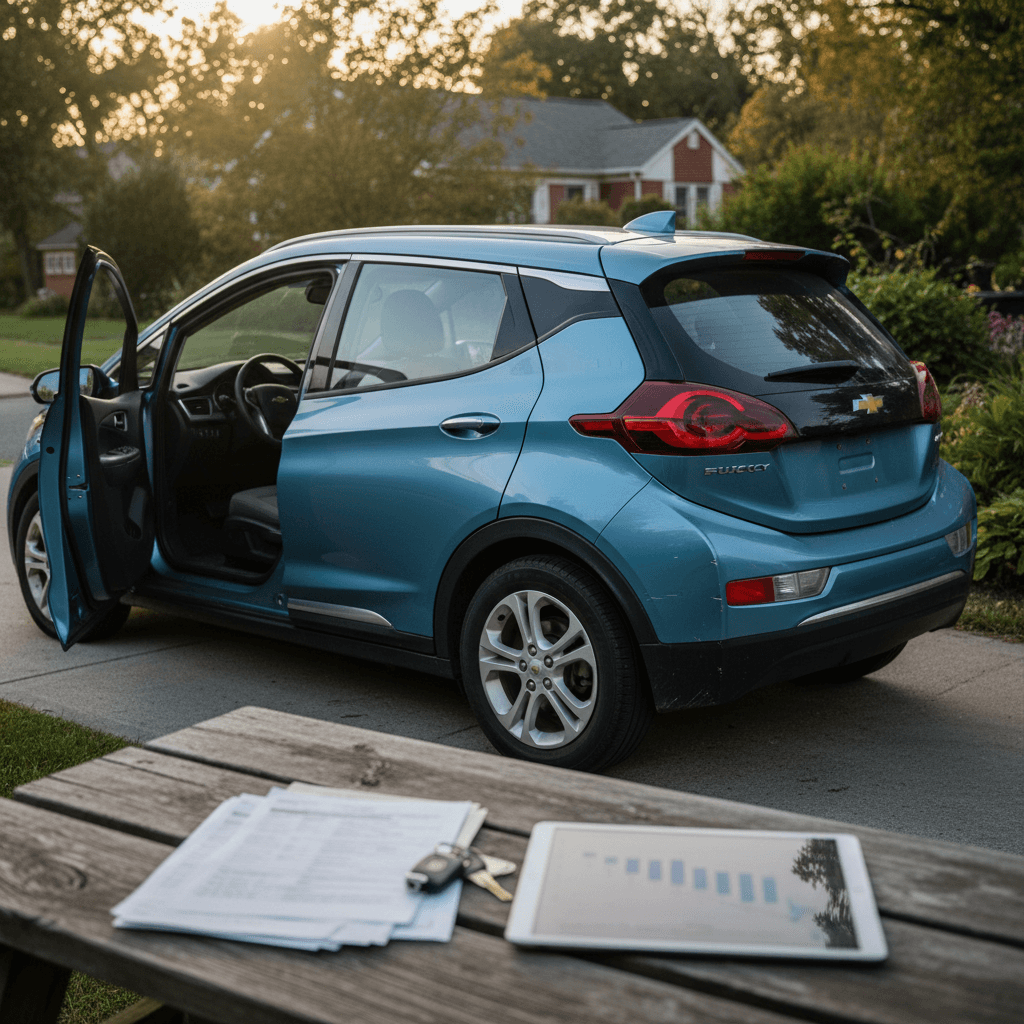
If you’re looking at a 5‑year‑old Chevrolet Bolt EV, whether you’re buying one used or deciding if it’s time to sell, value is front and center. The Bolt is one of the most affordable long‑range EVs on the market, but its resale story is complicated: rapid early depreciation, a massive battery recall, and unusually strong warranty coverage all collide. This guide breaks down what a Chevy Bolt EV is actually worth after 5 years in 2026, and how to use that to your advantage.
Key takeaway up front
Why 5‑year value matters for Chevy Bolt shoppers
Five years is a critical milestone for any vehicle. It’s usually when original owners start thinking about trading out of a car, and when buyers start seeing the steepest portion of depreciation already behind them. For the Chevrolet Bolt EV, that 5‑year mark is even more important because it sits right in the middle of GM’s 8‑year/100,000‑mile high‑voltage battery warranty window and after the bulk of its early price drops.
- Most 5‑year‑old Bolts are priced well below $20,000, putting long‑range EV ownership into true budget territory.
- Depreciation has usually done most of its damage by year five, so price drops often slow after this point.
- Battery condition and warranty status become more important than cosmetic wear when judging value.
- Demand for affordable used EVs is growing as new‑EV incentives change and prices stay high.
Why 5‑year‑old Bolts are a sweet spot
Chevrolet Bolt EV depreciation after 5 years: the numbers
Chevy Bolt EV value after 5 years at a glance
Think of a typical 2020 Chevrolet Bolt EV LT. Many of these left showrooms around $35,000–$38,000 with destination and options. By early 2025, real‑world used examples with average miles were trading in the mid‑teens, around $14,000–$15,000. That’s roughly a 60% drop in value over five years, leaving the car worth about 40% of its original price. Earlier model years that started with lower MSRPs may show similar percentage drops but smaller dollar losses.
Illustrative 5‑year Chevy Bolt EV value scenarios
These examples are based on recent market observations for typical, non‑accident vehicles with average equipment and mileage. Local prices will vary.
| Model year (5‑year age) | Original MSRP (approx.) | Mileage after 5 years | Battery status | Illustrative 2026 value |
|---|---|---|---|---|
| 2020 Bolt EV LT (5 yrs) | $37,000 | 60,000 mi | Original pack, no recall yet | $13,000–$15,000 |
| 2020 Bolt EV Premier (5 yrs) | $42,000 | 55,000 mi | Battery replaced under recall | $15,500–$17,500 |
| 2021 Bolt EV LT (5 yrs) | $38,000 | 70,000 mi | Battery replaced, fresh warranty | $14,000–$16,000 |
| 2019 Bolt EV LT (7 yrs) | $36,000 | 80,000 mi | Replacement pack, still under warranty | $11,000–$13,000 |
How MSRP, mileage and battery status combine to drive 5‑year value for Chevrolet Bolt EVs.
Treat these as ranges, not promises
Why the Bolt EV often depreciates faster than other cars
On paper, the Chevrolet Bolt EV should be a used‑car hero: compact footprint, strong range, and low running costs. In reality, early depreciation has been steeper than the typical gas car and even many rival EVs. Several forces are working together here.
Main drivers of Bolt EV depreciation
Why some owners saw 60%+ value drops in five years
Early EV price cuts
New EV prices, including the Bolt, fell faster than expected as production scaled and competition intensified. When new prices come down, used values for 3‑ to 5‑year‑old cars are pulled down too.
Battery fire recall headlines
The high‑profile battery recall spooked a lot of mainstream buyers, even those who never read the fine print. That reputational hit weighed on resale values, especially in the first years after the recall.
Tech moves quickly
Newer EVs advertise longer range, faster DC charging and more modern interiors. That makes an older Bolt EV feel dated on paper, even if it still does daily‑driver duty just fine.
Segment dynamics
The Bolt EV is a subcompact hatchback in a market that increasingly prefers crossovers and SUVs. That body style bias hurts resale against similarly priced compact SUVs, electric or gas.
Uncertainty about repairs
Many consumers still worry about long‑term battery replacement costs or the availability of EV‑qualified technicians. Even when those fears are overblown, they push resale down.
Used‑EV buyer hesitancy
Most used‑car shoppers are still learning how to evaluate an EV. When in doubt, they either under‑bid or walk away entirely, which adds downward pressure to transaction prices.
The flip side: depreciation is your discount
How the battery recall and replacements changed 5‑year value
GM’s large‑scale recall of 2017–2022 Chevrolet Bolt EV and EUV battery packs turned the used‑Bolt market upside down. Initially, headlines about potential fires pushed prices down. But as batteries were replaced under recall, something unusual happened: thousands of older Bolts suddenly had brand‑new packs installed, often with warranties that restart from the date of replacement.
Short‑term hit
- News coverage about fire risk scared away some shoppers.
- Cars subject to charge limits or parking restrictions were harder to sell.
- Some owners offloaded cars before their batteries were replaced.
Long‑term boost
- Once the recall work is complete, many Bolts get a fresh 8‑year/100,000‑mile warranty on the replacement pack.
- A 2018–2021 Bolt whose battery was swapped in, say, 2023 can now have coverage into the early 2030s.
- Range often returns to like‑new, which makes a 5‑ to 7‑year‑old car feel far younger in daily use.
Check the recall and replacement paperwork
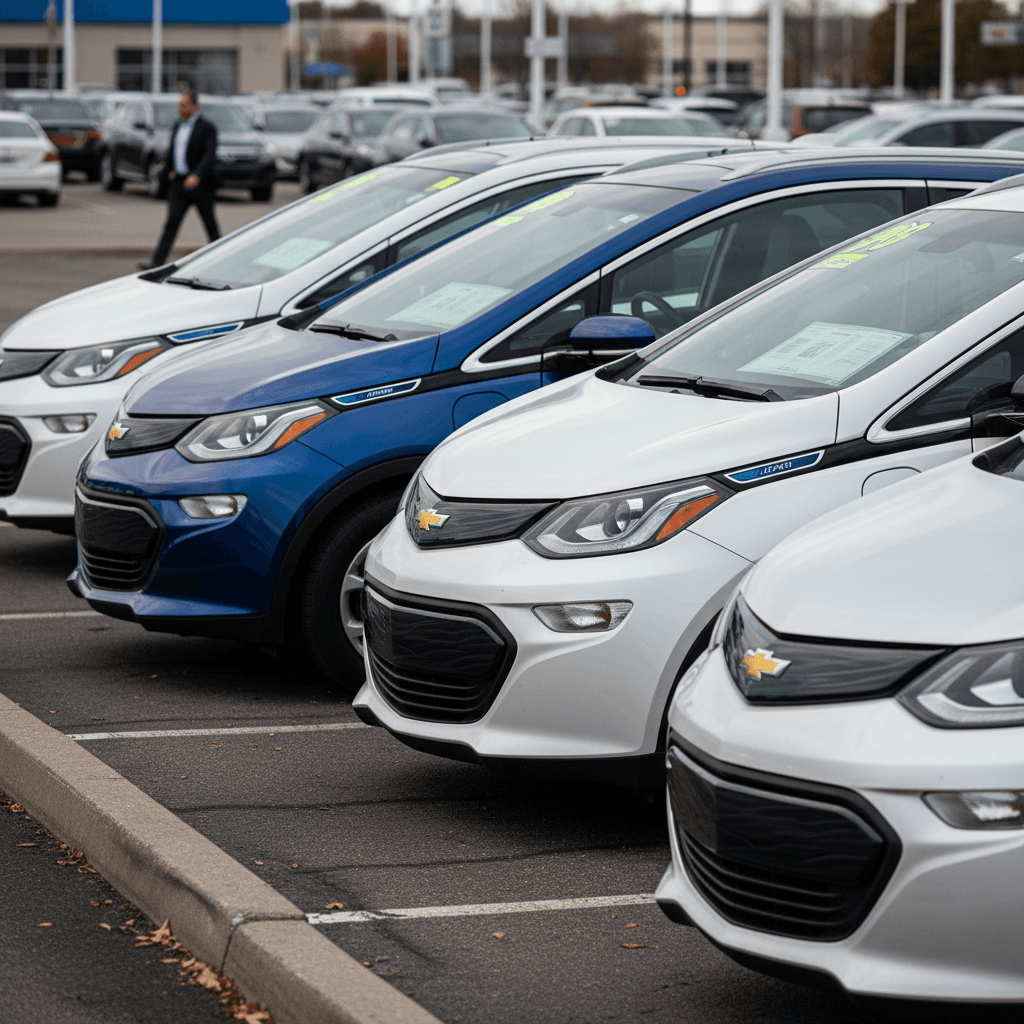
Battery warranty, range and real usability after 5 years
From a daily‑use standpoint, the question isn’t just, “What is this Bolt worth?” It’s, “How much life does it realistically have left?” GM backs the Bolt EV’s high‑voltage battery with an 8‑year/100,000‑mile warranty on most models, and some states extend coverage to 10 years/150,000 miles for qualifying owners. On cars that received a replacement pack, that 8‑year/100,000‑mile clock typically starts at the time of replacement, not the original in‑service date.
What a 5‑year‑old Bolt EV usually looks like in practice
Battery health and range tend to matter more than paint chips and curb rash.
Real‑world range
Many 5‑year‑old Bolts with original packs still deliver 200+ miles of mixed‑driving range when driven reasonably, often close to their original EPA ratings if cared for well.
Remaining warranty
A 5‑year‑old Bolt with its original pack often has 3+ years and tens of thousands of miles of battery coverage left. With a replacement pack, that coverage can be much longer.
Charging experience
DC fast‑charging isn’t class‑leading, but for commuter duty and occasional road trips, most 5‑year‑old Bolts still charge fast enough to be practical, especially if you have home Level 2 charging.
Don’t ignore battery health data
Chevy Bolt EV 5‑year value vs other EVs and gas cars
Zooming out, how does a 5‑year‑old Chevrolet Bolt EV compare to other electric and gas vehicles? Broad market data over the 2024–2025 timeframe shows that EVs, on average, depreciate faster than comparable internal‑combustion models over the first five years. Many mass‑market EVs have lost 50% or more of their value in that window, while a typical gas car might shed closer to 40–50%.
Illustrative 5‑year depreciation comparison
Approximate five‑year depreciation ranges using recent market studies and transaction data. Actual numbers vary by model and trim.
| Vehicle type | Typical 5‑year depreciation | Notes on 5‑year value |
|---|---|---|
| Mainstream gas sedan/hatchback | ~40–50% | Many compact gas cars retain roughly half their value after five years. |
| Mainstream compact crossover (gas) | ~35–45% | Crossovers tend to hold value better than small cars. |
| Average mass‑market EV (non‑Tesla) | ~50–60% | Many non‑Tesla EVs still lose over half their value in 5 years. |
| Chevrolet Bolt EV | ~55–65% | Heavier‑than‑average depreciation, but often offset by fresh recall batteries. |
| Select EVs with stronger brands | ~45–55% | Some newer EVs with high demand and limited supply depreciate less. |
The Bolt EV sits on the higher side of 5‑year depreciation compared with the overall market and many gas cars.
Think in total cost of ownership, not just resale
What a 5‑year‑old Chevrolet Bolt EV is really worth in 2026
Used‑vehicle pricing moves fast, but as of 2026, most 5‑year‑old Bolt EVs with average mileage land in a fairly predictable band. For a typical LT or 1LT trim with around 55,000–70,000 miles, clean history and completed recall work, you’re usually looking at a retail asking price in the low‑ to mid‑teens, with higher‑trim Premier or 2LT models a couple thousand dollars above that.
Biggest factors shaping a 5‑year‑old Bolt’s value
1. Battery status and documentation
Has the recall work been completed? Was the pack fully replaced or only monitored/updated? A documented replacement with a fresh warranty is a major value booster.
2. Mileage and usage pattern
A 5‑year‑old Bolt with 40,000 miles will command more than one with 90,000, but gentle, mostly highway miles can be kinder to the battery than constant DC fast‑charging.
3. Trim level and options
Premier and 2LT trims with more equipment (safety tech, nicer interior, DC fast‑charge capability where it was optional) hold value better than base cars.
4. Local demand and incentives
In EV‑friendly regions with strong charging infrastructure, used Bolt values can run higher than in markets where charging is sparse and demand is softer.
5. Cosmetic condition
Paintwork, wheels and interior wear still matter. A clean, well‑cared‑for car tells buyers the battery likely wasn’t abused either.
6. Verified battery health
A third‑party battery health report or a detailed diagnostic like the <strong>Recharged Score</strong> can validate that the pack is in good shape and justify a strong price.
How to shop smart for a 5‑year‑old Chevy Bolt EV
If you’re in the market for a 5‑year‑old Bolt, you’re walking into one of the best value plays in the used‑EV world, as long as you buy carefully. You’re not just kicking the tires; you’re evaluating software history, recall work and long‑term battery prospects.
Smart‑buyer checklist for a 5‑year‑old Bolt EV
Use these lenses to separate great deals from risky ones.
Dig into battery history
- Confirm recall status using GM’s VIN lookup or dealer service records.
- Ask whether the pack was replaced and when.
- Look for any history of high‑voltage battery repairs or warnings.
Get a real battery health readout
Request a professional battery diagnostic instead of guessing from the dashboard. At Recharged, every Chevy Bolt EV listing includes a Recharged Score Report with verified battery health and range projections to make this easier to compare across cars.
Match range to your daily use
Map your real commute and weekend needs. If a 5‑year‑old Bolt’s effective 180–220 miles of usable range covers your life with margin, you can safely ignore headline‑grabbing claims about range anxiety.
Plan your charging strategy
Make sure you’ll have reliable Level 2 home or workplace charging. A 5‑year‑old Bolt that can charge nightly at 240V is a much better ownership experience than one that lives on public DC fast charging.
Run the ownership‑cost math
Compare a 5‑year‑old Bolt’s payment, electricity and maintenance to a similar gas car. In many use cases, the Bolt wins on total cost even if resale percentages look harsher.
Buy from an EV‑savvy seller
Working with an EV‑focused retailer or marketplace can save you guesswork. Recharged, for example, specializes in used EVs with verified battery health, fair pricing and nationwide delivery, including many Chevy Bolts.
When it makes sense to sell a 5‑year‑old Bolt EV
On the flip side, if you already own a Bolt EV that’s approaching its fifth birthday, you’re likely wondering if now is the right time to exit before values slide further. The answer depends less on the calendar and more on your battery status, mileage and next‑car plans.
Good reasons to sell around 5 years
- You’ve put high mileage on the car (80,000+ miles) and want to move into something with more warranty runway.
- Your lifestyle has changed, and you now need more cargo space or towing capability.
- You’re able to move into a newer EV with faster charging or advanced driver‑assist tech that you’ll actually use.
Good reasons to hold longer
- Your Bolt just received a new battery pack, effectively resetting its long‑term usefulness.
- Your annual mileage is modest, and the car still easily covers your daily use.
- You value low operating costs more than having the latest tech or styling.
Consider trade‑in and consignment options
FAQ: Chevrolet Bolt EV value after 5 years
Common questions about 5‑year‑old Chevy Bolt EVs
A 5‑year‑old Chevrolet Bolt EV is a textbook example of how depreciation can look scary on paper but compelling in real life. First owners have already absorbed the sharpest value drop, yet the car often still delivers modern range, low running costs and, thanks to the recall, sometimes a brand‑new battery with years of warranty ahead. Whether you’re buying or selling, focus on battery history, verified health and how the car fits your daily life. And if you’d rather not navigate the used‑EV learning curve alone, Recharged can help you compare options, understand battery reports and complete the whole transaction online, with delivery right to your driveway.