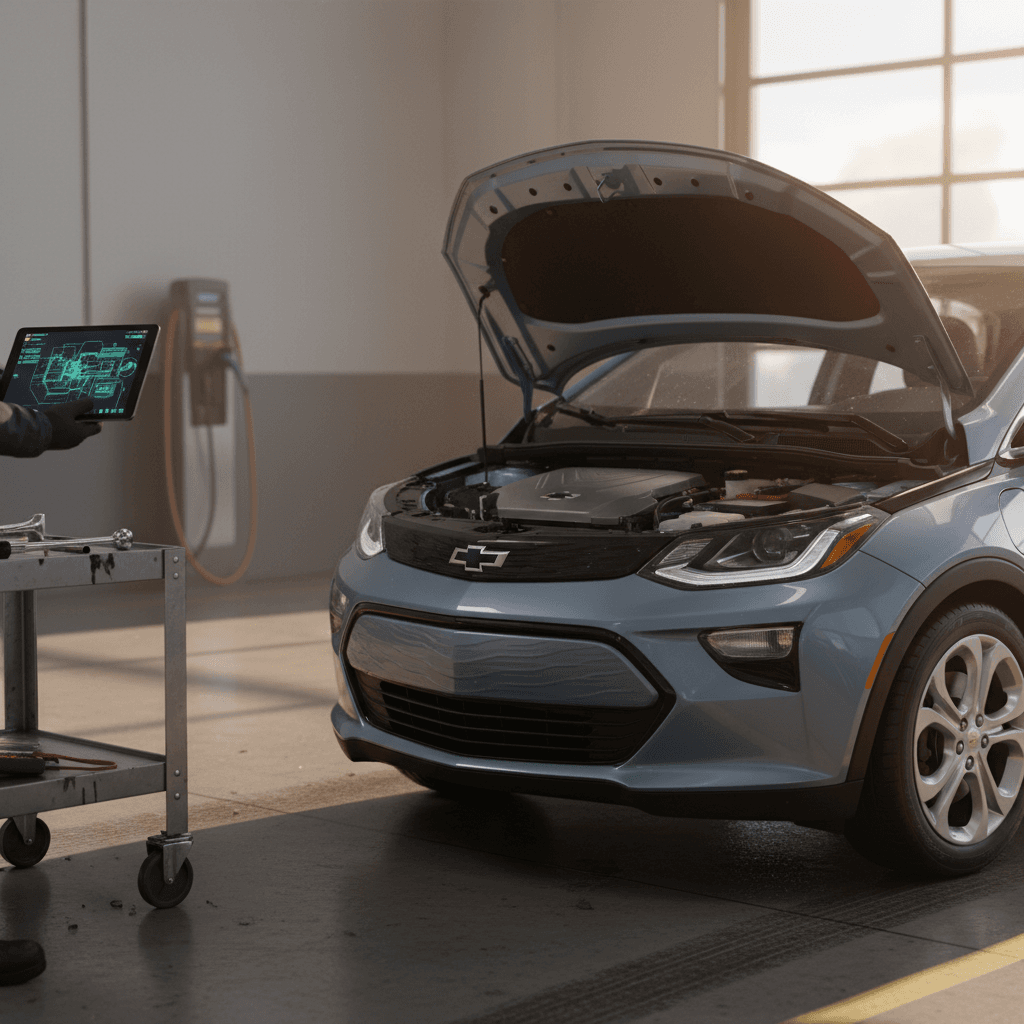
If you’re used to gas cars, the official Chevrolet Bolt EV maintenance schedule can look almost suspiciously simple. No oil changes, no timing belt, no transmission service, and yet you still want to know what’s really required to keep your Bolt reliable and protect its battery for the long haul.
Good news for Bolt EV owners
Why the Bolt EV maintenance schedule is different
The Bolt EV rides on GM’s BEV2 platform, which replaces a traditional engine and transmission with an electric drive unit and a large high-voltage battery. That means no engine oil, spark plugs, fuel filters, or exhaust system to service. Instead, your recurring maintenance boils down to a short list: tire rotation and inspection every 7,500 miles, an occasional cabin air filter, and long‑interval fluid changes for brake fluid and battery coolant.
- No engine oil or oil filter changes
- No transmission fluid service in normal use
- Regenerative braking reduces brake pad wear
- Battery and drive-unit coolant lasts up to ~150,000 miles in many manuals
- Main recurring item is tire rotation and basic inspections
Don’t let generic dealer menus confuse you
Core Chevrolet Bolt EV maintenance intervals at a glance
Typical Chevy Bolt EV maintenance intervals
Exact numbers vary a bit by model year, but for most Chevrolet Bolt EVs sold in the U.S. you can think in these buckets: tire rotation and inspection every 7,500 miles, cabin air filter around 22,500 miles or 2 years, and brake fluid and high‑voltage coolant roughly every 5 years or 150,000 miles, whichever comes first. Always double‑check your glovebox manual for the specifics on your VIN.
Chevrolet Bolt EV maintenance schedule (high‑level)
Big‑picture view of what your Bolt EV is likely to need over time. Intervals are approximate and based on common guidance in recent Bolt EV manuals and service literature. Always confirm for your model year.
| Item | Approx. Interval | Time Equivalent | What’s Included |
|---|---|---|---|
| Tire rotation & inspection | Every 7,500 miles | About every 6–12 months for most drivers | Rotate tires, inspect brakes, suspension, underbody, check coolant and fluids |
| Cabin air filter | 22,500–30,000 miles | ~2 years | Replace cabin HVAC filter |
| Brake fluid | Around 5 years | Time‑based | Flush and replace brake fluid to control moisture and corrosion |
| High‑voltage coolant | Up to 150,000 miles | Around 5 years (check manual) | Service battery and drive‑unit coolant loops if required |
| Wiper blades & washer fluid | As needed | 1–2 times per year | Replace wiper blades, top up washer fluid |
| HVAC A/C desiccant | Around 7 years | Time‑based | Service A/C system moisture control sachet |
| 12‑volt battery check | Every 1–2 years | Time‑based | Load‑test and replace 12‑V battery as needed |
Approximate Chevy Bolt EV maintenance intervals for typical U.S. driving.
Use your Bolt’s built‑in reminders
Chevy Bolt EV service schedule by mileage and time
To make this practical, let’s walk through the Chevrolet Bolt EV maintenance schedule the way you actually experience it, by mileage bands. If you’re a low‑mileage driver, pay more attention to the time‑based items like brake fluid and coolant checks; if you pile on highway miles, the mileage intervals will come up first.
Key Bolt EV maintenance milestones
What to expect as the odometer climbs
0–15,000 miles
What matters: Your first tire rotation and baseline inspection.
- Rotate tires at 7,500 miles
- Check for uneven tire wear or alignment issues
- Verify no open recalls or software updates
15,000–45,000 miles
What matters: Tires, cabin filter, and any early warranty fixes.
- Tire rotation every 7,500 miles
- Cabin air filter at ~22,500 miles
- Document any recall work and software updates
45,000–90,000 miles
What matters: Brake fluid age and first major wear items.
- Rotate tires on schedule; likely first tire replacement
- Brake fluid change around the 5‑year mark
- Recheck suspension components and bushings
High mileage Bolt EV drivers
If you drive 20,000+ miles per year, you’ll hit the mileage‑based coolant and desiccant intervals sooner. Many Bolt EV manuals call for coolant service around 150,000 miles, which might be only 6–8 years of driving for a high‑mileage owner.
Plan ahead so that a coolant service or tire replacement doesn’t land in the same month as registration, insurance renewals, or other big expenses.
Low mileage and city drivers
If you drive under 8,000 miles per year, time‑based intervals become more important than mileage. You could hit the 5‑year brake fluid recommendation at well under 40,000 miles, and your first tire replacement may be due to age rather than tread wear.
It’s reasonable to ask a shop to inspect tires, brakes, and suspension annually even if you’re not hitting 7,500‑mile rotation intervals every year.
Keep your records organized
Ready to find your next EV?
Browse VehiclesFluids on a Bolt EV: what actually needs service
Even though there’s no engine oil, your Bolt EV still has several important fluids: brake fluid, multiple coolant loops, washer fluid, and A/C refrigerant. Understanding what’s sealed and long‑life versus what actually needs periodic service will help you say yes to the right items and no to the upsells.
Bolt EV fluid service essentials
1. Brake fluid (~5‑year interval)
Brake fluid absorbs moisture over time, which can corrode lines and affect pedal feel. Many EV owners schedule a brake fluid flush around the 5‑year mark, even if the manual doesn’t spell it out as clearly as on gas vehicles.
2. High‑voltage coolant (up to 150,000 miles)
The Bolt EV uses Dex‑Cool based coolant in multiple loops to manage battery and drive‑unit temperature. Manuals typically reference a service interval around 150,000 miles or ~5 years, whichever comes first, for coolant checks or replacement.
3. HVAC A/C desiccant (~7 years)
The A/C system uses a desiccant to control moisture in the refrigerant loop. GM includes a long‑interval service for the desiccant, similar to many modern vehicles; for most owners this is a once‑per‑decade type item.
4. 12‑volt battery checks (every 1–2 years)
Like every EV, the Bolt has a conventional 12‑V battery that runs electronics and contactors. Have it load‑tested periodically and plan for replacement in the 5–7 year range or sooner if you see warning signs.
5. Washer fluid and wipers (as needed)
Top up washer fluid and replace wiper blades whenever visibility suffers. This is the one fluid you’ll probably handle yourself more than any shop will.
Be skeptical of "flush everything" packages
Tires, brakes, and alignment on the Bolt EV
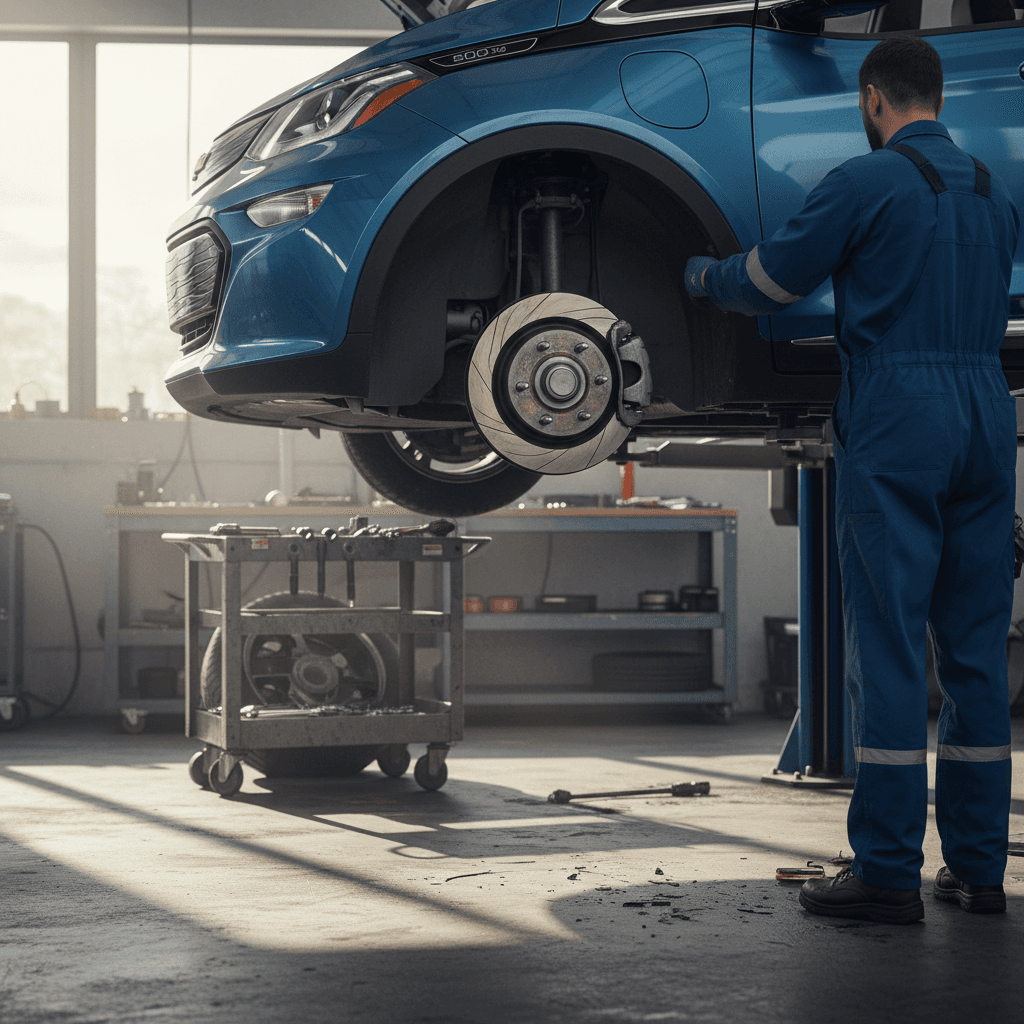
Because the Chevy Bolt EV is relatively heavy for its size and delivers instant torque, tires wear faster than many owners expect. At the same time, regenerative braking means pads and rotors can last a very long time if they don’t seize from disuse. Your maintenance strategy should treat tires as a consumable and brakes as a periodic inspection item.
How to treat tires and brakes on a Bolt EV
Where most of your maintenance dollars actually go
Tires and alignment
- Rotate every 7,500 miles to even out wear.
- Expect first tire replacement somewhere between ~30,000–50,000 miles, depending on driving style.
- Ask for a 4‑wheel alignment check if you see uneven wear or pull.
- Consider EV‑rated tires for better efficiency and noise control.
Brakes and calipers
- Have brake pads, rotors, and parking brake mechanisms inspected at each tire rotation.
- In salty climates, ask shops to clean and lubricate sliding pins and parking brake hardware to avoid seizing.
- Don’t be surprised if original pads last well beyond 100,000 miles with mostly one‑pedal driving.
Use recalls and software visits wisely
Software updates, recalls, and battery-related service
Unlike traditional maintenance, software updates and recalls don’t follow a fixed interval, but they’re a critical part of keeping a Bolt EV safe and pleasant to live with. Early model years in particular have seen high‑profile battery recall campaigns and software updates that changed how the pack charges and manages risk.
- Check the myChevrolet app and GM’s recall lookup site monthly, especially on 2017–2022 Bolt EVs.
- Make sure any battery or charging‑related recalls have been fully completed and documented.
- Ask dealers to check for calibration updates to the battery management system (BMS), infotainment, and driver‑assist features.
- If DC fast charging speeds suddenly drop or the car limits maximum charge level without explanation, schedule a diagnostic visit.
"For a used Bolt EV, completed recall work tells you as much about prior ownership as any oil‑change stamp ever could on a gas car."
How Recharged handles Bolt EV recalls
Bolt EV maintenance costs and how to budget
Because the Chevrolet Bolt EV maintenance schedule is so simple, most owners are surprised by how low the running costs are. Over a 5‑year period, you’re likely to spend more on tires than on all other scheduled maintenance combined, especially if your local shop doesn’t over‑recommend fluid services.
Typical Chevy Bolt EV maintenance cost ranges (first 5–8 years)
Rough, U.S.‑market estimates for common Bolt EV maintenance items. Actual pricing varies by region and shop; always request a line‑item quote before approving work.
| Service item | Typical interval | Estimated cost (USD) | Notes |
|---|---|---|---|
| Tire rotation & inspection | Every 7,500 miles | $30–$80 (often free with tires) | Many tire shops include rotations for free if you bought tires there. |
| New set of tires | 30,000–50,000 miles | $600–$1,000+ installed | Depends on tire brand, size, and EV‑specific options. |
| Cabin air filter | ~22,500–30,000 miles | $40–$120 | DIY is easy and cheap; dealer pricing is higher. |
| Brake fluid flush | Around 5 years | $120–$200 | Price depends on shop labor rates; EV‑certified dealers may be at the upper end. |
| Coolant service (battery/drive unit) | ~150,000 miles or ~5–7 years | $250–$500+ | High‑voltage coolant service is more specialized; confirm what’s included. |
| 12‑V battery replacement | 5–7 years | $150–$300 | Varies with brand and labor; can often be done by any competent shop. |
Approximate cost ranges for common Bolt EV maintenance jobs at independent shops and dealers.
Bundle smart, not blindly
Maintenance checklist for a used Chevrolet Bolt EV
If you’re shopping for a used Chevy Bolt EV, maintenance history matters as much as it would on a gas car, just with a different focus. You care less about oil‑change receipts and more about recalls, battery health, and whether basic items like tires and fluids have been looked after.
Used Bolt EV maintenance checklist
1. Verify recall completion
Ask for documentation that major battery and software recalls have been completed. On a vehicle listed on Recharged, this will be summarized for you in the Recharged Score report.
2. Inspect tires and alignment
Look for uneven tread wear, cupping, or mismatched tires. Ask when they were last rotated and whether the car has had any alignment work.
3. Ask about brake fluid age
On a 5‑year‑old Bolt EV, a brake fluid flush is a reasonable expectation. If it hasn’t been done yet, budget for it shortly after purchase.
4. Confirm coolant history
Coolant usually isn’t touched early in a Bolt EV’s life. But if the car is high‑mileage or older, ask whether any coolant service has been done and why.
5. Check cabin filter and HVAC performance
Poor airflow or weak defrosting can indicate a clogged cabin filter. It’s a cheap fix, but a good bargaining chip if the seller hasn’t addressed it.
6. Review 12‑V battery and charging behavior
Slow waking from sleep, random warning lights, or DC fast‑charging issues can hint at a weak 12‑V battery or pending software updates, worth resolving early in your ownership.
How Recharged simplifies used Bolt EV ownership
Chevrolet Bolt EV maintenance schedule FAQ
Frequently asked questions about the Chevy Bolt EV maintenance schedule
Bottom line: keeping your Chevy Bolt EV on schedule
The Chevrolet Bolt EV maintenance schedule is refreshingly simple: rotate tires every 7,500 miles, keep up with cabin filters and brake fluid, and plan for long‑interval coolant service. If you ignore the generic gas‑car service menus and follow your owner’s manual instead, you’ll spend more time driving and less time in waiting rooms, and you’ll protect both your battery and your wallet.
If you’re considering a used Bolt EV, buying from a source that understands these nuances really matters. Recharged pairs every vehicle with a Recharged Score that highlights battery health, recall status, and maintenance‑sensitive items, so you can see at a glance how well a particular car has been cared for and what its next few service visits are likely to look like.