If you’re considering a Chevy Bolt EV, you’ve probably asked yourself a version of the same question: **how bad is Chevrolet Bolt EV battery degradation, really?** Between early fire recalls, long commutes, and fast‑charging on road trips, it’s fair to wonder how much range the pack will lose over time, especially if you’re shopping used.
Key takeaway up front
Chevy Bolt battery degradation basics
When people talk about Chevrolet Bolt EV battery degradation, they’re usually worried about two things: 1. **Losing driving range over time** – for example, a car that started at 259 miles of EPA range might only show 230–240 miles years later. 2. **Out‑of‑warranty repair costs** – replacing a high‑voltage pack out of pocket can easily run into five figures. The good news: real‑world data from high‑mileage Bolt drivers suggests that degradation is **slower and more manageable** than many shoppers fear, particularly for cars that received new packs during GM’s recall campaign.
- The Bolt EV uses a liquid‑cooled, nickel‑rich lithium‑ion battery designed for long life.
- GM’s official guidance is that some capacity loss over time is normal and expected with any EV battery.
- The high‑voltage battery is covered by an 8‑year/100,000‑mile warranty on all model years sold in the U.S.
- Thousands of Bolts had their packs replaced under recall with newer modules, effectively restarting the battery warranty clock in many cases.
Don’t panic about the GOM
How Bolt batteries are built – and warrantied
Understanding how the pack is designed, and what GM promises to stand behind, goes a long way toward putting Chevrolet Bolt EV battery degradation in perspective.
Inside the Chevy Bolt EV battery
Why the pack holds up as well as it does
Nickel‑rich lithium‑ion
Liquid cooling
High power output
In the U.S., Chevrolet currently advertises the Bolt EV battery with an **8‑year/100,000‑mile high‑voltage battery warranty**, whichever comes first. That coverage typically applies from the vehicle’s original in‑service date. For many owners whose cars received new packs under the recall, there’s an additional twist: the replacement battery often came with its **own 8‑year/100,000‑mile coverage starting at the replacement date**. That means a 2017 Bolt that received a new pack in, say, 2023 can have coverage well into the 2030s, even if the bumper‑to‑bumper warranty is long expired.
What the warranty actually covers
Real‑world Chevrolet Bolt EV battery degradation data
Owners have now driven first‑generation Bolts for nearly a decade, with many cars exceeding 100,000 miles. That gives us a solid window into how Chevrolet Bolt EV battery degradation looks in everyday use, not just in lab tests.
What owners report about Bolt EV battery life
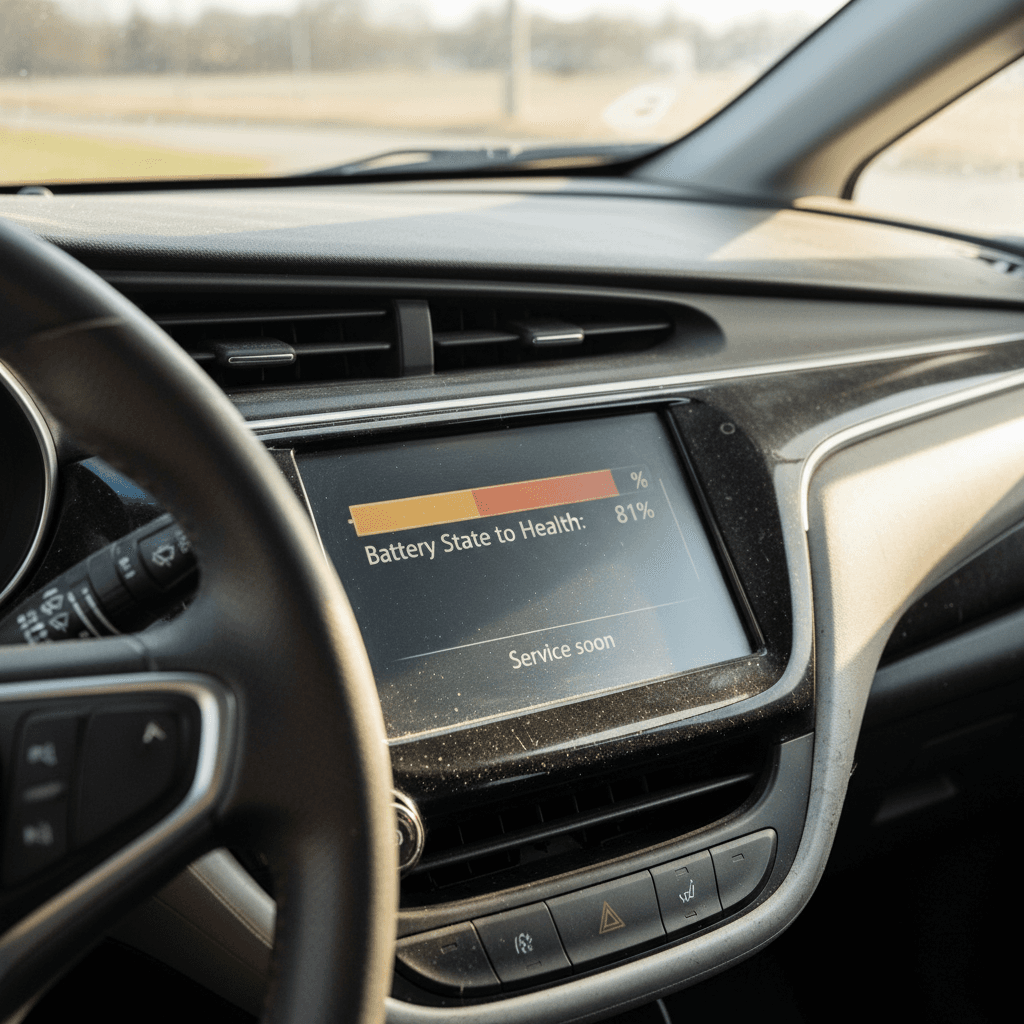
Anecdotally, high‑mileage owners describe their experience like this: - Around **40,000–60,000 miles**: many report *no obvious change* in daily commuting range. - Around **80,000–120,000 miles**: some owners see a modest drop, often on the order of a few percent, but still have enough range for long daily drives. - Owners of newer cars (2020+ or recall‑repacked Bolts) often say the replacement packs seem to degrade **even more slowly** than early batteries. That lines up with broader EV industry data: modern liquid‑cooled packs tend to lose **a chunk of capacity early** (within the first couple of years) and then **level off**, degrading very slowly for the rest of the pack’s life.
The big picture on degradation
How the Bolt battery recall changed degradation risk
Any honest look at Chevrolet Bolt EV battery degradation has to acknowledge the **battery fire recall**. In 2021, GM expanded its recall to cover all remaining 2019 and 2020–2022 Bolt EV and EUV models because some LG‑supplied cells had rare manufacturing defects that could increase fire risk. GM’s remedy was straightforward but expensive: replace defective battery modules, and in many cases the entire pack.
What the recall fixed
- Addressed a specific manufacturing defect (torn anode tab + folded separator) in a small number of cells.
- Replaced affected modules or packs with new, updated units.
- Often restored or increased usable capacity vs. the original battery.
What it means for degradation
- Many Bolts on the road today are effectively on their second, newer battery.
- The replacement packs have shown very low degradation so far in real‑world use.
- In most cases, the battery warranty clock was extended from the replacement date.
Pro tip for used shoppers
What battery degradation means when you’re buying a used Bolt
For used‑EV shoppers, Chevrolet Bolt EV battery degradation isn’t just theoretical, it’s a line item in your buying decision. Range, warranty coverage, and battery history directly affect how long the car will fit your life and what it’s worth in the used market.
How degradation affects a used Chevy Bolt EV purchase
Battery health is a key part of total value
Range and daily usability
Resale value
Warranty safety net
Verified battery reports
How Recharged handles Bolt batteries
How to check Chevrolet Bolt EV battery health in practice
You don’t need a PhD, or even a scan tool, to get a reasonable sense of a Bolt’s battery health. But you do need to be systematic. Here’s how to approach it if you’re evaluating a car in person or reviewing documentation from a seller.
Practical steps to assess a Chevy Bolt’s battery
1. Confirm recall status and replacements
Use the VIN on Chevrolet’s recall lookup or have a Chevy dealer print the warranty/recall history. Look for any <strong>battery module or pack replacements</strong> and note the dates and mileage.
2. Check the high‑voltage battery warranty end date
In a Chevy account or dealer service system, confirm when the <strong>EV Battery Limited Warranty</strong> expires by date and mileage. A post‑recall pack may show coverage well past the vehicle’s original in‑service date.
3. Observe range at 100% charge
With the battery at or near 100%, note the estimated range on the dashboard. Compare it to the original EPA rating for that model year, but adjust for recent driving style, temperature, and terrain.
4. Look at energy consumption history
If possible, review recent mi/kWh figures in the driver information center. Extremely inefficient driving or lots of high‑speed highway miles will lower the estimated range even on a healthy battery.
5. Ask for any scan‑tool or app reports
Some owners use OBD‑II tools or apps to pull pack data like state of health (SOH) and cell balance. These numbers aren’t perfect, but they can support what you see on the dash.
6. Take a real‑world test drive
On a mixed‑driving route, compare miles driven vs. percentage of battery used. A car that burns 20% of the pack in 20–25 miles on a mild‑weather test drive may warrant closer inspection.
Don’t over‑interpret one data point
Charging and driving habits that affect Bolt EV battery life
No EV is immune to chemistry. The way you charge and drive your Bolt EV can nudge degradation up or down over the long term. The goal isn’t to baby the car, it’s to avoid the few habits that genuinely accelerate wear.
Habits that influence Chevrolet Bolt EV battery degradation
Focus on the big levers; you don’t need to obsess over every charge.
| Habit | Impact on degradation | Why it matters | Practical approach |
|---|---|---|---|
| Frequent DC fast charging to 100% | Slightly higher | High charge rates and high SOC are harder on cells, especially in hot weather. | Use DC fast charging when you need it, but favor Level 2 at home and stop FC sessions around 70–80% on road trips when possible. |
| Letting the car sit at 100% for days | Higher | Cells prefer spending most of their life in the middle of the SOC window. | If you can, schedule charging so it finishes near the time you leave. |
| Regularly running down to near 0% | Moderately higher | Very low SOC combined with heat can stress cells over time. | Occasional deep discharges are fine, but don’t make 0–5% a daily habit. |
| Parking in extreme heat for long periods | Higher | High pack temperatures accelerate chemical aging, even when parked. | Whenever possible, park in shade or a garage, and avoid high‑SOC storage in severe heat. |
| Gentle Level 2 charging at home | Lower | Slower charging generates less heat and is easy on cells. | A 32–40A Level 2 charger at home is a great long‑term strategy. |
| Moderate highway speeds vs. constant high speed | Slightly lower | Higher speed means more heat from higher current draw. | You don’t have to crawl, but 70 mph vs. 80+ mph helps both range and long‑term pack health. |
You’ll see the best long‑term results by managing heat, time at very high state of charge, and excessive fast charging.
You don’t have to obsess over 80%
Chevy Bolt battery degradation FAQ
Frequently asked questions about Chevrolet Bolt EV battery degradation
Bottom line: should you worry about Bolt EV battery degradation?
If you’re eyeing a Chevy Bolt EV, it’s reasonable to ask hard questions about **battery degradation**, but the data so far is encouraging. Thanks to liquid cooling, updated packs from the recall campaign, and an 8‑year/100,000‑mile high‑voltage battery warranty, most owners see **modest, manageable range loss** over many years and tens of thousands of miles.
Where degradation really matters is when you’re buying used. That’s where verified diagnostics, clear recall and warranty history, and expert guidance make the difference between a great deal and an expensive gamble. With Recharged, every used Bolt EV comes with a Recharged Score battery health report, expert EV‑specialist support, and nationwide delivery, so you can confidently choose the right Bolt for your range needs today and years down the road.