If you’re driving, or thinking about buying, a Chevrolet Bolt EUV, battery degradation is probably high on your list of concerns. The battery is the most valuable part of the car, and real-world Chevrolet Bolt EUV battery degradation will determine how much range you have years down the line and how confident you feel on road trips.
Quick context
Bolt EUV battery degradation at a glance
Chevrolet Bolt EUV battery: reality check
We don’t yet have 10–12 years of large-sample data on the Bolt EUV specifically, the model launched for 2022, but we do have: - Real-world owner trip logs showing about 5–8% capacity loss around 15–25k miles in some cases, often in cold-weather use where estimates can be pessimistic. - A long track record of similar LG packs in the original Bolt EV and other models, which tend to age reasonably when not abused. In other words: some degradation is normal, and early range loss can look scary on the gauge yet still be within expectations.
Don’t overreact to one trip
How the Chevrolet Bolt EUV battery is built
Understanding how the Bolt EUV’s pack is designed makes it easier to interpret degradation and range loss. - Chemistry: The Bolt EUV uses an LG Energy Solution NMC (nickel‑manganese‑cobalt) lithium‑ion chemistry. It’s optimized for energy density and longevity, not maximum fast‑charge power. - Capacity: Nominal pack capacity is in the mid‑60 kWh range, with roughly ~65 kWh usable from the driver’s perspective. - Thermal management: It has an active liquid‑cooled and heated pack. That’s a huge advantage over early air‑cooled EVs and is a big reason Bolt degradation has generally been modest. - Buffering: Like most EVs, the Bolt EUV has top and bottom buffers the driver can’t access. Even at “0%” you’re not literally at zero; the car holds a small reserve to protect the cells.
Compared with early EVs
- Better cooling than early Nissan LEAF and other air‑cooled packs, which were notorious for heat‑driven degradation.
- More sophisticated BMS (battery management system) for balancing, logging, and protecting the pack.
- Larger pack means lower C‑rates (stress) at a given kW charge or discharge level.
Compared with newer EVs
- Moderate fast‑charge power (around 55 kW peak) which is actually easier on the pack than 200+ kW ultra‑fast charging.
- Not as advanced as latest 800V architectures, but the Bolt’s conservative design tends to favor longevity over speed.
- For 2027+, GM is moving the Bolt to an LFP pack, but current EUVs on the road today are NMC.
About the recall batteries
What’s “normal” Chevrolet Bolt EUV battery degradation?
Because the Bolt EUV is still relatively young, “normal” is defined by a mix of general lithium‑ion behavior and early owner data. Here’s a reasonable expectation curve for a well‑treated car in a typical U.S. climate:
Approximate Bolt EUV capacity trend (typical use)
These are high‑level expectations, not guarantees; real‑world cases will vary with climate, driving, and charging habits.
| Vehicle age / miles | Expected capacity vs. new | What you might notice | Cause if higher than this |
|---|---|---|---|
| Year 1 · <15k mi | 97–100% | Range fluctuates with seasons more than age. | Mostly measurement noise or harsh use. |
| Years 2–3 · 15–35k mi | 94–98% | Maybe 5–10 miles less rated range. | Lots of DCFC, hot climate, frequent 100% sitting. |
| Years 4–6 · 35–75k mi | 90–95% | Noticeable but modest loss; still practical daily. | Chronic heat, high‑mileage ride‑hailing use. |
| Years 7–8+ · 75k+ mi | 85–92% | Range planning matters more on road trips. | Potential defects; consider warranty check. |
Use this as a sanity check, not a lab‑grade prediction.
Outliers happen
What actually wears out a Bolt EUV battery?
Key drivers of Bolt EUV battery degradation
It’s mostly about time, temperature, and how you use the top and bottom of the pack.
Calendar age
Heat exposure
Charge patterns
On the flip side, things Bolt EUV owners often worry about, like occasionally charging to 100% before a trip, or using DC fast charging on long drives, are not catastrophic in isolation. It’s the combination of high SoC, high temperature, and time that really starts to matter.
Think “stress budget,” not perfection
DC fast charging and daily habits: how much do they matter?
Because the Bolt EUV has a relatively modest DC fast‑charging rate (roughly 50–55 kW peak on a ~65 kWh pack), its cells rarely see the brutal C‑rates that some ultra‑fast‑charging EVs experience. That’s good news for degradation.
- Occasional DC fast charging (road trips, weekends) – Perfectly fine, especially when the pack isn’t already scorching hot.
- Regular DCFC a few times per week – Still generally acceptable if the pack can cool, but expect somewhat more wear than a mostly‑home‑charged car.
- Multiple DCFC sessions every single day – Now you’re operating closer to the edge of what the chemistry loves, particularly in hot weather. This is where you might see faster long‑term loss.
Bolt EUV DCFC is conservative
Daily charging habits that protect your Bolt EUV battery
1. Use 80–90% as your daily target
For normal commuting, set your target charge level below 100%. Charging to full is fine when you’re about to leave on a longer drive; you just don’t want to sit at 100% for days on end.
2. Avoid repeatedly hitting 0–5%
Deep discharges add stress. Try to arrive home with 15–20% remaining when possible, and only run very low when you actually need the range.
3. Let the pack cool after hard use
If you’ve just fast‑charged or driven hard on a hot day, it’s slightly gentler to start the next DCFC session after the car has had some time to cool down.
4. Don’t obsess over every percent
The BMS deliberately hides some buffer. If you charge mostly at home, avoid extremes, and keep the car out of oven‑like heat, you’re already doing 80% of what matters.
Climate, storage, and driving style effects
Where and how you use your Bolt EUV can matter as much as how you charge it. Two owners with identical mileage can see different degradation simply based on climate and storage.
Hot‑climate Bolt EUV
- Parked outside in direct sun, especially on dark pavement.
- Garage routinely above 90–100°F in summer.
- Frequent afternoon DC fast charging when ambient temps are highest.
- More likely to see faster capacity loss over time.
Cooler‑climate Bolt EUV
- Parked in shade or a temperate garage.
- Moderate summers and cold winters.
- Range swings seasonally but long‑term degradation tends to be slower.
- Winter efficiency drops are often not degradation; they’re just cold chemistry and cabin heating.
Don’t confuse winter range drop with degradation
How to tell if a Bolt EUV battery has degraded
Because GM doesn’t show a simple battery health percentage on the dash, Bolt EUV owners (and used‑car shoppers) have to infer degradation from behavior and data. Here are practical methods you can use without engineering tools.
Practical ways to gauge Bolt EUV battery health
From quick checks to deeper analysis.
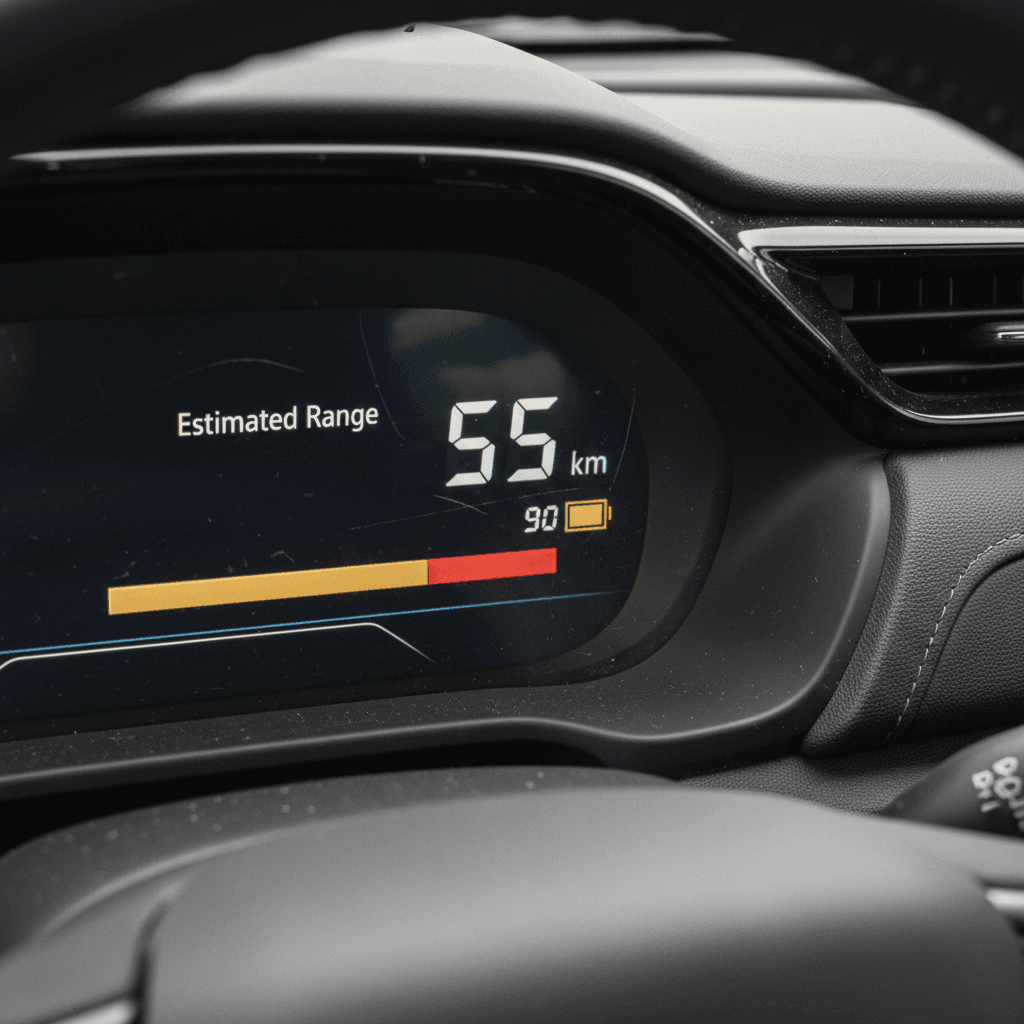
Watch rated range at 100%
Log a controlled trip
Use a professional health scan
Look for consistency, not perfection
Buying a used Chevrolet Bolt EUV: battery checks that matter
Used Bolt EUVs can be phenomenal value, especially after the recall era and with GM retiring the current model ahead of the 2027 reboot. But on a used EV, battery condition is the ballgame. Here’s how to approach it like a pro.
Used Bolt EUV battery checklist
1. Verify model year, recall status, and pack history
Confirm whether the car received a recall replacement battery and when. A newer pack in an older car is a plus, effectively resetting much of the degradation clock.
2. Ask for long‑term charging habits
Listen for patterns like: always fast‑charging multiple times a day, leaving it at 100% for weeks, or living in extreme heat without garage parking. Those can explain above‑average degradation.
3. Test drive with an eye on efficiency
On your drive, reset a trip meter and watch mi/kWh at moderate speeds. Very poor efficiency might mean worn tires, alignment issues, or a history of aggressive driving, indirect clues about pack stress.
4. Do a near‑full charge observation
If possible, see what the range estimate shows at or near 100% on a mild day. Compare that with the original 247‑mile EPA rating. Large gaps warrant deeper investigation.
5. Get an independent battery health report
Whenever you can, lean on a <strong>third‑party diagnostic</strong> rather than guesses from the dash. At Recharged, every vehicle includes a Recharged Score with a verified battery health assessment so you’re not buying blind.
If you’re comparing multiple used Bolt EUVs, prioritize verified battery health over minor cosmetic differences. Replacing a pack out of warranty can cost more than the car is worth; buffing a scuffed bumper is cheap.
Warranty coverage, recalls, and the next-gen 2027 Bolt
GM’s warranty and recall history is an important backdrop for any conversation about Bolt EUV battery degradation.
- Battery warranty: Most Bolt EUV models carry an 8‑year / 100,000‑mile warranty on the high‑voltage battery against defects and excessive capacity loss, starting from the in‑service date. Always confirm the exact terms for the VIN you’re looking at.
- Recall replacement packs: Many earlier Bolts, including some EUVs, received new LG packs under safety recalls. These are modern units with updated manufacturing controls; they’re not inherently more degradation‑prone than other EV packs.
- 2027 Bolt preview: GM has announced a next‑generation Bolt built on an evolved platform with an LFP battery and higher DC fast‑charge speeds. That matters mainly if you’re cross‑shopping, not if you already own an NMC‑based EUV today. Your current pack and the future LFP pack age differently, but both are designed for long service life.
How warranty interacts with degradation
How Recharged evaluates Bolt EUV battery health
With any EV, especially something as popular in the used market as the Bolt EUV, the hard part for buyers is separating normal aging from a problem child. That’s exactly where Recharged’s process comes in.
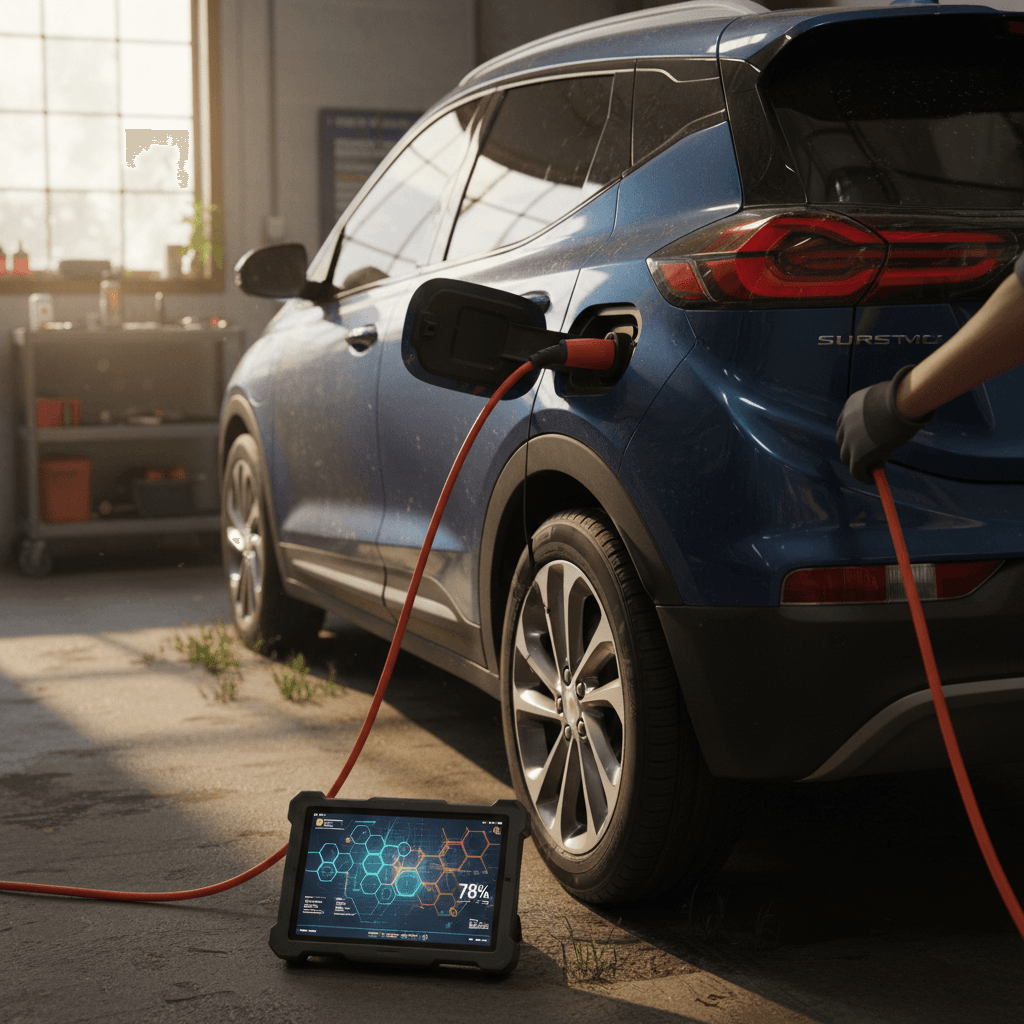
Inside a Recharged Score battery assessment for Bolt EUV
What we look at before a Bolt ever hits our site.
Deep-dive diagnostics
Usage & charging history
Range & performance tests
Every vehicle listed on Recharged comes with a Recharged Score Report summarizing this work. When you buy a used Bolt EUV through Recharged, you see transparent battery health data up front, backed by EV‑specialist support, trade‑in options, financing, and nationwide delivery, so degradation is something you plan around, not fear.
Chevrolet Bolt EUV battery degradation FAQ
Frequently asked questions about Bolt EUV battery degradation
Bottom line: should you worry about Bolt EUV battery degradation?
Some degree of Chevrolet Bolt EUV battery degradation is inevitable, but it doesn’t have to be a deal‑breaker. The pack is actively cooled, conservatively fast‑charged, and sized large enough that even modest capacity loss still leaves plenty of real‑world range for daily use. What matters is how the car has lived: climate, charging habits, and mileage.
If you own a Bolt EUV today, focus on the big levers, avoid baking it at 100% charge in extreme heat, don’t live at the very top or bottom of the battery, and use DC fast charging as a tool rather than a lifestyle. If you’re shopping used, prioritize cars with transparent battery health data and a clear service history.
Recharged was built around exactly this problem. Our Recharged Score Reports combine objective battery diagnostics with fair market pricing and EV‑specialist guidance, so whether you’re buying or selling a Bolt EUV, you have a clear picture of how the pack has aged, and what that means for your next decade of electric driving.