You don’t buy a Chevrolet Blazer EV just to baby it, you buy it for the shove of Ultium torque and real-world range. But if you care about how that battery will feel at 80,000 or 150,000 miles, how you charge and drive today matters. This guide walks through how to maximize Chevrolet Blazer EV battery life using GM’s own recommendations plus hard-earned EV experience, so you can enjoy the performance now without paying for it later.
Good news for Blazer EV owners
Why battery care matters on the Blazer EV
Your Blazer EV’s battery isn’t just a giant gas tank; it’s the most expensive component on the vehicle and the heart of its performance. GM backs the pack with an 8‑year/100,000‑mile battery warranty, which tells you they expect it to last, but that coverage is about defects, not how your habits affect range over time.
Blazer EV battery life at a glance
The goal isn’t to keep the battery “like new” forever, that’s not realistic. Instead, you’re aiming to slow down natural degradation so that a used Blazer EV in 8–10 years still delivers the range and performance that made you want it in the first place.
Ultium battery basics: what you’re working with
Chemistry: NCMA, not fragile phone cells
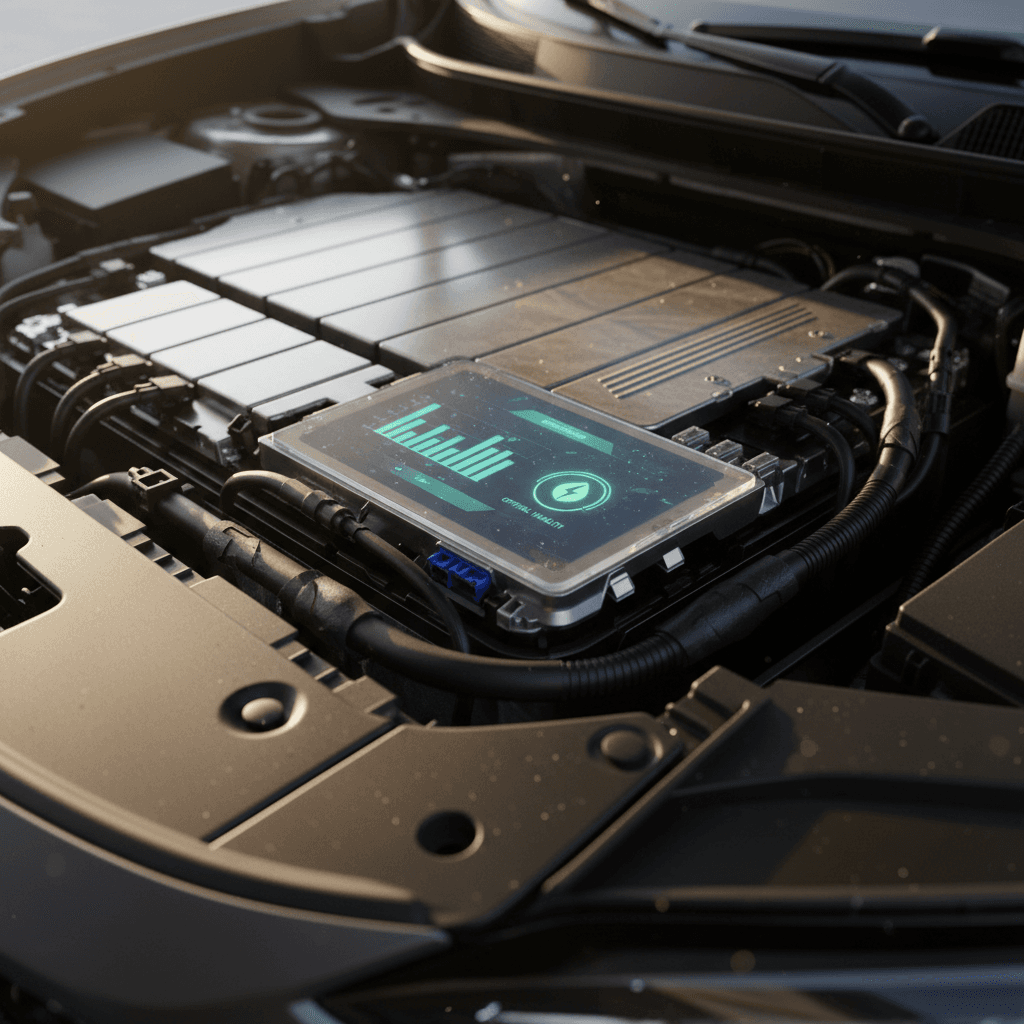
Blazer EV uses GM’s Ultium battery system with large-format nickel‑cobalt‑manganese‑aluminum (NCMA) cells. NCMA is designed for a balance of energy density, power, and durability. GM reserves a buffer at the top and bottom of the pack, so when the dash says 0% or 100%, the cells themselves aren’t truly at their extremes.
Thermal management: active heating and cooling
The pack is liquid‑cooled and can be heated as needed. The Blazer EV will run pumps and fans to keep the pack in its happy temperature zone, whether you’re DC fast charging in July or preconditioning in January. That thermal babysitting is one of your biggest allies in preserving battery life and consistent range.
Because Ultium handles so much in the background, you don’t need to micromanage like early EV adopters did. But you can still give the system an easier job by choosing smarter charging, driving, and parking habits, and that’s where the big wins are for long‑term health.
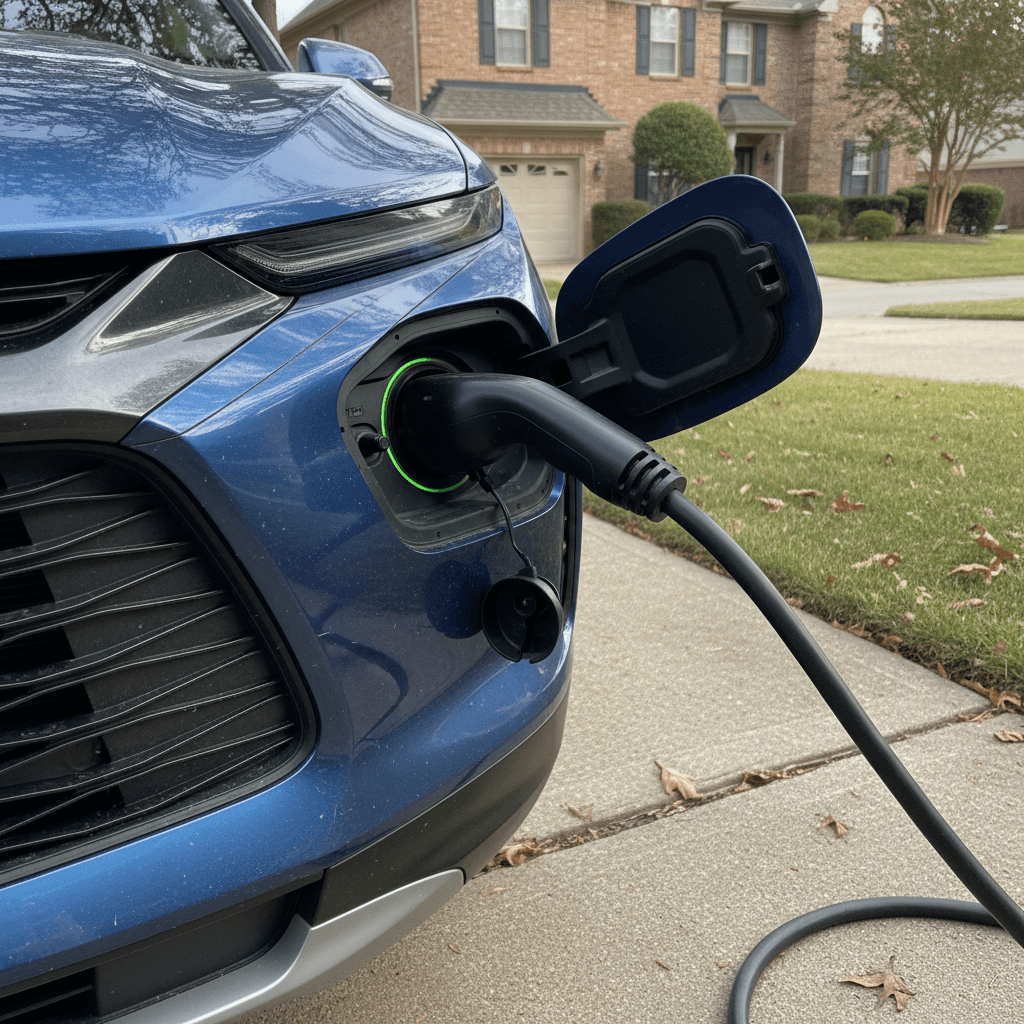
Smart charging habits for long battery life
If you remember nothing else from this guide, remember this: how you charge matters more than how fast you drive. The Blazer EV’s battery management system will protect itself, but you can take stress off the pack with a few simple rules.
Daily charging habits that help your Blazer EV battery
1. Set a daily charge target around 70–80%
Use the in‑car settings or the myChevrolet app to set your normal charge limit below 100%. GM itself recommends targeting about 80% for day‑to‑day driving. That keeps the cells out of their highest‑stress zone while still giving you plenty of range.
2. Save 100% for trips, not Tuesdays
Charging to 100% occasionally for a road trip is fine, especially if you start driving soon after. Parking at 100% for hours or days, especially in heat, is what slowly chips away at long‑term battery health.
3. Prefer Level 2 AC at home
Most of your charging should be at a <strong>Level 2 home charger</strong> (up to about 11.5 kW on the Blazer EV). It’s easier on the pack than frequent DC fast charging and still restores a big chunk of range overnight.
4. Charge more often, not from 0–100
It’s better to top up from, say, 30–40% back to 70–80% than to run the battery near empty and slam it back to full. Shallower daily cycles are kinder to lithium‑ion packs over the long term.
5. Schedule charging to finish before departure
In the myChevrolet app or infotainment, you can schedule charging so it completes just before you leave. That keeps the pack at lower states of charge longer and uses cheaper off‑peak electricity where available.
A simple rule of thumb
Driving habits that protect your battery and range
Modern EV batteries are tough. You’re not going to ruin your Blazer EV by enjoying the occasional full‑throttle on‑ramp. Still, smoother driving doesn’t just save energy, it can also ease long‑term stress on the pack and power electronics.
Four driving habits that pay you back later
Less drama from the accelerator today, more consistent range tomorrow.
Use smooth acceleration and regen
Big power spikes, full throttle launches followed by hard braking, draw high current from the pack. Over years, that can add wear. Instead, lean on the Blazer EV’s One‑Pedal Driving and Regen On Demand paddles to harvest energy smoothly while keeping current peaks lower.
Pick the right drive mode
If your Blazer EV offers an Eco or efficiency‑oriented mode, use it for commuting. It softens throttle response and optimizes climate and power use, which reduces the pack’s workload without turning your SUV into a slug.
Respect highway speeds
Above 70 mph, aerodynamic drag ramps up quickly, and your energy use spikes with no benefit to battery life. Stick to moderate highway speeds when you can; you’ll arrive with more range and fewer high‑load events on the pack.
Warm up while plugged in
On cold days, precondition the cabin and battery while you’re still connected to a charger. The energy comes from the grid instead of the pack, and the battery reaches its ideal operating temperature with less internal stress.
EV batteries like the Blazer EV’s Ultium pack respond best to consistency, smooth inputs, predictable charging, and fewer extremes. Think of it more like a marathon runner than a drag racer.
Temperature, weather, and your Blazer EV battery
Every lithium‑ion battery has a comfort zone, and the Blazer EV’s pack is no exception. Ultium’s thermal management system works hard to keep it there, but your parking and climate‑control choices can either help or fight that system.
- Whenever possible, park in shade or a garage in hot weather. That reduces how hard the cooling system has to work and how long the pack sits at elevated temperatures.
- In winter, plug in when parked overnight so the car can precondition the pack and cabin without draining the battery as deeply.
- Avoid leaving the Blazer EV at 0–10% or near 100% in very hot or very cold conditions for long periods. Mid‑pack charge (around 40–60%) is the least stressful place to sit.
- If you use scheduled departure, let the car handle warming or cooling the battery while still plugged in, especially before highway drives or DC fast‑charging stops.
Extreme heat is the bigger enemy
Best practices for long-term storage and vacations
Going away for a week, or a month? Your Blazer EV will be fine if you set it up correctly before you lock the door. This is where many owners accidentally stress the pack by leaving it either full or nearly empty for long stretches.
How to leave your Blazer EV parked for weeks
1. Aim for 40–60% state of charge
Before you park the Blazer EV for more than a week, drive or charge it to around half full. Lithium‑ion packs are happiest long‑term around the middle of their range.
2. Decide: plugged in or unplugged
For most garages, you can leave the car <strong>plugged in</strong> with a 50–60% charge limit set. For outdoor storage in extreme heat, some owners prefer to leave it <strong>unplugged</strong> around 50% to minimize any top‑off cycles. Either approach works if your limits are conservative.
3. Turn off scheduled preconditioning
Disable any daily preconditioning or departure schedules while you’re gone. You don’t want the car waking up and running climate every morning while no one’s there to enjoy it.
4. Expect a little phantom drain
It’s normal for the Blazer EV to lose a few percent of charge over a week or two as it maintains systems and communicates with the app. That’s another reason not to leave it parked near empty.
DC fast charging: how much is too much?
The Blazer EV’s Ultium pack is built to handle DC fast charging. You don’t have to be afraid of pulling up to a 150 kW or 250 kW station on a road trip. The question is how often you should rely on it in your normal routine if you care about long‑term battery life.
Balancing Level 2 vs. DC fast charging for battery longevity
Use this as a reality check, not a rigid rulebook. Life happens; the idea is to make the healthier choice most of the time.
| Charging pattern | Battery impact (long-term) | When it makes sense |
|---|---|---|
| Mostly Level 2 at home, DC fast only on trips | Best | Ideal if you have home charging, lowest long‑term stress. |
| Level 2 at work + occasional DC fast on busy weeks | Good | Solid compromise if you can’t charge at home. |
| DC fast a few times per week, little Level 2 | Acceptable but not ideal | Apartment living near a fast charger. Expect somewhat faster degradation. |
| Daily DC fast from low state of charge to near 100% | Hardest on pack | Use only when there’s no alternative; consider changing your routine. |
Aim for most of your energy to come from Level 2 AC at home or work, and use DC fast charging as a convenience, not a crutch.
Avoid back-to-back full fast charges
Signs of battery stress, and when to get it checked
You won’t wake up one morning to find your Blazer EV’s battery “ruined” from normal use. Degradation is gradual. Still, there are patterns worth paying attention to so you can catch issues early, especially while the pack is under warranty.
- Noticeable, permanent loss of range over a single year of similar use (not just winter vs. summer swings).
- The car refuses to charge above a certain percentage (for example, consistently stopping at 70–80% even when set higher).
- Big differences between predicted range and what you actually get on familiar routes in mild weather.
- Charging behavior that suddenly changes, very slow DC fast‑charge speeds, or the car stopping sessions early across multiple stations.
Use diagnostics and reports to your advantage
Ready to find your next EV?
Browse VehiclesBattery life tips when shopping for a used Blazer EV
If you’re considering a used Blazer EV, or planning to sell yours someday, battery life isn’t just a technical curiosity. It’s a resale‑value question. The way the first owner charged and drove the SUV will show up in both range and price.
How to size up battery health on a used Blazer EV
You can’t see the cells, but you can read the clues.
Ask for a battery health report
Look for documentation of state of health (SoH) or an independent battery diagnostic. At Recharged, that’s baked into the Recharged Score so you see how much usable capacity remains compared with new.
Review charging history patterns
Frequent DC fast charging isn’t an automatic red flag, but a vehicle that lived almost exclusively on fast chargers may show more degradation than one that mostly sipped Level 2 at home.
Test-drive a familiar loop
If you can, take a test drive on mixed roads and watch energy use and predicted range. Big, unexpected swings in mild weather can hint at underlying battery or tire issues.
If you’re selling or trading in, these same factors work in your favor. A Blazer EV that’s been gently charged and cared for will be easier to market, and that’s exactly the kind of history a platform like Recharged is built to surface for buyers and sellers alike.
Chevrolet Blazer EV battery life FAQ
Chevrolet Blazer EV battery life FAQ
Key takeaways to maximize Blazer EV battery life
Blazer EV battery life in three sentences
You don’t have to turn your Chevrolet Blazer EV into a science project to keep its battery happy. A handful of easy habits, most of which you’ll set once in the myChevrolet app or in‑car menus, will quietly protect both range and resale value over the long run. And if you’re shopping for a Blazer EV or thinking about selling yours, a transparent, data‑driven platform like Recharged can put real battery health front and center, so everyone knows exactly what they’re getting.