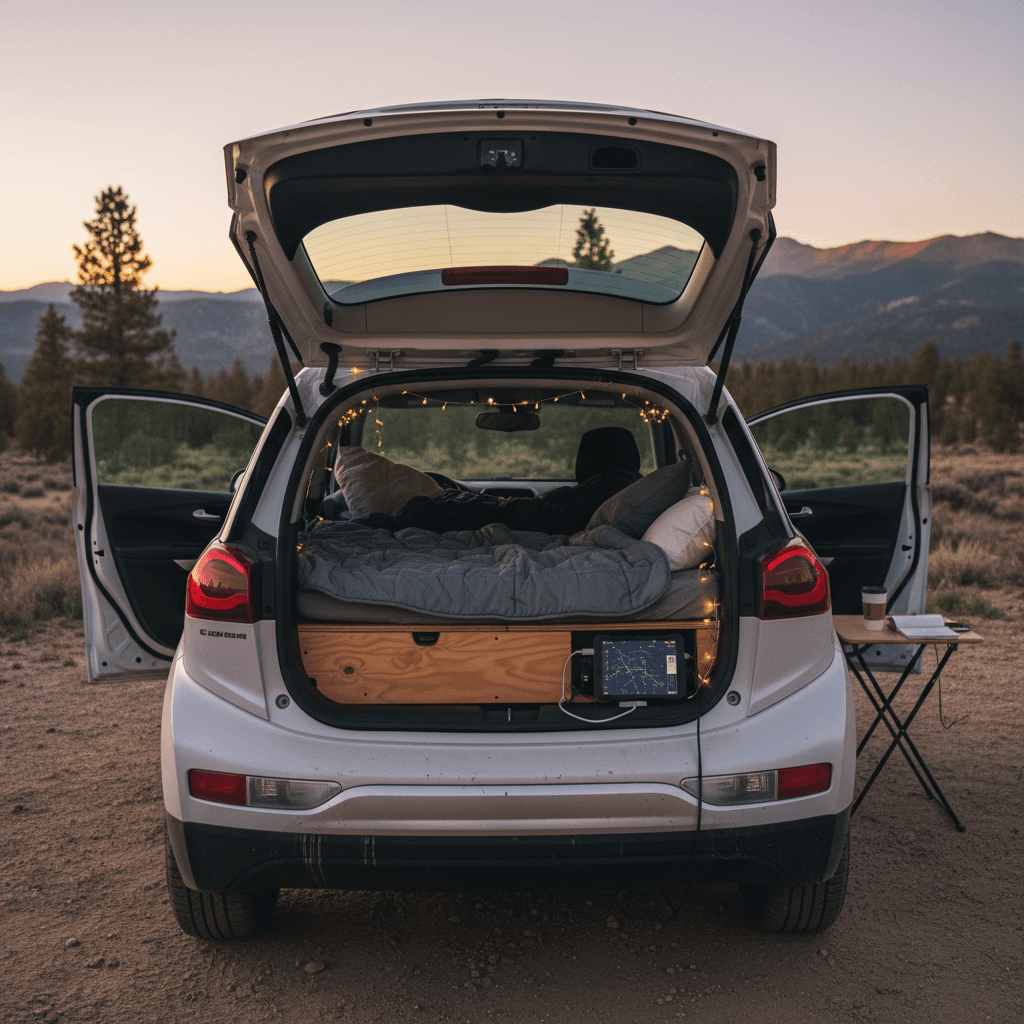
If you’ve ever looked at your compact electric hatchback and wondered, **“Can you sleep in a Chevrolet Bolt EV?”**, you’re not alone. Between music festivals, long road trips, and quick overnights at trailheads, plenty of owners have experimented with Bolt car camping. The honest answer: yes, you *can* sleep in a Bolt EV or EUV, but it’s tight, and it takes some planning to be comfortable and safe.
Quick answer
Can You Actually Sleep in a Chevrolet Bolt EV?
The Bolt EV and Bolt EUV were never marketed as micro‑campers, but their **flat‑folding rear seats** and tall hatchback shape make them more versatile than most sedans. Owners regularly report sleeping in the car by folding the rear seats, sometimes removing the rear bottom cushions, and adding a platform or mattress. It’s not luxurious, yet for a night at a campground, rest stop, or work shift, it can do the job.
- Best for: solo sleepers under about 6 feet, or two people who don’t mind close quarters
- Occasional use: music festivals, road trips, a nap at a DC fast‑charger, bad‑weather backup to a tent
- Not ideal for: extended multi‑week van‑life style trips, especially for taller or less‑flexible sleepers
Key limitation
Bolt EV and EUV Space: How Much Room Do You Really Have?
Before you commit to sleeping in a Chevrolet Bolt EV, it helps to understand the actual space you’re working with. Official cargo specs tell part of the story; owner experience fills in the rest.
Chevy Bolt EV & EUV Space at a Glance
With the rear seats folded, the Bolt EV offers a nearly flat load floor, especially with the optional **false cargo floor** panel in its raised position. The Bolt EUV is about six inches longer overall, but official cargo volume is very similar, so think of the EUV as giving you a touch more legroom and rear‑seat comfort, not a dramatically bigger bed.
Measure your own car
Basic Sleeping Setups That Work in a Bolt
There’s no one “correct” way to sleep in a Chevrolet Bolt EV, but a few setups keep appearing in owner reports. All of them aim to solve two challenges: creating a reasonably flat surface and using every inch of limited length.
Three Common Chevy Bolt Sleeping Layouts
From quick‑and‑dirty to semi‑built micro‑camper
1. Simple mattress in the hatch
Best for: quick overnights, solo sleepers.
- Fold both rear seatbacks forward.
- Lay a compact camping pad or 3–4" folding mattress in the cargo area.
- Store bags in front footwells or front passenger seat.
Fast to set up, but you’ll feel the slope if you don’t level under the hips and shoulders.
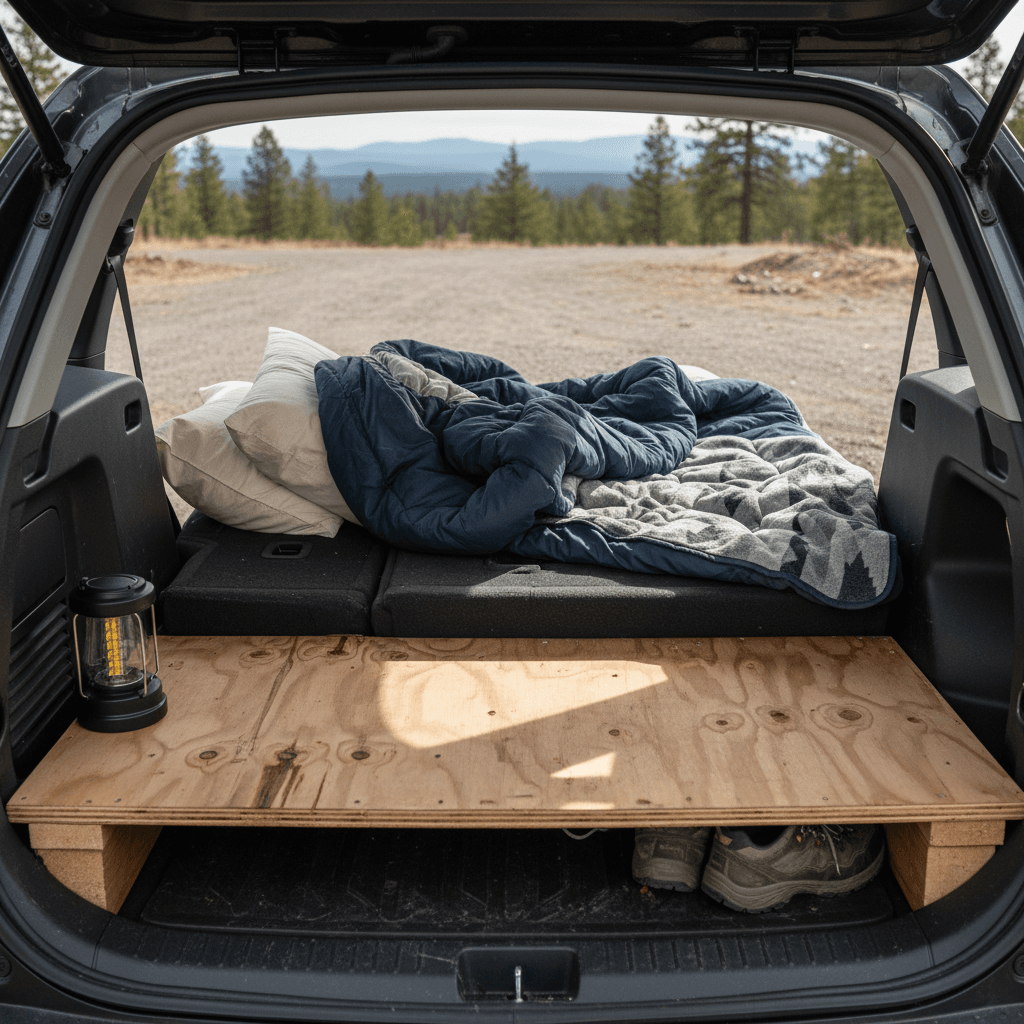
2. Rear cushion removed + platform
Best for: frequent campers, extra legroom.
- Unbolt or lift out the rear seat bottom cushions.
- Fold seatbacks to create a longer, flatter deck.
- Add a light plywood platform level with the cargo floor.
This is the go‑to setup in many DIY builds and gives the flattest surface.
3. Diagonal sleeper
Best for: taller folks pushing the limits.
- Sleep slightly diagonal from rear corner to opposite front seat.
- Push the front passenger seat forward and recline slightly.
- Use soft gear bags to fill gaps.
Not elegant, but it squeezes a bit more length from a short cabin.
Chevy Bolt Sleeping Setup Checklist
Clear the cargo area completely
Remove hard items, crates, and sharp gear before you unfold your mattress or pad. Anything left loose can become an uncomfortable pressure point at 2 a.m.
Decide if you’ll remove rear cushions
Pulling the lower rear seat cushions can give you a flatter, slightly longer space. It’s extra work up front but makes a big difference if you’ll car camp more than once or twice.
Level the floor
Use foam blocks, folded blankets, or cut pool noodles to fill low spots where the seatbacks meet the cargo floor. Your back will thank you later.
Choose the right mattress size
Most owners find that a camping pad, a narrow twin, or a trimmed foam topper fits better than a full‑size air mattress, which tends to buckle against the Bolt’s short interior.
Plan storage zones
Pack so overnight essentials (toothbrush, water, headlamp) are easy to reach from bed. Bulkier items can live in the front seats or under a raised platform.
Climate Control While You Sleep: Heat, AC, and Battery Use
One advantage of sleeping in an EV versus a gas car is quiet, efficient **electric climate control**. You can run heat or AC for hours without an idling engine or exhaust fumes. That said, the Bolt doesn’t have an official "camping mode," so you’ll want to understand how to use the system wisely.
Using the Bolt’s HVAC overnight
- State of charge: Aim for at least 60–70% before an overnight with heat or AC.
- Energy use: Gentle HVAC use might consume roughly 1–2 kWh per hour in moderate conditions; extreme heat or cold can be higher.
- Car must be “on”: To keep climate running, the Bolt has to be in the "Ready" state (as if you were driving), which also lights some exterior lamps by default.
Many owners simply restart the car if climate times out instead of trying to hack an unofficial mode.
Minimizing battery impact
- Use preconditioning while plugged in to start with a comfortable cabin and warm battery.
- Rely on good bedding and clothing first; use HVAC to trim the edge off the cold or heat.
- Crack windows slightly instead of blasting AC in mild weather.
- In winter, set the temperature a few degrees lower and use seat heaters where available.
With a full or near‑full pack, running climate for one night is typically a small fraction of total range.
Cold‑weather caveat
Safety First: Ventilation, Location, and Electrical Loads
Sleeping in a Chevrolet Bolt EV can be very safe if you respect a few basic rules. You don’t have to worry about carbon monoxide from an exhaust pipe, but you still need to think about **airflow, surroundings, and electrical safety**.
Core Safety Rules for Sleeping in a Bolt
Simple habits that make a big difference
Ventilation
- Crack at least one window 0.5–1 inch.
- Avoid blocking HVAC vents and cabin air intake.
- Use window screens to keep bugs out in summer.
Location choice
- Never sleep in a running car inside a closed garage.
- Choose well‑lit, legal locations: campgrounds, rest areas, friends’ driveways.
- Obey local rules, some municipalities restrict overnighting in vehicles.
Electrical loads
- Respect the 12V outlet’s power limits (roughly 120–150 W continuous).
- Don’t daisy‑chain space heaters or large appliances from inverters.
- Use only properly rated cords and devices.
Absolutely avoid
Comfort Hacks to Make a Small Space Sleepable
Space will always be the Bolt’s limiting factor. But with the right gear, you can nudge the experience from “I survived” to “I’d do that again.” Think like a backpacker, not an RVer.
- Use an insulated camping pad rather than a tall air mattress; it’s easier to fit and stays warmer.
- Add a memory‑foam topper cut to match the cargo area for a custom fit.
- Bring a compact, compressible sleeping bag rated for the coldest temperatures you expect.
- Use soft gear bags or pillows to fill gaps where your hips or shoulders would otherwise sag.
- Pack a small, USB‑powered fan for white noise and airflow in warmer months.
- Hang a simple curtain or sunshades behind the front seats for privacy and better insulation.
Think vertically
Charging and Campground Considerations
Many people first ask, "Can you sleep in a Chevrolet Bolt EV?" when planning a trip that includes campgrounds or RV parks. The good news is that the Bolt pairs nicely with many campground setups, as long as you stay within electrical limits and campground rules.
Common Campground Power Options for a Chevy Bolt
Know what you’re plugging into before you sleep and charge.
| Outlet type | Typical breaker | How a Bolt can use it | Key cautions |
|---|---|---|---|
| Standard household (NEMA 5-15) | 15 A, 120 V | Level 1 charging with the factory EVSE; adds roughly a few miles of range per hour. | Charge rate is slow; avoid running lots of other campsite loads from the same circuit. |
| TT-30 RV plug | 30 A, 120 V | Usually best treated like a beefy 120 V circuit; use appropriate adapters and set the car to lower current. | Do NOT try to pull 240 V from a 30 A plug with random adapters, fire risk and breaker trips. |
| 50 A RV pedestal (NEMA 14-50) | 50 A, 240 V | With the right Level 2 EVSE, you can charge at up to 32 A on a Bolt, adding significant range overnight. | Use only properly rated EVSE and cords; follow campground rules about EV charging. |
Always confirm the outlet type, breaker rating, and campground policies before connecting your EV.
Plan for both sleep and state of charge
When a Bolt Is Great for Camping, and When a Tent Is Better
Sleeping in a Chevrolet Bolt EV isn’t an all‑or‑nothing decision. In practice, most owners treat the car as a flexible backup: sometimes bed, sometimes gear locker, sometimes just weatherproof hangout space.
When the Bolt shines
- Stormy nights: Heavy rain, wind, or wet ground make a hard shell very appealing.
- Single‑night stops: You’re just sleeping, not setting up a full campsite.
- Urban or stealth stays: Overnighting where pitching a tent would be awkward or illegal.
- Allergy season: Cabin filters and closed windows can be kinder than a pollen‑filled tent.
When a tent (or bigger vehicle) wins
- Trips longer than a night or two: You’ll probably crave space to stand and move.
- Tall or less‑flexible campers: If you’re 6’3" and up, the Bolt’s length will feel punishing.
- Family camping: Kids and gear quickly overwhelm the interior.
- Hot, still climates: Even with AC, sleeping in a glassy greenhouse can be miserable without shade.
How Sleeping in a Bolt Affects Battery and Resale
Occasional overnight use won’t suddenly wreck a Bolt battery, especially if you’re smart about state of charge and climate settings. From a buyer’s perspective, the bigger concern is how well the car was cared for overall, mileage, charging habits, and maintenance matter far more than a few nights of car camping.
What Overnighting Really Means for Your Bolt
Separating worry from reality
Battery wear
Running HVAC while you sleep uses energy, but it’s not inherently damaging. Avoid deep discharges to near 0% and constant fast‑charging to preserve battery health over the long term.
Odometer vs. usage
From a resale standpoint, miles driven, accident history, and service records carry more weight than whether the owner occasionally slept in the car.
What buyers look for
Serious buyers care about verified battery health, fair pricing, and transparent history. That’s exactly what a Recharged Score Report is designed to document on a used Bolt EV or EUV.
How Recharged helps future campers
Ready to find your next EV?
Browse VehiclesFAQ: Sleeping in a Chevrolet Bolt EV or EUV
Frequently Asked Questions About Sleeping in a Chevy Bolt
Bottom Line: Can You Sleep in a Chevy Bolt EV?
You absolutely can sleep in a Chevrolet Bolt EV or EUV, as long as your expectations match the car’s size. It’s a compact hatchback that can double as a hard‑shell tent, not a rolling studio apartment. With a thoughtful sleeping setup, smart use of climate control, and attention to safety and packing, the Bolt can turn festival parking lots, trailhead turnouts, and RV pedestals into surprisingly comfortable overnight stops.
If you’re considering a Bolt specifically because you want efficient commuting plus the option to crash in the back a few times a year, you’re very much the kind of owner this car suits. And if you’re still shopping, exploring used Bolt EV and EUV listings on Recharged gives you transparent **battery health data, fair pricing, and EV‑savvy guidance**, so you can choose a car that fits both your daily life and your occasional micro‑adventures.