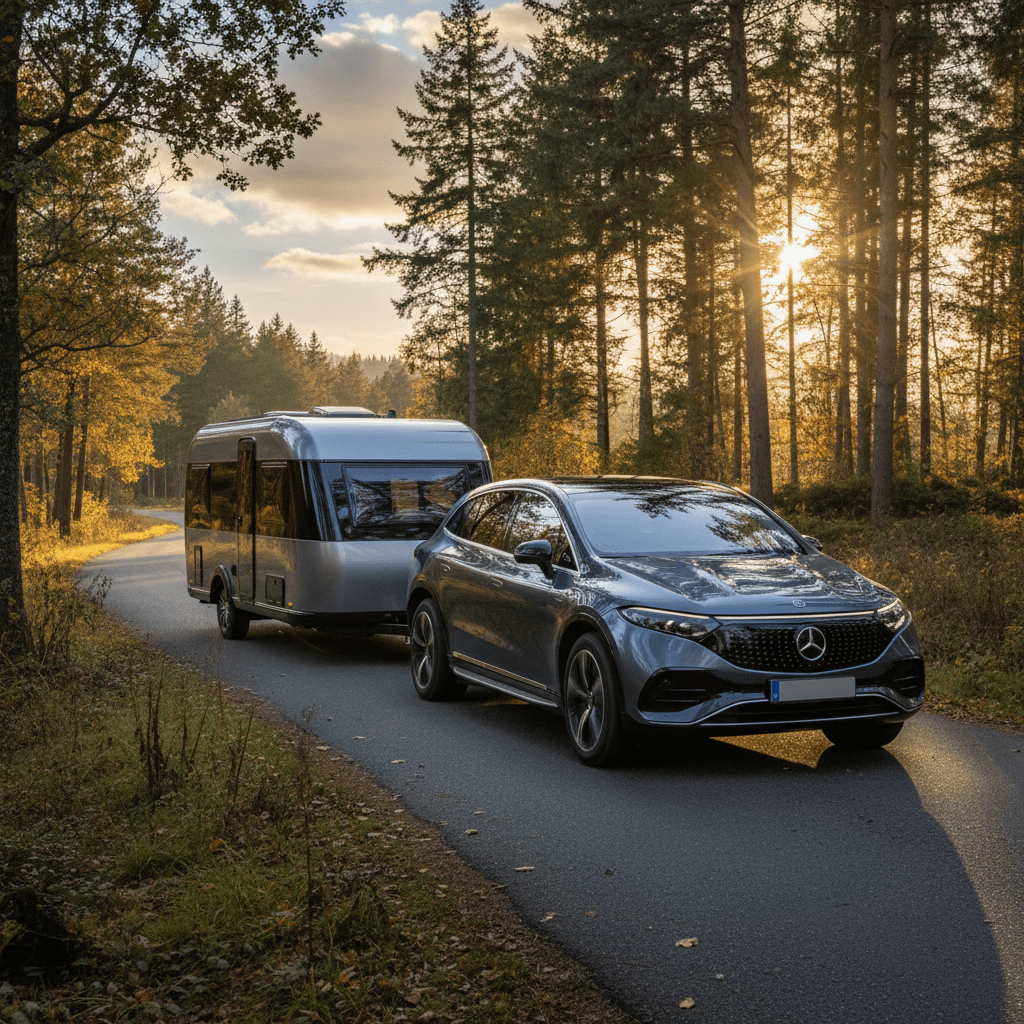
If you’re looking at a Mercedes EQS and wondering, **“Can this tow a trailer?”**, the answer depends heavily on which EQS you mean. The sleek EQS sedan and the EQS SUV share a name and battery tech, but they play very different roles when it comes to towing. Let’s break down exactly what each can (and cannot) do, and what it means for real-world range and usability.
Quick answer
Can a Mercedes EQS Tow a Trailer at All?
The phrase **“Mercedes EQS”** covers two main body styles: - The **EQS sedan** (sometimes just called “EQS”) – a low, aero-focused luxury flagship. - The **EQS SUV** – a taller, three-row luxury SUV built on the same EVA platform. From a towing perspective, you need to treat them as two different vehicles. The EQS SUV is designed and certified to tow when ordered with the correct factory equipment. The EQS sedan, meanwhile, is *not* tow-rated in the U.S. and Canada, even though European documentation shows small braked capacities for certain trims. That matters for warranty, safety, and even insurance.
- If you want to **tow a real trailer** (camper, small boat, cargo), you should be looking at an **EQS SUV with the factory trailer hitch package**.
- If you’re considering an **EQS sedan**, think in terms of **bike racks and cargo carriers**, not full trailers.
- In all cases, towing with an EV will **cut your effective range**, often by 30–50% depending on trailer size, speed, and terrain.
EQS Sedan vs EQS SUV: Very Different Towing Stories
EQS Sedan (V297)
- U.S. and Canadian models are **generally not rated to tow**.
- Mercedes marketing and spec sheets focus on luxury and efficiency, not towing.
- Aftermarket hitches you see online are usually marketed for **bike racks**, not trailers.
- Using it to tow a trailer can **violate the vehicle’s intended use**, with warranty and liability implications.
EQS SUV (X296)
- Many trims in North America are **rated to tow up to about 3,500 lbs** when properly equipped with a factory hitch.
- Dealers and brochures for recent model years highlight towing as a feature.
- Includes software features like trailer mode, camera aids, and stability systems.
- Better packaging for cooling and weight distribution during towing.
Don’t assume “EQS” means it can tow
Mercedes EQS SUV Towing Capacity and Best Trailer Types
For U.S.-spec models, recent **Mercedes EQS SUV** trims (like the EQS 450 4MATIC SUV) are typically rated to tow **up to 3,500 lbs (about 1,588 kg) when properly equipped**. Some European documentation lists **up to 1,700 kg braked** for specific variants, but you should always go by the **rating for your market and VIN**. That 3,500‑lb figure puts the EQS SUV in line with a lot of midsize crossovers: capable enough for lifestyle towing, but not a replacement for a heavy-duty pickup.
EQS SUV Towing Snapshot
Within that envelope, the EQS SUV is well suited for: - **Teardrop or small travel trailers** (often 1,500–2,800 lbs loaded) - **Single-axle utility trailers** with yard equipment, home‑improvement supplies, or motorcycles - **A pair of jet skis** or a small fishing boat on a lightweight trailer - **Light cargo trailers** for moves or weekend projects If you’re eyeing a full-size camping trailer or multi‑axle car hauler, you’re well beyond what the EQS SUV is designed for.
Check the label, not the brochure
EQS Sedan: Why It’s Not Rated to Tow (Even If You See Hitches Online)
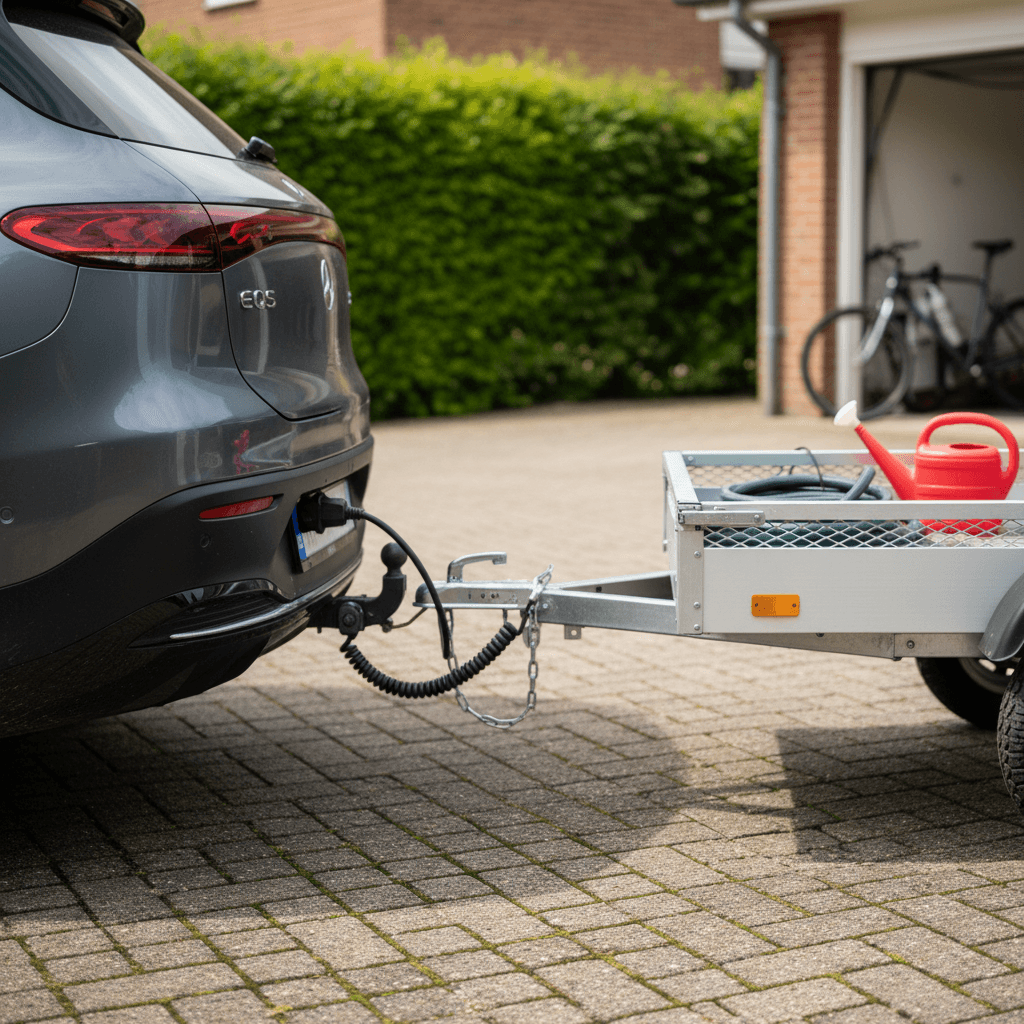
The **EQS sedan** is engineered first and foremost as a slippery, long‑range luxury flagship. That aerodynamics‑first design, plus its rear structure and cooling package, means **Mercedes doesn’t certify most North American EQS sedans for trailer towing**. You will occasionally see **aftermarket tow bars** advertised for EQS sedans or European documentation listing a modest braked capacity. That doesn’t change the fundamental reality for U.S. buyers: if your owner’s manual and door‑jamb label don’t list a towing capacity, you should treat the car as **“not approved for towing.”**
- The rear crash structure, cooling system, and software may **not be validated for sustained towing loads**.
- Using an aftermarket hitch for a trailer can **create warranty disputes** if anything drivetrain- or structure-related fails.
- Insurance companies can push back if they see a trailer behind a vehicle that the manufacturer did not rate for towing.
- Mercedes often supports **bike racks** on sedan hitches in some markets, but that’s a very different load case than pulling 2,000–3,500 lbs at highway speed.
Don’t tow a trailer with a non‑rated EQS sedan
How Towing Affects Mercedes EQS Range
Whether you’re in an EQS SUV or another EV, towing **dramatically changes the energy math**. The EQS’s big battery and smooth aero give it excellent solo range, but a boxy trailer adds frontal area and drag that no software can magic away.
What Kills Range When You Tow
Understanding the tradeoffs helps you plan smarter trips
Aerodynamic drag
Extra mass
Higher speeds
In real‑world testing across multiple EVs, towing often cuts **usable range by 30–50%**. With an EQS SUV that might normally give you, say, 270–300 highway miles in light conditions, towing a modest camper at interstate speeds might bring that down into the **140–190 mile** window between fast charges. That doesn’t make towing impossible, but it does mean you need to **plan your charging stops more carefully** and keep realistic expectations about trip length per leg.
Slow down to go farther
Realistic Towing Setups for the EQS SUV
If you treat the EQS SUV as a **light‑duty lifestyle tow vehicle**, it can be a genuinely useful tool. The key is to stay well inside its comfort zone rather than trying to make it do heavy‑duty truck work.
Smart Trailer Choices for the EQS SUV
1. Lightweight teardrop or small camper
Aim for a **loaded weight under ~2,800 lbs**. A compact teardrop, minimalist off‑road pod, or aerodynamic small camper keeps drag and mass reasonable, preserving more of your EQS’s range.
2. Single‑axle utility trailer
For Home Depot runs, yard projects, or hauling a motorcycle, a **small open utility trailer** in the 1,000–2,000 lb range is ideal. The open design and low profile are friendlier to your watt‑hours than a tall enclosed box.
3. Water toys and sports gear
A pair of jet skis or a lightweight fishing boat on a modest trailer are classic EQS SUV loads. Just stay mindful of **ramp traction** at boat launches and keep the combined trailer + gear weight under your rating.
4. Cargo carriers and bike racks
If you’re only adding a rear‑mounted rack or cargo carrier, you’re not technically “towing,” but tongue weight still matters. Make sure you’re **within the hitch’s vertical load rating** and that rear suspension doesn’t sag excessively.
Match the trailer to the EV
Charging and Route Planning When You Tow With an EQS
Charging with a trailer in tow introduces a wrinkle many first‑time EV towers don’t anticipate: **you may not always be able to pull through a charger stall with a trailer attached**. That’s especially true at older DC fast‑charging sites that were designed before EV towing was a real use case.
Plan for unhooking at some chargers
At many DC fast‑charge sites, you’ll need to **drop the trailer in an adjacent space**, then maneuver the EQS into a standard stall. That adds a few minutes at each stop, which is one more reason to avoid pushing your range to the limit.
- Practice backing and disconnecting the trailer before your first big trip.
- Use wheel chocks when you unhitch on any kind of slope.
- Keep a lock or coupler lock handy if you’ll be away from the trailer while charging.
Use apps that show layout photos
Charging apps that include **site photos and comments** make towing life easier. Look for mentions of pull‑through spots, easy trailer access, or large lots.
- Prefer **large plaza or travel center sites** over cramped urban chargers.
- When in doubt, call the site host (hotel, store, truck stop) and ask about trailer access.
- Build extra time into your itinerary the first few trips while you learn the network.
Remember: your EQS is still a road‑trip EV first
Warranty, Safety, and Legal Considerations
With any premium EV, especially one as complex and software‑driven as the EQS, you want to stay inside the lines Mercedes draws around **intended use**. That’s especially true if you’re buying used and don’t want surprises down the road.
Key Rules Before You Tow With an EQS
Think like a lawyer *and* an engineer for a minute
1. Respect the rated limits
2. Know what your warranty covers
3. Mind stability and braking
4. Follow the owner’s manual
Aftermarket hitches are not magic
Shopping for a Used EQS You Can Tow With
If you’re shopping the **used EQS market** with towing in mind, you’re already ahead of the game. Most listings and even many salespeople gloss over towing details, so a bit of homework goes a long way. This is exactly the kind of use‑case nuance Recharged was built to surface for EV shoppers.
Used EQS Towing Checklist
Confirm you’re looking at an EQS SUV, not a sedan
Listing photos can be misleading. Double‑check body style, VIN, and specs. If you want to tow a real trailer, **focus on EQS SUV listings** only.
Verify the factory tow package
Look for **factory hitch hardware**, trailer wiring, and trailer‑mode options in the infotainment menus. On Recharged, you can also talk to an **EV specialist** to verify build sheets and options before you commit.
Check battery health and thermal history
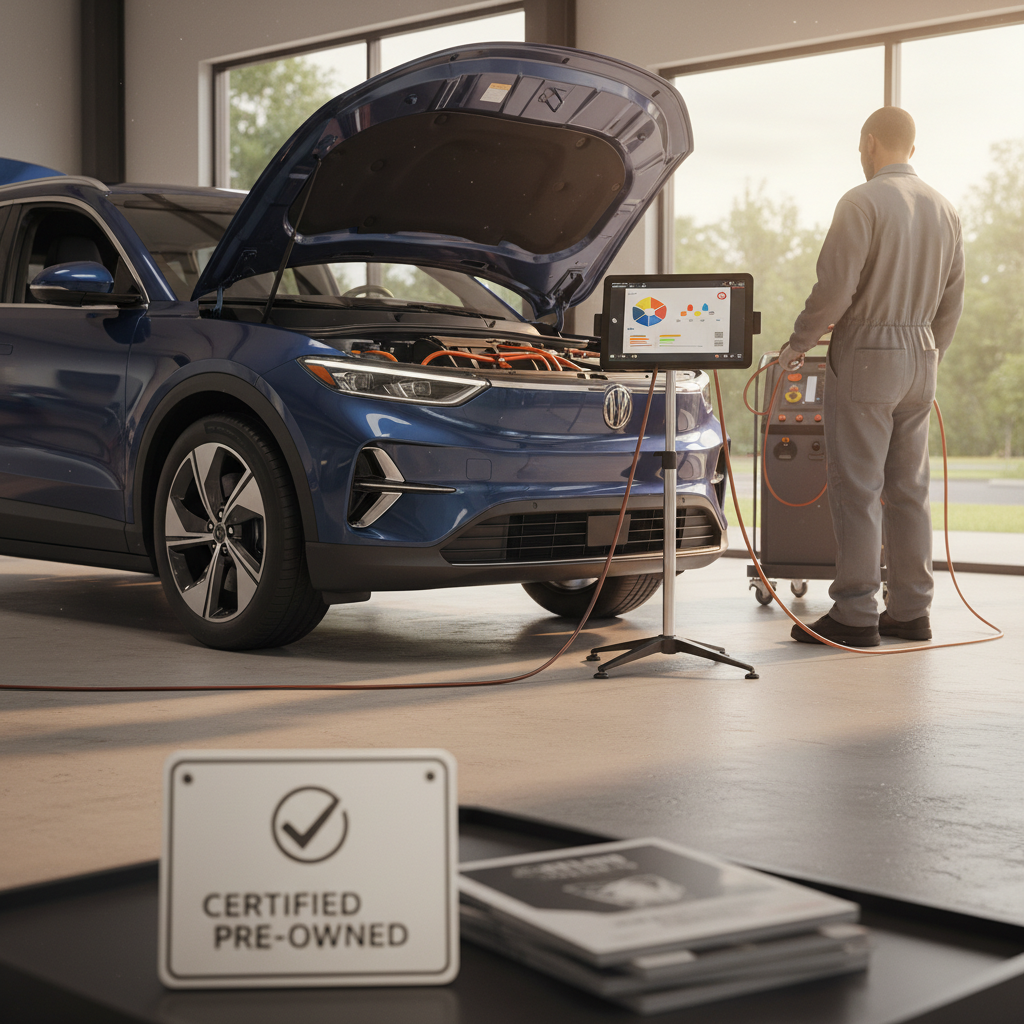
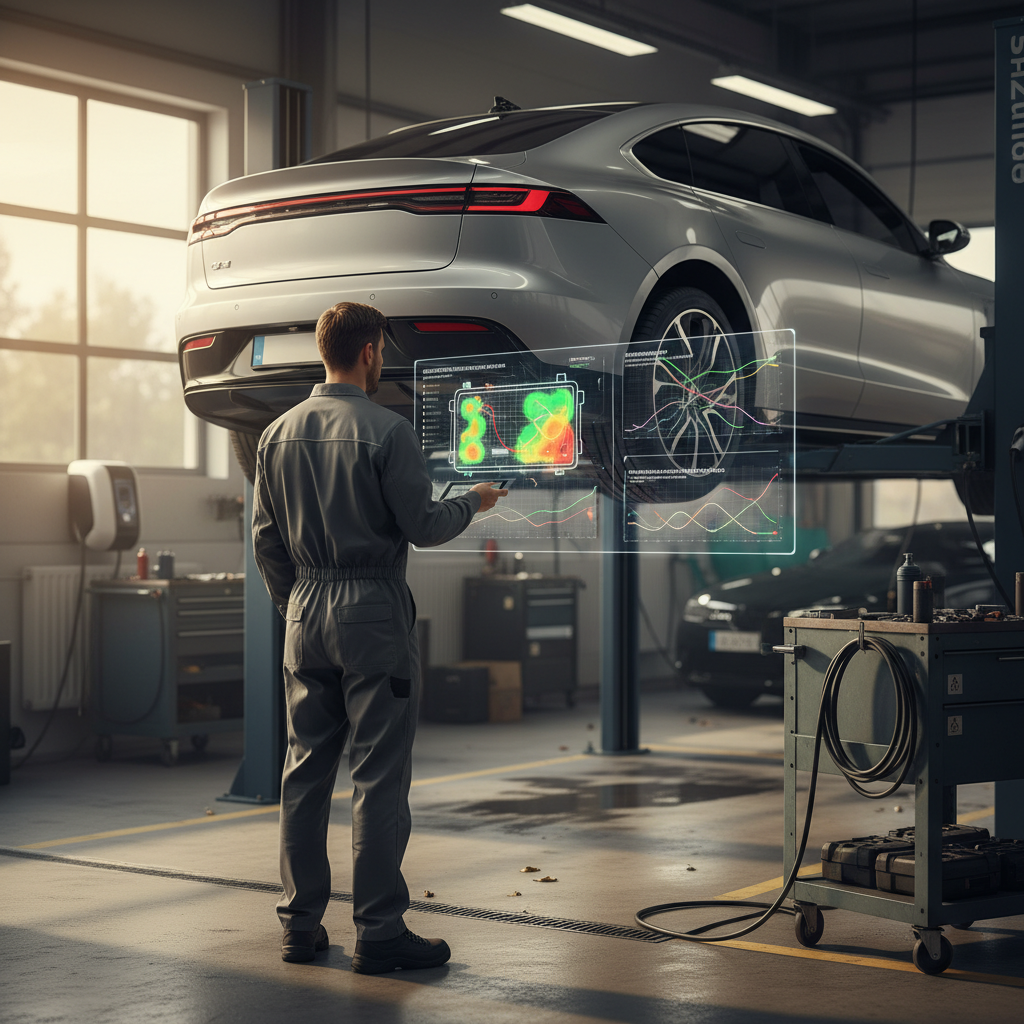
Towing adds load and heat. A **Recharged Score battery health report** helps you understand how the pack has aged and whether it’s still delivering close to its original usable capacity.
Inspect tires and brakes
Towing stresses **tires and braking systems**. On a used EQS SUV that’s done trailer duty, you want fresh, correct‑spec tires and brakes that are in good shape with plenty of pad life remaining.
Ask previous-owner use questions
If possible, find out **what the trailer use actually looked like**: frequency, distances, and load type. Occasional light‑duty towing is very different from constant heavy loads.
Run the numbers for your trailer
Before you fall in love with a specific used EQS SUV, compare its **exact tow rating** to the realistic loaded weight of the trailer you plan to pull. Aim to stay **at least 20% under the max rating** for comfort and margin.
How Recharged can help
Ready to find your next EV?
Browse VehiclesMercedes EQS Towing FAQ
Frequently Asked Questions About Towing With a Mercedes EQS
Bottom Line: Should You Tow With a Mercedes EQS?
If your question is **“Can a Mercedes EQS tow a trailer?”**, the nuanced answer is this: **the EQS SUV, properly equipped, is a solid light‑duty tow vehicle; the EQS sedan is effectively a non‑towing car in North America.** The SUV’s roughly 3,500‑lb rating, strong torque, and quiet cabin make it great for small campers, boats, or utility trailers, as long as you respect its limits and plan for shorter legs between fast charges.
For shoppers in the used market, that makes the **EQS SUV with a factory tow package** an interesting niche: a genuinely luxurious EV that can still handle weekend‑warrior duties. Just be honest about your trailer, your routes, and your expectations. If you want help sorting through real‑world range, battery health, and towing‑ready configurations, **Recharged’s EV‑specialist team and Recharged Score reports** are designed to give you exactly that clarity before you buy.