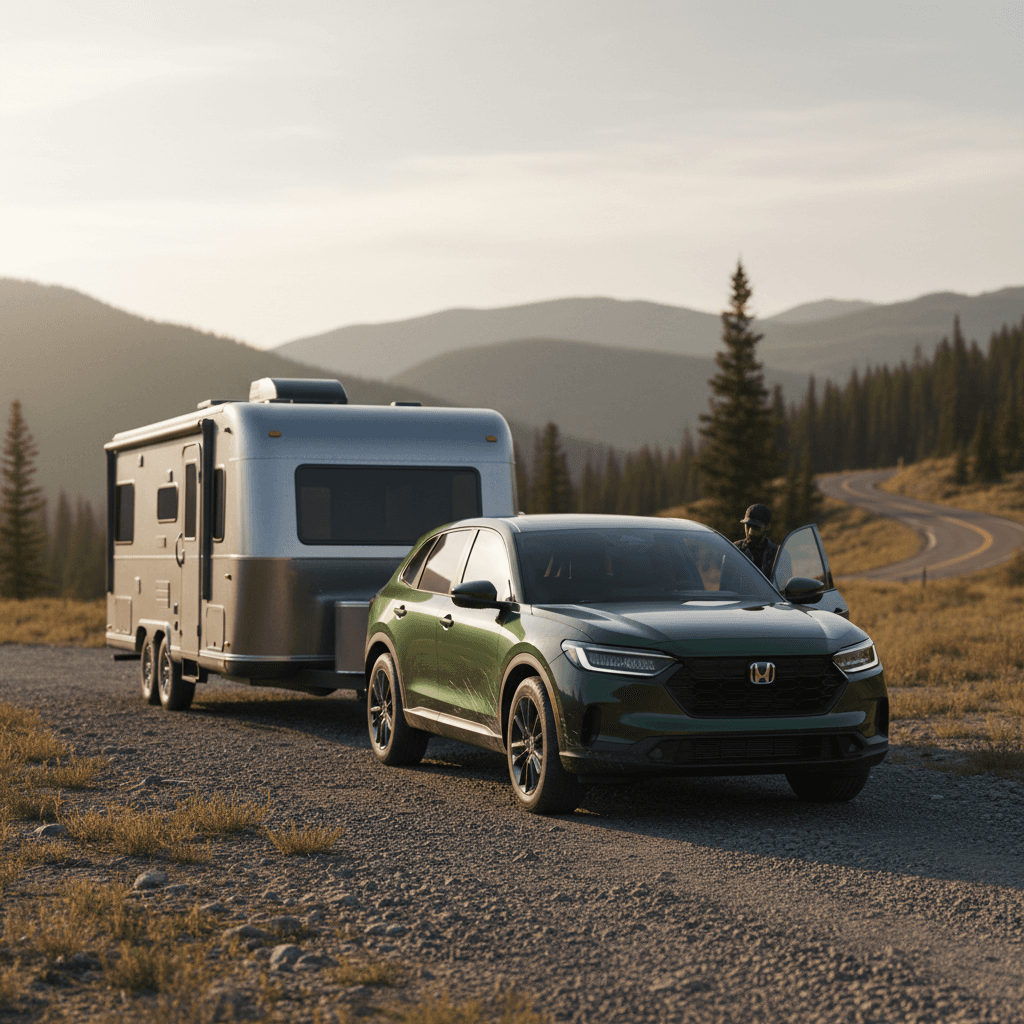
If you’re eyeing a Honda Prologue but also need to haul a small trailer, you’re probably asking a simple question: can the Honda Prologue tow a trailer without drama? The short answer is yes, but within clear limits. Understanding those limits is the difference between a relaxed weekend getaway and an overloaded EV that feels out of its depth.
Quick Answer
Can the Honda Prologue Tow a Trailer?
From the factory, Honda does allow you to tow with the Prologue. Official specs list a maximum towing capacity of 1,500 lbs across trims when the vehicle is properly equipped. That’s true for both front-wheel-drive and dual-motor all-wheel-drive versions, and it applies to model years 2024 through at least 2026.
In practical terms, that means the Prologue is fine for light-duty towing: a home-improvement store run with a utility trailer, a lightweight cargo box, or a very small camper. It is not designed to pull a big travel trailer, boat, or car hauler, even if aftermarket hitches advertise higher numbers than Honda does.
Ratings Don’t Stack
Honda Prologue Towing Capacity at a Glance
Honda Prologue Towing & Load Basics
Honda’s own documentation is clear: 1,500 pounds is the ceiling. That includes the weight of the trailer itself plus anything you load onto it, lumber, camping gear, motorcycles, you name it. A safe setup also keeps tongue weight (the downward force on the hitch ball) at about 10–15% of total trailer weight, so roughly 150–225 pounds at the hitch for a Prologue‑sized load.
Where to Confirm Your Numbers
What Kind of Trailer Can a Honda Prologue Safely Tow?
Once you know the 1,500‑pound limit, the next question is obvious: what does that get you in the real world? Quite a bit for lighter duty, as long as you choose carefully and pay attention to the trailer’s GVWR (Gross Vehicle Weight Rating), not just its empty weight.
Realistic Trailer Setups for a Honda Prologue
Stay within 1,500 lbs total, including gear, and the Prologue can be a useful tow partner.
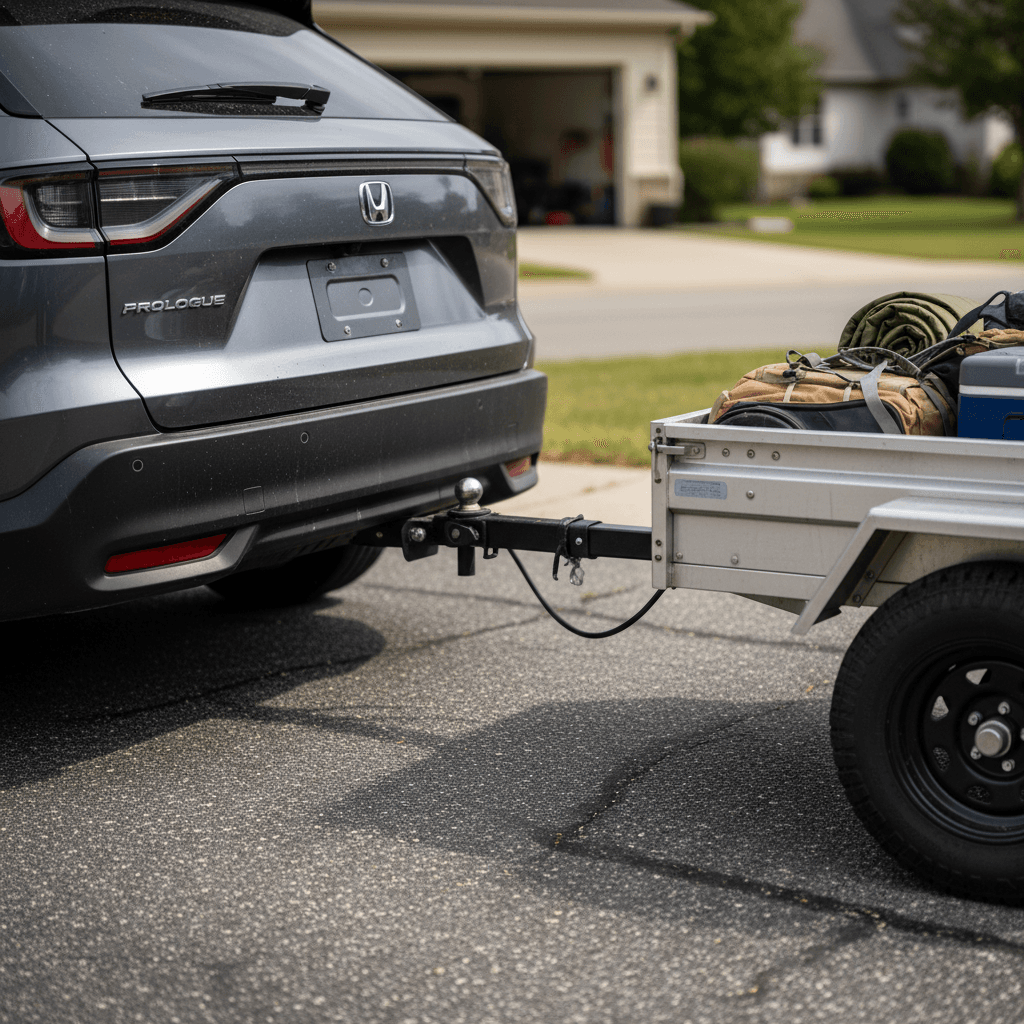
Small Utility Trailer
Think 4x6 or 5x8 open utility trailer for yard waste, appliances, or DIY runs.
- Typical empty weight: 400–700 lbs
- Leaves 800–1,000 lbs of payload within Prologue limits
- Ideal for occasional weekend projects
Cargo Box or Enclosed Micro-Trailer
A very small enclosed trailer for luggage, camping gear, or tools.
- Empty weight: often 600–900 lbs
- Keep total loaded weight under 1,500 lbs
- Aerodynamics matter, taller boxes hurt range more
Ultra-Light or Teardrop Camper
The Prologue can pull only the lightest campers.
- Look for dry weights under ~1,200 lbs
- Pack light to stay under the limit
- Best for short trips at moderate speeds
Where the Prologue runs out of steam is with traditional travel trailers and larger boats. Those often start around 2,500–3,000 lbs empty and climb quickly from there. Even though the Ultium platform under the Prologue can support more in other applications, Honda has chosen a conservative 1,500‑lb rating, and that’s the number you have to live with.
Don’t “Just Try It” With a Big Trailer
Towing vs. Carrying Bikes and Cargo
Many Prologue shoppers don’t actually want to tow a full trailer, they want to haul bikes, a cargo carrier, or a small platform rack. That’s where things get a little more nuanced, because now you care as much about tongue weight as you do about tow rating.
Using the Hitch for Racks
A hitch‑mounted bike rack or cargo tray can be a great match for the Prologue. Even though the SUV is only rated to tow 1,500 lbs, aftermarket hitches often carry higher tongue‑weight ratings (for example, 300–400 lbs for some EcoHitch and Draw‑Tite designs).
Here, you’re not pulling a trailer; you’re just hanging weight off the back. That’s less demanding than towing, but you still need to respect both the vehicle’s payload limits and the hitch’s tongue‑weight rating.
Towing an Actual Trailer
Hooking up a trailer is a different story. Now the Prologue has to manage extra mass plus aerodynamic drag, and its brakes, cooling systems, and stability control all come into play.
So even if your hitch is technically rated for 3,500 lbs, Honda’s own 1,500‑lb tow cap still applies. Think of the hitch rating as the tool’s limit and the vehicle rating as the job site rules, you have to obey both, and the stricter one always wins.
Great Use Case: E‑Bikes on a Hitch Rack
How Towing Affects Your Prologue’s Range
Towing with any EV is less about “can it move the load?” and more about “how far will it go while doing it?” The Prologue’s battery, around the mid‑80 kWh range, gives decent solo range, but add a trailer and the efficiency picture changes quickly.
- At highway speeds, it’s common for EV drivers to see 30–50% less range when towing, especially with a boxy or tall trailer.
- A low, open utility trailer with a lawnmower will hurt range less than a tall enclosed trailer with flat sides.
- Speed kills efficiency: cruising at 75 mph with a trailer is dramatically harder on range than staying around 60 mph.
- Hills, headwinds, cold temperatures, and aggressive acceleration all stack the deck against you when towing.
Plan Your Stops Conservatively
The good news is that with the Prologue’s DC fast‑charging capability, you can recover range relatively quickly on the road. Just remember that hitch racks or trailers can complicate access at some public chargers, and you may need to unhook or park more carefully.
Hitches and Hardware for the Honda Prologue
Because the Prologue shares GM’s Ultium platform, several aftermarket companies moved quickly to offer 2‑inch receiver hitches for model years 2024–2026. You’ll see Class 3 options from brands like EcoHitch and Draw‑Tite, often rated around 3,500 lbs gross trailer weight and 300–400 lbs tongue weight.
Typical Hitch Options for the Honda Prologue
Always verify part numbers and ratings for your specific model year and trim before purchase or installation.
| Hitch Type | Receiver Size | Common Rating (GTW) | Common Rating (TW) | Best Use Case |
|---|---|---|---|---|
| OEM or Dealer Kit | Usually 2" | 1,500 lbs | Check label (often ~150 lbs) | Light trailers, small racks |
| EcoHitch / Torklift | 2" | Up to ~3,500 lbs | Up to ~400 lbs | Heavy bike racks, cargo trays, light trailers |
| Draw‑Tite Class 3 | 2" | Up to ~3,500 lbs | Up to ~350 lbs | General‑purpose towing within Honda’s 1,500‑lb limit |
Aftermarket hitches don’t change Honda’s official 1,500‑lb tow rating, but they do expand what you can safely hang on the back.
Installation & Warranty
Is the Honda Prologue a Good Choice If You Tow Often?
The honest answer: the Prologue is a good occasional tower, not a dedicated tow vehicle. If you tow several times a month or pull anything near the 1,500‑lb limit frequently, you may want to think twice.
When the Prologue Makes Sense
- You tow a small utility trailer a few times a year for projects.
- You mostly want a hitch for bikes or a cargo carrier.
- Your camping style involves very light teardrop campers and shorter drives.
- You value quiet, electric driving more than maximum tow muscle.
When to Consider Something Else
- You own a camper or boat with a GVWR over 1,500 lbs.
- You regularly tow long distances at highway speeds.
- You need room to grow into a larger trailer in the future.
- You’re coming from a truck or SUV with a 5,000‑lb+ rating and don’t want to scale back.
Think of It as an EV First, Tow Vehicle Second
Practical Towing Tips for Honda Prologue Owners
Seven Steps to Safer Towing With a Honda Prologue
1. Weigh Your Trailer Loaded
Don’t guess. Visit a truck scale or RV dealer to weigh your trailer fully packed. Compare that number to the Prologue’s 1,500‑lb limit and the trailer’s own GVWR.
2. Keep Tongue Weight in the Sweet Spot
Aim for about <strong>10–15% of trailer weight</strong> on the hitch ball. Too little tongue weight can cause sway; too much can overload the rear axle and hurt handling.
3. Check Tire Pressure and Load Ratings
Set your Prologue’s tires to the recommended pressures for heavier loads, and make sure your trailer tires are in good shape and properly inflated.
4. Use the Right Ball Mount and Wiring
Match ball size and height to the trailer coupler so the trailer sits level. Use a properly installed <strong>4‑ or 7‑pin wiring harness</strong> so lights and brakes work correctly.
5. Take It Easy on Speed and Braking
Drive a little slower than usual, and leave extra following distance. The Prologue has good brakes, but you’re asking them to do more work when you’re towing.
6. Practice Maneuvering in a Parking Lot
If you’re new to towing, spend 20–30 minutes practicing turns, backing up, and braking in an empty lot before you jump onto the freeway.
7. Watch Range and Charge More Often
Plan shorter legs between charging stops the first few trips, and log your energy use. Over time you’ll learn how your specific trailer affects range.
How Towing Fits Into Buying a Used Honda Prologue
If you’re considering a used Honda Prologue, towing should be part of your evaluation, especially if the previous owner used it hard. Frequent heavy towing can stress any vehicle, and with an EV you care doubly about battery health and thermal management.
At Recharged, every used EV comes with a Recharged Score battery health report, so you can see how the pack has aged and how it compares to similar Prologues. If the vehicle has a hitch, our EV‑specialist team can help you think through what it has been used for and whether it still fits your towing needs today.
How Recharged Can Help
Honda Prologue Towing FAQ
Frequently Asked Questions About Towing With the Honda Prologue
Bottom Line: Can a Honda Prologue Tow a Trailer?
Yes, the Honda Prologue can tow a trailer, as long as you respect its 1,500‑lb limit and think of it as an EV first, light‑duty tow vehicle second. It’s well suited for small utility trailers, bike racks, and the lightest campers, but it’s not the right choice for big boats or heavy RVs.
If that towing profile fits your life, the Prologue remains a comfortable, quiet electric crossover that can still handle weekend chores and adventures. And if you’re exploring a used Prologue, a platform like Recharged can help you weigh towing needs against battery health, range, and price so you end up with the right EV for how you actually live.