If you’re considering a Cadillac Lyriq in 2026, especially as a used EV, you’re probably wondering how this striking luxury SUV holds up after a few years of real-world use. This long-term Cadillac Lyriq review looks past the brochure numbers and digs into everyday living: ride comfort, range, charging, software headaches, depreciation, and what savvy shoppers should look for before signing on the dotted line.
What this 2026 long-term Lyriq review covers
Cadillac Lyriq long-term overview (2023–2026)
Cadillac launched the Lyriq for 2023 as its first Ultium‑based EV, and it quickly became the brand’s volume electric model. Early production was slow, but by late 2024 and 2025, sales ramped up and thousands of Lyriqs hit American driveways. That means 2023 and 2024 Lyriqs are now showing up in significant numbers on the used market, often with 10,000–30,000 miles on the clock and a hefty chunk of depreciation already absorbed by the first owner.
Cadillac Lyriq long-term snapshot (early 2026)
On paper, the Lyriq stacks up well: strong range for a midsize luxury SUV, a roomy and quiet cabin, and dramatic styling that makes even German rivals look conservative. The flip side is typical of first‑wave EVs from legacy brands: software complexity, recall campaigns, and dealer learning curves that can make ownership more stressful than it needs to be.
Used Lyriq sweet spot
Daily driving, comfort, and performance
Everyday, the Lyriq’s core virtues hold up well over time. The Ultium platform feels solid and substantial, with a planted highway ride and quiet cabin that still feels fresh years later. Even early 2023 models deliver smooth, instant torque and an upscale driving experience that stands shoulder‑to‑shoulder with class rivals like the BMW iX, Mercedes EQE SUV, and Audi Q8 e‑tron.
How the Lyriq feels after a few years
Strengths and weaknesses that show up with long-term use
Ride & refinement
The Lyriq is tuned more for comfort and quiet than razor‑sharp handling. Owners who’ve logged 20,000+ miles consistently praise its highway composure, low wind noise, and solid feel over broken pavement.
Performance
RWD models feel brisk, while dual‑motor AWD and Lyriq‑V trims offer genuine luxury‑EV thrust. Even after tens of thousands of miles, acceleration remains consistent thanks to the electric drivetrain’s lack of traditional wear items.
Interior & seats
Cabin materials generally hold up well, with only minor wear on high‑touch surfaces. The front seats are comfortable for long trips, though some owners wish for more aggressive lumbar support and a bit more thigh padding.
Watch those big wheels
Real-world range and charging experience
On paper, 2024–2026 Lyriqs span roughly 270 to just over 320 miles of EPA‑rated range, depending on drivetrain and wheels. In long‑term use, most owners see numbers that track reasonably close to those figures in mild weather, with the usual EV penalties in cold winters, high speeds, and heavy use of climate control.
Real-world range
- Mild climates, mixed driving: Many owners report 260–300 miles per charge in daily use for RWD trims when driven sensibly.
- Cold weather: Winter can chop range by 20–30%, particularly on short trips where cabin heating dominates energy use.
- Performance trims: Lyriq‑V and big‑wheel AWD models trade some efficiency for speed and style, dipping into the low‑to‑mid 200s in aggressive driving.
Charging experience
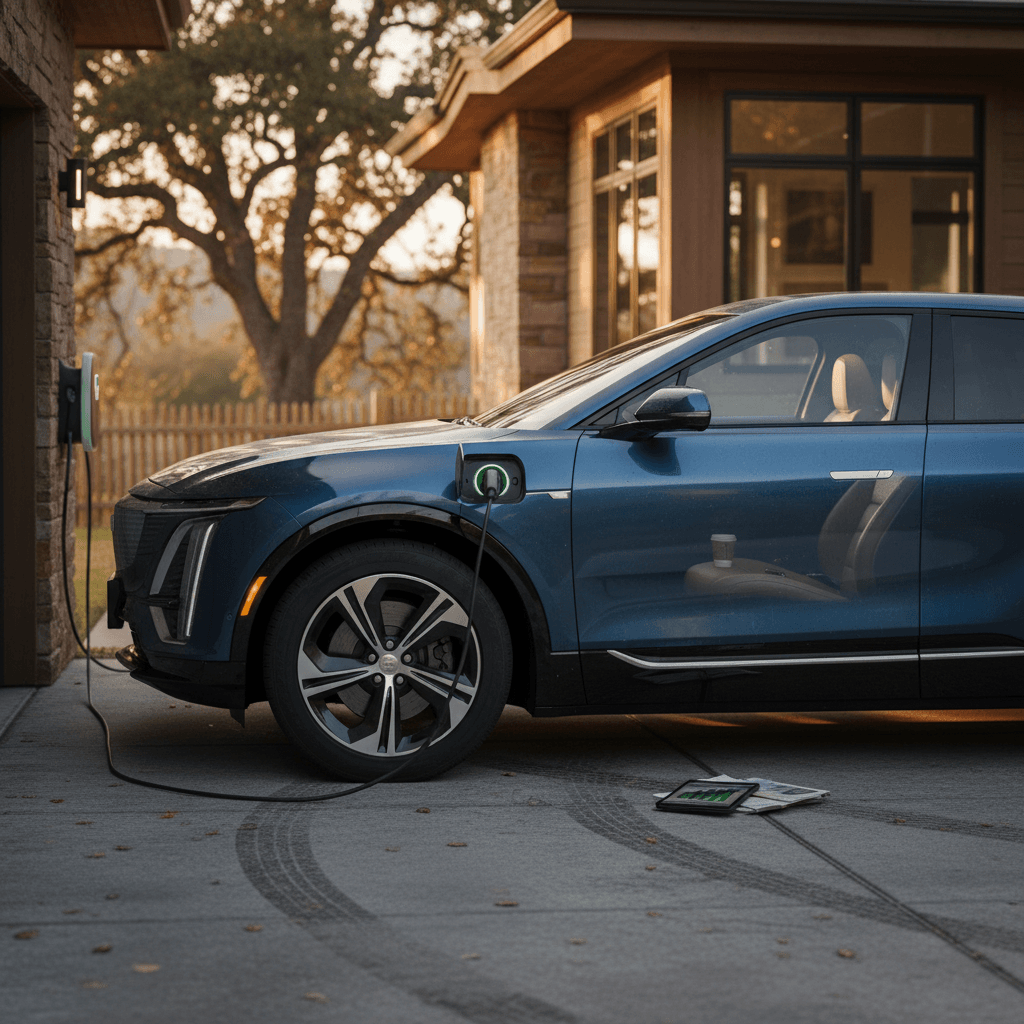
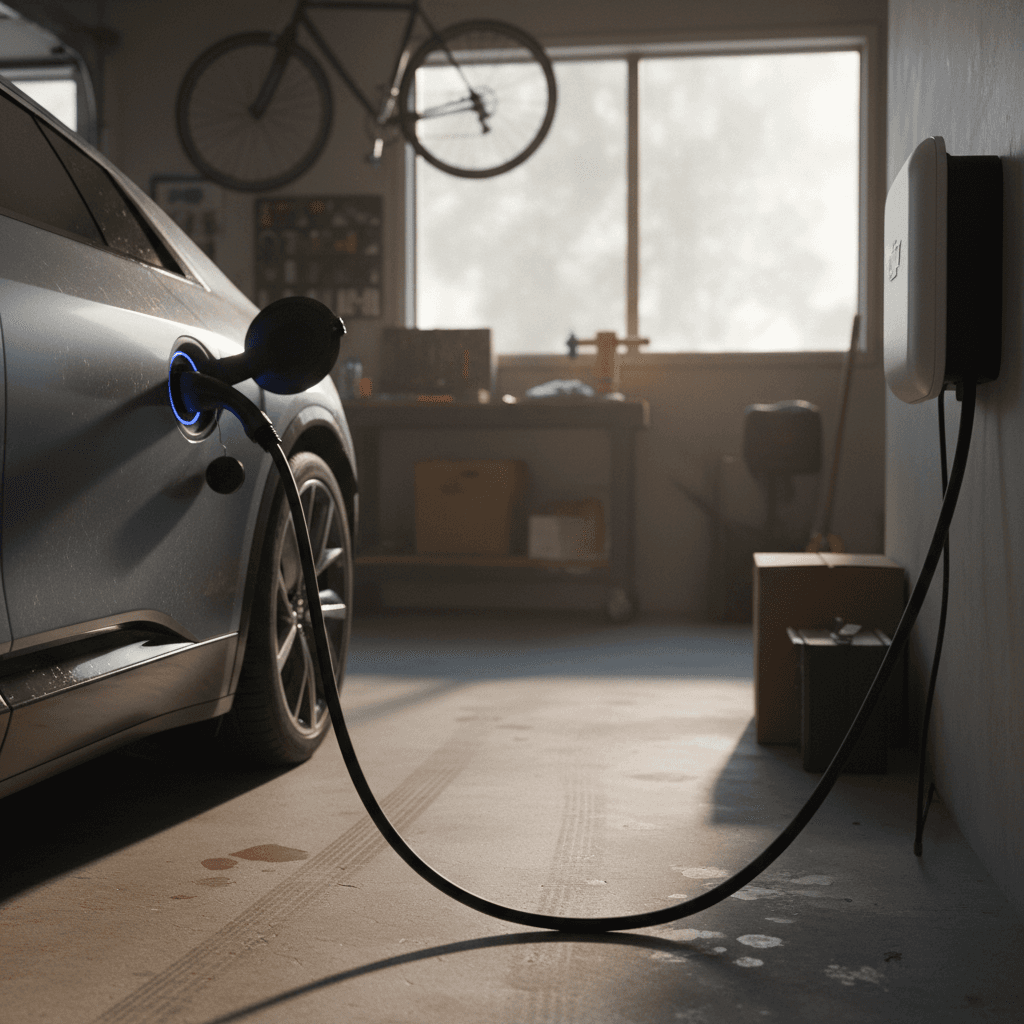
- Home Level 2: With a 19.2‑kW onboard charger available on some trims, the Lyriq can be one of the fastest home‑charging luxury EVs, perfect if you have a robust 240‑volt setup.
- DC fast charging: Real‑world DC speeds are competitive but not class‑leading. Planning ahead on road trips is still wise, especially in cold or very hot conditions.
- Public networks: Because the Lyriq uses the CCS standard (with NACS compatibility ramping up via adapters and future hardware), your experience can vary by network quality and location.
Home charging makes the Lyriq shine
Software glitches, recalls, and reliability
Here’s where long‑term Cadillac Lyriq ownership gets complicated. Mechanically, the Ultium hardware has so far shown encouraging durability. The big pain points have been software, infotainment, and OTA (over‑the‑air) update behavior, with a non‑trivial number of owners spending too much quality time in service bays while dealers chase down bugs and failed updates.
The most common long-term Lyriq complaints
Based on owner reports, recalls, and service campaigns through early 2026
Infotainment & screens
Intermittent blank screens, frozen backup cameras, and quirky Android Automotive behavior are among the most common gripes. Updates fix some issues while occasionally introducing new ones.
Navigation & connectivity
Some owners report GPS dropout or inaccurate location after certain software builds, along with Bluetooth or phone‑projection glitches that require resets or dealer reprogramming.
Recalls & OTA updates
Multiple campaigns have targeted brake‑system software, driver‑display behavior, and module updates. OTA fixes are convenient when they work, but failures can strand the car at the dealer for reprogramming.
Why software matters more on a Lyriq
To be clear, not every Lyriq owner is living a software horror story. Many report only minor annoyances that get smoothed out over time. But enough reports of repeated dealer visits for updates and module replacements exist that you should walk into Lyriq ownership with realistic expectations, and a strong, EV‑savvy dealer or independent expert in your corner.
Battery health and long-term durability
The good news: early data on Cadillac Lyriq battery degradation is reassuring. Most owners with 15,000–30,000 miles report virtually no noticeable loss in usable range, and pack diagnostics typically show capacity in the mid‑ to high‑90% range. That’s in line with other modern EVs that use large packs and conservative thermal management.
How to judge Lyriq battery health in 2026
1. Look at real-world range, not just the gauge
Ask the seller how far the Lyriq comfortably goes on a typical 80–90% charge in their daily driving. If their number is dramatically below EPA estimates with gentle driving, dig deeper.
2. Review charging habits
Frequent DC fast charging at high states of charge can accelerate wear on any EV pack. A car that mostly lives on Level 2 home charging is ideal for long‑term health.
3. Get a battery health report
A <strong>Recharged Score</strong> report or similar diagnostic can read pack data directly and estimate remaining capacity, charge history, and any stored battery fault codes.
4. Check for HV system warnings
On a test drive, scan the dash for any high‑voltage battery, charging‑system, or propulsion warnings. Intermittent messages are often a clue to past or current issues.
5. Verify warranty status
GM typically covers EV batteries for 8 years/100,000 miles (check the specific terms for the Lyriq). Confirm build date, in‑service date, and mileage to understand how much coverage remains.
Early verdict on Lyriq battery life
Depreciation and resale value in 2026
Luxury EVs have been hit hard by price cuts and rapid tech changes, and the Cadillac Lyriq is no exception. Market data in early 2026 shows roughly 50–52% depreciation by year three for typical Lyriqs, meaning they retain only about half of their original MSRP value after three years of average use.
Estimated Cadillac Lyriq value over time (U.S., early 2026)
Illustrative examples based on current market data for typical 2023–2024 Lyriqs at average mileage and condition. Individual vehicles will vary.
| Model year & MSRP | Age in 2026 | Typical current asking price | Approx. % of original MSRP |
|---|---|---|---|
| 2023 Lyriq (~$62,000 MSRP) | 3 years | $30,000–$35,000 | ~48–56% |
| 2024 Lyriq (~$72,000 MSRP) | 2 years | $36,000–$42,000 | ~50–58% |
| 2025 Lyriq (~$70,000 MSRP) | 1 year | $48,000–$55,000 | ~68–78% |
Use these numbers as directional guidance, not exact offers, when evaluating a used Lyriq or your trade‑in.
What this means for buyers vs. first owners
From a cost‑of‑ownership standpoint, the Lyriq now looks far more compelling as a 3‑ to 4‑year‑old used purchase than it did as a brand‑new luxury experiment in 2023. Your main job as a buyer is to make sure you’re picking a good example, not someone else’s software project car.
Living with a used Lyriq: what to check before you buy
Because so many of the Lyriq’s long‑term risks are software‑ and electronics‑related, a good pre‑purchase evaluation goes well beyond the usual walk‑around and quick spin. You want to confirm that the vehicle’s digital life is as healthy as its physical one.
Used Cadillac Lyriq pre-purchase checklist
Confirm recall and software status
Ask the seller for documentation of completed recalls and software campaigns. In the car, check for pending updates or warning messages, and verify that recent OTA campaigns have installed successfully.
Do a full infotainment and camera test
Cycle through navigation, Bluetooth, Apple CarPlay/Android Auto, cameras, and driver‑assistance screens. Watch for freezes, blank displays, or features that don’t respond to inputs.
Scan for diagnostic trouble codes
A <strong>Recharged Score Report</strong> or similar scan can reveal hidden module errors or communication issues that haven’t surfaced as dash warnings yet, critical on a software‑dense EV like the Lyriq.
Inspect tires, brakes, and suspension
Heavy EVs can be tough on consumables. Check for uneven tire wear, worn brake pads/rotors, or clunks over bumps that may signal suspension wear, especially on big‑wheel trims.
Evaluate charging behavior
If possible, plug into Level 2 and confirm that the Lyriq charges at an expected rate without errors. If the seller has fast‑charging logs or trip data, review them for anomalies.
Verify DC fast charging history
Cars that lived on road‑trip duty and were fast‑charged aggressively aren’t automatic dealbreakers, but they may have more stress on the battery. Use that information to adjust your expectations and price.
Lean on EV specialists
Who the Cadillac Lyriq suits best (and who should skip it)
Great fit if you:
- Want a comfortable, quiet luxury EV for commuting and road trips rather than a hard‑edged performance SUV.
- Have reliable access to home Level 2 charging and can occasionally use public fast chargers for longer journeys.
- Value distinctive styling and an upscale cabin that feels special next to more conservative luxury crossovers.
- Are willing to live with (and occasionally troubleshoot) software quirks in exchange for the Lyriq’s strengths.
Better to look elsewhere if you:
- Need rock‑solid software stability and dealer support above all else; a Tesla Model Y/Model X or certain Korean EVs may fit better.
- Don’t have easy access to home charging; any large‑battery EV will feel more stressful on public networks alone.
- Plan to keep the vehicle 10+ years and are risk‑averse about long‑term parts and software support.
- Prefer smaller, nimbler crossovers for tight city driving and parking, where a compact EV SUV may be easier to live with.
The Lyriq’s core appeal remains strong
FAQ: Cadillac Lyriq long-term ownership
Cadillac Lyriq long-term ownership: common questions
Bottom line: should you buy a Lyriq in 2026?
Viewed through a long‑term ownership lens in 2026, the Cadillac Lyriq is a mixed but ultimately appealing package. Its core EV hardware, battery, motors, charging capability, has held up well so far, and the driving experience still feels thoroughly modern. Depreciation has turned early adopters’ pain into current shoppers’ opportunity, putting well‑equipped Lyriqs within reach of many buyers who couldn’t justify a new one in 2023.
The flip side is that you must go in with eyes open about software complexity and recall history. This isn’t the set‑and‑forget simplicity of a traditional gas SUV, and not every dealer is equally adept at EV support. That’s why tools like a Recharged Score battery‑health and diagnostics report, transparent pricing, and EV‑savvy guidance matter so much when you’re shopping used.
If you value comfort, style, and strong real‑world range, and you’re willing to pair the Lyriq with reliable home charging and a bit of patience for software updates, it can be a very smart buy in 2026, especially as a 2‑ to 4‑year‑old used EV that’s already taken its biggest depreciation hit. Choose the right example, verify its digital and mechanical health up front, and the Lyriq rewards you with a distinctive, quietly confident take on electric luxury.