A cost-per-mile comparison becomes useful only when it measures the same thing on both sides. Start with energy cost per mile, electricity for the EV and gasoline for the combustion vehicle, before adding financing, depreciation, insurance, maintenance, and other ownership expenses. Using your own bills and driving history is more reliable than relying on a broad average that may not match your utility rate, public-charging habits, fuel prices, or route.
How do you calculate EV and gas cost per mile?
Divide the energy price by the vehicle’s real efficiency to calculate energy cost per mile. For an EV rated in miles per kilowatt-hour, use electricity price per kWh ÷ miles per kWh; for a gas vehicle, use gasoline price per gallon ÷ miles per gallon. If the EV reports consumption in kWh per 100 miles, multiply that figure by the electricity price and divide by 100. Multiply the final dollar result by 100 if you want the answer in cents per mile.
The bill-and-odometer method is even better
For home charging, use the all-in electricity amount you actually pay rather than copying only the utility’s advertised energy charge. Include time-of-use pricing if your rate changes by hour. The guide to EV charging costs at home explains which items on a utility bill can affect the result.
Home charging, public charging, and gasoline compared
The correct formula changes with the source of energy, so calculate each charging or fueling method separately. If you use more than one source, weight the results according to your actual miles or energy purchased from each. This prevents an inexpensive home rate from masking frequent paid charging.
Cost-per-mile formulas
Use the price and efficiency figures from your own bills, receipts, vehicle display, or driving log.
| Energy source | Formula | Input to use | Watch out for |
|---|---|---|---|
| Home charging | $/kWh ÷ mi/kWh | All-in utility rate | Time-based rates |
| Public charging | Charging spend ÷ miles | Actual session receipts | Fees and pricing |
| Gasoline | $/gallon ÷ mpg | Required fuel grade | Real-world mpg |
Compare the results in dollars per mile using the same driving period.
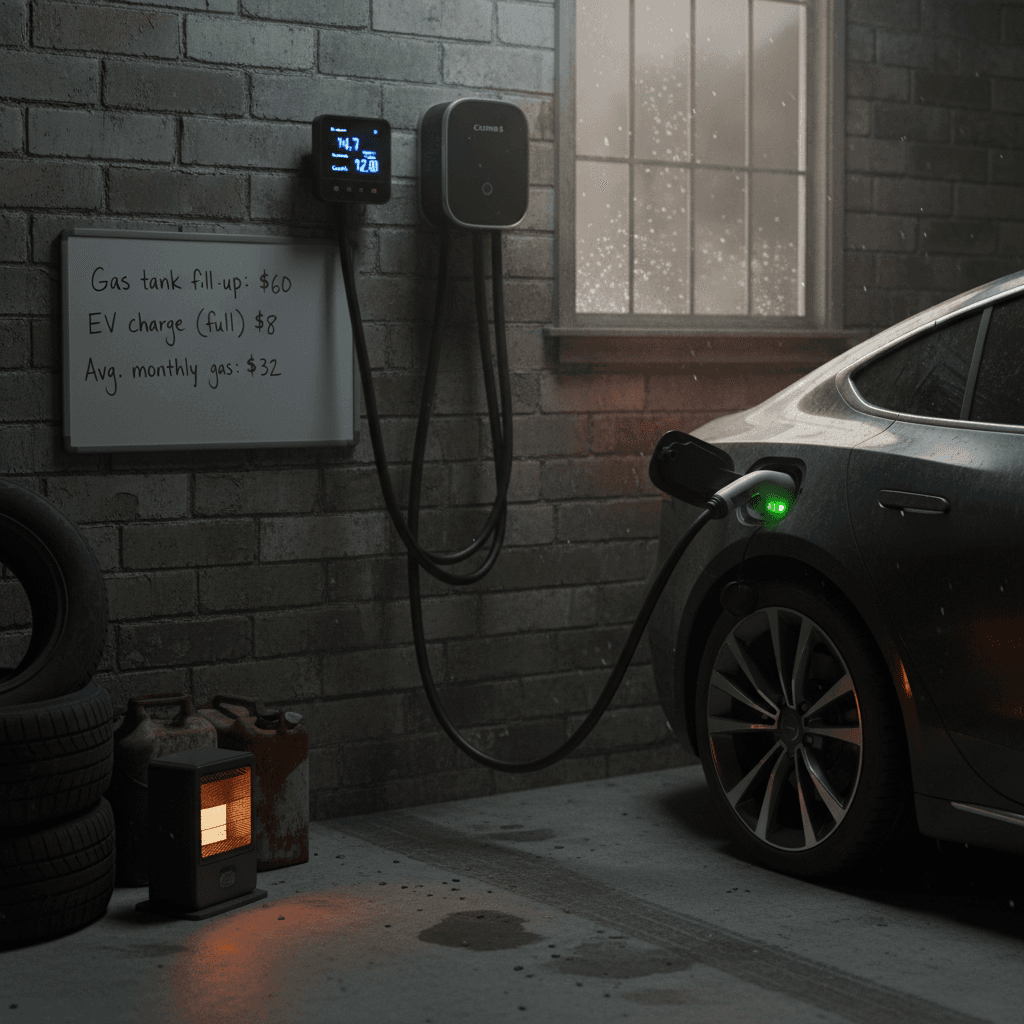
A fair comparison needs real driving inputs
Use prices and efficiency readings from the same location, season, and type of driving whenever possible. An EV’s dashboard efficiency can change with temperature, speed, elevation, towing, climate-control use, and wheel or tire choices. A gas vehicle’s observed mpg also changes with route, traffic, speed, and driving style, so comparing an EV’s best trip with a gas car’s worst tank would distort the result.
Inputs to collect before calculating
Actual energy prices
Use your all-in home electricity rate, public-charging receipts, and local price for the gasoline grade the car requires.
Observed efficiency
Record miles per kWh or kWh per 100 miles for the EV and observed mpg for the gas vehicle.
Matching mileage
Compare similar routes and driving periods rather than unrelated dashboard snapshots.
Charging mix
Separate home, workplace, and public charging before calculating a weighted EV result.
Charging losses
Use billed electricity or total charging spend when possible so energy lost during charging is included.
Seasonal changes
Repeat the calculation in different conditions if your weather or driving pattern changes substantially.
What Recharged data adds to the calculation
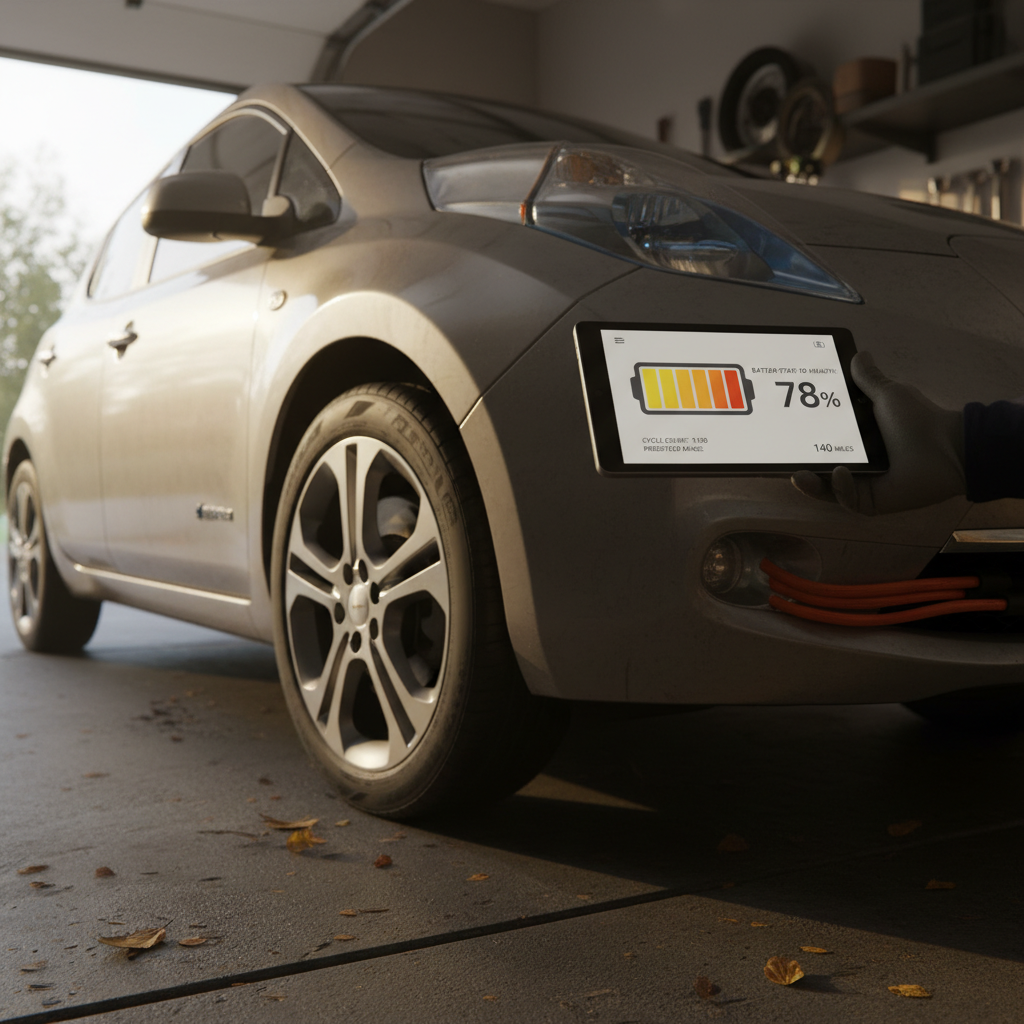
Recharged data shows that purchase price and verified battery condition belong in the broader ownership discussion, even though neither replaces the energy formula. Across 2,242 Recharged Score battery inspections, tested remaining capacity averaged 93.9% of original capacity, with a 94.9% median; tested real-world range averaged 266 miles. Those battery diagnostics help a used-EV shopper assess remaining capacity and usability rather than assuming every battery with the same age or mileage is in the same condition.
In 1,796 EV sales at Recharged over the trailing 12 months captured on September 22, 2026, the retail price buyers actually paid averaged $29,901 and the median was $27,297. These are vehicle purchase prices, not energy costs, so they should enter a total-ownership comparison separately from electricity cost per mile. The practical takeaway is that a favorable charging calculation doesn’t remove the need to compare the vehicle price and review a used EV’s verified battery health.
When you compare an EV with a gas car, keep the energy bill separate from the payment, purchase price, insurance, and other ownership costs. That makes it easier to see where each vehicle is actually saving, or costing, you money.
Recharged data
Used EV battery health
94%
avg remaining capacity
From Recharged battery inspections, not manufacturer estimates.
- Lowest
- 63%
- Median
- 95%
- Highest
- 100%
- Est. range
- 266 mi avg
- Cell balance pass
- 100%
- Quick charges
- 18 avg
- Slow charges
- 65 avg
Average cell imbalance: 7.3 mV
Based on vehicles Recharged tested
Recharged data
Recent EV sold prices
$27,297
median sold price
What buyers actually paid through Recharged, not list price.
- Lowest
- $500
- Average
- $29,901
- Highest
- $129,998
Monthly median sold price
Based on Recharged sales in the last 12 months
Every EV is battery-tested with a Recharged Score. Nationwide delivery.
Energy cost is only part of ownership cost
Energy cost per mile is not the same as total ownership cost per mile. A complete comparison also includes depreciation, financing, insurance, taxes and fees, tires, scheduled service, repairs, and any charging equipment you need at home. The vehicle with the lower energy cost can still be the more expensive choice overall if its purchase price, insurance, financing, or depreciation is materially higher.
- Purchase price and expected depreciation
- Financing interest and loan term
- Insurance premiums and deductibles
- Registration, taxes, and recurring fees
- Tires, maintenance, and repairs
- Home charging equipment and installation
- Electricity, public charging, or gasoline
Keep one worksheet for energy cost and another for the complete monthly or annual budget. If you finance, compare the amount borrowed, rate, term, and total interest rather than looking only at the payment. Recharged’s guide to EV total cost of ownership can help you organize the non-energy expenses.
When can gas cost less per mile?
Gas costs less per mile whenever its local price divided by the vehicle’s observed mpg is below the EV’s blended electricity cost divided by its observed efficiency. That situation can occur when an EV driver depends heavily on paid public charging, pays a high electricity rate, or gets low efficiency on a demanding route. The same comparison can move in the EV’s favor when charging shifts to a lower home rate or the EV uses less electricity per mile.
Don’t compare only the lowest electricity rate you could theoretically obtain with the gasoline price you currently pay. Use the charging network, membership fees, parking charges, utility plan, and fuel grade you would actually choose. If home charging is part of the plan, compare Level 1 and Level 2 charging separately from the energy-rate calculation because equipment and installation are ownership expenses, not electricity consumed per mile.
Instant offer, trade-in, or consignment. Pickup available.
EV vs. gas cost-per-mile FAQ
Compare your own driving, not a national average
The right comparison uses your electricity rate, charging mix, gasoline price, and observed vehicle efficiency. Start with energy cost per mile, then add purchase price, financing, insurance, depreciation, maintenance, and charging equipment to evaluate the complete budget. For a used EV, verified battery health adds important context about remaining capacity and real-world usability. That process gives you a decision based on the car and route you’ll actually use, not an average that may not resemble either one.