If you’re coming from a gas BMW, the BMW iX maintenance schedule can feel almost too simple: no oil changes, no spark plugs, no exhaust system. But “less maintenance” doesn’t mean “no maintenance.” To protect your battery, brakes, warranty, and resale value, especially if you ever plan to sell or trade your iX, you still need a clear plan.
Good news for iX owners
BMW iX maintenance overview
The iX is built like a modern BMW SUV on the outside, but under the skin it’s a very different machine. There’s no engine oil, transmission fluid, or fuel system to service. Most of your scheduled maintenance revolves around tires, brakes, cabin filters, brake fluid, and periodic checks of the high‑voltage battery’s cooling system and software.
BMW iX maintenance at a glance
BMW wraps those tasks into a mix of time-based items (like a brake‑fluid flush every two years) and usage-based items that depend on how you actually drive. The iX tracks all of this with BMW’s Condition Based Service (CBS) system, so you’re not guessing, or blindly following a generic 5,000‑mile schedule that doesn’t really apply to an EV.
How the BMW iX maintenance schedule actually works
Unlike older BMWs that followed fixed 7,500‑ or 10,000‑mile intervals, the BMW iX relies on Condition Based Service (CBS). Sensors monitor component wear, fluid age, and your driving style. The car then calculates when a specific service is due and shows it in the iDrive menu and instrument cluster.
BMW iX Condition Based Service vs. old-school schedules
Why you shouldn’t blindly follow a generic 5,000 or 10,000‑mile reminder
Condition Based Service (CBS)
What the iX uses today
- Monitors brake wear, fluid age, and time.
- Shows specific items due (e.g., "Brake fluid" or "Vehicle check").
- Intervals can change based on how and where you drive.
- Prevents unnecessary visits triggered by generic mileage emails from dealers.
Fixed mileage schedule
What many owners are used to
- Every 5,000 or 10,000 miles, regardless of use.
- Designed around engine oil changes and fuel systems.
- Doesn’t reflect EV realities like regenerative braking.
- Can lead to over‑servicing an iX and wasting time and money.
Ignore generic dealer emails
To see what your iX actually needs, go into the iDrive menu, open Vehicle status → Service requirements, and you’ll see a list with due dates and remaining mileage or time for each item. That CBS list is effectively your personalized BMW iX maintenance schedule.
Recommended BMW iX maintenance intervals
Because CBS is personalized, there isn’t a single fixed schedule that covers every BMW iX. But we can outline a realistic baseline for U.S. owners, based on BMW’s EV guidelines and what dealers and owners are actually seeing in 2024–2025.
Typical BMW iX maintenance intervals (2022–current)
Use this as a planning guide. Always follow what your specific iX shows in the Service menu.
| Interval | What usually happens | Notes |
|---|---|---|
| Every 10,000–12,000 miles or 12 months | Tire inspection & possible rotation; basic safety check | More about tire wear than fluids, schedule sooner if you drive hard or long distances. |
| Every 20,000 miles or 2 years | Brake fluid replacement; cabin (pollen) filter; comprehensive inspection | These are the big recurring items for most iX drivers. |
| Every 40,000 miles or 4 years | Additional brake inspections, possible pad/rotor replacement depending on driving style | Many iX owners go longer on pads thanks to regen braking. |
| Around 60,000 miles+ | Coolant check for high‑voltage battery thermal system; possible replacement per BMW guidance | This is less frequent but important for long‑term battery health. |
| As needed | Tires, wiper blades, software updates, alignment, glass, etc. | CBS or your own inspections will flag these. |
Time‑based intervals matter more than mileage for many iX owners, since EVs often see lower annual miles.
Think in years, not just miles
BMW iX maintenance checklist by mileage & time
Practical maintenance checklist for your BMW iX
Every month
Check tire pressures (especially before long trips), look for uneven wear, and confirm that there are no warning lights. EVs are heavy; running low tire pressure can eat range and tires quickly.
Every 10,000–12,000 miles or 1 year
Have tires inspected and rotated if wear patterns allow, check brake pads and rotors, inspect suspension components and steering, and confirm there are no outstanding software recalls or service campaigns.
Every 20,000 miles or 2 years
Schedule a <strong>brake fluid flush</strong>, replace the cabin microfilter / pollen filter, inspect the high‑voltage wiring and connectors, and have a technician review the battery cooling system for leaks or issues.
Every 40,000 miles or 4 years
Expect a deeper brake inspection; depending on how much you rely on regenerative braking, you may or may not need pads and rotors. It’s also a good time to check alignment, especially if you’ve hit potholes or curbs.
Around 60,000 miles+
Discuss high‑voltage battery coolant service with a BMW EV‑certified shop. Many BMW EV guides treat this as a long‑term item, but if components are replaced, coolant will be changed at that time.
Before warranty expires (4 yrs/50k mi)
Have the car thoroughly inspected for any warranty‑eligible issues: minor leaks on the battery cooling system, odd noises, pixel issues in displays, charge‑port door problems, etc.
Common BMW iX service items explained
Tires & alignment
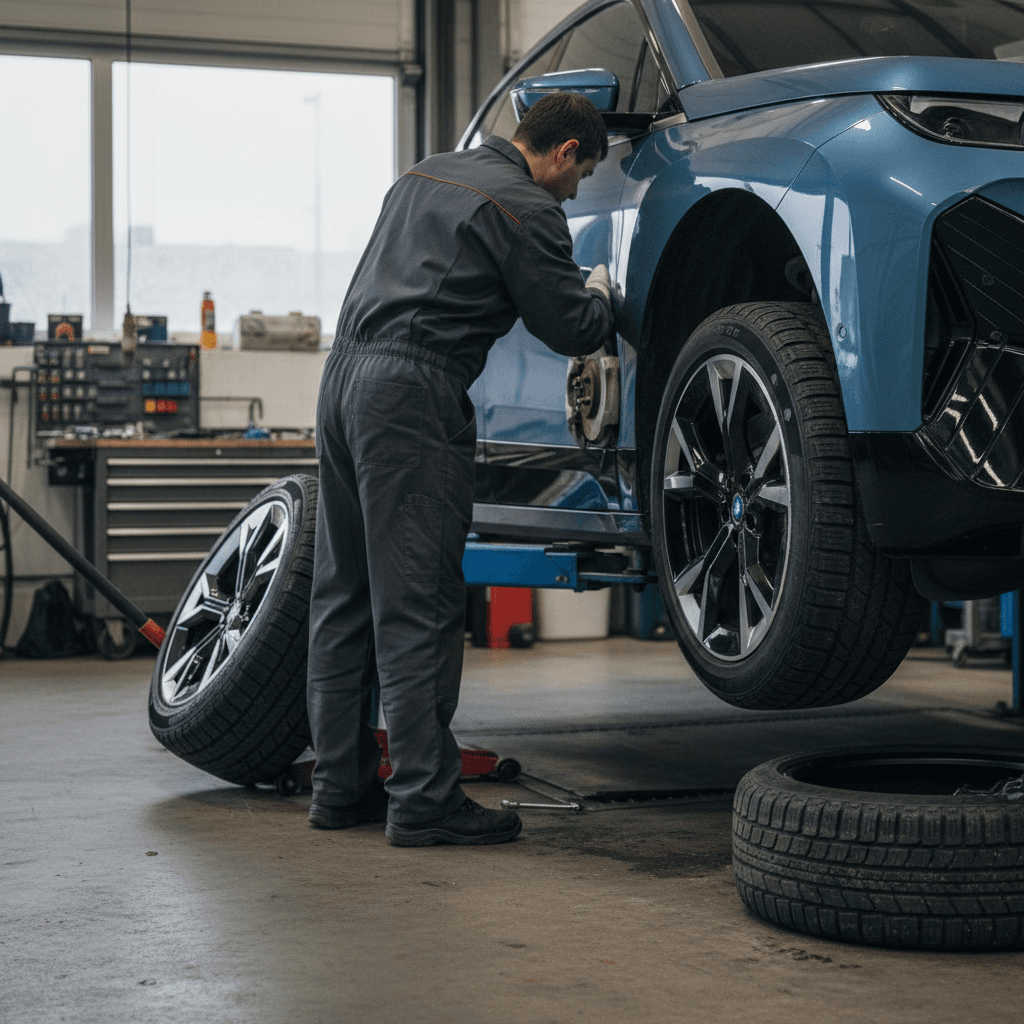
The iX is a heavy, high‑torque SUV, and that shows up in tire wear. Staggered wheel setups on some trims limit front‑to‑rear rotation options, so you may be replacing tires sooner than you expected, especially if you run performance rubber or drive aggressively.
- Check pressures monthly, especially in winter.
- Ask about rotation options for your exact wheel and tire size.
- Do an alignment check if you notice pulling, vibration, or rapid shoulder wear.
Brakes on an EV
Thanks to regenerative braking, the iX can go much longer on brake pads than a comparable gas SUV. But that same light mechanical brake use means the system still needs preventive care.
- Brake fluid absorbs moisture and should be flushed about every 2 years.
- Lightly used rotors can develop surface rust; periodic inspections catch that early.
- If you tow or drive in mountains, you’ll stress the brakes more, expect earlier pad/rotor replacement.
Beyond tires and brakes, there are a few EV‑specific details worth understanding so you’re not surprised at the service counter.
- Cabin (pollen) microfilter: Keeps the iX’s filtration and HVAC system working well. Expect replacement roughly every 20,000 miles or 2 years, or sooner in dusty or polluted environments.
- High‑voltage battery cooling system: Uses coolant and electric pumps to keep the pack in its ideal temperature range. For most owners, this is a long‑interval item; it’s usually inspected at major services and serviced if components are replaced.
- Software updates: BMW regularly refines charging behavior, efficiency, and driver‑assist functions. Some updates can be installed over‑the‑air; others may be applied during a service visit.
- Wiper blades & washer fluid: Simple but essential. Replace blades when they streak; top up washer fluid ahead of winter or road‑trip season.
High‑voltage safety
BMW iX maintenance costs & BMW Ultimate Care
Under the hood, the iX behaves like a BMW, but your cost structure looks more like a smartphone than a sports sedan: long stretches of near‑zero servicing punctuated by tire and brake work. Understanding how BMW’s maintenance programs fit into that picture helps you avoid overpaying.
How BMW Ultimate Care affects BMW iX maintenance
What’s covered, and what still comes out of pocket
Included maintenance (3 yr / 36k mi)
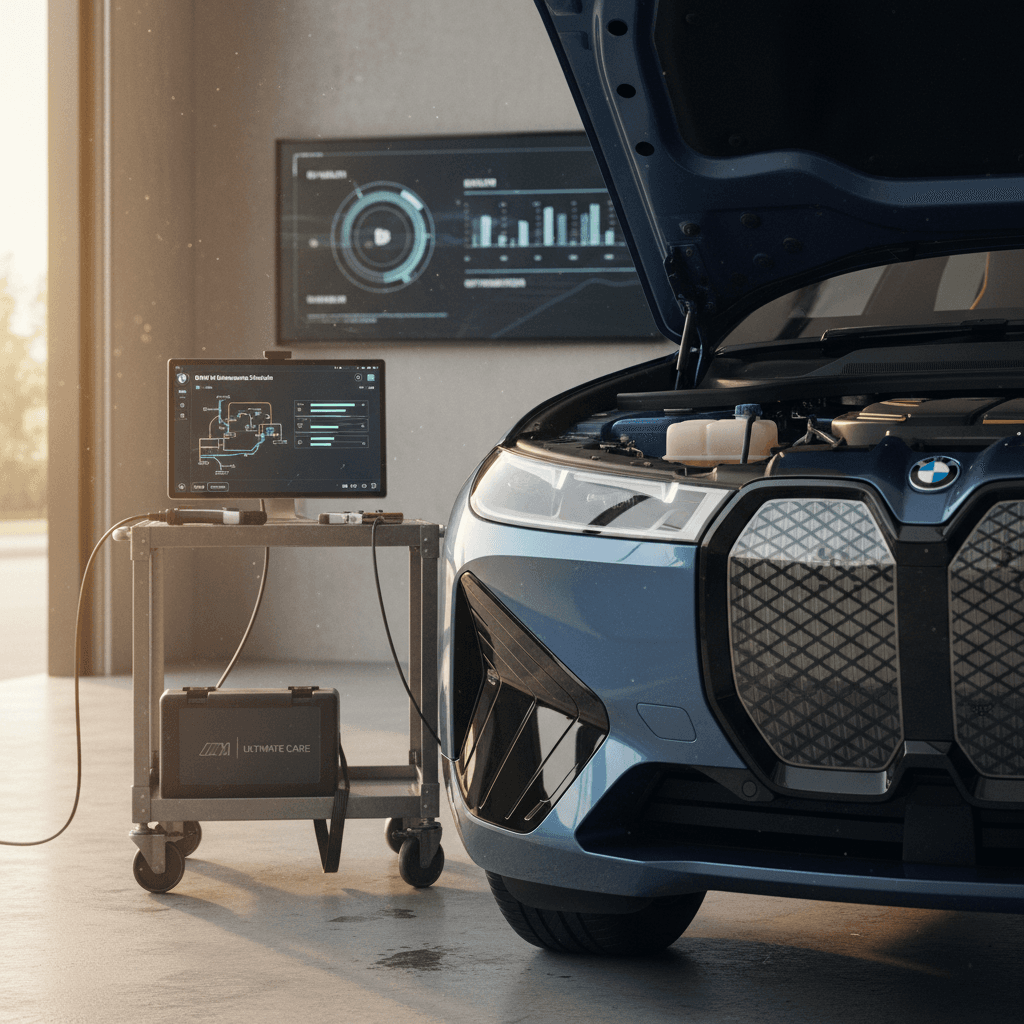
Most new BMWs (including EVs like the iX) come with BMW Ultimate Care for 3 years or 36,000 miles from in‑service date.
- Covers factory‑recommended maintenance items.
- Typically includes brake fluid and cabin filter replacements.
- Does not cover wear items like tires or brake pads.
What you’ll likely pay for
- Tires: often the single biggest routine expense.
- Brake pads/rotors once regen can’t save them anymore.
- Alignment checks or adjustments.
- Out‑of‑warranty inspections or diagnostics if an issue pops up.
Extended plans & EVs
BMW sells Ultimate Care+ and other extended plans. Whether they make sense for an iX depends on your mileage and tolerance for risk.
If your driving is light and you’re mostly worried about long‑term battery health, a good EV‑savvy shop may be more valuable than a blanket maintenance plan.
Leasing vs. owning an iX
Maintenance tips if you’re buying a used BMW iX
For used‑EV shoppers, the maintenance schedule isn’t just about what you’ll do next, it’s also a window into how the previous owner treated the car. Because the iX doesn’t have obvious oil‑change stamps, you need to read the digital trail differently.
Used BMW iX maintenance due diligence
1. Pull BMW service history
Ask for a printout from a BMW dealer or service center. Look for brake‑fluid flushes roughly every 2 years, regular inspections, and any high‑voltage or cooling‑system work.
2. Check current service requirements in iDrive
Sit in the car and open the <strong>Service requirements</strong> menu. Note any overdue or soon‑due items. Overdue brake fluid or missed inspections can hint at broader neglect.
3. Inspect tires carefully
Uneven wear or mismatched tires can flag poor alignment or previous suspension damage. On a heavy EV like the iX, that matters for both safety and running costs.
4. Ask about software & recalls
Confirm that major software updates and any recall campaigns have been completed. These can affect charging reliability, range estimates, and driver‑assist features.
5. Get an independent EV‑focused inspection
Beyond a standard pre‑purchase inspection, it’s worth having a shop that understands high‑voltage systems review the battery cooling hardware, charger, and high‑voltage junction boxes.
How Recharged can help with a used iX
Ready to find your next EV?
Browse VehiclesDIY checks vs. dealer visits for your iX
The BMW iX maintenance schedule leaves plenty of room for simple DIY checks, but you still want a professional, ideally EV‑certified, watching over the high‑voltage side. The trick is knowing where that line is.
Smart DIY checks
- Tire pressure & wear: Use a quality gauge and check monthly when tires are cold.
- Wiper blades & washer fluid: Replace blades when they streak; use winter fluid where temperatures drop below freezing.
- Visual walk‑around: Look for damage to wheels, underbody panels, and the charge‑port door.
- Software updates: When the car offers over‑the‑air updates, schedule them at home on Wi‑Fi.
Leave to the pros
- Brake fluid flushes: Requires proper bleeding procedures and tools.
- High‑voltage components: Anything involving orange cables, the battery pack, or inverter.
- Battery coolant system: Coolant changes or leak repairs should be done at an EV‑certified shop.
- Complex diagnostics: Charging faults, warning lights, or range anomalies are best handled with BMW‑level diagnostic equipment.
Choose an EV‑savvy shop
BMW iX maintenance schedule FAQ
Common questions about the BMW iX maintenance schedule
Key takeaways for your BMW iX maintenance plan
The BMW iX maintenance schedule is much lighter than what you might be used to with a gas SUV, but it still matters. If you pay attention to time‑based services every two years, keep up with tires and brakes, and let Condition Based Service guide your timing, you’ll spend more time driving and less time waiting at the service desk.
If you’re shopping for a used iX, or thinking about your exit strategy a few years down the road, strong maintenance records and verified battery health will separate the best cars from the rest. That’s exactly why Recharged pairs every EV we sell with a Recharged Score Report, expert EV‑specialist support, and transparent pricing, so you can enjoy BMW’s flagship electric SUV with clear expectations about what it will (and won’t) cost to maintain over time.