If you’re eyeing a BMW i7, you’re probably wondering how practical it is once the suitcases, stroller or golf bags show up. Search traffic around “BMW i7 cargo space with seats down” is a little misleading, because the i7 doesn’t offer a classic fold‑flat rear bench like an SUV, but it can still be surprisingly useful if you understand how the trunk and rear pass‑through work.
Key takeaway up front
BMW i7 cargo overview: the quick facts
BMW i7 cargo numbers at a glance
Unlike SUVs and hatchbacks where you fold the whole rear bench flat and quote a huge "max cargo" number, the BMW i7’s cargo story is about how well you can use its deep trunk and clever pass‑through. That matters if you’re deciding between an i7 and something like a Mercedes‑Benz EQS hatchback or BMW iX, or if you’re cross‑shopping used luxury EVs on Recharged.
Does the BMW i7 have folding rear seats?
Here’s the first surprise for anyone searching for “BMW i7 cargo space with seats down”: the i7’s rear seatbacks do not fold completely flat like you’d see in a wagon or SUV. Instead, BMW gives the sedan a through‑loading system in the center of the rear bench.
- The backrest for the middle section can fold down independently, creating a long pass‑through from trunk to cabin.
- You retain seating for two adults in the outer rear seats while carrying skis, snowboards or long boxes.
- Some trims pair this center section with a luxurious rear armrest and control panel when it’s in the upright position.
No full “seats down” mode
That design choice keeps noise and cold air out of the cabin and preserves the rear entertainment options and seat comfort BMW builds into the i7. But it also means you need to think differently about cargo than you would in a crossover.
BMW i7 trunk space vs. rivals and vs. 7 Series
BMW i7 cargo space vs. key alternatives
How the i7’s trunk stacks up against other big luxury sedans and EVs.
| Model | Body style | Trunk / boot (seats up) | Max cargo with seats folded | Notes |
|---|---|---|---|---|
| BMW i7 | Sedan (notchback) | ~17.7 ft³ (≈500 L) | N/A (center pass‑through only) | Traditional trunk; center rear pass‑through for long items. |
| BMW 7 Series (gas) | Sedan | ~19.1 ft³ (≈540 L) | N/A | Slightly larger trunk; similar layout. |
| Mercedes‑Benz EQS | Hatchback | ~21.5 ft³ (≈610 L) | Up to ≈62.5 ft³ (≈1,770 L) | Full hatch with folding rear seats; much larger max capacity. |
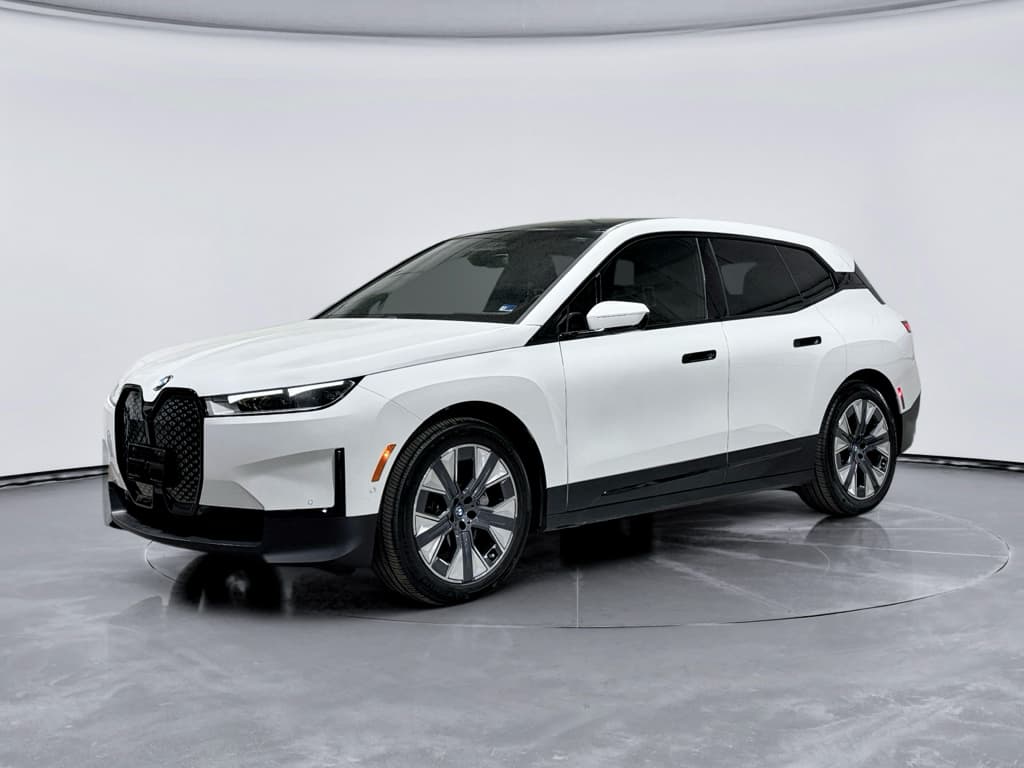
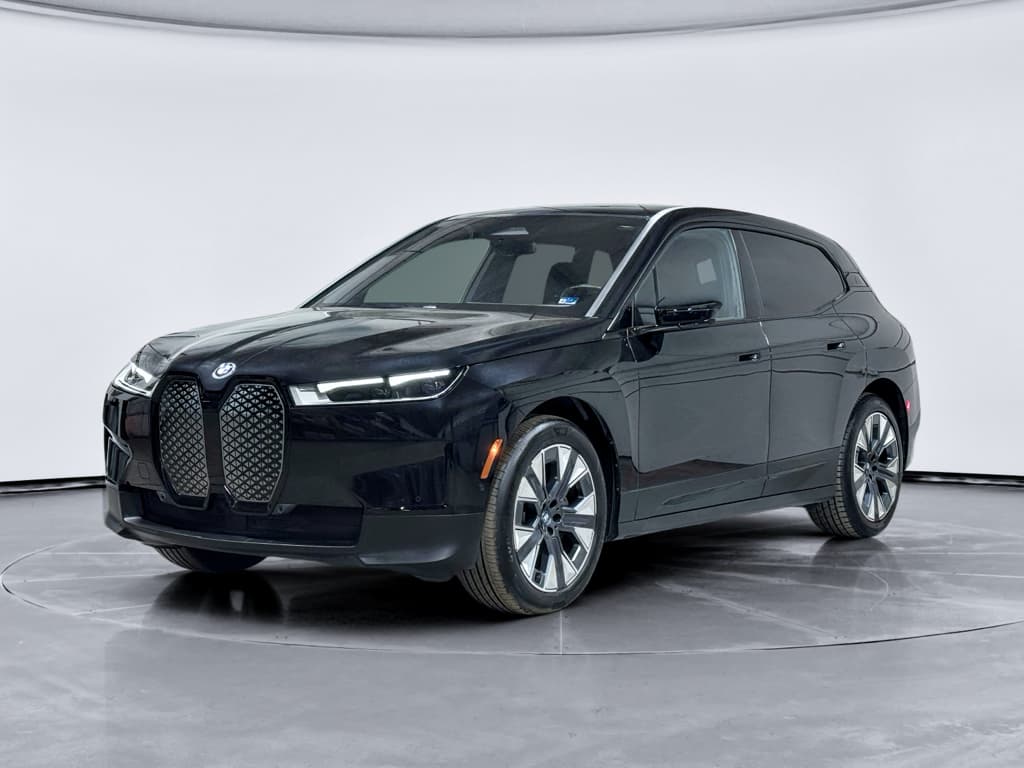
| BMW iX | SUV | ≈35.5 ft³ (≈1,005 L) | ≈77 ft³ (≈2,175 L) | Two‑row SUV with fold‑flat rear seats; far more flexible. |
| Tesla Model S | Hatchback | ≈25 ft³ | ≈61 ft³ | Large hatch opening; split‑folding rear seats. |
All figures are with rear seats in their standard upright positions.
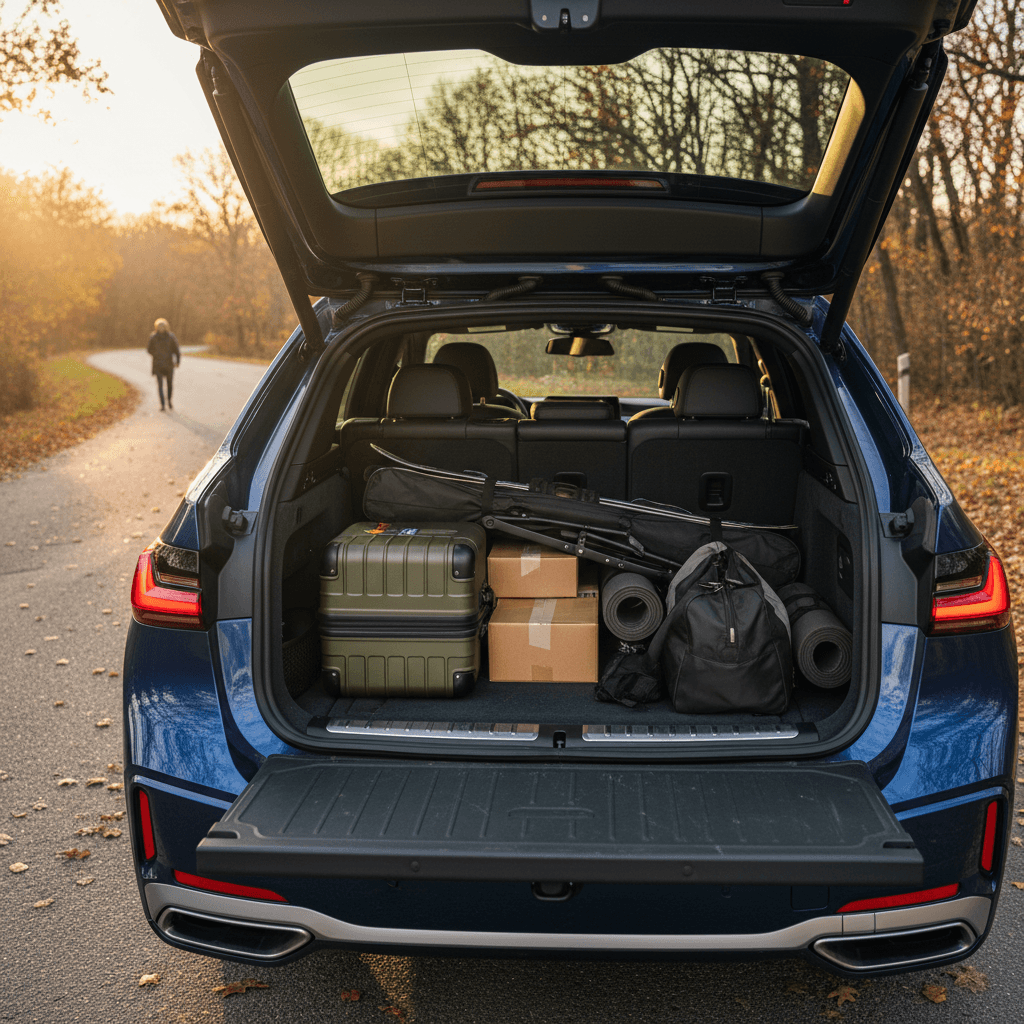
On paper, the i7 gives up ultimate flexibility to hatchbacks and SUVs. Compared with its gas‑powered 7 Series sibling, it loses a bit of trunk depth because the battery and electric motor packaging eat into the space behind the rear axle. Day to day, though, that 17–18 cubic‑foot trunk is still generous enough for multiple large suitcases, a stroller, and soft bags.
Sedan vs. hatchback mindset
Real‑world: what actually fits in an i7
Airport run or weekend away
- 2–3 large checked suitcases plus 2–3 carry‑on bags.
- Or 4 medium suitcases stacked upright.
- Smaller soft duffels can tuck into the corners and on top.
Because the opening is sedan‑style, loading is easiest with suitcases on their sides rather than upright like in an SUV.
Family errand duty
- Compact stroller lying on its side plus a week’s worth of groceries.
- Pet crate or travel kennel (medium) with bags stacked alongside.
- Sports gear, soccer bags, basketballs, coolers, stacked two layers high.
The deep floor and squared‑off sides make it easier to keep things from rolling around than in some sloped‑roof EV hatchbacks.
How the i7 handles awkward, long cargo
Using the trunk and pass‑through together gives you more flexibility than the specs suggest.
Skis & snowboards
Most owners can load 2–3 pairs of skis (or snowboards) through the center pass‑through while keeping two adults in the outer rear seats.
Golf bags
Two full‑size bags fit sideways; three can work if you angle them or let the top of one extend slightly into the pass‑through area.
Flat‑pack boxes
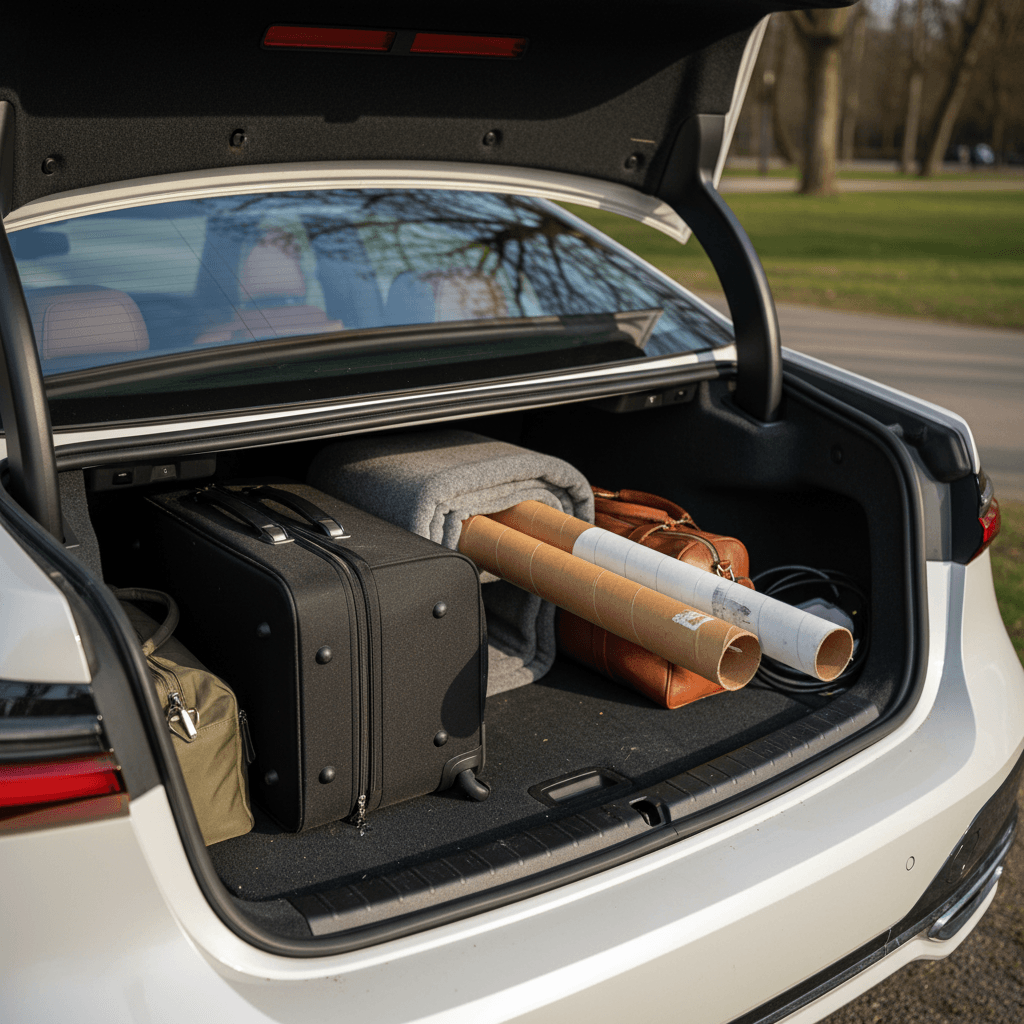
Long, flat boxes (laminate flooring, curtain rods, flat‑pack shelves) slide in through the center with the rear middle section lowered.
Bottom line on real‑world space
How to use the rear pass‑through effectively
Because you can’t fold the i7’s entire rear bench down, making the most of the center pass‑through is crucial. The goal is to protect the interior while using every inch of that tunnel between trunk and cabin.
Step‑by‑step: loading long cargo in a BMW i7
1. Clear the rear center area
Remove anything from the middle rear seat (child booster, cushions, tablet) so the backrest can fold fully and flat.
2. Fold the center backrest down
Use the release in the cabin or trunk (depending on trim) to lower the middle section until it rests flush with the seat base, creating the pass‑through.
3. Protect the leather and trim
Lay down a blanket or cargo mat over the pass‑through and the edge of the trunk to prevent scratches from skis, boards or boxes.
4. Load from the trunk first
Slide long items into the trunk opening and through the pass‑through while guiding the front ends into the cabin so they don’t hit the console or screen.
5. Secure with straps or the seat belt
Use soft tie‑downs or even the center seat belt to keep items from sliding forward under braking.
6. Double‑check rear visibility
Make sure nothing blocks your rear‑view mirror excessively. If it does, rely more on the i7’s camera views when maneuvering.
Avoid this common mistake
Cargo tips for families and road‑trippers
The i7 skews toward owners who want rear‑seat comfort, screens and massaging seats more than they want to haul mulch. Still, there are smart ways to make its cargo area work harder for daily life and road trips.
Making the most of BMW i7 cargo space
Practical ideas if you’re hauling kids, luggage or gear regularly.
Plan around strollers & car seats
If you run two child seats in back, the i7’s center pass‑through becomes your lifeline for long items. Consider a more compact stroller that can live in a trunk corner and leave the pass‑through free.
Use nesting luggage
Choose a set of suitcases that nest inside each other. Pack them separately at home, then nest and stack them sideways in the trunk so the floor stays mostly clear for cooler bags and soft duffels.
Think in layers for road trips
Put heavier items like tools and water at the bottom, then hard luggage, then soft bags or coats on top. Keep a small overnight bag on top or in the cabin so you don’t have to unload everything at hotels.
If you mostly drive in the city
The i7’s trunk will feel huge if your typical haul is groceries, gym bags and an occasional airport run. Parallel parking a full‑size SUV can be a pain; the i7 still gives you comfort and space without the bulk.
If you’re a “gear person”
Cyclists, DIY types and frequent campers may appreciate a hatchback EV or SUV more. A BMW iX, iX3 or another large EV SUV offers true fold‑flat seats and massive max cargo numbers the i7 simply can’t match.
Considering a used i7 or another EV?
Shopping used: what to check on an i7’s cargo area
When you’re looking at a used BMW i7, whether online or in person, treat the trunk like any other wear‑and‑tear zone. Luxury sedans often hide hard lives behind perfect paint.
Used BMW i7 cargo checklist
Inspect trunk carpet and side panels
Look for deep gouges, stains or warped trim that suggest the car spent its life hauling heavy equipment instead of luggage.
Check operation of the center pass‑through
Fold the middle backrest down and up a few times. It should latch cleanly without resistance or crunching sounds.
Look for moisture or odor
A musty smell, discolored carpet or condensation on the underside of the rear deck can hint at past leaks or spills that might affect electronics.
Confirm power trunk operation
Open and close the powered trunk several times using the key fob and cabin button. A slow or hesitant motion could signal an adjustment or repair is needed.
Test the emergency release
From inside the trunk, locate and gently test the emergency release handle. It’s a small safety item that’s easy to overlook on a test drive.
Review cargo photos carefully online
When shopping digitally, zoom in on trunk photos. A clean, lightly used cargo area usually aligns with careful ownership elsewhere on the car.
How Recharged simplifies this
Ready to find your next EV?
Browse VehiclesBMW i7 cargo space FAQ
Frequently asked questions about BMW i7 cargo space
Is the BMW i7 right for your cargo needs?
If your search for “BMW i7 cargo space with seats down” had you picturing a cavernous, SUV‑style cargo bay, the reality is different: the i7 is a traditional luxury sedan with a generous trunk and a smart pass‑through, not a fold‑flat load floor. For airport runs, ski trips and everyday family life, that combination works better than the spec sheet suggests. If you routinely haul bulkier gear, a hatchback or SUV EV will still be the better tool.
Either way, thinking about how you actually use space is just as important as horsepower or range. If you’re comparing the BMW i7 with other luxury EVs, shopping used through Recharged lets you line up options side‑by‑side, factor in verified battery health from our Recharged Score Report, and get expert guidance on whether a sedan trunk, a hatchback opening or a full SUV layout will fit your life best.