If you’re eyeing a long highway run in a BMW i5, or thinking about buying one specifically for road trips, you’re asking the right question: how does it really behave when the miles get long and the battery gauge is your new fuel needle? The BMW i5 is one of the most relaxed long‑distance EVs you can buy, but to get the best from it you need a smart plan for range, charging and comfort.
Who this guide is for
Is the BMW i5 good for long-distance driving?
BMW i5 range & charging numbers that matter on the highway
On paper, the BMW i5 eDrive40 is rated for roughly 300 miles of range and supports DC fast charging up to about 205 kW. In the real world, holding 70–80 mph with passengers, cargo and less‑than‑perfect weather, most owners report comfortable highway legs in the 180–230 mile window before it’s time to think about a charger. That’s more than enough to match normal fuel or bathroom stops, if you plan for it.
Road-trip verdict
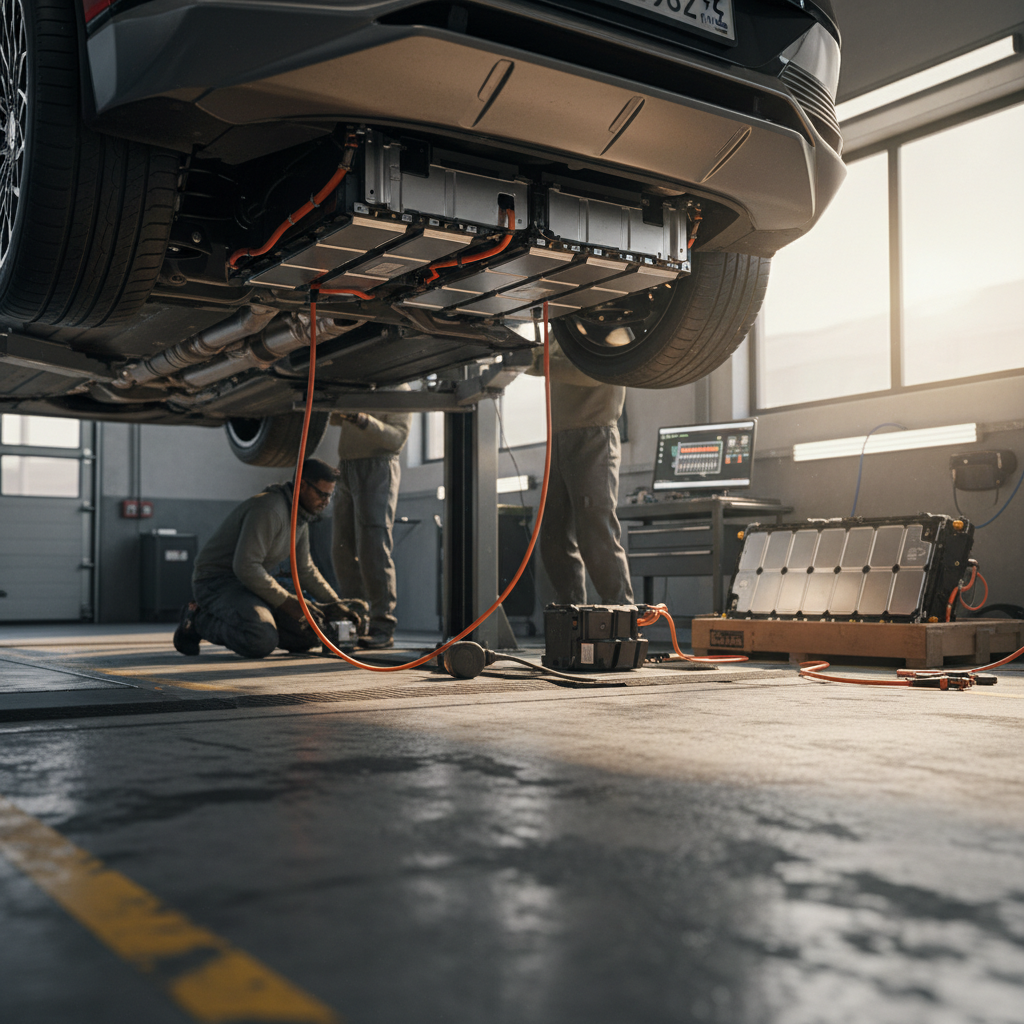
Know your BMW i5 range, battery and real-world consumption
eDrive40: Range first
- Single rear motor, lower consumption.
- EPA range around the 300‑mile mark, depending on wheels.
- Best choice if you prioritize maximum highway range and efficiency.
M60 xDrive: Power with a penalty
- Dual‑motor all‑wheel drive, noticeably quicker.
- Same battery, but more power = shorter real‑world range.
- Expect a meaningful hit at 75–80 mph, especially in Sport modes.
Both versions share roughly an 81 kWh usable battery and the same 205 kW DC fast‑charging hardware, so the biggest range difference between trims comes from how much power you’re asking from the motors. The eDrive40’s calmer, rear‑drive setup simply sips less energy than the M60 when you’re slicing along the interstate.
Use energy instead of miles
- At 65–70 mph in mild weather, many i5 drivers see roughly 3.0–3.5 mi/kWh (highly route‑dependent).
- At 75–80 mph, it’s more realistic to plan around 2.4–2.8 mi/kWh.
- Heavier wheels, headwinds, rain, cold temperatures and roof boxes all nibble away at those numbers.
Don’t chase the EPA number
Plan your route: apps, buffers and charging rhythm
Three tools that make BMW i5 trip planning painless
Use more than one source before you roll out of the driveway.
BMW’s built‑in nav
The i5’s native navigation can route through DC fast chargers and manage arrival SOC targets. It talks directly to the car, so it knows your current consumption and battery state.
Third‑party planners
Tools like A Better Routeplanner (ABRP) or PlugShare let you pre‑plan from your couch, simulate speeds, temperatures and arrival buffers, and see alternate networks along your route.
Charging‑network apps
Apps from Electrify America, EVgo, ChargePoint and others show live status, pricing, and report‑back reviews. They’re indispensable for knowing which sites are healthy before you arrive.
How much buffer should you leave in a BMW i5?
Aim to arrive with 10–20%
For most legs, plan to reach the charger with <strong>10–20% state of charge</strong>. That keeps a safety margin for detours or an offline site, yet puts you in the fast part of the charging curve.
Shorten legs when chargers are sparse
If there’s only one DC fast station in a wide radius, consider planning to arrive with 20–30% instead. Extra cushion is cheap peace of mind if that site is busy or down.
Use 60–80% as your working window
On dense corridors, it’s often faster overall to drive between about 10–15% and 60–70% than to sit waiting for the last slow 80–100%.
Cross‑check two apps
Before a long leg, confirm your next charger in both the car’s nav and a third‑party app. If reviews mention chronic issues, reshuffle your plan while you still have options.
Think in time, not just miles
Sometimes it’s smarter to stop a little earlier at a <strong>reliable 150–350 kW site</strong> than to stretch to a slower or questionable one. Reducing stress beats squeezing every last mile.
String chargers, not just miles
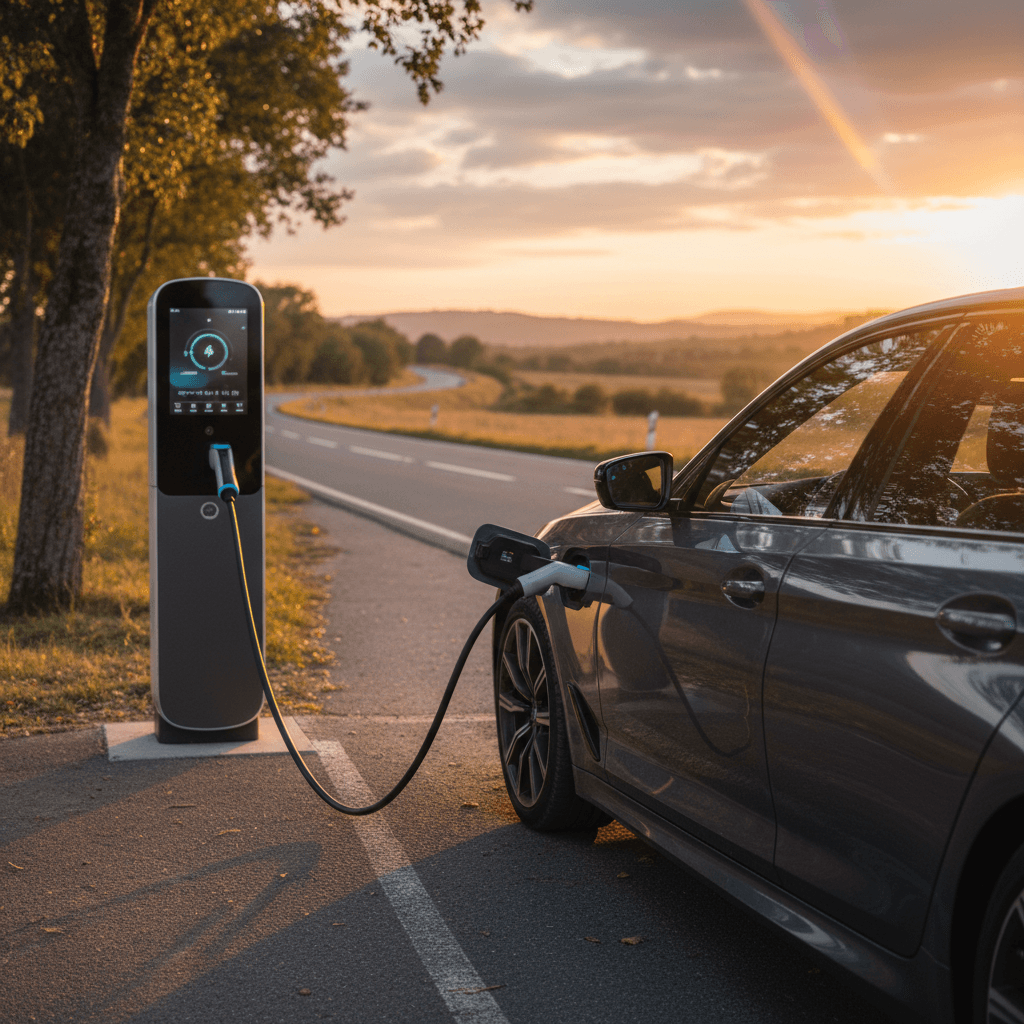
Smart BMW i5 charging strategy for fast road trips
BMW i5 DC fast‑charging strategy by scenario
Use this as a starting point and adjust based on weather, traffic and charger density.
| Scenario | Arrival SOC target | Charge‑to SOC target | Typical stop time | Why it works |
|---|---|---|---|---|
| Dense fast‑charging corridor | 10–15% | 60–70% | 15–25 min | Stays in the i5’s quickest charging zone; minimizes taper time above ~70%. |
| Moderate charger spacing | 15–20% | 75–80% | 25–35 min | Adds wiggle room for traffic or weather while still avoiding the slowest 80–100% region. |
| Sparse chargers / at night | 20–30% | 85–90% | 35–45 min | Prioritizes buffer when the next charger is far away or support is limited. |
| Lunch or long meal break | 10–20% | 90–100% | 45–70 min | If you’re stopped anyway, let the car creep up higher so the next leg can be longer. |
Charging from 10–80% on a capable DC fast charger typically takes about 30 minutes when the battery is warm.
Pre‑condition for speed
- Start fast‑charge sessions below 30% whenever practical; the lower you arrive (within reason), the happier the charging curve.
- Expect the peak 200‑ish kW figure only in a narrow band. Most of your 10–80% session will sit somewhere between ~80–150 kW, depending on temperature and SOC.
- If a charger is under‑delivering badly, don’t be shy about moving to another stall or site. Your time is worth protecting.
Don’t live at DC fast chargers
Speed, weather and driving modes: protecting your range
Speed: the invisible range thief
- Jumping from 70 mph to 80 mph can carve 10–20% off your range, depending on conditions.
- The i5 is so quiet that 85 mph can feel like 65, glance at the speedo more often than you think you need to.
- Use adaptive cruise to keep speed honest and energy use steady.
Weather: plan for the worst, enjoy the best
- Cold snaps reduce range by warming the cabin, battery and tires; headwinds and heavy rain add drag.
- In winter, build in an extra stop or shorten legs by 20–25% until you see what your route actually delivers.
- Pre‑condition the car while plugged in so early miles aren’t spent heating everything from the battery.
Pick the right driving mode
- Dial regenerative braking to a level that feels natural; stronger regen in traffic can recapture energy you’d throw away in a gas car.
- Avoid roof boxes and unnecessary external racks on road trips, they’re murder on aero and range.
- Watch live consumption over 15–30 minutes instead of panicking after one uphill stretch. The downhill that follows often evens things out.
Comfort settings so you arrive relaxed, not wrung out
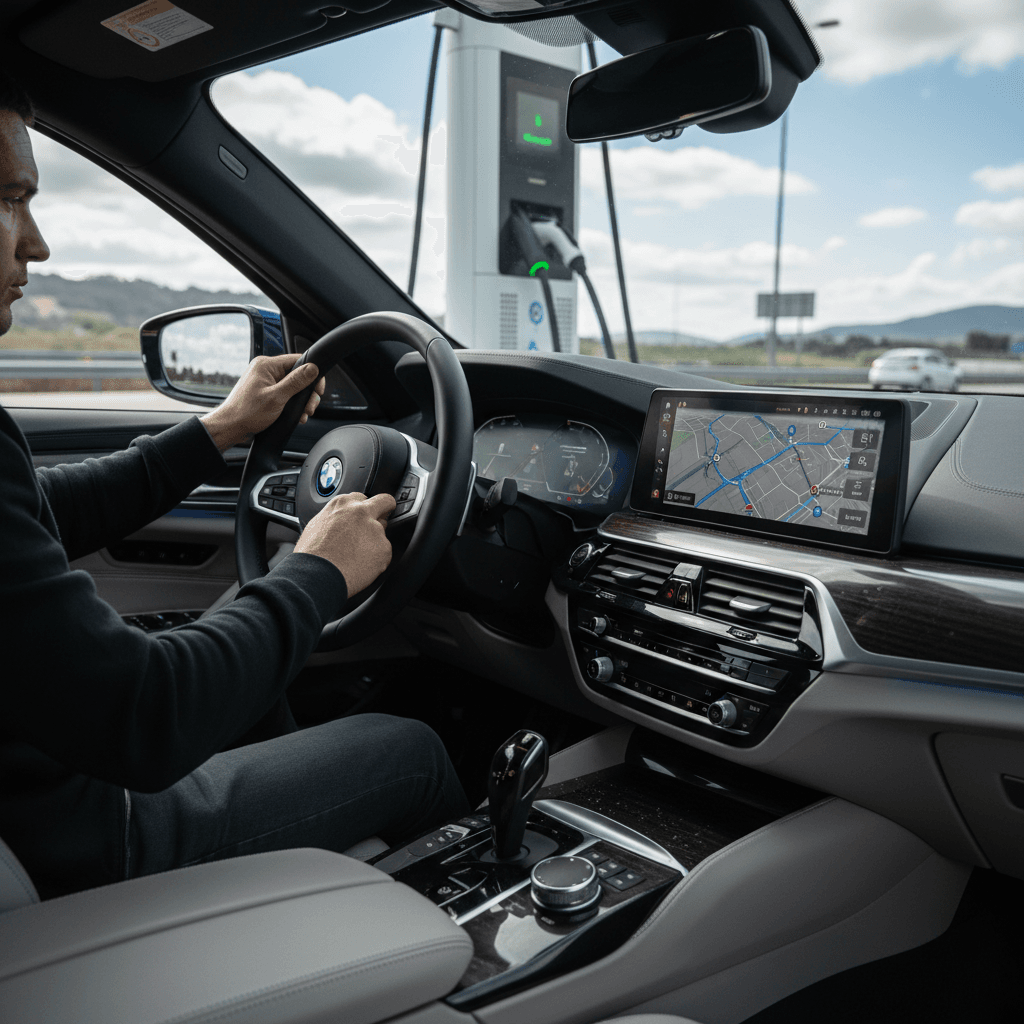
Turn the BMW i5 into a rolling lounge
Small setup tweaks pay off big after hour four, not just mile four.
Seats & posture
Spend time dialing in seat height, lumbar and thigh support before you leave town. Use memory settings so you can get back to your sweet spot after driver changes.
Smart climate control
Use automatic climate and seat or steering‑wheel heaters instead of cranking cabin temperature. They draw less energy and keep you more stable over long stints.
Driver‑assist sanity
On interstates, BMW’s Highway Assistant and active lane‑keeping can reduce fatigue. But set following distance and lane‑change behavior where you’re comfortable, and turn features off if they irritate you.
Every EV road trip has a rhythm. In the BMW i5 it usually looks like this: two to three hours of quiet, effortless cruising, then a 20–30 minute stop that charges the car and resets the driver. Use that time to stretch, swap drivers, top up snacks, and check that your next leg still makes sense given weather, traffic and how you’re actually consuming energy.
Fatigue is a bigger risk than range
Pre-trip BMW i5 checklist for long drives
BMW i5 long-distance checklist
1. Update software and maps
Before a big trip, make sure your i5’s <strong>iDrive software and navigation maps</strong> are current so charging locations and routing logic are as accurate as possible.
2. Inspect tires and set pressures
Check for damage and set tire pressures to the <strong>door‑jamb label</strong>, not the sidewall. Under‑inflation eats range and stability; over‑inflation chews comfort and grip.
3. Clean up your charging apps
Install or log in to major network apps (EA, EVgo, ChargePoint, regional players) and add your payment info while you’re on Wi‑Fi at home.
4. Pack cables, adapters and plan B
Bring your included Level 2 cable or portable EVSE, plus any outlet adapters you rely on at destinations. Snap screenshots of backup chargers near your hotels.
5. Set realistic legs in a planner
Lay out your route with conservative legs for day one. If consumption looks better than planned, you can always skip a stop later.
6. Decide your personal buffer
Some drivers are happy arriving at 5–10%; others want no lower than 20%. Pick a number now so you aren’t negotiating with yourself at 2 a.m. in a crosswind.
Buying a used BMW i5 for long-distance driving
If long‑distance comfort and range are at the top of your shopping list, a used BMW i5 can be a sweet spot: the depreciation curve has already taken its bite, but you’re still getting modern battery tech, strong DC‑fast‑charging hardware and current‑gen driver assists.
What to look for in a road‑trip i5
- Battery health: Ask for a battery report or diagnostics so you know usable capacity is still close to original.
- Wheel and tire choice: Smaller wheels with efficient tires ride better and stretch range, especially on rough highways.
- Highway options: Adaptive cruise, Highway Assistant, head‑up display and comfort seats all matter more at the 400‑mile mark than on a test drive.
How Recharged can help
- Every EV on Recharged comes with a Recharged Score Report, including verified battery health and fair‑market pricing.
- Our EV specialists can walk you through whether an i5 eDrive40 or M60 fits your actual road‑trip patterns.
- We handle financing, trade‑ins and nationwide delivery, so your next long drive can start right from your driveway.
Road‑trip confidence, baked in
Ready to find your next EV?
Browse VehiclesBMW i5 long-distance driving FAQ
Frequently asked questions about BMW i5 road trips
Key takeaways: making the most of your BMW i5 on long drives
- Treat EPA range as a ceiling; plan your BMW i5 road‑trip legs around realistic 180–230‑mile stretches, especially at 70–80 mph.
- Use the i5’s nav plus at least one third‑party app to plan charger‑to‑charger, with a 10–20% arrival buffer and a backup station in reach.
- For quick progress, arrive at DC fast chargers near 10–20% and unplug at 60–80%, letting the car pre‑condition the battery on the way.
- Manage speed, weather and driving modes, Efficient or Comfort modes and honest cruise‑control speeds protect both your range and sanity.
- Build a comfort routine around your charging stops so you and the car arrive fresher than you would in most gas sedans.
- If you’re shopping used, lean on tools like Recharged’s battery‑health diagnostics and EV‑savvy advisors to match the right BMW i5 to your real travel habits.
A BMW i5 driven with a little planning is a superb long‑distance car: hushed, stable, quick when you need it and efficient when you don’t. Learn its rhythms, trust your planning tools, and those first tentative trips turn into easy, confident crossings. Whether you’re dialing in the car you already own or choosing a used BMW i5 through Recharged, the payoff is the same: fewer worries about plugs, more time enjoying the road.