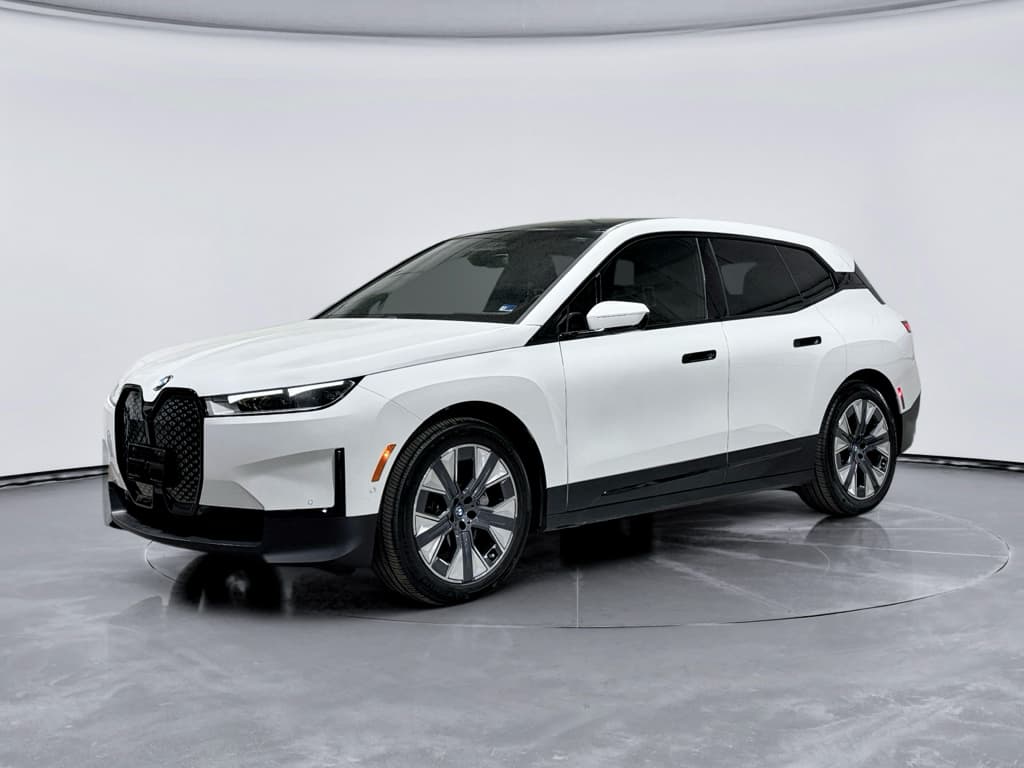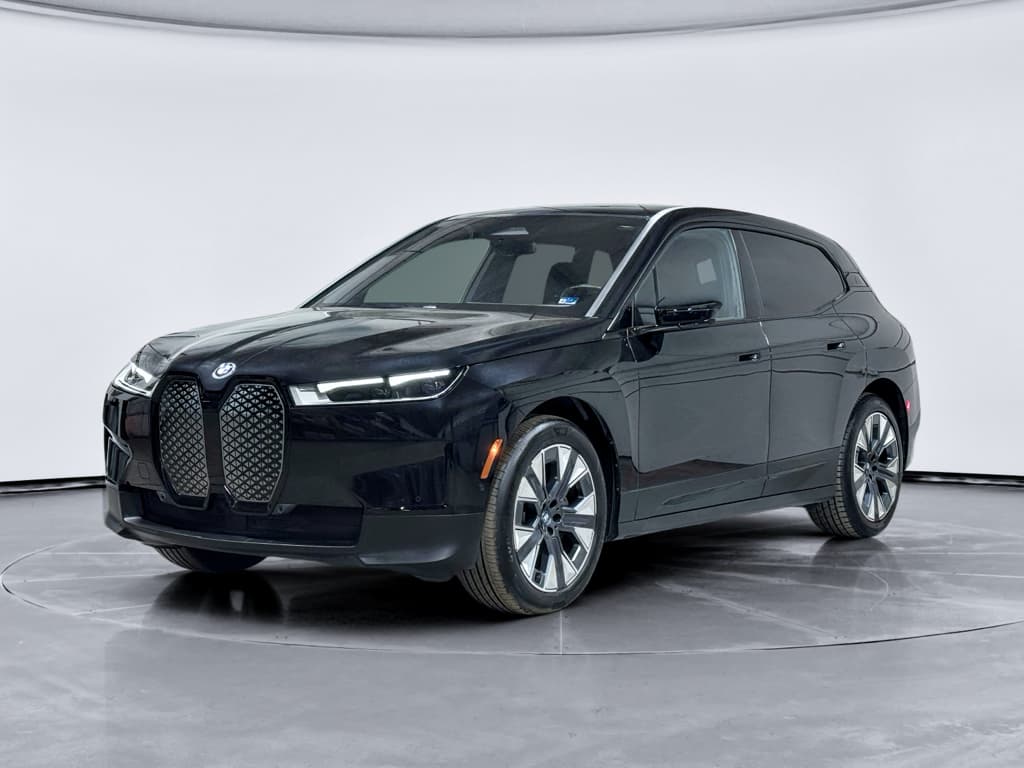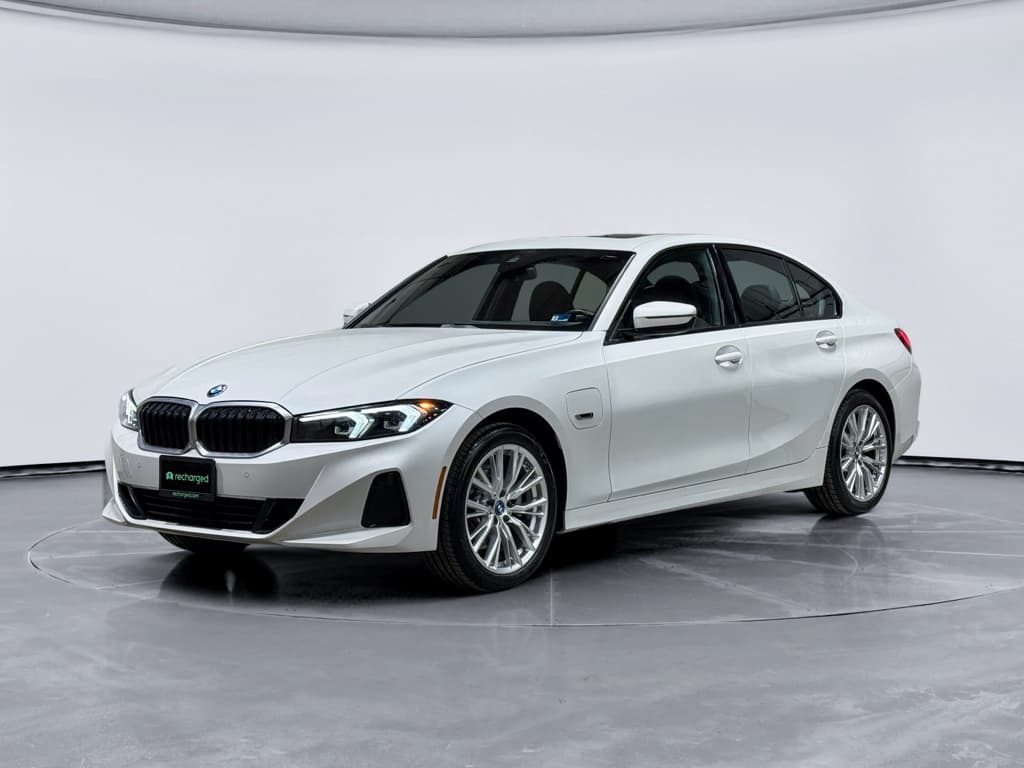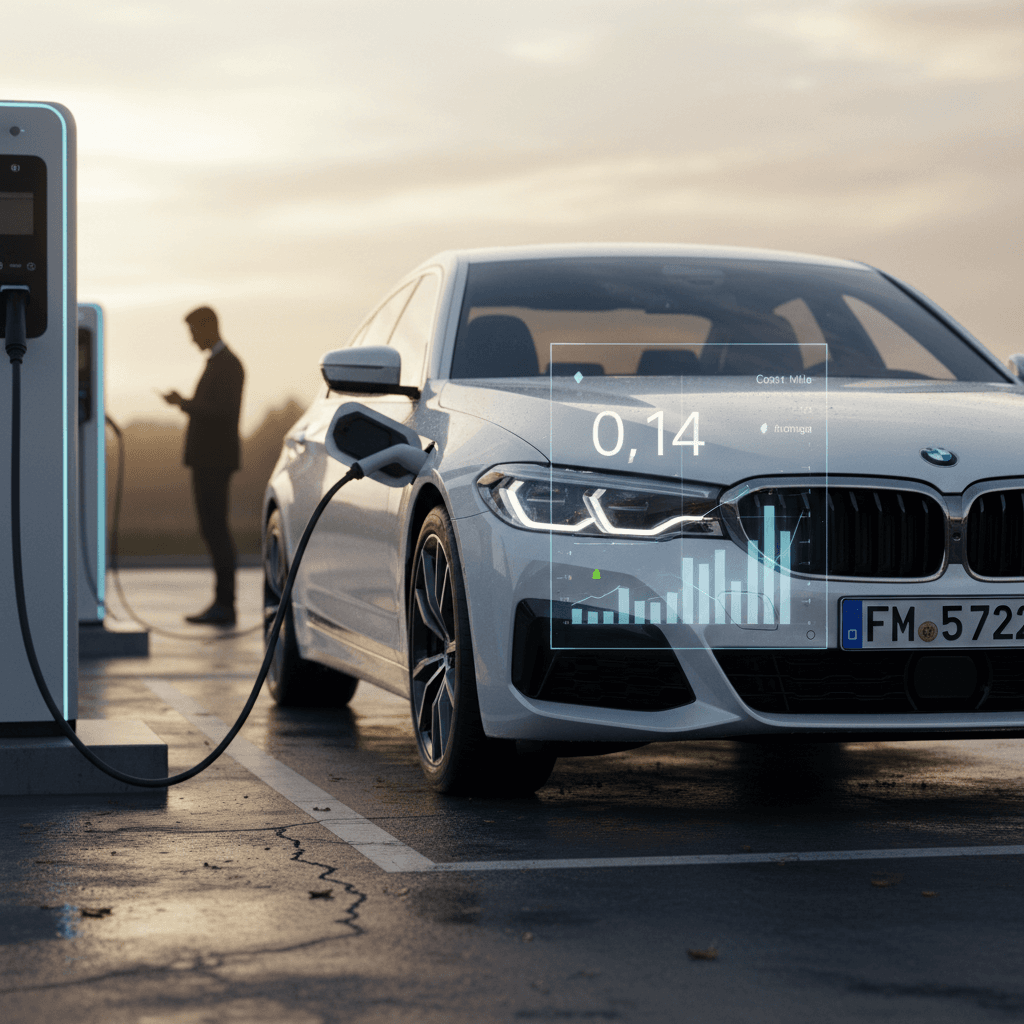
When you’re eyeing a BMW i5, the first question after “How does it drive?” is usually “What does it cost me **per mile**?” The good news: the BMW i5 cost per mile to drive is dramatically lower than a comparable gas 5 Series, especially if you can plug in at home. Let’s put real numbers to it so you can see what you’d actually spend in 2025–2026 conditions.
Key takeaway in one line
BMW i5 cost per mile: quick overview
Typical BMW i5 cost per mile (2025–2026)
To get to those numbers, you combine **efficiency** (how many miles you go on 1 kWh) with **electricity price** (what you pay for each kWh). The BMW i5 is a mid-size luxury sedan with an 81–84 kWh usable battery and **EPA efficiency around the low-30s kWh/100 miles**, depending on wheel size and trim. That puts it in the same ballpark as rivals like the Mercedes EQE and Tesla Model S, but with the familiar 5 Series feel.
Back-of-the-napkin formula
BMW i5 efficiency: what the numbers say
The BMW i5 comes in a few main flavors in the U.S. right now: the **i5 eDrive40** (rear‑wheel drive) and **i5 M60 xDrive** (dual‑motor, performance‑focused). Wheels and options change the exact rating, but they’re in a tight band, so we can work with realistic averages.
BMW i5 EPA efficiency (approximate)
Representative EPA-style energy use figures for common BMW i5 variants. Exact numbers vary slightly with wheel size and options.
| Model / setup | EPA-style energy use (kWh/100 mi) | Miles per kWh (mi/kWh) |
|---|---|---|
| i5 eDrive40 (19" wheels) | 28–30 | 3.3–3.6 |
| i5 eDrive40 (20–21" wheels) | 30–32 | 3.1–3.3 |
| i5 M60 xDrive (performance) | 32–35 | 2.9–3.1 |
Use these as a baseline; your real‑world driving may do slightly better or worse.
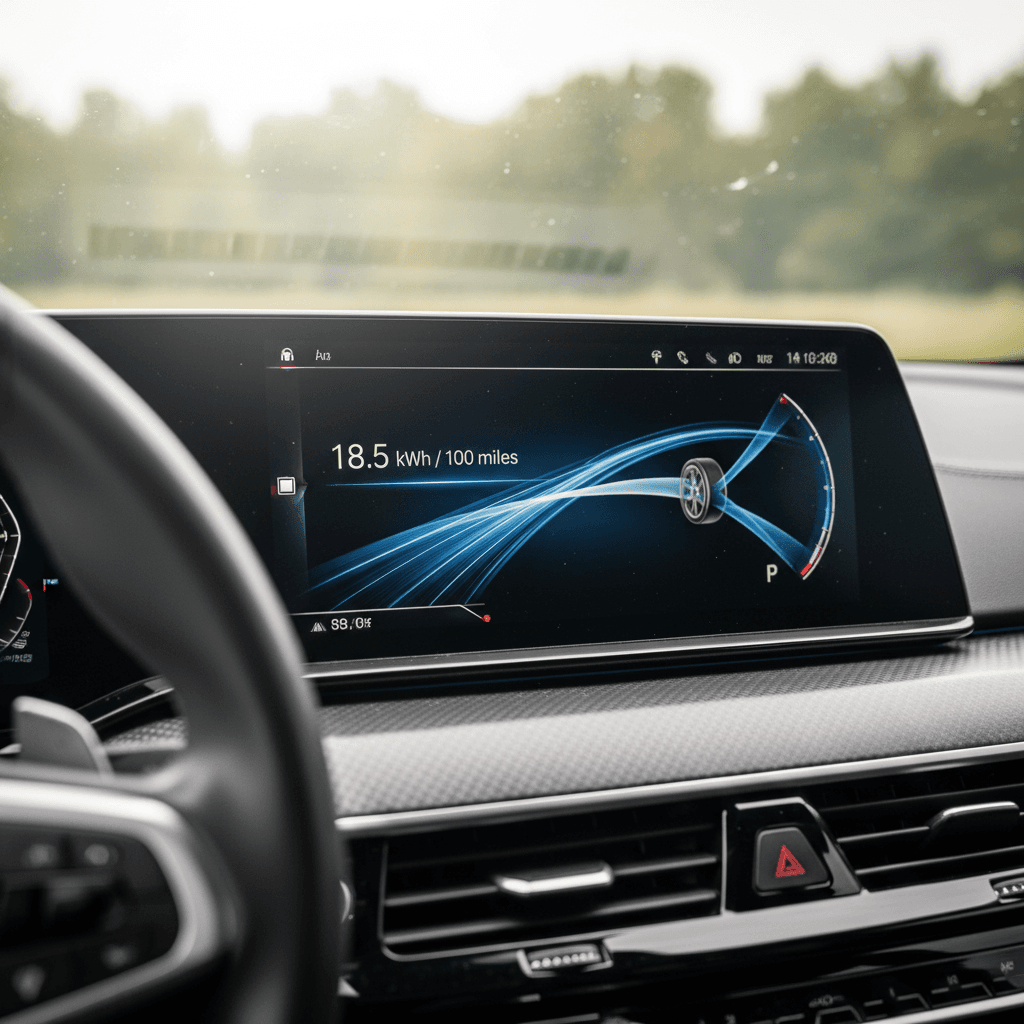
Owners routinely report **3.0–3.5 mi/kWh in mixed driving**, with higher numbers in mild weather and smoother driving, and lower numbers in cold climates or at consistent high speeds. For our cost-per-mile math, we’ll use **3.2 mi/kWh** as a realistic everyday figure for an i5 eDrive40, and **3.0 mi/kWh** for a driven-as-intended M60 xDrive.
Electricity price scenarios: home vs public charging
The other half of the BMW i5 cost-per-mile story is **what you pay for electricity**. As of late 2025 into early 2026, the **average U.S. residential electricity price** sits in the high‑teens cents per kWh. Depending on your state, you might pay 12 cents, or 30+ cents, per kWh at home, and DC fast charging can range from 35–60 cents per kWh or more.
BMW i5 electricity cost per mile: common scenarios
Assumes ~3.2 mi/kWh for i5 eDrive40 and ~3.0 mi/kWh for M60 xDrive.
1. Home charging – low cost
Example: 14¢/kWh (cheap power state or off‑peak EV plan)
- i5 eDrive40 @ 3.2 mi/kWh → about 4–5¢ per mile
- M60 xDrive @ 3.0 mi/kWh → about 5¢ per mile
If your utility offers a dedicated EV overnight rate, your i5 can be dramatically cheaper than even a frugal hybrid.
2. Home charging – average U.S.
Example: 17–18¢/kWh (typical 2025–2026 national average)
- i5 eDrive40 @ 3.2 mi/kWh → about 5–6¢ per mile
- M60 xDrive @ 3.0 mi/kWh → about 6¢ per mile
For most U.S. owners, this is the realistic everyday cost range.
3. Home charging – high-cost markets
Example: 25–30¢/kWh (parts of CA, New England, Hawaii)
- i5 eDrive40 @ 3.2 mi/kWh → about 8–9¢ per mile
- M60 xDrive @ 3.0 mi/kWh → about 8–10¢ per mile
You still typically undercut a similar gas 5 Series, but the gap narrows.
4. DC fast charging – road trip
Example: 40–50¢/kWh at a public fast charger
- i5 eDrive40 @ 3.2 mi/kWh → roughly 13–16¢ per mile
- M60 xDrive @ 3.0 mi/kWh → roughly 14–17¢ per mile
Use fast charging mainly for road trips; regular use can erase much of your fuel‑cost advantage.
Watch those peak rates
BMW i5 vs gas 5 Series: cost per mile
Numbers don’t mean much until you compare them to something you know. Let’s stack a BMW i5 against a gasoline 5 Series, say a **530i** or **540i**, on fuel only, using realistic 2025–2026 fuel prices.
Fuel-only cost per mile: BMW i5 vs gas 5 Series
Approximate, for illustration. Your exact numbers will depend on local electricity and gasoline prices, plus your driving style.
| Vehicle | Assumptions | Cost per mile (fuel only) | Annual fuel cost (12k mi) |
|---|---|---|---|
| BMW i5 eDrive40 – home charging | 3.2 mi/kWh, $0.18/kWh | ~$0.06/mi | ~$720/year |
| BMW i5 eDrive40 – split: 80% home, 20% DCFC | Home $0.18/kWh, DCFC $0.45/kWh | ~$0.08/mi | ~$960/year |
| BMW 530i gasoline | 30 mpg combined, $3.75/gal | ~$0.13/mi | ~$1,560/year |
| BMW 540i gasoline | 26 mpg combined, $3.75/gal | ~$0.14–$0.15/mi | ~$1,680–$1,800/year |
| BMW 540i – expensive gas market | 26 mpg, $4.75/gal | ~$0.18/mi | ~$2,160/year |
Assumes 12k miles per year. Gas MPG are realistic real‑world averages, not optimistic window‑sticker numbers.
Even if you mix in some costly DC fast charging on road trips, the i5 typically cuts your **fuel cost per mile nearly in half** compared with a comparable gas 5 Series. Over 60,000 miles of ownership, that’s often **$3,000–$5,000 in fuel savings**, depending on how and where you charge.
Where a used i5 really shines
Ready to find your next EV?
Browse VehiclesMaintenance, tires, and other running costs
Fuel isn’t the only thing that matters when you talk about the **BMW i5 cost per mile to drive**. Maintenance, consumables, and the occasional “welcome to German luxury” repair bill all play a role. The i5, like other EVs, saves you money in some categories and asks a bit more in others.
Where the i5 saves you money
- No oil changes: That whole line item simply disappears, no more $150 synthetic oil services every 7,500 miles.
- Less brake wear: Regenerative braking means pads and rotors last much longer than on a gas 5 Series.
- Simpler drivetrain: No spark plugs, timing chains, multi-speed automatic, or exhaust system to service.
- Fewer emissions tests: In regions that require tailpipe tests, EVs often skip this entirely.
Where the i5 can cost a bit more
- Tires: EVs are heavy and torquey. Expect to budget for high‑quality tires a little more often, especially on the M60 or with 20–21" wheels.
- Insurance: Newer EVs can be pricier to insure than older gas sedans due to repair costs and high‑value electronics.
- Out‑of‑warranty repairs: Like any modern BMW, complex electronics and air suspension parts (if equipped) can be expensive outside warranty.
Battery health and long-term costs
How driving style and weather change your cost per mile
EPA labels are great for comparison, but they’re not your life. The **actual cost per mile for a BMW i5** moves around with your right foot, the thermometer, and even which wheels you picked on option day.
Six factors that move your i5 cost per mile up or down
1. Highway vs city driving
EVs flip the old script: stop‑and‑go, lower‑speed driving can be more efficient than steady 80‑mph freeway blasts. If you spend most of your time above 70 mph, figure your i5 might sit closer to 2.7–3.0 mi/kWh, nudging your cost per mile up a couple of cents.
2. Climate and HVAC use
Cold weather is the enemy of battery chemistry. In harsh winters, you might temporarily see efficiency sag below 3.0 mi/kWh. Preconditioning the cabin while plugged in and using heated seats instead of cranking the heat can claw some of that back.
3. Wheel and tire choice
Those gorgeous 21‑inch aero wheels look the part, but they usually cost you some efficiency versus 19s. Over tens of thousands of miles, the difference can show up in both electricity use and tire replacement intervals.
4. Driving style
Smooth inputs, gentle acceleration, and anticipating traffic lights make a bigger difference in an EV than you might think. Hammer the throttle at every green light and your i5 will gladly trade kWh for grins.
5. Payload and roof racks
Hauling four adults and a full trunk all the time, or running a roof box, increases drag and weight. The car doesn’t care, but your cost per mile quietly ticks up.
6. Charging habits
Charging from 10–80% on DC fast chargers all the time is convenient, but pricier and harder on long‑term battery health than mostly using home Level 2. Keeping daily charging at home between about 20–80% often gives the best balance of cost and longevity.
Don’t size the budget to your best day
Saving more with a used BMW i5
New luxury sedans shed value faster than most of us like to admit. That’s bad news if you bought yesterday, but **fantastic news if you’re shopping used today**. The BMW i5 is no exception: early‑ownership depreciation plus low running costs can make a used i5 one of the smarter ways to get into an executive EV.
Why cost per mile gets better with a used i5
You’re stacking a lower purchase price on top of lower operating costs.
Lower upfront price
A used BMW i5 lets someone else absorb the first big depreciation hit. Your monthly payment often falls more than your electricity and maintenance costs rise, bringing your all‑in cost per mile down.
Known battery health
With a Recharged Score report on a used i5, you’re not guessing about the battery. You see a verified health reading, so you can comfortably project efficiency and range over your ownership.
Nationwide delivery & support
Recharged pairs used EVs with EV‑specialist support, trade‑in options, financing, and available nationwide delivery. That makes it easier to choose the right i5, not just the closest one.
BMW i5 cost per mile: FAQ
Frequently asked questions about BMW i5 cost per mile
Bottom line: is a BMW i5 cheap to run?
If you can charge at home, a BMW i5 is **significantly cheaper to run per mile** than a comparable gas 5 Series. You’re usually living in the **5–8¢‑per‑mile** neighborhood for electricity, and even if you fold in some public fast charging, you’re often at half, or better, the fuel cost of a gasoline 5er.
Where you live, how you drive, and how you charge all nudge that number up or down, but the pattern is clear: the i5 lets you enjoy a proper BMW luxury sedan while spending less every time you pull away from a stoplight. If you want to push those savings even further, a **used BMW i5 with a verified battery report from Recharged** gives you lower cost per mile on both the purchase price and your day‑to‑day driving, and our EV‑specialist team can walk you through the numbers before you ever click “buy.”