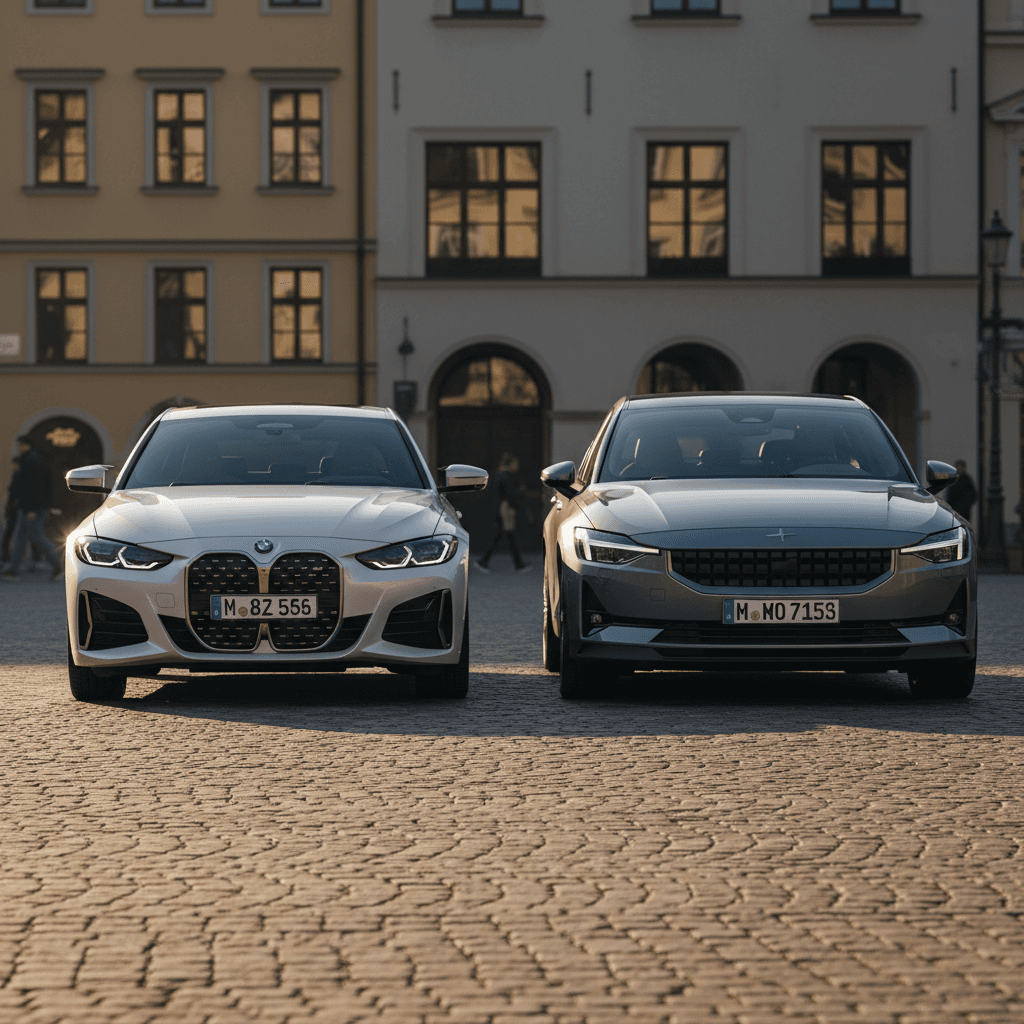
If you’re cross-shopping the BMW i4 vs Polestar 2 and wondering which is better, you’ve already narrowed your search to two of the sharpest-driving electric sedans on the market. They occupy the same price bracket, target the same buyer, and on paper look eerily similar. In reality, they deliver very different personalities, and very different ownership stories, especially on the used market.
At a Glance
BMW i4 vs Polestar 2: Quick Overview
Personality Snapshot: Which EV Fits You?
High-level strengths before we get lost in kilowatts and cargo volume.
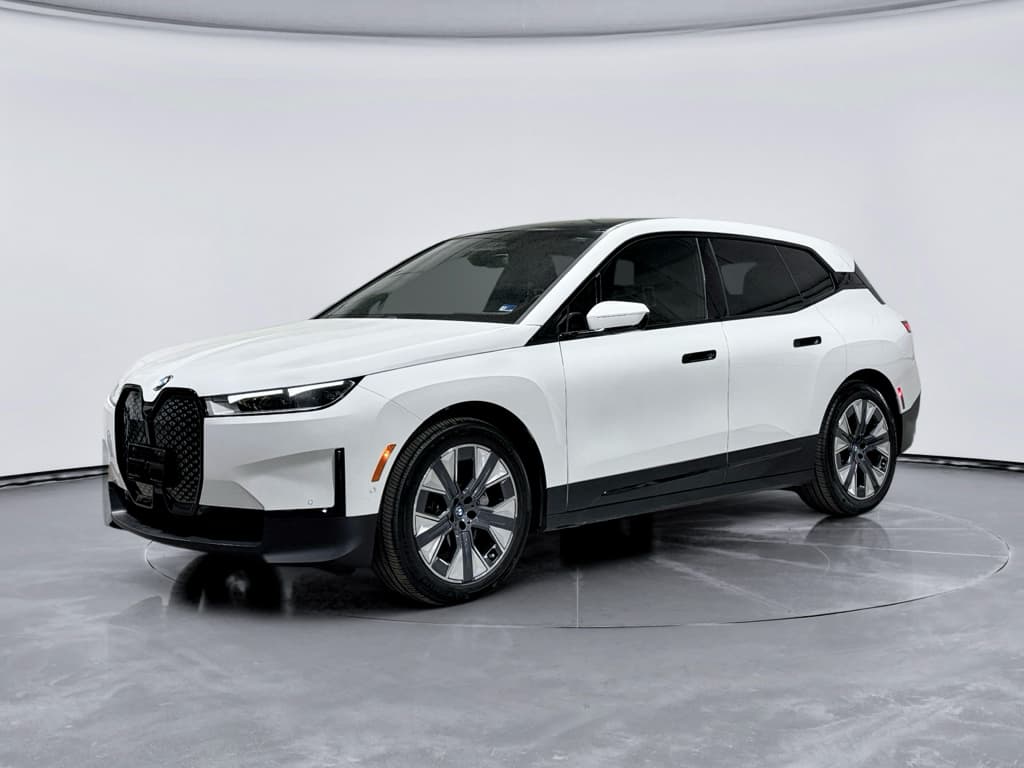
BMW i4: The Electric 3 Series
Best for: Drivers who still enjoy a good on-ramp and care about cabin hush.
- Silky RWD or punchy AWD performance
- Traditional, high-quality BMW interior
- Excellent highway refinement and noise isolation
- Charges quickly on DC, though not class-leading
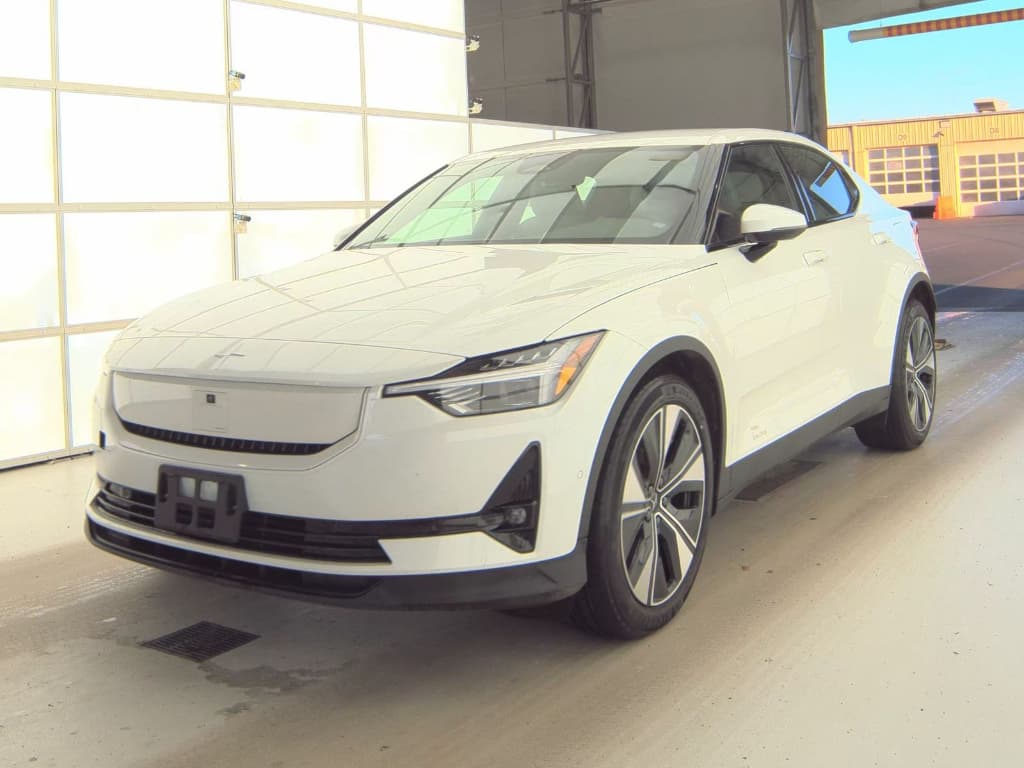
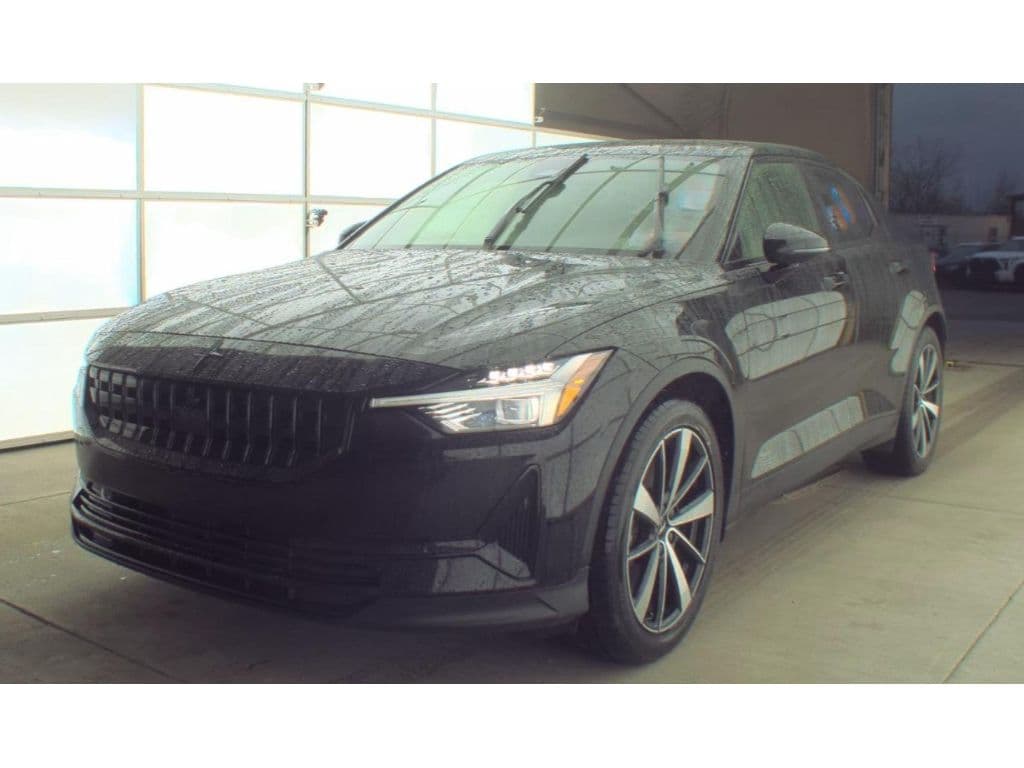
Polestar 2: Scandinavian Design Statement
Best for: Design and tech‑savvy buyers who want something that doesn’t look like every other German sedan.
- Clean, minimal Scandinavian style inside and out
- Google-based infotainment that’s genuinely excellent
- Strong range, especially on newer single‑motor cars
- Ride skewed a bit firmer and more "EV hatchback" than luxury sedan
Core Metrics Snapshot (Typical 2024–2025 US Specs)
Key Specs: BMW i4 vs Polestar 2
BMW i4 vs Polestar 2: Core Specs (Typical 2024–2025 US Models)
Exact numbers vary by trim and wheel size, but this gives you the lay of the land.
| Model / Trim Example | Drive | Usable Battery (approx.) | EPA Range (approx.) | 0–60 mph (approx.) | Peak DC Charge Rate |
|---|---|---|---|---|---|
| BMW i4 eDrive35 | RWD | ~66 kWh | ~260 mi | ~5.8 s | 180–200 kW |
| BMW i4 eDrive40 | RWD | ~81 kWh | ~290–300 mi | ~5.4 s | 200 kW |
| BMW i4 M50 / xDrive M Performance | AWD | ~81 kWh | ~245–270 mi | ~3.7–3.9 s | 200 kW |
| Polestar 2 Long Range Single Motor (82 kWh) | RWD | ~79–82 kWh | ~300–320 mi | ~5.9 s | Up to ~205 kW |
| Polestar 2 Long Range Dual Motor | AWD | ~79–82 kWh | ~260 mi | ~4.2–4.5 s | Up to ~155–205 kW (pack dependent) |
Always check the window sticker or Recharged Score Report for exact battery, range, and charging specs on the specific car you’re considering.
Mind the Model-Year Details
Range and Battery Life: Which Goes Farther?
On paper, Polestar 2 usually wins the range headline, particularly in its Long Range Single Motor configuration, which can top around 300 miles of EPA‑rated range in recent model years. BMW’s i4 eDrive40 isn’t far behind, often hovering just under that mark depending on wheels and options, while the dual‑motor performance versions of both cars sacrifice range for thrust.
BMW i4 Range Character
- eDrive35/40: Respectable highway performers with efficiency similar to a Tesla Model 3 Long Range in the real world if you’re gentle.
- M50/xDrive M Performance: Heavier, stickier tires and more motor mean noticeably shorter range, think practical 220–250 miles on the highway if you’re doing 75 mph with climate on.
- Battery chemistry: BMW sticks with a proven large pack; degradation data so far has been conservative and boring, in a good way.
Polestar 2 Range Character
- Long Range Single Motor: The sweet spot. Owners routinely report real‑world highway numbers surprisingly close to the EPA sticker when driven at sane speeds.
- Dual Motor / Performance: Range drops, especially on Performance Pack cars with stickier tires. Expect something closer to mid‑200s in mixed driving.
- Early vs. later cars: Later model years got larger batteries and efficiency tweaks. A 2021 car will not match a 2024+ single‑motor on range.
How to Read Range Claims Like a Pro
Charging Speed and Road-Trip Usability
Both cars are solid road‑trip companions if you have access to CCS fast chargers (and, increasingly, NACS via adapters or built‑in compatibility on newer examples). BMW i4 models (aside from some base trims) commonly support up to around 200 kW peak DC charging, with real‑world 10–80% sessions taking roughly 30–35 minutes when the battery is preconditioned. Newer Polestar 2 single‑motor cars with the larger CATL pack have similar peak rates and times, while some dual‑motor versions top out lower.
Everyday Charging: What Living With Each Car Feels Like
Level 2 at home is where 90% of your charging life happens.
BMW i4 at Home
- 11 kW onboard AC charger
- 0–100% in under 8 hours on a 240V Level 2
- Great match for overnight charging even for high‑mileage commuters
Polestar 2 at Home
- Also typically 11 kW AC onboard
- Similar overnight full charges from a 40–48A Level 2
- Very predictable, stable charging behavior reported by most owners
Public Fast Charging
- Both use CCS on earlier models; newer cars increasingly support NACS (Tesla‑style) with adapters or native ports.
- On an efficient single‑motor trim, a 30‑minute stop can add roughly 150–200 miles of range in good conditions.
Don’t Buy an EV Without a Home-Base Plan
Driving Experience and Performance
Here’s where preferences harden into opinions. The BMW i4 feels very much like a 3 Series that went to a tech retreat and came back humming. It’s quiet, substantial, and the steering has that familiar BMW weighting, even if purists will quibble about feedback. The Polestar 2 leans into its EV‑ness: upright, slightly firmer, and more hatchback‑crossover in its stance, with a distinctly Scandinavian sense of restraint.
- Single‑motor trims in both cars are more than quick enough for real life. If you’re coming from a conventional 4‑cylinder sedan, either will feel like it discovered warp drive.
- Dual‑motor and performance variants deliver honest‑to‑God sports‑sedan acceleration, but you pay at the pump, well, at the plug, in range and tire wear.
- The i4 is the more isolated, luxurious highway tool; the Polestar reads the road a bit more, which some drivers perceive as "sporty" and others as "busy."
If You Love to Drive…
Interior Comfort, Space, and Practicality
BMW i4 Cabin
- Design: Classic BMW cockpit with a big curved display, physical controls where you want them, and high‑quality materials.
- Comfort: Excellent front seats, quiet at speed, and a more traditional sedan seating position.
- Cargo: Technically a hatchback, but shaped like a sedan. Trunk space is decent; rear headroom can be tight for tall adults.
Polestar 2 Cabin
- Design: Minimalist, sustainable materials, and a strong "boutique hotel" vibe. It feels special, especially if you’re bored of German seriousness.
- Comfort: Seats are supportive but firmer; ride quality on Performance Pack cars can verge on harsh on broken pavement.
- Cargo: True hatchback practicality, with a useful rear opening and split‑folding seats that make IKEA runs less of a Tetris session.
Space Reality Check
Infotainment, Tech, and Driver Assistance
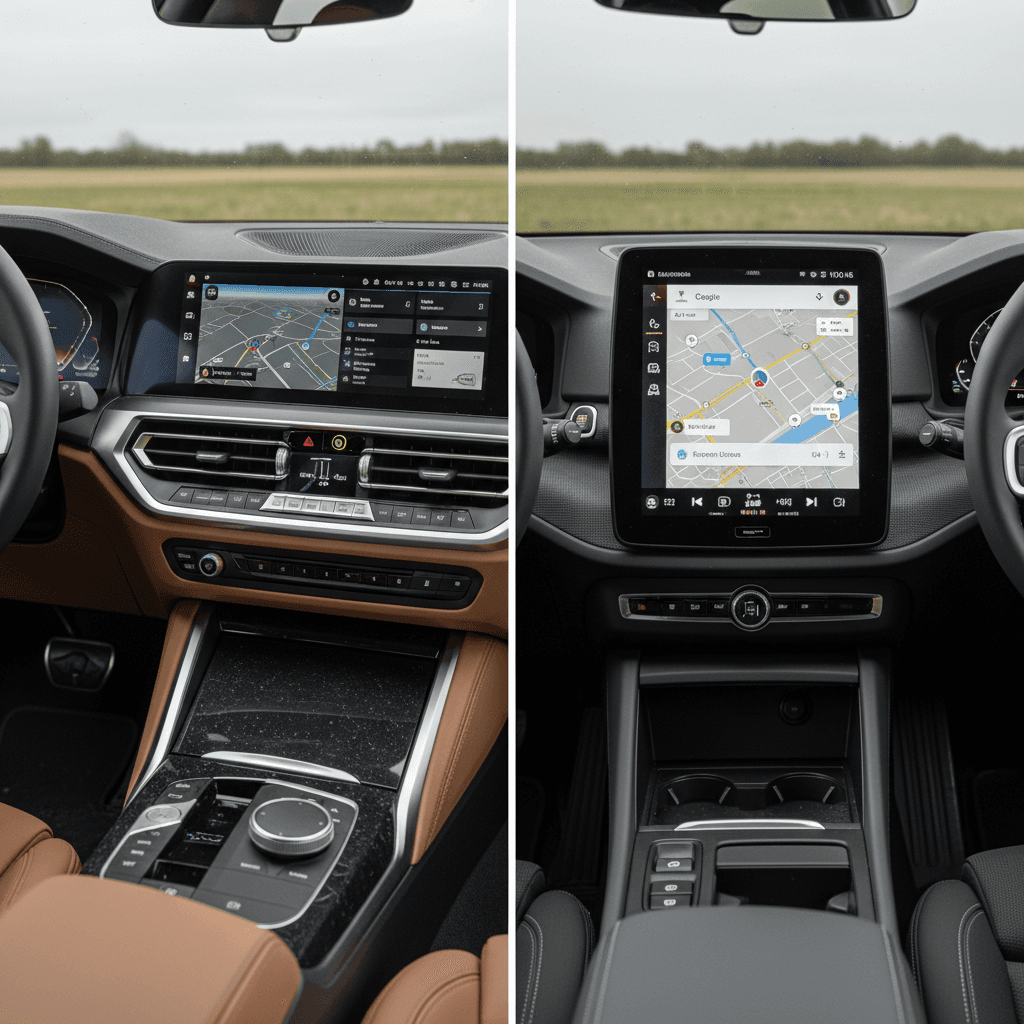
Tech is where the Polestar 2 punches above its weight. Polestar leans on native Google built‑in, which means Google Maps, Assistant, and the Play Store feel more like an Android tablet than a car infotainment system. Voice recognition is generally excellent and over‑the‑air updates are normal business. BMW’s latest iDrive is feature‑rich and fast but layered; some owners adore the depth, others find the learning curve a bit steep.
Tech Face-Off: Convenience vs. Complexity
Polestar 2 Tech Highlights
- Google Maps routing that automatically factors charging stops.
- Clean, snappy UI with minimal clutter.
- Strong integration with Android phones; Apple CarPlay improved in later updates.
- Driver aids that feel modern but occasionally conservative with alerts.
BMW i4 Tech Highlights
- Curved dual‑screen layout with polished graphics.
- Deep customization for drive modes, displays, and driver assistance.
- Wireless Apple CarPlay and Android Auto on most trims.
- Excellent head‑up display and camera systems on well‑optioned cars.
Future-Proofing Your Tech
Ownership Costs, Reliability, and Depreciation
The good news: both the BMW i4 and Polestar 2 benefit from EV powertrains that, in theory, have fewer wear items than their gas equivalents. No oil changes, no exhausts, no gearboxes full of clutches. The catch is that they are complex, premium European EVs, and that means software updates, sensors, and out‑of‑warranty repairs can add up.
What to Consider Beyond the Sticker Price
Battery Health and Remaining Warranty
Battery packs are expensive. You want a clear picture of current health and how much of the original battery warranty remains. Recharged’s battery diagnostics roll this into a simple Recharged Score so you’re not reading scan‑tool tea leaves.
Out-of-Warranty Risk
A used i4 or Polestar 2 that’s out of its basic warranty can still be a great buy, if the price properly reflects that risk. Plan a reserve for potential high‑tech repairs, especially around ADAS and infotainment.
Tire and Brake Wear
Performance versions of both cars can chew through tires faster than you expect, and regenerative braking patterns can create uneven pad wear if something’s off. Inspect or have a trusted shop inspect before committing.
Insurance and Registration
Premium EVs can cost more to insure than an economy EV due to repair complexity. Get quotes on both models with your actual driving profile and ZIP code before you fall in love with either.
Brand Network Matters
Used EV Angle: Which Is the Smarter Second-Hand Buy?
If you’re shopping used, which is where Recharged lives, the calculus shifts from glossy brochures to what’s actually sitting on the lot in 2025. The BMW i4 tends to hold its value a bit better thanks to the brand’s residuals and a broader audience cross‑shopping it against familiar 3/4 Series sedans. The Polestar 2 can sometimes be found at more aggressive pricing relative to its original MSRP because the brand is newer and less widely recognized in the US.
Why a Used BMW i4 Makes Sense
- Feels instantly familiar if you’ve owned BMWs before.
- Strong dealer support and parts availability.
- Higher residuals, but also strong demand when you go to sell.
- Great pick if you value refinement and long‑distance comfort.
Why a Used Polestar 2 Is a Clever Play
- Often more metal for the money because brand awareness is still catching up.
- Standout design that doesn’t blend into traffic.
- Excellent Google‑based tech that ages gracefully.
- Later cars with the larger battery deliver compelling range for the price.
How Recharged De-Risks Used EVs
Ready to find your next EV?
Browse VehiclesBMW i4 vs Polestar 2: Which Should You Buy?
So, BMW i4 vs Polestar 2: which is better? As usual, the right answer isn’t a model; it’s a match. Each car has a clear personality, and you’ll be happier playing to that rather than trying to force one to be something it isn’t.
Choose the BMW i4 if you…
- Want an EV that feels like a classic German sport sedan first and a gadget second.
- Prioritize highway refinement, low cabin noise, and long‑distance comfort.
- Live somewhere with strong BMW dealer coverage and prefer established service networks.
- Are considering a performance variant and know you’ll smile every time you merge.
Choose the Polestar 2 if you…
- Value design, sustainability cues, and that "what is that?" curb appeal.
- Love the idea of Google‑native infotainment and smart routing to chargers.
- Want strong range on a budget, especially in single‑motor, larger‑battery trims.
- Do more city and suburban driving, where its firmer setup feels energetic rather than harsh.
If you forced a verdict for the average EV shopper, the BMW i4 edges ahead as the more rounded luxury daily driver, especially if you spend serious time on the highway. But for tech‑forward buyers who want something visually distinctive with excellent range in the right trim, a well‑specced Polestar 2 is the connoisseur’s choice. Either way, a used example with a clean battery bill of health, and a transparent Recharged Score, will do more for your happiness than chasing the last 10 miles of range on a brochure.