If you’re cross‑shopping performance EVs, the BMW i4 M50 is probably on your list right next to the Tesla Model 3 Performance and Polestar 2. On paper the i4 M50 looks like a classic BMW M car gone electric: dual motors, up to 536 hp, and a 0–60 mph time in the mid‑3‑second range. But what is it actually like to drive, live with, and, especially if you’re buying used, own day in and day out?
Where the i4 M50 fits
BMW i4 M50 overview: what this car is
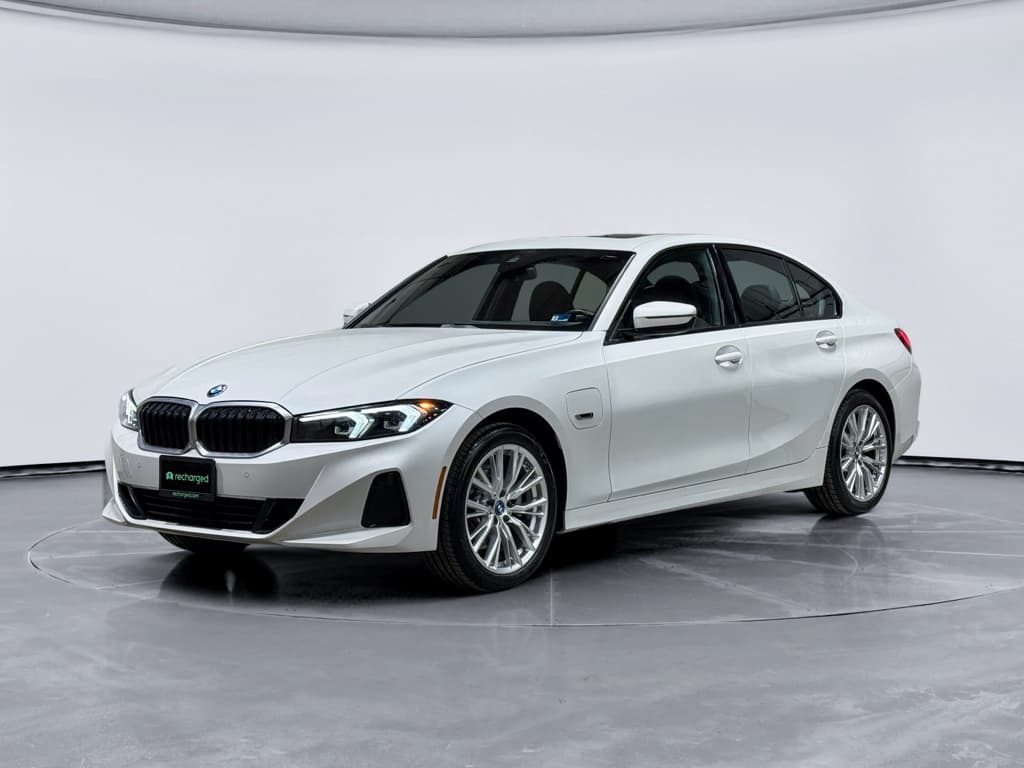
The i4 M50 is the top performance version of BMW’s i4 electric Gran Coupe. It uses a dual‑motor all‑wheel‑drive setup with a combined output of up to about 536 hp and 586 lb‑ft of torque, backed by an 83.9 kWh battery pack. Official 0–60 mph is around 3.7 seconds, which firmly plants it in “this used to be supercar quick” territory for everyday drivers.
Key BMW i4 M50 specs at a glance
Curb weight is just over 5,000 pounds, and you feel that mass in certain situations. But BMW has done enough chassis work, adaptive dampers, serious tires, and a rear‑biased power delivery, to keep the i4 M50 feeling secure and, at times, genuinely fun.
Trim and wheel choice matter
Power, acceleration and driving modes
Prod the accelerator in the BMW i4 M50 and it responds the way the numbers suggest. Dual motors give you instant torque and all‑wheel‑drive traction, so full‑throttle launches pin you back with almost no drama. The rear motor still does much of the work, which helps the car feel more like a traditional rear‑drive BMW that just happens to have front‑axle assist.
How the main driving modes change the i4 M50
Same powertrain, very different personalities
Eco Pro
Softens throttle response and prioritizes efficiency.
- Best for traffic and city driving
- Limits climate draw to save energy
- Makes the car feel less eager but still plenty quick
Comfort
The default for daily driving.
- Smoother accelerator mapping
- Dampers balance body control and ride comfort
- Quiet, refined highway character
Sport / Sport Boost
Unlocks full personality.
- Sharper throttle and heavier steering
- Unleashes up to 536 hp for short bursts
- Launches feel legitimately supercar‑quick
In Sport and Sport Boost, the car feels dramatically more alert. There’s no traditional gearbox, but BMW uses simulated shift points and sound to give you a familiar M‑car rhythm if you want it. If you prefer silence, you can disable the synthetic soundtrack and lean into the eerily quiet, instant acceleration instead.
Watch your speed
Handling, steering feel and ride comfort
On a twisty road, the i4 M50 is a mixed bag, in a way that matters if you’re expecting an electric 3 Series. Steering is quick and precise, and front‑end grip is strong, especially with the optional performance tires. The chassis stays flat in fast corners, and the all‑wheel drive can fire you out of bends with impressive traction.
Where it feels like a BMW
- Sharp turn‑in and accurate steering on smoother pavement
- High‑speed stability that inspires confidence on the highway
- Strong brakes and short stopping distances for a 5,000‑lb car
- Rear‑biased power delivery that lets you rotate the car with the throttle
Where the weight shows
- On tight, bumpy back roads the M50 can feel heavy and a bit blunt
- With 20" wheels, broken pavement sends more thumps into the cabin
- You sense the mass in quick left–right transitions compared with a lighter 3 Series
- It feels more like a shrunken 8 Series Gran Coupe than a classic sports sedan
Ride quality: 19s vs 20s
If your reference point is an M3 or a 3 Series on adaptive suspension, the i4 M50 doesn’t feel as playful or as communicative. If your benchmark is a fast luxury EV or a mid‑size GT, though, the way it blends composure, silence and grip is impressive.
Range, efficiency and real‑world results
Officially, the BMW i4 M50 is rated at up to about 269 miles of EPA range on 19‑inch wheels and roughly 227 miles on the optional 20‑inch setup. Efficiency is roughly mid‑pack for performance EVs: the EPA pegs combined consumption around the mid‑30‑kWh‑per‑100‑mile mark, which translates to close to 95 MPGe on the best configurations.
Range and efficiency snapshot
Weather and speed matter
For daily use, most owners will see an effective usable range in the 200–250‑mile band depending on climate, wheel choice, and how hard they lean on the car’s performance. That’s plenty for commuting, school runs and errands, but road‑trippers used to 350+ miles from a Model 3 Long Range will notice the difference.
Charging the BMW i4 M50: home and DC fast charging
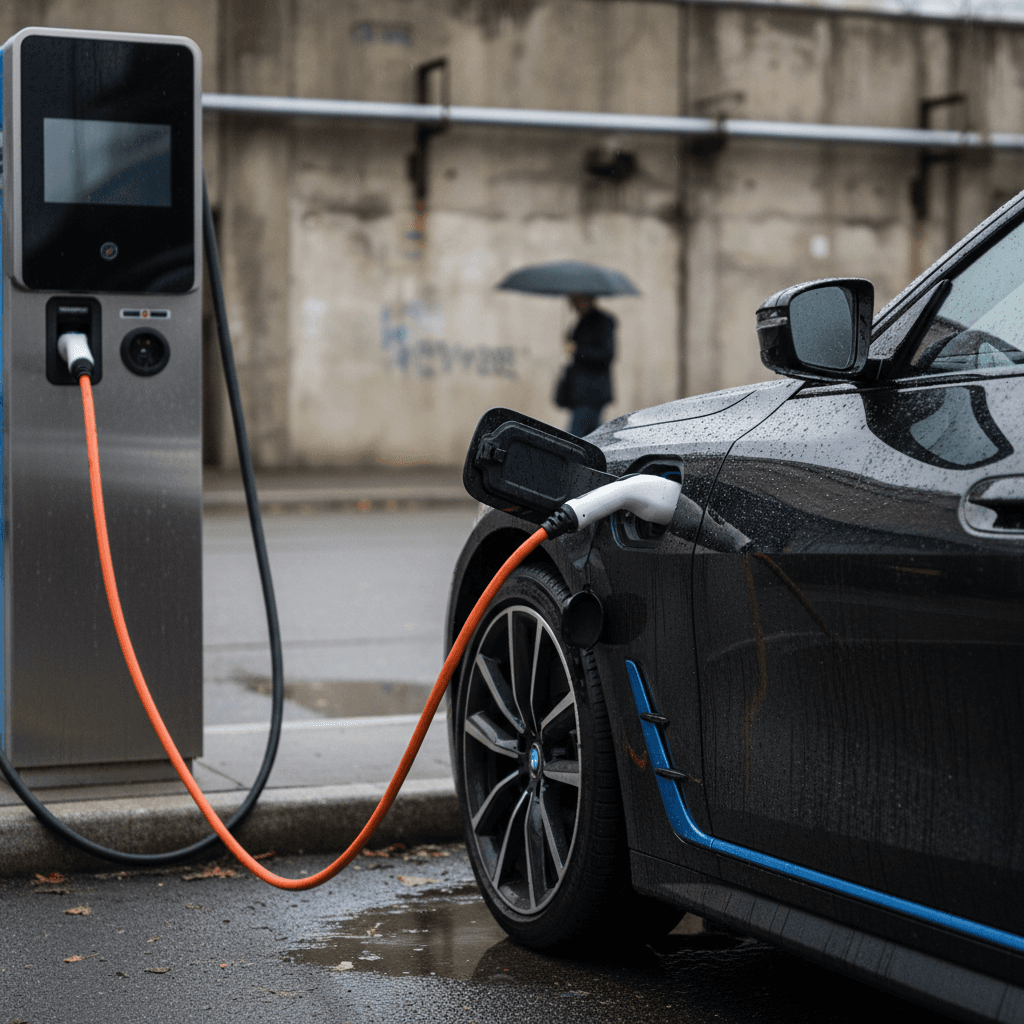
Charging is an area where the i4 M50 quietly does a lot right. The onboard AC charger supports up to 11 kW on Level 2, which means a properly installed 48‑amp home charger can take the battery from near empty to full in roughly eight to ten hours. In practical terms, you’ll add around 30–35 miles of range per hour at home, more than enough to wake up to a full battery after overnight charging.
How long charging actually takes
Approximate times in everyday scenarios
Home Level 2 (11 kW)
- 0–100% in about 8–10 hours
- Great for overnight charging
- Roughly 30–35 miles of range per hour
Public Level 2
- Same speed as home if power is available
- Plan on 2–3 hours to go from ~20% to ~80%
- Good for workplace or destination charging
DC fast charging
- Peak around 200 kW on compatible chargers
- Roughly 10–15 minutes: 60–90 miles added
- About 30 minutes: 10–80% under ideal conditions
Plan for the charging curve
If you’re coming from a gas BMW, the biggest mental shift is learning to think in terms of where you’ll park and charge rather than where you’ll stop for fuel. Get a Level 2 charger installed at home and the i4 M50 becomes extremely easy to live with; rely only on public DC fast charging and your experience will depend heavily on which networks are strong in your area.
Home charging safety
Interior, seats and noise levels on the road
Inside, the i4 M50 feels very much like a modern BMW 4 Series Gran Coupe, which is mostly good news. You get a low driving position, supportive sport seats with extendable thigh support, and BMW’s latest curved display running iDrive. Materials are solid and the layout will feel familiar if you’ve driven recent BMWs.
Cabin quietness while cruising
Seats built for long days
Rear‑seat space and headroom are adequate rather than generous, remember, this is a sloping‑roof Gran Coupe, not a tall SUV. The upside is a practical hatchback that makes loading bulky cargo easier than in a traditional sedan. If you regularly carry four adults and luggage, though, it’s worth sitting in the back before you buy.
BMW i4 M50 vs Tesla Model 3 Performance and other rivals
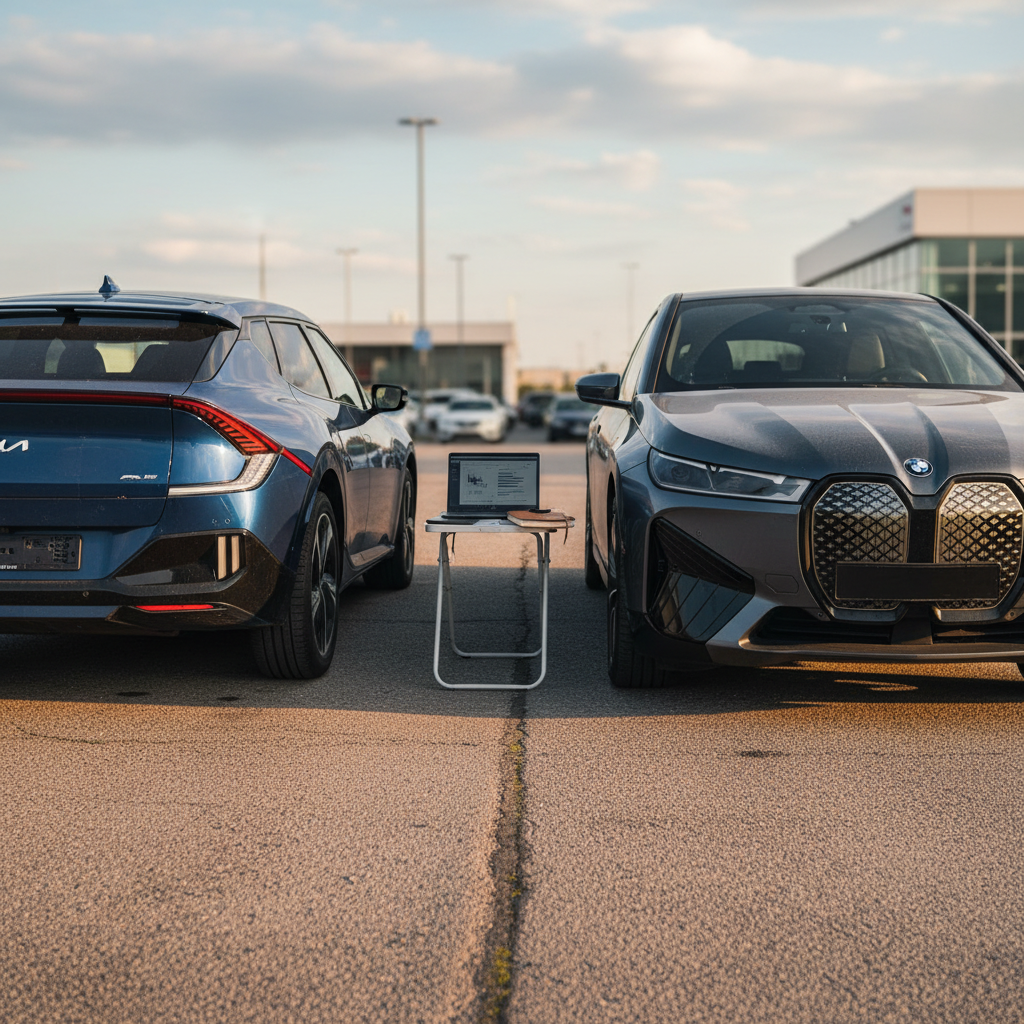
The BMW i4 M50’s natural rivals are the Tesla Model 3 Performance, Polestar 2 dual‑motor, and higher‑spec versions of the Hyundai Ioniq 5 and Kia EV6. Each takes a different approach to the same brief: quick, reasonably practical EVs that can serve as daily drivers and weekend fun cars.
BMW i4 M50 vs key performance EV rivals (high level)
How the i4 M50 stacks up where drivers notice it most.
| Model | 0–60 mph (approx.) | EPA range (best config) | Driving character | Strengths | Drawbacks |
|---|---|---|---|---|---|
| BMW i4 M50 | 3.7 s | ~269 mi | Heavy but secure GT | Luxury cabin, instant punch, BMW badge | Less playful than an M3, mid‑pack efficiency |
| Tesla Model 3 Performance | ~3.1 s | ~300–320 mi | Light, very quick | Range, charging network, software | Simpler interior, firmer ride |
| Polestar 2 Dual Motor | 4.0–4.3 s | ~240–270 mi | Sporty, firm | Scandi design, strong performance | Tighter rear seat, firm ride |
| Hyundai Ioniq 5 AWD | ~4.4 s | ~260–270 mi | Comfortable, airy | Ultrafast 800‑V charging, space | Not as overtly sporty |
| Kia EV6 GT-Line/GT | ~3.4–4.5 s | ~250–280 mi | More playful | Aggressive styling, strong performance | Less traditional luxury feel |
Approximate values; exact figures vary by model year, wheel choice and options.
How to choose between them
Day‑to‑day driving and road‑trip usability
Driven gently in Comfort mode, the BMW i4 M50 is a relaxed, quiet commuter. Visibility is decent, the adaptive cruise and lane‑keeping systems take the edge off traffic, and regen braking in its stronger settings lets you do most slowing with one pedal. The car feels overbuilt for simple errands, which, for many buyers, is part of the appeal.
What stands out in daily use
Instant power with no drama
Even half throttle is more than enough for most situations. Passing is effortless; highway on‑ramps become something you look forward to.
Easy one‑pedal driving
Stronger regen settings let you slow smoothly without touching the brake pedal most of the time, once you’re used to it.
Comfortable long‑haul cruiser
Straight‑line stability, quiet cabin and supportive seats make 3–4‑hour stints at the wheel surprisingly relaxing.
Parking and maneuvering
The i4 is long but still city‑friendly. Sensors, cameras and good low‑speed response make tight spaces manageable.
Road‑trip planning required
Range is fine for most days but not class‑leading. You’ll plan charging stops a bit more carefully than in a long‑range Tesla.
Mind the trunk and rear space
Buying a used BMW i4 M50: what to watch
The i4 M50 is already finding its way into the used market, which makes it an intriguing option if you want serious performance for less than new‑car money. As with any used EV, though, there are a few extra items to put on your checklist beyond the usual tires and brake pads.
Key checks when shopping a used i4 M50
Performance EV, but the homework is very familiar
Battery health and range
Ask the seller for recent range figures at 100% charge and typical use. Degradation on modern packs is usually modest, but hard‑driven or frequently DC‑fast‑charged cars may have lost more capacity.
With Recharged, every vehicle includes a Recharged Score with verified battery health so you know how the pack has aged before you buy.
Wheels, tires and brakes
Those big 20‑inch wheels look great but can be expensive to replace, and low‑profile tires are more vulnerable to pothole damage. Check for wheel rash, sidewall bubbles and brake wear, especially on heavy performance EVs like the M50.
Charging history and equipment
Confirm which home charger (if any) comes with the car and how it was installed. Ask how often the previous owner used DC fast charging vs. home Level 2, that’s useful context for long‑term battery health.
Software, recalls and service history
Verify that software is up to date and that any outstanding recalls or service campaigns have been addressed. Well‑documented maintenance and over‑the‑air updates are a good sign of a cared‑for car.
How Recharged can help
Ready to find your next EV?
Browse VehiclesBMW i4 M50 driving review FAQ
Frequently asked questions about the BMW i4 M50
Final thoughts: who the i4 M50 is really for
Viewed as an electric replacement for a 3 Series or M3, the BMW i4 M50 can feel a little too heavy and not quite as playful as the badge might lead you to expect. But judged as a fast, comfortable, four‑door GT that happens to be electric, it’s a deeply appealing package: huge power when you want it, a quiet and composed ride when you don’t, and a cabin that feels familiar rather than futuristic for its own sake.
If you want the sharpest handling and longest range in the class, a Model 3 Performance or one of the latest dedicated‑EV platforms might still be your best fit. If you’re ready to move into an EV but don’t want to give up the feel of a solid German luxury car, with real seats, real switchgear and a sense of heft, the i4 M50 deserves a serious look, especially on the used market where depreciation has already done some of the work for you.