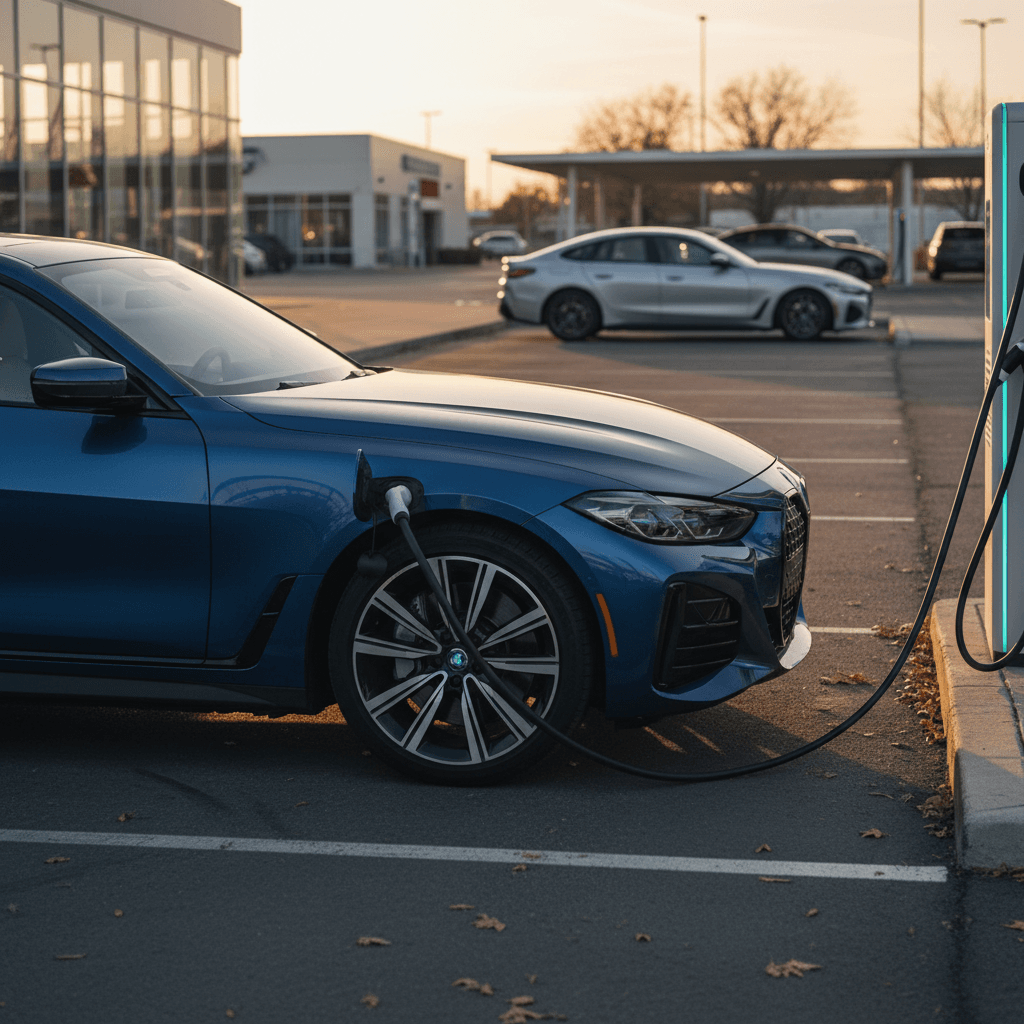
You don’t cross-shop the BMW i4 by accident. You’re looking for a sleek, electric Gran Coupé that still feels like a BMW on a back road. But once you’re in the weeds comparing BMW i4 eDrive35 vs eDrive40 vs M50, the trim walk can get confusing, especially if you’re shopping used and seeing different model years, wheel sizes, and option packages.
The short version
BMW i4 eDrive35 vs eDrive40 vs M50: Trim overview
Regardless of trim, every i4 is a five-door liftback based on BMW’s 4 Series Gran Coupé, with the brand’s signature long hood and low seating position. Where they differ is in motor layout, battery size, and tuning.
How each BMW i4 trim is positioned
Same body, very different personalities
i4 eDrive35
Role: Value and efficiency play.
- Single rear motor, smaller battery
- Lower price, less range and power
- Best if most of your driving is commuting
i4 eDrive40
Role: Everyday sweet spot.
- Single rear motor, larger battery
- More range and stronger acceleration
- Balanced for road trips and daily use
i4 M50
Role: Performance flagship.
- Dual motors, all-wheel drive
- Big power, sport-tuned suspension
- Quick enough to humble sports cars
Model-year wrinkle
Key specs at a glance
BMW i4 eDrive35 vs eDrive40 vs M50: core numbers
Approximate U.S.-spec figures for recent model years. Exact range and performance vary slightly by wheel size, options, and test cycle.
| Trim | Drive | Approx. horsepower | 0–60 mph (approx.) | Battery (usable kWh) | EPA range (18" wheels, approx.) | Typical new MSRP* |
|---|---|---|---|---|---|---|
| i4 eDrive35 | RWD | ~281 hp | ~5.7–5.8 s | ~67 kWh | ~256 miles | ~$54k when new |
| i4 eDrive40 | RWD | 335 hp | ~5.5 s | ~80 kWh | ~300–318 miles | ~$59k+ depending on year |
| i4 M50 | AWD dual motor | 536 hp | ~3.7–3.9 s | ~80 kWh | ~245–270 miles | ~$71k+ depending on year |
Use this as a directional guide; confirm details for any specific used i4 you’re considering.
About the numbers
Pricing and value: where each trim makes sense
The i4 lineup follows a classic BMW pattern: the higher the trim, the more power and equipment you get, but the more you pay up front and in tires, brakes, and energy consumption over time.
BMW i4 value snapshot (recent U.S. market)
How prices stack up new
When new, the price walk from eDrive35 to eDrive40 is usually several thousand dollars. Jumping from eDrive40 to M50 can add another five figures once you factor in performance and luxury options.
If you’re financing, that can translate to a noticeable jump in monthly payment. The question is whether you’ll use what you’re paying for, extra range or extra speed.
The used-market twist
On the used market, price gaps can narrow. A lightly optioned eDrive40 might sit closer in price to a well-equipped eDrive35 than you’d expect. And early-build M50s can undercut newer eDrive40s while delivering far more performance.
Shopping on Recharged, you’ll see fair-market pricing and a Recharged Score Report with battery health and equipment breakdown, so it’s easier to compare real-world value across trims and years.
Value sweet spot
Range, battery, and charging differences
All i4s use BMW’s 400‑volt architecture and support DC fast charging, but the eDrive35 uses a smaller battery pack than the eDrive40 and M50. That’s the core reason its range and price are lower.
Battery and range: what changes by trim
Same charging hardware, different capacity and range
i4 eDrive35
- Usable battery around 67 kWh
- EPA range roughly 256 mi on 18" wheels
- Great for commuting and short trips
i4 eDrive40
- Usable battery around 80 kWh
- EPA range roughly 300–318 mi depending on year and wheels
- Best long‑range option in the lineup
i4 M50
- Same larger pack as eDrive40
- EPA range roughly 245–270 mi
- Dual motors and stickier tires trade range for speed
Wheel size matters
- All trims can AC charge at up to about 11 kW on Level 2, filling from empty to full in roughly 7–9 hours depending on battery size.
- Peak DC fast‑charging power can reach around 180 kW on compatible chargers, taking the battery from about 10% to 80% in roughly 30 minutes under ideal conditions.
- Because the eDrive35 has a smaller pack, it can feel quicker to recover useful range on a fast charger, even if the peak charging numbers look similar on paper.
How Recharged helps on range
Performance and driving feel
Here’s where the three trims really separate. The i4 is built on BMW’s CLAR platform, so even the base eDrive35 doesn’t feel like an appliance; it feels like a BMW. But your right foot will notice the differences between trims immediately.
Power and acceleration by BMW i4 trim
Approximate performance figures for typical U.S. configurations.
| Trim | Drive layout | Approx. horsepower | Approx. torque | 0–60 mph feel | Character |
|---|---|---|---|---|---|
| i4 eDrive35 | Single motor RWD | ≈281 hp | ≈295 lb‑ft | Quick, not brutal | Smooth, effortless daily driver |
| i4 eDrive40 | Single motor RWD | 335 hp | ≈317 lb‑ft | Genuinely fast | Stronger mid‑range punch, classic BMW RWD balance |
| i4 M50 | Dual‑motor AWD | 536 hp | ≈586 lb‑ft | Seriously quick | Instant shove; feels more like an M car than a family EV |
Real‑world times vary with conditions, but the hierarchy stays the same: eDrive35 < eDrive40 < M50.
Steering, ride, and handling
All trims share a similar basic suspension tune, but cars equipped with adaptive dampers and M Sport packages will feel tighter and more controlled. The eDrive35 and eDrive40 on 18‑inch wheels ride the best over broken pavement. The M50, especially on 20‑inch wheels, brings more grip and more impact harshness.
If you live somewhere with rough roads, prioritize smaller wheels and adaptive suspension over top‑spec power. You’ll enjoy the car more every day.
Traction and weather
The eDrive35 and eDrive40 are rear‑wheel‑drive, which many enthusiasts love for the classic BMW feel. The M50’s all‑wheel drive gives you better traction off the line and extra confidence in rain or snow, at the cost of some efficiency.
For winter climates, an M50 on proper winter tires is a beast. In milder regions, an eDrive40 with all‑season tires is more than enough.
Performance pick
Features, options, and daily usability
Spec sheets can make it look like the trims are worlds apart, but in practice, most comfort and tech features are shared. Differences often come down to option packages rather than the trim name on the trunk.
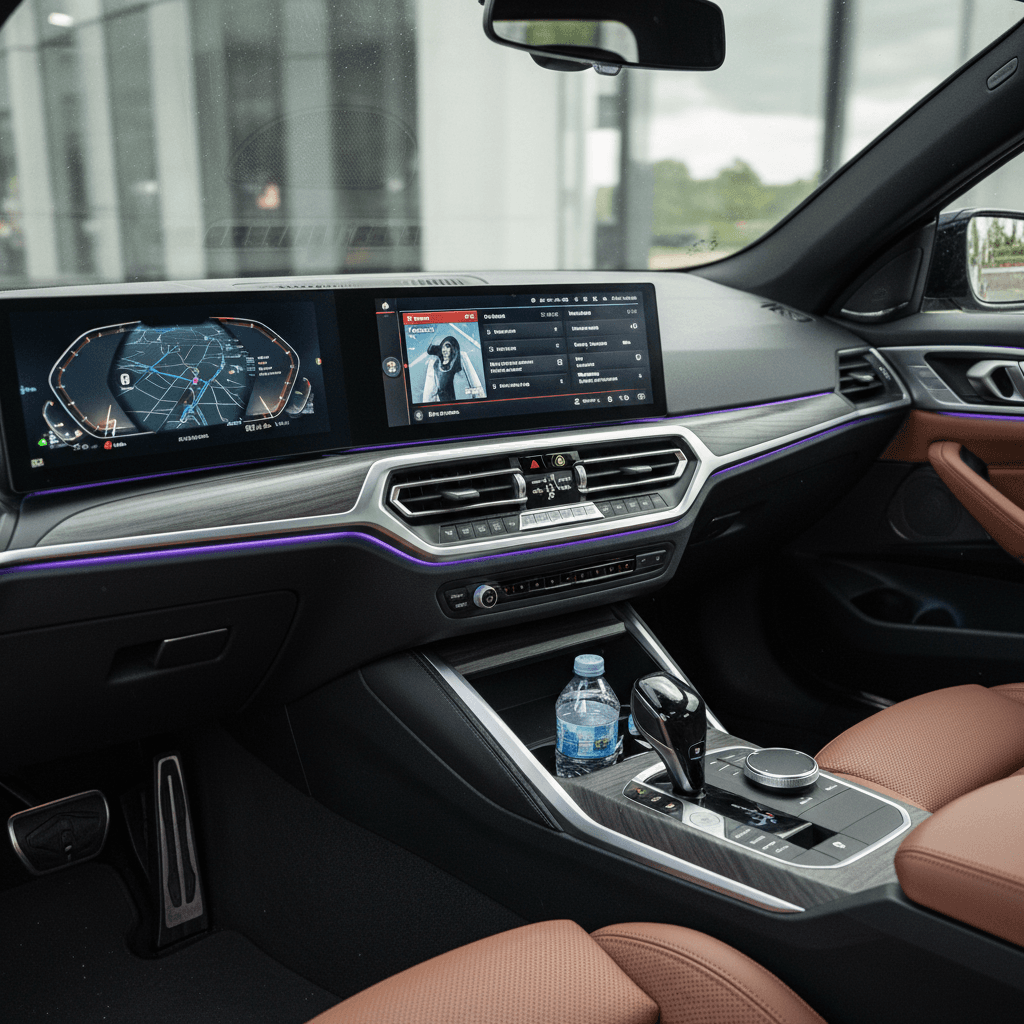
What you’ll find in most BMW i4s
Shared strengths and trim‑specific upgrades
Shared tech
- Curved dual display (digital cluster + touchscreen)
- BMW Operating System with Apple CarPlay & Android Auto
- Available driver‑assist suites (adaptive cruise, lane keeping, parking assists)
Comfort & practicality
- Supportive front seats, adult‑friendly rear seats
- Liftback hatch with generous cargo room
- Available heated seats, steering wheel, and premium audio
Where trims differ
- M50 adds performance details: bigger brakes, sport seats, unique wheels
- Many features (HUD, premium audio, driver assist) are optional on all trims
- Look at individual car spec sheets, not just the trim badge
Shopping tip
Which BMW i4 trim fits you best?
Instead of obsessing over every spec, think about how you actually drive. Commutes, kids, climate, and budget will do a better job of pointing you to the right i4 than lap times or top speed.
Match your driving style to the right i4
Daily commuter & suburban driver
Mostly city and suburban driving, 40–70 miles a day.
Rarely exceeds the speed limit by much.
Wants comfort, quiet, and low running costs more than maximum power.
Best fit: <strong>eDrive35</strong> (or an eDrive40 if prices are close).
Road‑trip friendly all‑rounder
Regular highway trips, maybe a few long road trips a year.
Cares about range and fast‑charging time.
Enjoys brisk acceleration but doesn’t need supercar pace.
Best fit: <strong>eDrive40</strong> with 18" wheels and driver‑assist options.
Performance enthusiast
Loves on‑ramps, back roads, and fast passing maneuvers.
More likely to talk about 0–60 than energy efficiency.
Okay trading some range and comfort for grip and power.
Best fit: <strong>M50</strong>, ideally with adaptive suspension and the right tires for your climate.
Four‑season or mountain‑town driver
Lives where it rains or snows a lot.
Steep driveways, unplowed side streets, and ski trips are part of life.
Wants maximum traction above all else.
Best fit: <strong>M50</strong> with a dedicated set of winter wheels and tires.
Don’t forget charging access
Used BMW i4 buying checklist
The good news: the i4’s battery and drivetrain have, so far, shown solid real‑world durability. Still, you’re buying a complex German performance EV, so you want to be methodical.
Essential checks before you buy a used i4
1. Confirm trim, year, and battery
Double‑check that the car is actually an eDrive35, eDrive40, or M50, and note the model year. Batteries and range ratings can change slightly over time, and some early listings mislabel trims.
2. Look at battery health data
Ask for a recent battery health report. On Recharged, every i4 includes a <strong>Recharged Score</strong> with verified battery diagnostics and realistic range estimates so you’re not guessing.
3. Check wheel size and tire type
Larger wheels look great but reduce range and often ride comfort. Performance tires on an M50 are fantastic in the dry but may be a liability in snow. Factor the cost of a second wheel‑and‑tire set if needed.
4. Inspect charging history and hardware
Confirm that both Level 1 and Level 2 charging cables are included, and if the car has been DC fast‑charged heavily, balance that against battery health data. Occasional fast charging is fine; constant DC abuse is less ideal.
5. Verify driver‑assist and tech packages
Take the time to scroll through the iDrive menus. Does it have adaptive cruise with stop‑and‑go, lane keeping, surround‑view cameras, head‑up display? Those options matter for daily comfort, resale value, and long trips.
6. Test drive in your real world
Drive the car on the roads you actually use, broken pavement, highway merges, parking garages. Pay attention to ride quality, visibility, and how natural the regenerative braking feels to you.
Why shop a used i4 with Recharged
FAQ: BMW i4 eDrive35 vs eDrive40 vs M50
Frequently asked questions about BMW i4 trims
Bottom line: picking the right BMW i4
All three trims, BMW i4 eDrive35, eDrive40, and M50, deliver the same core experience: a handsome, hatchback‑practical electric BMW with a premium cabin and serious highway composure. The trick is to buy for how you drive, not how you daydream. If most of your miles are spent commuting, the eDrive35 or eDrive40 will feel special every day without overspending. If you want to grin every time you merge and you’re okay trading some range and running costs, the M50 is the one that makes your passengers swear.
When you’re ready to zero in on a specific car, Recharged can help you compare real‑world range, battery health, and pricing across used BMW i4s nationwide. With transparent Recharged Score Reports, EV‑savvy support, and flexible options for trade‑ins, financing, and delivery, it’s a simpler way to find the i4 that actually fits your life, not just the spec sheet.