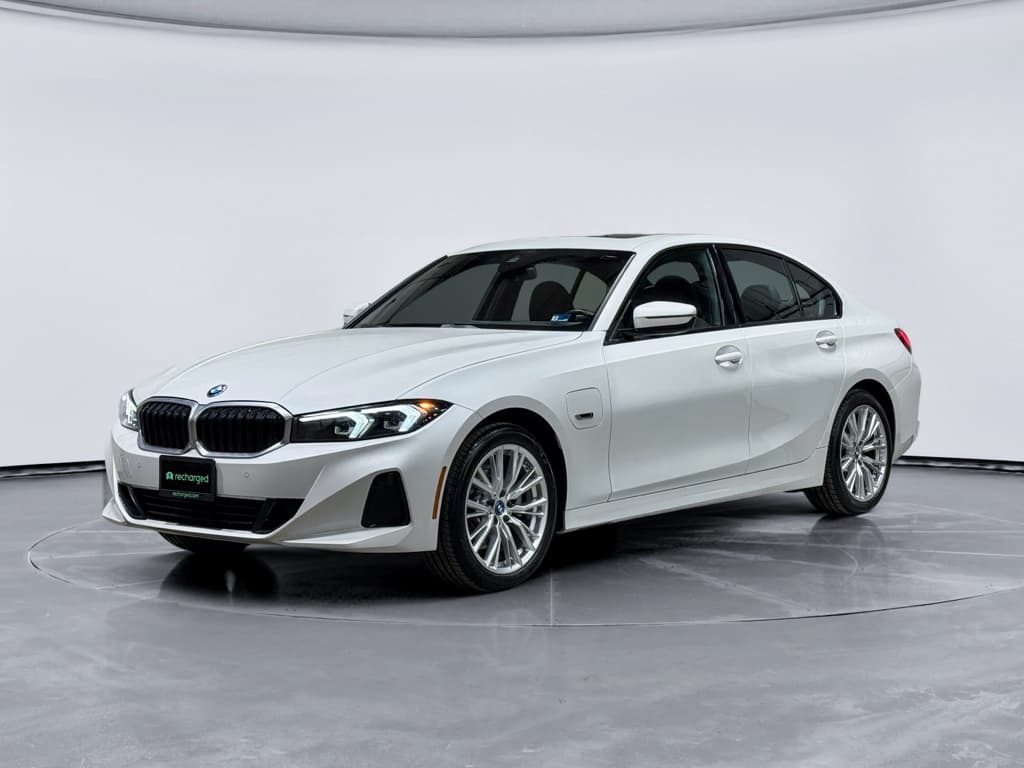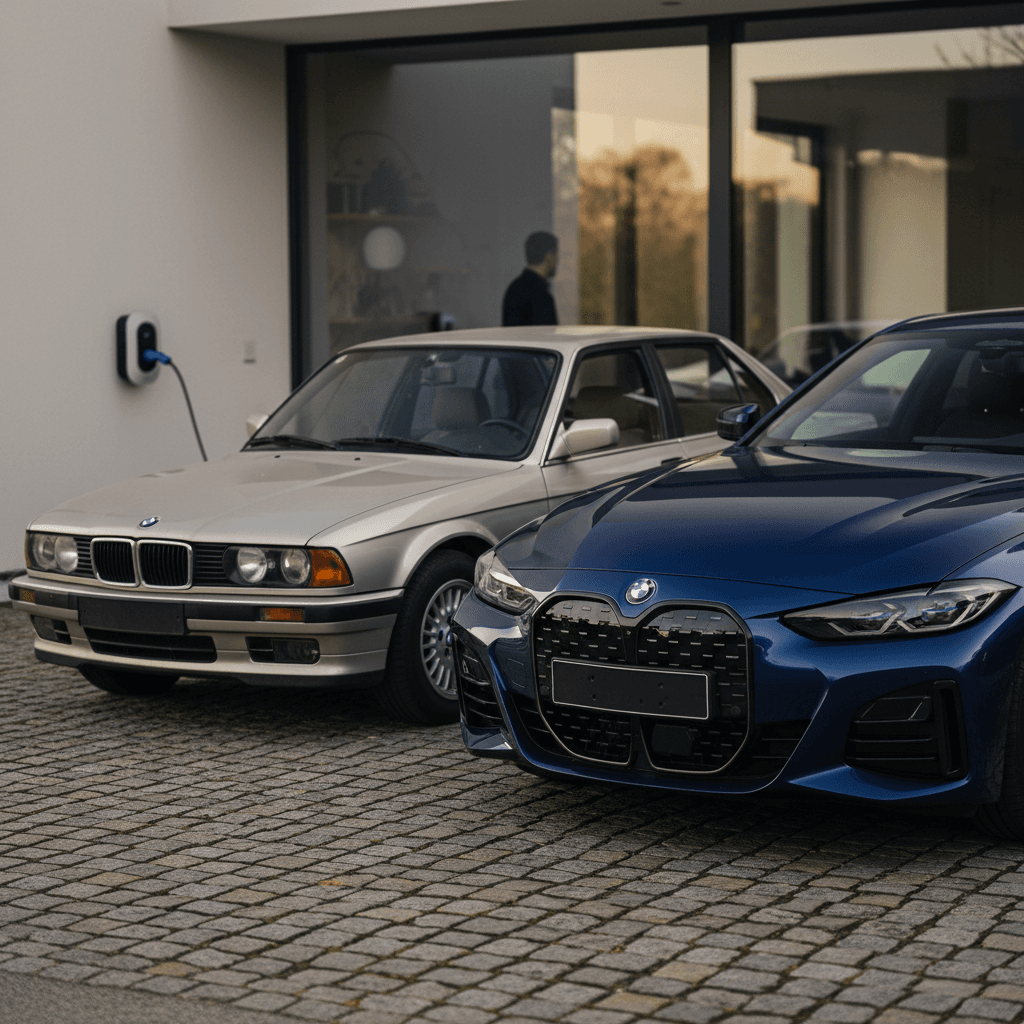
If you’ve lived with a BMW 3 Series for years and you’re eyeing the BMW i4, you’re exactly who this review is written for. We’ll walk through what it actually feels like to swap a gas 3 Series for an electric i4, how the steering and ride compare, what happens to your fueling routine, how far it really goes on a charge, and what to watch for if you’re shopping used.
Quick take
Who this review is for
- Current or recent BMW 3 Series owners (F30, G20, or similar) wondering whether the i4 feels like a “real BMW.”
- Shoppers cross‑shopping a used 330i/340i with a used BMW i4 eDrive35, eDrive40, xDrive40 or M50.
- Drivers who like BMW’s sport‑sedan feel but are new to EVs and worried about range, charging, or long trips.
- Budget‑minded buyers wondering whether a used i4 makes more sense than another gas 3 Series lease.
Instead of a generic spec sheet, we’ll frame this as an owner‑style review: how it drives, what you give up, what you gain, and how day‑to‑day life changes when you step out of a 3 Series and into a BMW i4.
Driving feel: BMW 3 Series vs BMW i4
What feels familiar
- Steering and chassis tuning: The i4 is built on the same basic platform as the 4 Series Gran Coupe, so the front‑end feel, seating position and steering weight will feel immediately familiar to a 3 Series driver.
- Cabin and ergonomics: BMW’s driving position, seat shape and control layout are very much 3‑Series‑like. You still sit low with a long hood in front of you, and the car shrinks around you in the same way in tight traffic.
- Road manners: At normal speeds the i4 tracks straight and steady like a 3 Series, with that same planted, Germanic feel on the freeway.
What feels different
- Instant torque: Even the single‑motor i4 eDrive35 and eDrive40 leap off the line in a way your 330i never did. There’s no gear hunting, just a smooth, strong shove.
- Weight: The battery pack makes the i4 hundreds of pounds heavier than a comparable 3 Series. You mostly feel it in quick direction changes, tight back‑road corners, and heavy braking.
- Sound and feedback: You lose the engine note and traditional BMW straight‑six character. Instead you get near‑silence, some synthesized “IconicSounds Electric” if enabled, and more subtle cues from tires and wind.
If you love your 340i
BMW 3 Series vs BMW i4: key feel‑it‑from-the-seat stats
On a twisty road, you’ll notice the i4’s extra weight if you really lean on it, but BMW’s suspension tuning and low center of gravity keep body control tidy. Think of it as a slightly heavier but more planted Gran Coupe, with more effortless speed between corners.
Trim guide: which BMW i4 feels most like a 3 Series?
BMW i4 trims through a 3 Series owner’s eyes
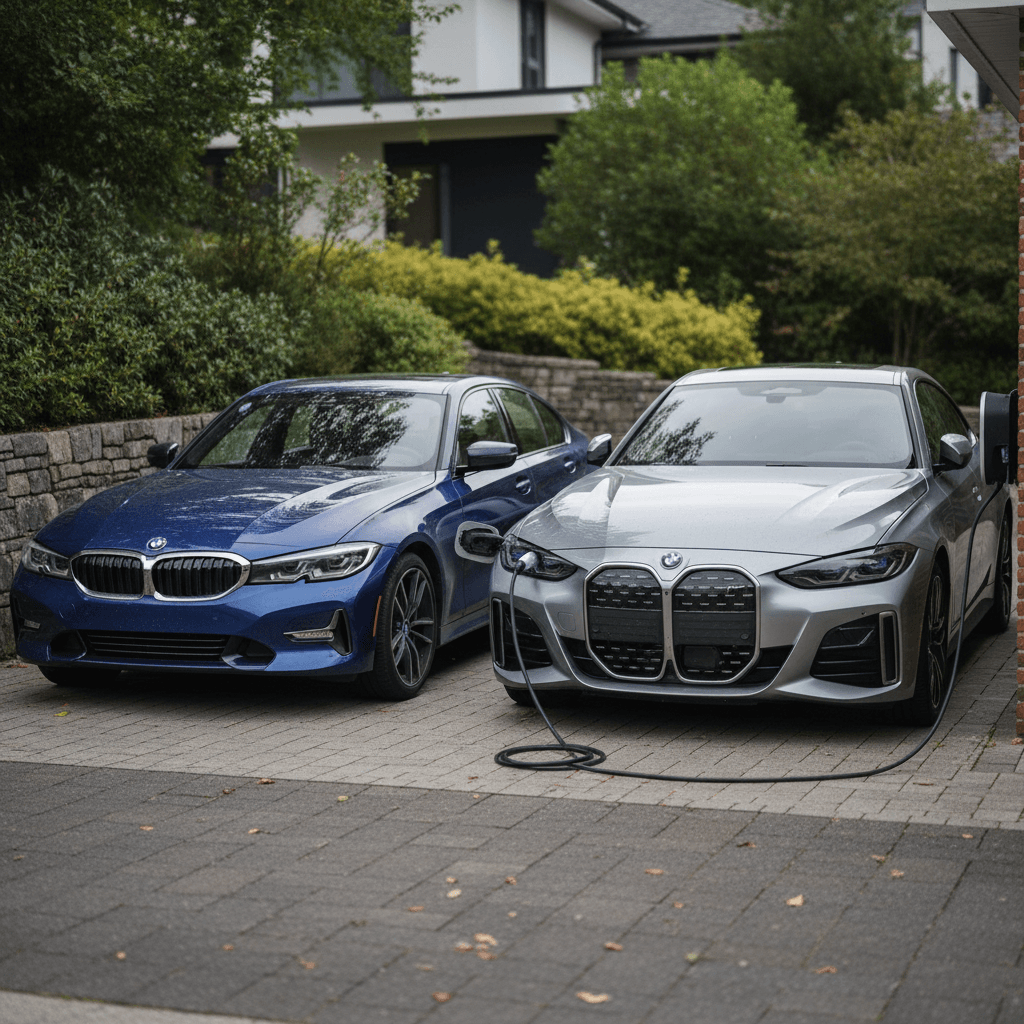
The BMW i4 lineup has evolved, but most used‑market cars in the U.S. today are eDrive35, eDrive40, xDrive40, or M50. Here’s how they map to familiar 3 Series flavors.
| i4 trim | Closest 3 Series feel | Drive layout | Typical real‑world role |
|---|---|---|---|
| eDrive35 | 320i/330i value play | RWD | Quicker than a base 3 Series in city driving, smaller battery but enough range for most commuters. |
| eDrive40 | 330i sweet spot | RWD | Best blend of range, performance and price. Feels like a strong 330i with instant torque. |
| xDrive40 | 330i xDrive / M340i lite | AWD | Similar oomph to eDrive40 but with all‑weather traction; great for snow‑belt drivers. |
| M50 | M340i / mild‑mannered M3 | AWD | Seriously quick, feels like an electric M‑lite. Heavier and a bit firmer, with shorter range when driven hard. |
Always verify exact specs for the model year you’re shopping, power, range and options can vary slightly across years.
Mind the wheels and tires
Range and charging: switching from gas to kilowatts
A 3 Series owner is used to 350–450 miles of highway range and five‑minute fuel stops. The BMW i4 changes both sides of that equation. You’ll “refuel” mostly at home, overnight, and think more about daily needs than about replicating a full tank’s range on every trip.
Realistic BMW i4 range expectations for ex‑3 Series drivers
Numbers vary by wheel size, climate, and how hard you drive, but here’s the ballpark many owners report in mixed driving.
i4 eDrive35
Daily mixed driving: ~200–230 miles per full charge in typical U.S. conditions if you’re not hypermiling.
Best for: Shorter commutes, urban/suburban driving, or drivers with easy access to home charging.
i4 eDrive40 / xDrive40
Daily mixed driving: ~240–290 miles per full charge is common when driven like a 3 Series.
Best for: Ex‑330i owners who want less range anxiety and more road‑trip flexibility.
i4 M50
Daily mixed driving: ~210–260 miles, often a bit less if you regularly exploit the power.
Best for: Enthusiasts coming from a 340i or M car who prioritize pace over maximum range.
Charging mindset shifts when you leave a 3 Series for an i4
1. You “fill up” at home, not the station
With a Level 2 charger (240V) at home, your car can add roughly 25–35 miles of range per charging hour. Most drivers simply plug in at night and wake up with a full “tank” every morning.
2. DC fast charging is for trips, not daily use
Think of DC fast chargers like highway gas stations. They’re perfect for road trips or occasional deep runs, but more expensive and harder on the battery than home charging.
3. Plan long trips with the nav
BMW’s built‑in navigation or companion apps can route you via fast chargers. It’s an extra planning step versus a 3 Series, but once you’ve done a couple of trips, it becomes routine.
4. State of charge replaces fuel gauge
You’ll start thinking in percentages and estimated miles. Many owners aim to keep the i4 between ~20–80% in daily use, only charging to 100% before big trips.
5. Weather matters more
Cold snaps that barely budged your 3 Series’ fuel economy can cut EV range more noticeably. Preconditioning the cabin and battery while plugged in helps a lot.
Home charging and used i4 shopping
Daily life: what actually changes when you go EV
What gets easier
- Fuel stops disappear: You’re not visiting gas stations every week. The car charges while you sleep, work, or shop.
- City driving is smoother: Stop‑and‑go traffic is quieter and more relaxing without shifts or engine noise. Regenerative braking lets you slow the car mostly with the right pedal.
- Short‑hop errands feel effortless: Quick, quiet trips to the store or school run become the i4’s sweet spot, where it’s efficient and responsive.
What adds friction
- Apartment living: If you don’t have a dedicated parking spot with power, you’ll need a solid plan for public charging. That’s a bigger adjustment than any handling difference.
- Spontaneous long trips: A last‑minute 400‑mile run that was a non‑event in a 3 Series now requires a quick check of chargers and weather.
- Trunk and rear headroom: The i4’s fastback roofline eats into rear headroom, and the battery raises the floor a bit versus a traditional 3 Series sedan.
Where the i4 quietly wins
Cost of ownership: 3 Series vs BMW i4
Up front, a BMW i4 usually stickers higher than a comparable 3 Series. On the used market, though, depreciation and incentives can narrow or even flip that gap. The real story emerges over several years of ownership, where fuel and maintenance swing in the EV’s favor for many drivers.
3 Series vs i4: where your money goes
Assuming U.S. energy prices and typical suburban driving patterns.
Fuel vs electricity
3 Series: Regular fuel fill‑ups add up quickly if you commute or road‑trip often.
i4: Home charging is usually much cheaper per mile, especially with off‑peak electricity rates. Public DC fast charging can approach gas‑car costs, but that’s typically a small slice of total miles.
Maintenance and repairs
3 Series: Engine oil, filters, belts, exhaust components, and more add complexity and cost over time.
i4: Far fewer moving parts. You’re mainly dealing with tires, brakes, cabin filters and brake fluid, plus occasional software updates.
How Recharged fits in
Used BMW i4 buying tips for 3 Series owners
Checklist: moving from a used 3 Series to a used i4
1. Start with your real range needs
List your longest regular drives and how often you take 200+ mile trips. If those are rare, an eDrive35 or M50 could be fine. If you want extra buffer, target an eDrive40 or xDrive40.
2. Verify battery health, not just odometer
In an EV, pack condition matters as much as mileage. A Recharged Score battery assessment can show how the i4’s battery has aged versus what’s typical for its year and miles.
3. Look at charging history
Lots of DC fast‑charging isn’t necessarily a deal‑breaker, but a car that lived mostly on home Level 2 charging is generally easier on the battery. Ask for charging records or app screenshots when possible.
4. Match trim to your old 3 Series
Coming from a 320i/330i? Focus on eDrive35 or eDrive40. From a 330i xDrive or M340i? Look closely at xDrive40 or M50 for similar or better performance with AWD.
5. Inspect wheels, tires and brakes
Heavy EVs can be tougher on consumables. Check for uneven tire wear, bent wheels, or lip damage from low‑profile tires. On test drives, feel for pulsing or vibration under braking.
6. Confirm charging options at home and work
Before you sign anything, make sure you can install a Level 2 charger where you live or have reliable access to workplace charging. Recharged’s EV specialists can help you think through your setup.
Pros & cons for 3 Series owners considering an i4
What you’re likely to love
- Instant response: The i4’s torque makes city driving and passing feel effortless compared with a turbo‑four 3 Series.
- Lower running costs: Less money spent on fuel and routine maintenance over time.
- Familiar BMW feel: Steering, seats, and overall cabin vibe feel like a BMW, not a science experiment.
- Silent commuting: Less noise and vibration on your daily drive, especially in traffic.
What might bother you
- Charging learning curve: Public charging networks, apps, and cables add complexity compared with gas stations.
- Range swings: Weather, speed and elevation visibly affect the range estimate, which takes some getting used to.
- Less analog feel: If you love mechanical engagement and engine sound, the i4’s character is more muted and digital.
- Back‑seat compromises: Tall passengers may notice the sloping roofline more than in a 3 Series sedan.
FAQ: BMW 3 Series owner switching to BMW i4
Frequently asked questions from 3 Series owners
Bottom line: should you swap your 3 Series for an i4?
If you’re a typical BMW 3 Series owner, someone who values sharp steering, a balanced chassis and a premium but understated cabin, the BMW i4 is one of the easiest transitions you can make into an EV. The learning curve lives more in charging and trip planning than in how the car drives. In the right trim, it still feels like a BMW sport sedan, just one that happens to run on electrons.
Your best move is to be honest about how you drive: how often you tackle long trips, whether you can install home charging, and how much you care about outright pace versus range. Then pick the i4 trim that aligns with the 3 Series you know, eDrive40 or xDrive40 for most, M50 if you miss your six‑cylinder. When you’re ready to explore used options, Recharged can pair you with battery‑verified BMW i4s, transparent pricing, and EV‑savvy support so that your jump from 3 Series to i4 feels like an upgrade, not a gamble.