If you’re hunting for the best used Hyundai Kona Electric to buy in 2026, you’re shopping for one of the quiet heroes of the EV world. It doesn’t shout about performance or style, but it quietly delivers excellent efficiency, real‑world range, and long‑term durability that’s turned a lot of skeptics into EV lifers.
Quick take
Why the Kona Electric is a smart used buy in 2026
What makes a used Kona Electric attractive?
Three big reasons it keeps showing up on smart shoppers’ short lists in 2026.
Excellent efficiency
Battery durability
Used value
On top of that, every Kona Electric benefits from Hyundai’s long battery and powertrain warranty when it’s still in effect. When you’re buying used, that’s one more safety net against the rare big‑ticket problem.
Kona Electric generations, batteries, and range basics
Before you decide which is the best used Hyundai Kona Electric to buy in 2026, it helps to understand the basic generations and battery options you’ll see in listings.
Hyundai Kona Electric: quick model overview (U.S. focus)
Key phases you’ll encounter when shopping used in 2026.
| Model years (U.S.) | Generation / phase | Battery (approx.) | EPA range (approx.) | Notes |
|---|---|---|---|---|
| 2019–2020 | Original Kona Electric | 64 kWh | 258 miles | First wave in the U.S.; some early‑run battery recall vehicles. |
| 2021–2023 | Facelift Kona Electric | 64 kWh | ~258 miles | Updated styling, improved driver‑assist tech, still CCS fast charging. |
| 2024–2025 | 2nd‑gen Kona Electric (market‑dependent in N.A.) | ~48 kWh & ~65 kWh | ~200–260+ miles | Larger body, more tech; availability and trims vary by region. |
| 2026+ (new) | Latest Kona Electric | Similar pack sizes | TBD | New‑car territory, but 2024–2025 examples may trickle into used stock. |
Battery sizes and EPA ranges are approximate; always confirm the exact spec for the specific VIN.
Battery sizes in plain English
Best used Kona Electric years and trims to target
Let’s get to the heart of it: which used Kona Electrics should be at the top of your list in 2026? Here’s how the field sorts out from a buyer’s perspective.
Best‑bet Kona Electric picks for 2026 shoppers
1. 2021–2023 Kona Electric (long‑range battery) – overall best pick
If you want the most balanced choice, a 2021–2023 Kona Electric with the long‑range pack is the best used Kona Electric to buy in 2026 for most drivers. You get the revised styling, improved safety tech, and the benefit of Hyundai’s battery learnings from the first production years.
- Standard ~64 kWh battery with ~258 miles of EPA range when new.
- CCS DC fast‑charging up to roughly 100 kW peak on the right charger.
- Refined cabin and infotainment versus 2019–2020 cars.
- Plenty of examples coming off 3‑year leases with moderate mileage.
- In many cases, several years of high‑voltage battery warranty still remaining.
Trim sweet spot
2. 2019–2020 Kona Electric – value play (with asterisks)
Early U.S.‑market Kona Electrics from 2019–2020 are often the best bargains on the used market in 2026. They share the same basic battery size and range as later cars. The complication is the early battery recall on some vehicles, which replaced packs that didn’t meet Hyundai’s standards.
What to verify on 2019–2020 cars
- Expect simpler cabins and older infotainment than 2021+ cars.
- These cars may be out of basic bumper‑to‑bumper warranty but often still within high‑voltage battery coverage depending on mileage and in‑service date.
- Because shoppers worry about the recall, good, documented cars can be excellent value if you do your homework.
3. 2024–2025 Kona Electric – nearly new, but rare and pricier
The latest‑generation Kona Electric, which began appearing around the 2024 model year, is larger and more tech‑heavy. In 2026, these are still relatively new and may be scarce on the used market, often as lease returns or early trade‑ins.
Why consider 2024–2025 used?
- Freshest styling and interior.
- Latest safety and driver‑assist systems.
- Maximum remaining factory warranty.
Why many buyers don’t need to
- Pricing often close to new after incentives.
- Real‑world range improvement is modest versus 2021–2023.
- Limited inventory makes it harder to be picky on color/trim.
If your budget comfortably reaches into late‑model territory, a 2024–2025 Kona Electric can be a great choice. But for sheer value, 2021–2023 still tends to win in 2026.
Years and configurations to approach carefully
No model is perfect. The Kona Electric has a short list of quirks and problem patterns that are worth respecting when you’re shopping used.
Kona Electric watch‑outs when buying used
Not deal‑breakers, but worth a closer look.
High‑mileage DC‑fast‑charge cars
Pre‑recall 2019–2020 packs
Neglected software updates
Don’t skip the battery report
Real‑world range and charging expectations
Paper specs are one thing; daily life with a used Kona Electric is another. The good news is that real‑world efficiency is one of this car’s superpowers.
What to expect from a healthy long‑range Kona Electric in 2026
Numbers assume a long‑range (~64 kWh) battery in decent health and reasonable driving habits.
| Condition | Typical highway range | Typical mixed‑driving range | Charging notes |
|---|---|---|---|
| Mild weather, 65–70 mph | ~200–220 miles | ~230–250 miles | DC fast charging usually tapers after ~55–60% state of charge. |
| Cold winter, 65–70 mph | ~150–180 miles | ~180–210 miles | Preconditioning and using seat/steering heat instead of blasting the HVAC helps. |
| Hot summer, A/C running | ~180–210 miles | ~210–240 miles | Battery cooling will occasionally limit peak DC speeds on very hot days. |
| Daily home Level 2 charging | N/A | N/A | A 32–40 amp Level 2 home charger will comfortably refill a daily 40–70‑mile commute overnight. |
Your actual results will vary with temperature, driving style, and terrain, but this gives a realistic ballpark.
Plan around 80% on road trips
Battery health: what to look for on a used Kona Electric
The Kona Electric’s battery chemistry and cooling have a solid track record so far, but individual cars still age differently depending on how they were driven and charged. In 2026, you have the advantage of several years of real‑world data to lean on.
- Most well‑cared‑for Kona Electrics show modest capacity loss after the first few years, think a subtle reduction in displayed range, not a collapse.
- Cars that spent their lives in extreme heat, fast‑charged constantly, or sat at 100% for days on end tend to show more degradation.
- Hyundai’s battery warranty generally protects you from extreme cases (capacity below a specified threshold) within the warranty window, but it does not guarantee zero degradation.
Battery‑health checks before you buy
1. Ask for a recent battery‑health report
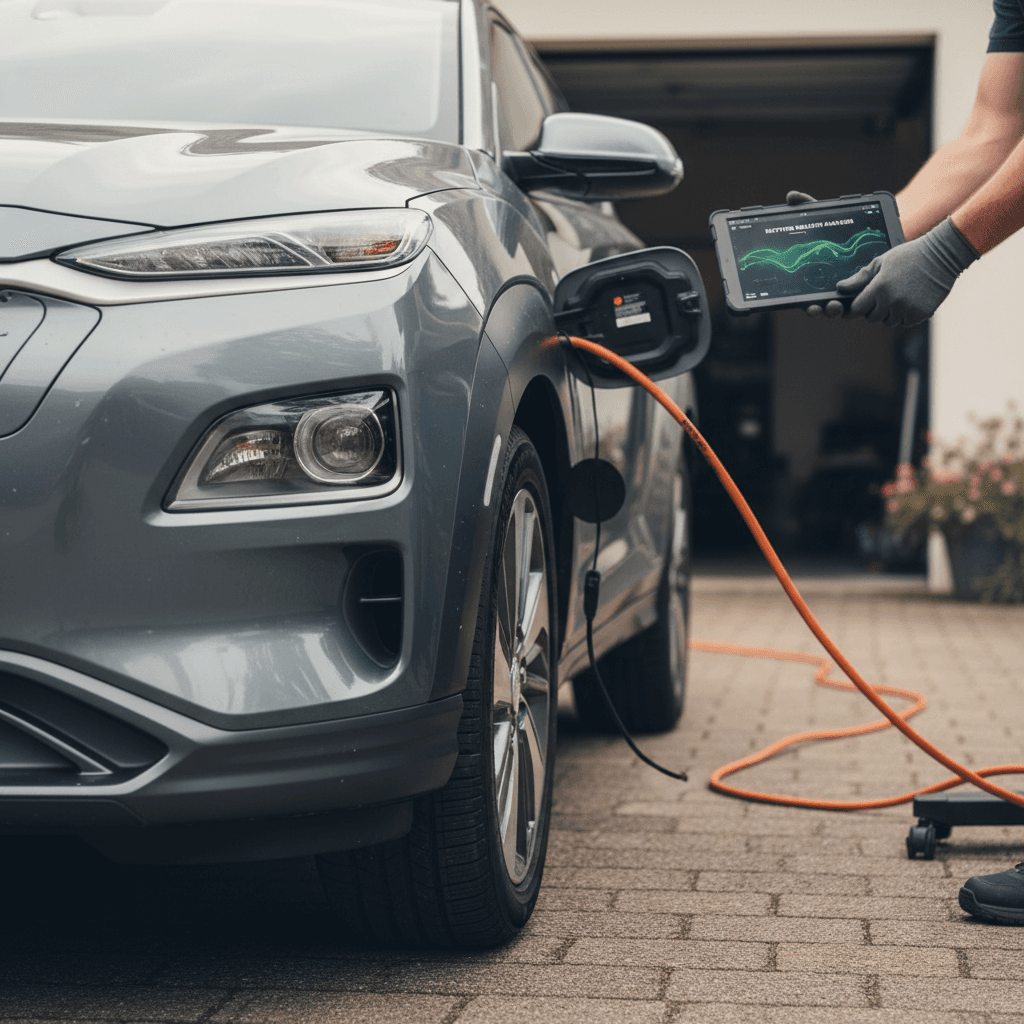
Ideally you’ll see a professional diagnostic readout, not just a photo of the dashboard range. At Recharged, this comes baked into the <strong>Recharged Score Report</strong> on every Kona Electric.
2. Compare indicated range at 100%
A healthy long‑range Kona Electric in mild weather that shows a full‑charge range much lower than expected (say, under 200 miles with conservative driving) deserves a closer look.
3. Review charging history if available
Some fleets and meticulous private owners track charging sessions. Lots of DC fast‑charge history in hot climates isn’t an instant deal‑breaker, but it should make you pay closer attention to the health report.
4. Check for Hyundai recall and software completion
Have a Hyundai dealer or trusted EV shop confirm all relevant battery recalls and software updates have been performed. This protects both safety and long‑term pack behavior.
5. Test preconditioning and charging behavior
On your test drive, plug into a Level 2 charger. The car should start charging promptly, with stable current. Any warning lights or inconsistent behavior need investigation before you sign anything.
How Recharged de‑risks battery health
Ownership costs and reliability highlights
One reason the Kona Electric makes such a smart used buy in 2026 is that once you own it, it’s pleasantly uneventful. No oil changes, almost no routine maintenance beyond tires and cabin filters, and brake wear is low thanks to strong regenerative braking.
Kona Electric ownership: what tends to cost money
And what usually doesn’t.
Typical expenses
- Tires: The Kona’s torque is gentle on rubber compared with high‑performance EVs, but expect replacements every 30k–40k miles.
- Brake service: Pads often last a long time thanks to regen, but budget a basic inspection every few years.
- 12V battery: Some owners report premature 12V battery failures; replacing with a quality unit solves it.
Less common big‑ticket items
- High‑voltage battery: Rare outside recall scenarios, and typically covered under warranty for many years.
- Electric motor / inverter: Generally robust; failures are uncommon compared with engine issues in gas cars.
- Thermal system: With basic maintenance, the cooling system has a good track record so far.
Warranty still matters in 2026
Inspection and test‑drive checklist for a used Kona Electric
You don’t need to be an engineer to evaluate a used Kona Electric. You just need a repeatable checklist and the discipline not to skip steps when a car looks pretty in the photos.
Hands‑on checklist for shopping a used Kona Electric
1. Start with the paperwork
Verify VIN, mileage, title status, and service records. Look specifically for <strong>battery recall documentation</strong> on 2019–2020 cars and any major warranty repairs.
2. Inspect the charging port and cable
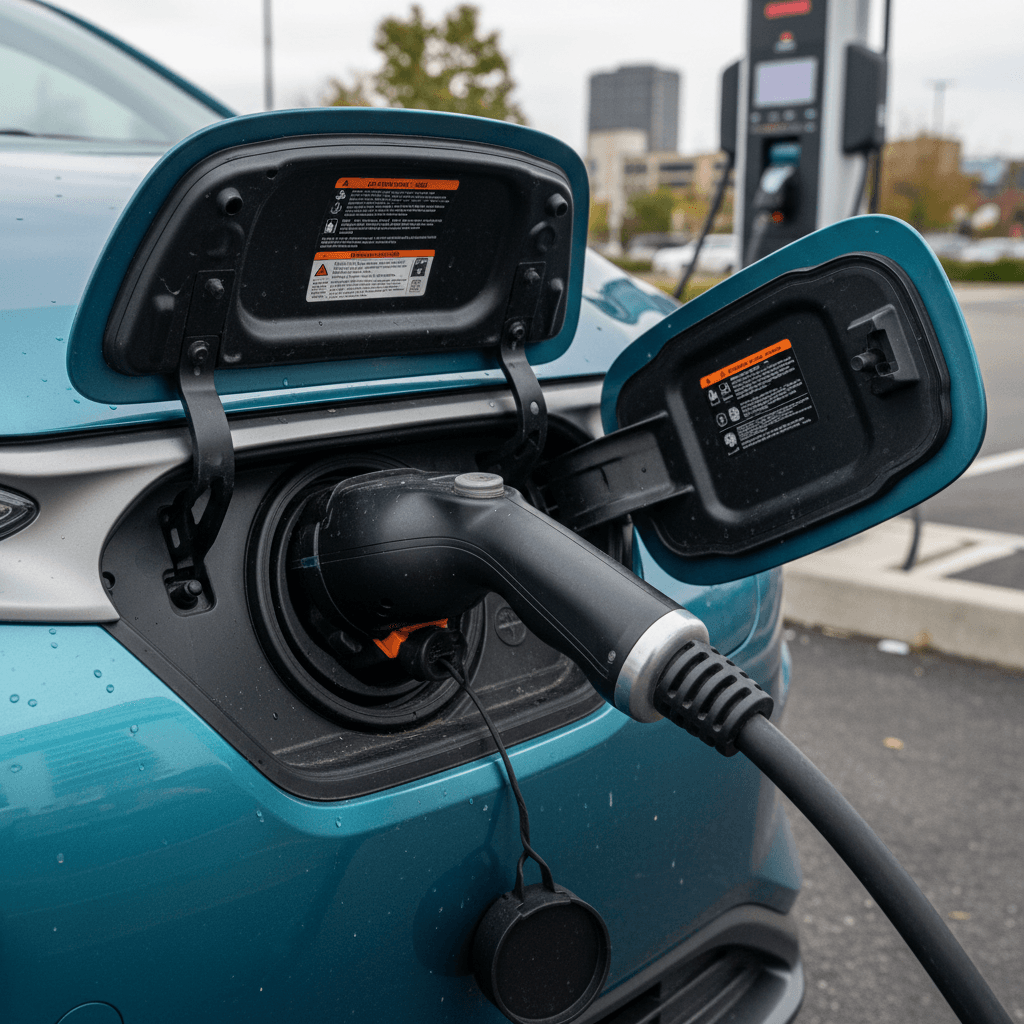
Open the front charging flap, look for corrosion, bent pins, or impact damage. If the seller provides a portable EVSE or home cable, inspect it too.
3. Cold start and dash check
With the car off for a while, power it up and check for any persistent warning lights, especially those related to the EV system or battery.
4. Short mixed test drive
Drive at city and highway speeds. You’re listening for <strong>unusual noises</strong>, feeling for alignment issues, and checking for smooth, predictable regen and acceleration.
5. Try a quick top‑up charge
Even 10–15 minutes on Level 2 is informative. Charging should start quickly, without error messages or excessive relay clicking.
6. Evaluate interior wear
High seat or steering‑wheel wear on a low‑mileage car is a red flag. The Kona’s interior materials generally hold up well; a tired‑looking cabin may hint at a hard life.
Don’t test drive on 5% battery only
How Recharged helps you buy a used Kona Electric confidently
The Kona Electric is a great platform; your job in 2026 is simply to find a great example. That’s where a specialist used‑EV marketplace like Recharged changes the game.
Why shop for a used Kona Electric with Recharged?
Less guesswork, more confidence.
Verified battery health
Fair, transparent pricing
EV‑savvy support & delivery
Ready to find your next EV?
Browse VehiclesIf you already have a Kona Electric you’re thinking about selling or trading, Recharged can also provide an instant offer or consignment option that highlights your car’s battery health to buyers who care about it most.
FAQ: buying a used Hyundai Kona Electric in 2026
Common questions about used Kona Electrics
Bottom line: the best used Kona Electric to buy in 2026
If you’re trying to zero in on the best used Hyundai Kona Electric to buy in 2026, aim for a 2021–2023 long‑range car with clean service history, solid battery‑health documentation, and the features you’ll actually use, heated seats, good driver‑assist, and a charging setup that fits your life. Don’t dismiss 2019–2020 models with replacement packs; they can be the sleeper values of the bunch when backed by proof of a fresh battery and good diagnostics.
Above all, treat the battery like the engine in a traditional car: demand records, data, and a proper inspection. Whether you buy through a private party, a dealer, or a specialist marketplace like Recharged, going in with clear expectations on range, charging, and health turns the Kona Electric from a question mark into one of the most sensible used‑EV bets you can make in 2026.