If you’re helping a parent, partner, or yourself shop for the best used electric car for seniors, you’re juggling a lot more than price and paint color. You’re thinking about eyesight, reaction time, arthritis, parking lots, winter roads, and you want a car that quietly makes all of that easier, not harder.
Who this guide is for
Why seniors are taking a fresh look at EVs
Once you get past the unfamiliar silence and the charging cable, electric cars can be wonderfully well‑suited to senior drivers. Most used EVs have smooth, one‑pedal‑style acceleration, strong regenerative braking that helps with stop‑and‑go traffic, and far fewer moving parts than a gasoline car. That means fewer oil changes, fewer exhaust leaks, and fewer last‑minute trips to the shop.
Key ways EVs make life easier for older drivers
Less drama, more comfort, and fewer surprises.
Smoother driving
Electric motors deliver power smoothly and instantly, so there’s no waiting for a transmission to downshift or an engine to wake up. That can make merging, passing, and city driving feel calmer.
Less maintenance
No oil changes, fewer fluids, and far fewer wear items than a gas car. For many seniors on a fixed income, that means fewer surprise bills and fewer trips to the service lane.
Predictable costs
Electricity is usually cheaper and more stable in price than gasoline, and many utilities offer off‑peak discounts. That makes monthly costs easier to budget.
One big caveat
What makes an electric car good for seniors?
Before we name names, it helps to know what you’re shooting for. The best used electric car for a senior isn’t the one with the biggest battery, it’s the one that fits their body, their habits, and their neighborhood.
Senior‑friendly EV checklist
High, chair‑like seating position
Seats that are too low or too high make every errand a wrestling match. Look for a compact crossover or tall hatchback where you can slide in sideways, not climb up or drop down.
Excellent visibility
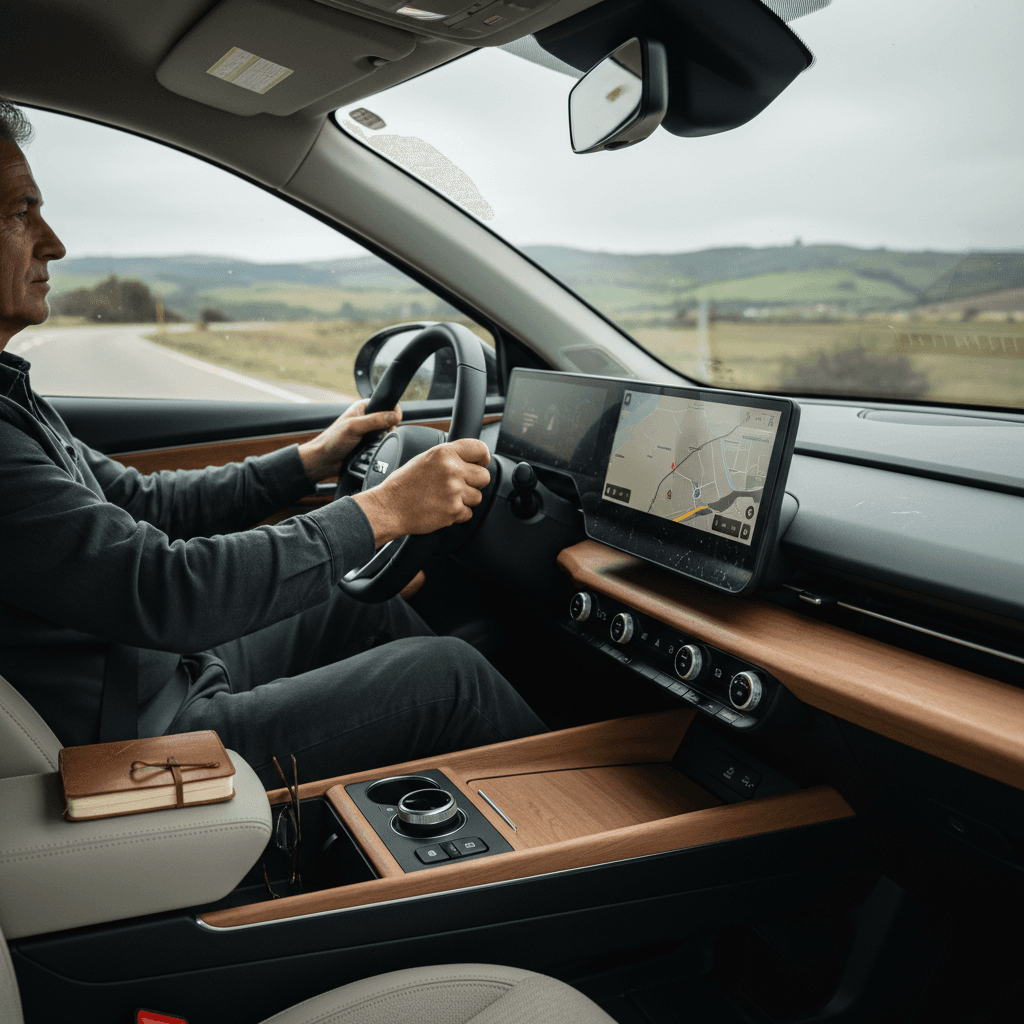
Big windows, slim roof pillars, and large mirrors reduce blind spots. A backup camera is mandatory; parking sensors and a 360º view camera are even better.
Simple, readable controls
Large fonts, clear icons, and <strong>physical buttons or knobs</strong> for basics like volume, temperature, and defrost. Minimal “deep menu diving” required.
Gentle, predictable power
Quick is nice, but lurchy is not. You want smooth response from the accelerator and brakes, with an option for strong regenerative braking that feels natural, not grabby.
Advanced safety tech that’s easy to use
Blind‑spot monitoring, rear cross‑traffic alert, automatic emergency braking, and lane‑keeping assist help catch what a tired brain or stiff neck might miss.
Enough range, not maximum range
For many seniors, 150–250 miles of real‑world range is plenty. Don’t overpay for an enormous battery if most trips are to the grocery store and doctor’s office.
Best used electric cars for seniors: quick shortlist
Let’s get right to the models that tend to work best. These are widely available used in the U.S. as of 2026 and balance comfort, safety, and value for older drivers.
Best used electric cars for seniors (2026 snapshot)
Approximate model years and highlights to start your search. Exact features vary by trim and options.
| Model | Typical used years to target | Why it works well for seniors | Approx. EPA range (when new) |
|---|---|---|---|
| Chevrolet Bolt EUV | 2022–2023 | Tall hatchback feel, roomy back seat, available Super Cruise hands‑free driving, good value | 247 mi |
| Chevrolet Bolt EV | 2017–2022 (post‑battery recall fixed) | Compact size, easy to park, strong efficiency, simple cabin | 238–259 mi |
| Hyundai Kona Electric | 2019–2022 | Comfortable seats, high driving position, long range for price | 258 mi |
| Kia Niro EV | 2019–2022 | “Just right” crossover height, good visibility, practical cargo area | 239 mi |
| Nissan Leaf (40–62 kWh) | 2018–2022 | Very simple controls, soft ride, great for shorter‑range driving and city use | 150–226 mi |
| Tesla Model 3 RWD / Long Range | 2018–2022 | Excellent crash ratings, strong driver‑assist tech; best for tech‑comfortable seniors | 220–358 mi |
Use this as a starting grid, then verify features and battery health on any specific car you’re considering.
Think trims, not just models
Chevrolet Bolt EV & EUV: small footprint, big value
If you asked seasoned EV reviewers to name the single best used electric car for seniors on a budget, the Chevrolet Bolt family would be on nearly every list. The Bolt EV is the original tall hatchback; the slightly larger Bolt EUV adds rear legroom and an easier‑to‑see‑out‑of profile.
Bolt EV (2017–2022)
- Compact exterior, easy to park and maneuver.
- Good headroom and wide doors for front passengers.
- Simple cabin and straightforward controls once you’re familiar.
- Excellent efficiency: you go far on each kWh.
Bolt EUV (2022–2023)
- Stretched body with more rear legroom and slightly higher roofline.
- More comfortable for grandkids or caregivers riding in back.
- Available Super Cruise hands‑free highway driving on certain trims.
- Still easy to park, but feels more like a small SUV.
Battery recall note
- Best for seniors who want an easy‑to‑park car with plenty of range for errands plus visiting family.
- Look for: 2020–2022 Bolt EV or 2022–2023 Bolt EUV with Driver Confidence or similar safety package.
- Skip if: You need a high, SUV‑like seating position or tow capability.
Hyundai Kona Electric: comfortable and efficient
The Hyundai Kona Electric hides its EV hardware under a friendly small‑SUV shape. The seats are supportive, the driving position is upright, and the ride tuning on earlier model years leans more comfort than sport, things older drivers tend to appreciate.
Why the Kona Electric works well for seniors
Trim tip
Kia Niro EV: the Goldilocks crossover
If your mental picture of the perfect senior‑friendly EV is “not too big, not too small, and easy to get into,” the Kia Niro EV should be on your short list. It’s a compact crossover with a gently raised ride height, big doors, and a square cargo area that makes walkers, folding chairs, or luggage easy to load.
What seniors tend to like about the Niro EV
Little details that add up in daily driving.
Easy entry/exit
Seat height feels like a sturdy dining chair, not a deep sofa or a bar stool. That’s kinder on knees and hips.
Good sightlines
Large windows and a relatively low beltline make it easier to judge traffic and park without guesswork.
Practical cargo area
Wide hatch opening and a flat load floor help when you’re lifting groceries, medical equipment, or luggage.
Best fit scenario
Nissan Leaf: the simple, city-friendly choice
The Nissan Leaf has been around long enough that many seniors have already ridden in one. The appeal is still there: a soft ride, straightforward controls, and a friendly hatchback body that fits into tight parking spots. The trade‑off is range; older Leafs, especially the smaller‑battery versions, are best for drivers who mostly stay close to home.
Leaf battery aging
- Best for seniors who mostly drive in town, grocery runs, appointments, social visits, and have access to at‑home or easy local charging.
- Look for: 2018 or newer Leaf with the larger 40 kWh or 62 kWh pack if range anxiety is a concern.
- Skip if: You live in a very hot region and need frequent highway range; consider a Bolt, Kona, or Niro instead.
Tesla Model 3: when tech‑forward makes sense
You won’t usually see the Tesla Model 3 at the top of senior‑friendly lists, and for good reason: the low seating and nearly all‑touchscreen interface can be a hurdle. But for tech‑comfortable seniors, the ones already living in their smartphones, the Model 3 brings stellar crash ratings, strong driver‑assistance on highways, and access to Tesla’s extensive Supercharger network on road trips.
Why consider it
- Excellent crash safety scores and robust passive safety design.
- Autopilot and optional advanced driver‑assist can reduce fatigue on long, straight highway drives.
- Very efficient, with strong range even in earlier model years.
- Regular over‑the‑air software updates can add features and improvements.
Potential downsides for seniors
- Low step‑in height; getting in and out can challenge bad knees or hips.
- Nearly all controls live on the central touchscreen, which some older drivers find distracting.
- Firm ride on some wheel/tire combinations.
Be honest about tech comfort
Safety tech that actually helps older drivers
Modern EVs can be packed with driver‑assistance systems. Some are genuinely helpful for older drivers; others just add beeps and confusion. Focus on features that watch blind spots, warn you when backing up, and gently keep the car in its lane, rather than full “self‑driving” claims.
Safety features worth paying for
If you can only afford a few, start here.
Blind‑spot monitoring & rear cross‑traffic alert
These systems light up or beep when a vehicle is hiding in your blind spot or crossing behind you as you back out of a space. For stiff necks and crowded parking lots, they’re worth their weight in gold.
Lane‑keeping assist & lane‑departure warning
Cameras read lane lines and nudge the steering or beep if you drift. Especially valuable on long, monotonous drives when fatigue creeps in.
Automatic emergency braking
Uses radar or cameras to detect stopped traffic or pedestrians and can brake if you don’t react in time. You hope you never need it, but when you do, it can be a lifesaver.
Adaptive cruise control
Maintains a set speed and distance from the car ahead, easing the mental load in traffic. For seniors who dread stop‑and‑go highway driving, this is a game‑changer.
Don’t oversell the tech
How to test‑drive a used EV with a senior driver
The right car on paper can still be the wrong car in the driveway. With seniors, the test drive isn’t about zero‑to‑sixty times; it’s about getting in and out, operating the basics without frustration, and seeing clearly in the worst‑case scenarios.
Senior‑focused EV test‑drive checklist
1. Start in the parking lot
Watch how easy it is to get in and out. Do they have to grab the door frame or twist uncomfortably? Can they adjust the seat and mirrors without hunting through touch menus?
2. Do a vision check
Sitting in the driver’s seat, ask what’s hard to see. Are the rear corners visible? Are there big blind spots? Are the gauges readable without glasses?
3. Practice low‑speed maneuvers
Find a quiet lot. Have them back into a space, pull forward, and turn tightly. Do they feel in control, or are they fighting the steering, pedals, or camera views?
4. Sample the driver‑assist tech
On a safe road, try adaptive cruise and lane‑keeping at modest speeds. If the nudges or beeps are startling or confusing, those systems may create more stress than relief.
5. Try a simulated emergency stop
With warning and on an empty road, ask them to brake firmly from 30–35 mph. Does the pedal feel natural? Do they feel secure and stable in the seat?
6. End with charging basics
If possible, plug the car into a Level 2 charger. Can they open the charge port, connect the cable, and read the charging screen without help?
Bring real‑world props
Budgeting, financing, and running costs
One upside to shopping for the best used electric car for seniors right now is that used EV prices have softened compared with the pandemic peak. That means you may be able to afford a nicer, safer car than you expected, especially once you factor in fuel and maintenance savings.
Up‑front price
- Popular senior‑friendly used EVs like the Bolt, Kona, Niro, and Leaf often sit in the $15,000–$28,000 range, depending on year, mileage, and trim.
- Earlier Teslas typically cost more, but prices can be surprisingly close to well‑equipped mainstream EVs.
- Certified pre‑owned (CPO) programs from the manufacturer may add warranty coverage but can carry a price premium.
Ongoing costs
- Electricity is usually cheaper per mile than gasoline, especially with home charging on an off‑peak plan.
- No oil changes and fewer fluids mean fewer maintenance line items over the years.
- Insurance varies by model and location; some EVs cost more to insure, so get quotes before you sign.
Financing a used EV
Why buy used through an EV specialist like Recharged
Buying any used car can feel like homework; buying a used EV can feel like homework in a new language. A specialist marketplace like Recharged is built to take the guesswork out of that process, especially for buyers who care deeply about safety, comfort, and long‑term value.
How Recharged simplifies used EVs for seniors and families
From battery health to delivery, it’s designed to be low‑stress.
Verified battery health
Every car on Recharged comes with a Recharged Score Report that includes professional battery diagnostics, so you know how much usable range is left, not just what the window sticker claimed when it was new.
Transparent pricing & value
Recharged benchmarks each vehicle against the broader used‑EV market, so seniors and caregivers can see whether the price is fair without haggling.
Nationwide, mostly‑online process
You can browse, ask questions, arrange trade‑ins or instant offers, and complete paperwork from home. Vehicles can be delivered nationwide, or you can visit the Recharged Experience Center in Richmond, VA.
Ready to find your next EV?
Browse VehiclesFor families coordinating from different cities, that fully digital experience means a son in Denver and a daughter in Tampa can review the same Recharged Score, discuss options on a video call, and help mom in Virginia make a confident choice, without dragging her through a dozen traditional showrooms.
FAQ: best used electric car for seniors
Common questions about used EVs for seniors
Bottom line: choosing the right used EV for a senior driver
The “best” used electric car for seniors isn’t the flashiest one on the lot; it’s the one that quietly disappears into the background of everyday life. For some, that will be a Chevrolet Bolt EUV that slides neatly into the garage and shrugs off weekly errands. For others, it might be a Kia Niro EV that feels like a familiar small SUV, or a Nissan Leaf that makes short‑hop city driving nearly effortless.
Start with the basics: visibility, seating comfort, ease of controls, and the right kind of safety tech. Layer on realistic range needs and total cost of ownership. Then, if you’d like a co‑pilot, lean on an EV‑only specialist like Recharged, where every car comes with a Recharged Score battery report, fair‑market pricing, financing options, and expert guidance from first question to final signature.
Do that, and the electric car in the driveway becomes what it should have been all along: a quiet, clean, low‑drama way for the older driver in your life to stay independent, connected, and comfortably in motion.