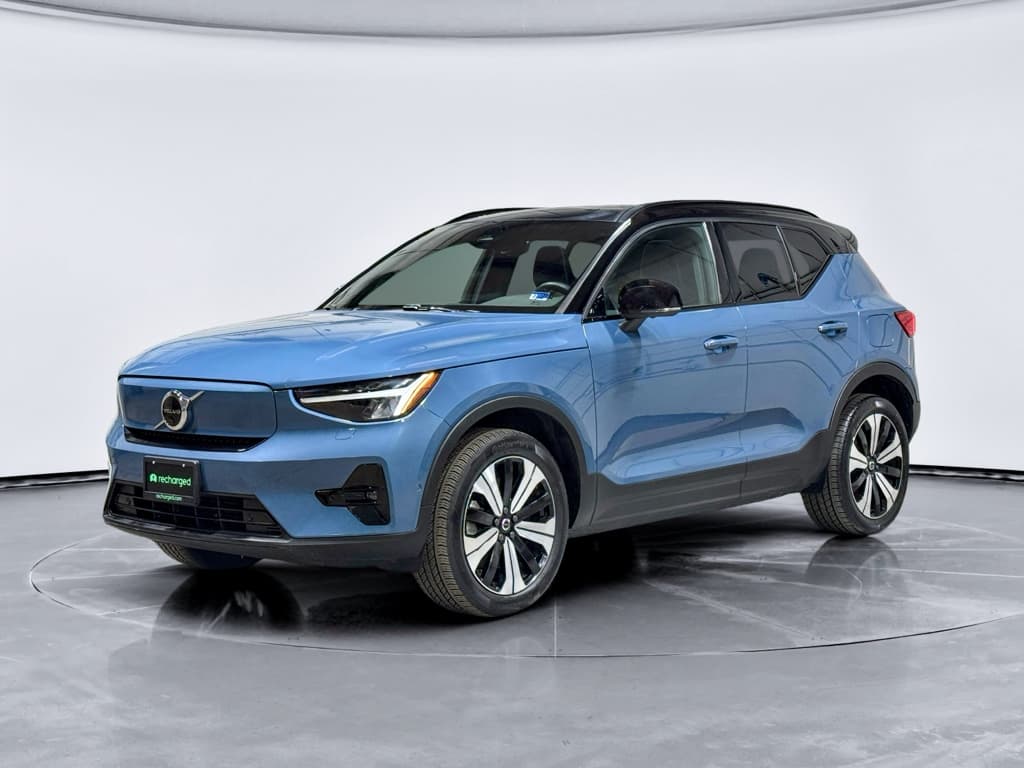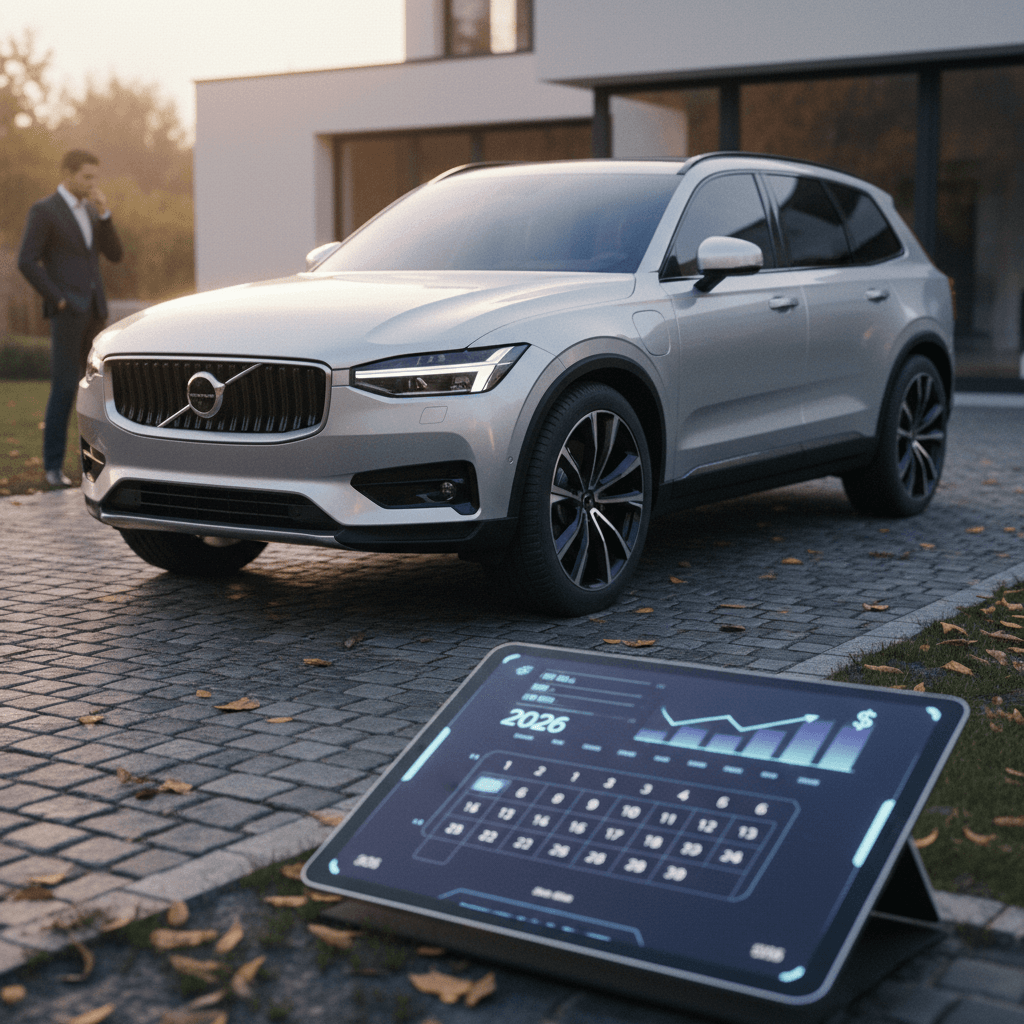
If you bought a Volvo EX90, you didn’t just buy a family hauler. You bought the flagship of Volvo’s electric future: a three-row Scandinavian smart device on wheels. The question now, in 2026, is simple and uncomfortable: when is the best time to sell your Volvo EX90 so you keep the safety and serenity, but don’t get crushed by early-EV depreciation?
Context: where we are in April 2026
Why timing matters for Volvo EX90 sellers
Early EVs are volatile assets
The EX90 is a first-generation model on Volvo’s new SPA2 electric platform. First-gen EVs tend to have choppier depreciation curves than mature gasoline SUVs. Software matures, options change, and incentives move the goalposts.
But demand is building for 3-row EVs
On the other side of the ledger, the EX90 sits in a thin field: big, safe, genuinely premium three-row EVs. Buyers cross-shopping the Kia EV9, Mercedes EQE SUV, Rivian R1S and Tesla Model X are starting to notice well-priced EX90s.
That tension, between early-tech risk and family-EV desirability, is why timing your sale matters. Sell too soon and you eat the steepest depreciation for the privilege of debugging Volvo’s software. Hold too long and you may get leapfrogged by the next-gen Volvo tech stack and fresher competitors.
Early Volvo EX90 value signals (US, directional)
Volvo EX90 depreciation: what we know so far
No one has five years of hard data on EX90 resale yet. But we can triangulate from Volvo’s historical behavior, early appraisal tools, and the broader luxury EV market.
- Launch premium is fading. Early adopters who took delivery in late 2024 and early 2025 paid close to sticker. By spring 2026, discounts of 6–10% off MSRP are showing up on new EX90s at some dealers, which bleeds into used pricing.
- Forecasts suggest ~50% value at 5 years. Third-party depreciation models currently peg a typical EX90 at roughly half its original price after five years, about par for a luxury three-row, slightly better than some rivals in the short run.
- Software maturity is improving. Over‑the‑air updates in 2025–2026 have targeted energy use, driver-assistance behavior and infotainment polish. Vehicles on the latest software tend to be more desirable and easier to sell.
- Brand history matters. The gasoline XC90 has historically been a little below average for resale versus the German big hitters. The EX90 may do better thanks to EV demand, but Volvo is still Volvo: safety-first, not resale-king.
Forecasts are not guarantees
Key milestones that shift EX90 resale value
Events that can move your EX90’s value up or down
These are the calendar moments and product moves worth watching before you list your car.
Year 1–2: Depreciation cliff
The moment you drive a new Volvo EX90 off the lot, you take the classic luxury hit. By the end of year two, much of that first big drop is baked in. Selling before 24 months means paying for a lot of depreciation you don’t recover.
Year 3–4: Sweet spot for many sellers
By year three, depreciation starts to slow and warranty coverage is still strong. For EX90s delivered in late 2024 or 2025, that puts the potential sweet spot in the 2027–2028 window.
Major tech/infotainment refresh
If Volvo rolls out a notable interior or infotainment refresh, for example, a bigger screen, new safety hardware or a next-gen driver-assistance stack, pre-refresh cars can soften overnight. Keeping an eye on Volvo product news is part of selling smart.
New battery/efficiency breakthrough
An EX90‑related model with meaningfully better range or efficiency (or faster charging) reshuffles the deck. When a new benchmark appears, buyers recalibrate what they’re willing to pay for the old one.
Battery health becomes visible
As more EX90s hit 40–80k miles, used buyers will treat verified battery health as table stakes, not a nice-to-have. Cars with clean battery diagnostics can hold a noticeable premium.
Macro EV sentiment swings
Federal and state incentives, interest rates, and charging-infrastructure headlines all tilt EV demand up or down. A generous incentive for new three-row EVs, for example, can drag used prices with it.
Watch the siblings, not just the EX90
Best time to sell a Volvo EX90 by owner profile
“Best time” isn’t the same for everyone. It depends on when you bought, how many miles you drive, how much you value the latest tech, and how sensitive you are to monthly payment versus total cost of ownership. Let’s break it down.
Timing strategies for different EX90 owners
1. Early adopter (2024–early 2025 delivery)
If you took delivery in late 2024 or early 2025, you’ve already driven through the first, nastiest part of depreciation.
Your next decision window is around the <strong>36–48 month</strong> mark. For late‑2024 cars, that’s late <strong>2027 through 2028</strong>.
That’s when your story is still fresh, new platform, strong warranty coverage, modern cabin, but before the market starts to view first‑run EX90s as “old tech.”
If Volvo announces a major EX90 or sister‑model tech leap for the 2029 model year, consider listing your car in the <strong>6–12 months</strong> leading up to that arrival.
2. Practical family buyer (2025–2026 delivery)
If you bought later, with discounts and more mature software, your depreciation curve is friendlier.
For a 2025 EX90 delivered in early 2026, a logical sell window is <strong>2029–2030</strong>, again lining up with the 3–4 year mark.
By then you’ll have a strong story to tell: real‑world range, long‑trip comfort, child-seat reality, all catnip to used buyers.
If you plan to keep your EX90 until the end of the battery warranty, you’re not optimizing for resale; you’re optimizing for amortized comfort. Different game.
3. Lease turn‑in or short‑cycle owner
If you leased your EX90 for 24–36 months, your timing is mostly set by the contract date.
Your only question is whether to <strong>buy out the lease and resell</strong> if market pricing is higher than your residual.
Because three‑row EVs are still relatively scarce, there is some chance of positive equity, but don’t assume it.
As your lease end approaches, get real offers from multiple sources, including instant offers and trade‑in bids, and compare them to the buyout figure.
4. High‑mileage commuter or road‑tripper
If you throw 20–25k miles a year on your EX90, time is not your friend. Depreciation curves are gentler than they look on the glossy charts at high mileage.
For you, the smart move is often to <strong>sell earlier</strong>, somewhere around year three, before your odometer spooks family buyers.
If you’ve crossed 60–70k miles, your best defense is a clean, third‑party <strong>battery and health report</strong> plus meticulous service history.
Market signals it’s time to sell your EX90
You don’t have to guess. The market usually tells you when it’s ready to pay strong money for your Volvo EX90, if you know what to look for.
6 signs it’s a good time to sell your EX90
1. New EX90 incentives just got juicy
If Volvo or your local dealers suddenly start stacking <strong>heavier discounts, lease cash, or low‑APR deals</strong> on new EX90s, it means they’re pushing volume. That usually puts pressure on used prices. Listing just before those incentives hit your area often nets a better return.
2. Used EX90 listings are thin, but moving fast
Open the major listing sites and search for EX90s similar to yours (trim, color, mileage). If there are only a handful and they’re vanishing in days, you’re in a mini‑sellers’ market. That’s your cue.
3. Your local dealer is calling you back
When dealers start cold‑calling or texting about buying back your EX90, it’s because they’re short on inventory. Even if you don’t want to sell to them, it’s a clue that demand is strong enough to shop the car around.
4. Competing models just got better, on paper
If Kia, Tesla, Rivian, Mercedes or Polestar drops a significantly <strong>longer-range or cheaper three-row EV</strong>, your EX90 becomes yesterday’s news faster. There’s often a brief window, between the announcement and real on‑lot availability, when your EX90 still looks competitive.
5. Software updates have stabilized
If your EX90 finally feels sorted, range is predictable, driver assistance is drama-free, and the infotainment system doesn’t hang at every light, you’re holding a car that many early shoppers wanted but didn’t get. That’s a great time to sell while your story is, “This is the good one.”
6. Your life has outgrown (or undergrown) it
The softest but most important signal: your life changed. Fewer kids at home, a new commute, a move to a city with tight parking. If the EX90’s size and payment no longer fit your reality, the right time to sell is sooner, not later.
How Recharged can help you read the market
Ready to find your next EV?
Browse VehiclesHow software updates and tech cycles affect value
The EX90 is as much a rolling software platform as it is an SUV. That’s great for safety and comfort, but it also means your resale value is tied directly to where in the tech cycle your particular car lives.
Over‑the‑air updates: invisible value
Regular OTA updates that improve energy consumption, fix bugs, and refine driver assistance are quiet value builders. An EX90 that’s been kept up‑to‑date on software feels newer than its build date suggests. Documenting that, screenshots from the car or app, update history from your dealer, can reassure buyers.
Major hardware changes: visible obsolescence
If Volvo introduces a hardware‑level change, a different lidar unit, new camera suite, redesigned interior with a bigger screen, that’s when yesterday’s EX90 becomes obviously “old.” You don’t need to panic‑sell, but listing within a year of that kind of change can keep your discount modest.
Don’t ignore driver-assistance headlines
Seasonal patterns: when demand for EX90 peaks
Seasonality isn’t as dramatic for EVs as it is for sports cars or convertibles, but a big all‑weather family SUV like the EX90 still has its moments.
Seasonal timing for selling a Volvo EX90 in the US
Broad patterns, not immutable laws, but useful for picking a listing month.
| Season | Demand Signal | What It Means for EX90 Sellers | Timing Move |
|---|---|---|---|
| Late summer | Back‑to‑school planning, road‑trip reflections | Families realize they want more space, safety and range before winter. | List in July–September for strong family demand. |
| Fall / early winter | Winter weather, holiday travel, bonus season | All‑weather safety and heated everything become hot talking points. | List in October–December if you’re in snow states. |
| Late winter / early spring | Tax refunds, lease rollovers | Buyers with lump sums start shopping, dealers want inventory. | February–April can work well if you price assertively. |
| Deep summer | Heat, vacations, distraction | Shoppers are on beaches, not browsing three‑row EVs. | Only list then if you have to; be prepared to sharpen price. |
If you’re flexible, aim to list your EX90 just before shoppers start thinking about winter and school runs.
Prep your Volvo EX90 to get top dollar
Timing gets you in the right neighborhood. Condition decides which side of the street you land on. With the EX90, buyers are especially sensitive to tech cleanliness, software behavior, and any hint of rough treatment.
Pre‑sale checklist for a strong EX90 offer
1. Update all software and map data
Before you show or list the car, install any pending <strong>OTA software updates</strong>. Verify driver‑assistance, cameras, parking aids and infotainment all behave. A test drive should feel calm and glitch‑free.
2. Get a battery and health report
Request a <strong>high‑voltage battery health check</strong> from a qualified shop or EV specialist. At Recharged, every vehicle gets a Recharged Score with verified battery health; showing similar documentation to private buyers or other marketplaces can justify a higher price.
3. Detail the cabin, especially the screens
Clean, streak‑free displays, reconditioned leather or textile, and an odor‑free cabin do more for a tech‑forward EV than new tires ever will. Buyers judge the car’s software age by how the interior feels in the first 30 seconds.
4. Gather every charger, cable, and accessory
Make sure you include the <strong>home charging cable, manuals, cargo pieces, third‑row headrests</strong>, and any branded roof or tow accessories you’re not keeping. Missing items are leverage for the buyer; don’t hand them that leverage.
5. Fix visible cosmetic issues
Curb rash on those big wheels, a cracked windshield, or obvious door dings all punch below the belt on trade‑ins. Get quotes; fixing select items often returns more than it costs, especially on a still‑new luxury EV.
6. Organize your service history
Compile digital and paper records: maintenance, recalls, tire rotations, software campaigns. A tidy <strong>service log</strong> tells the buyer, and the appraising algorithm, that you’re the owner they want to follow.
Should you sell, trade-in, or consign?
Once you’ve decided the time is right, the next question is how to exit your EX90 without leaving money, or sanity, on the table.
1. Instant offer
Best for: speed and low hassle. You submit details, get an offer, and the check arrives quickly. You’ll usually net less than a private sale, but you avoid strangers in your driveway.
On Recharged, you can request an instant offer based on real EV market data and verified condition, including battery health.
2. Trade‑in toward another EV
Best for: simplifying the math. Trading your EX90 into your next EV (on Recharged or at a dealer) can reduce sales‑tax exposure in some states and keep all the paperwork under one roof.
You may leave a little money on the table versus a perfect private sale, but the friction savings are real.
3. Consignment / marketplace listing
Best for: maximizing sale price if you’re not in a rush. Consignment with an EV‑focused retailer like Recharged lets professionals handle photos, marketing, and test drives while you retain ownership until the car sells.
This is often the sweet spot for nearly new, high‑value EVs like the EX90.
Use multiple numbers, not just one
FAQ: Best time to sell a Volvo EX90
Frequently asked questions about selling a Volvo EX90
Bottom line: when to sell your Volvo EX90
If you strip away the emotion, the best time to sell a Volvo EX90 is when three things line up: you’ve cleared the nastiest early‑depreciation cliff, the car still feels current on tech and software, and the market around you is a little short on clean, family‑ready three‑row EVs. For many early buyers, that points to the third to fourth year of ownership, roughly 2027–2028 for the first US deliveries.
But cars are not spreadsheets. They’re chapters in your life. When your chapter with the EX90 is winding down, kids older, commute different, next EV calling, your job is to exit cleanly and intelligently. Watch the incentives, scan the listings, mind your software and battery health, and take multiple offers. And if you want a partner that lives and breathes used EVs, Recharged can help you sell or trade your EX90 with transparent pricing, verified battery diagnostics, and EV‑specialist guidance from the first question to the final signature.