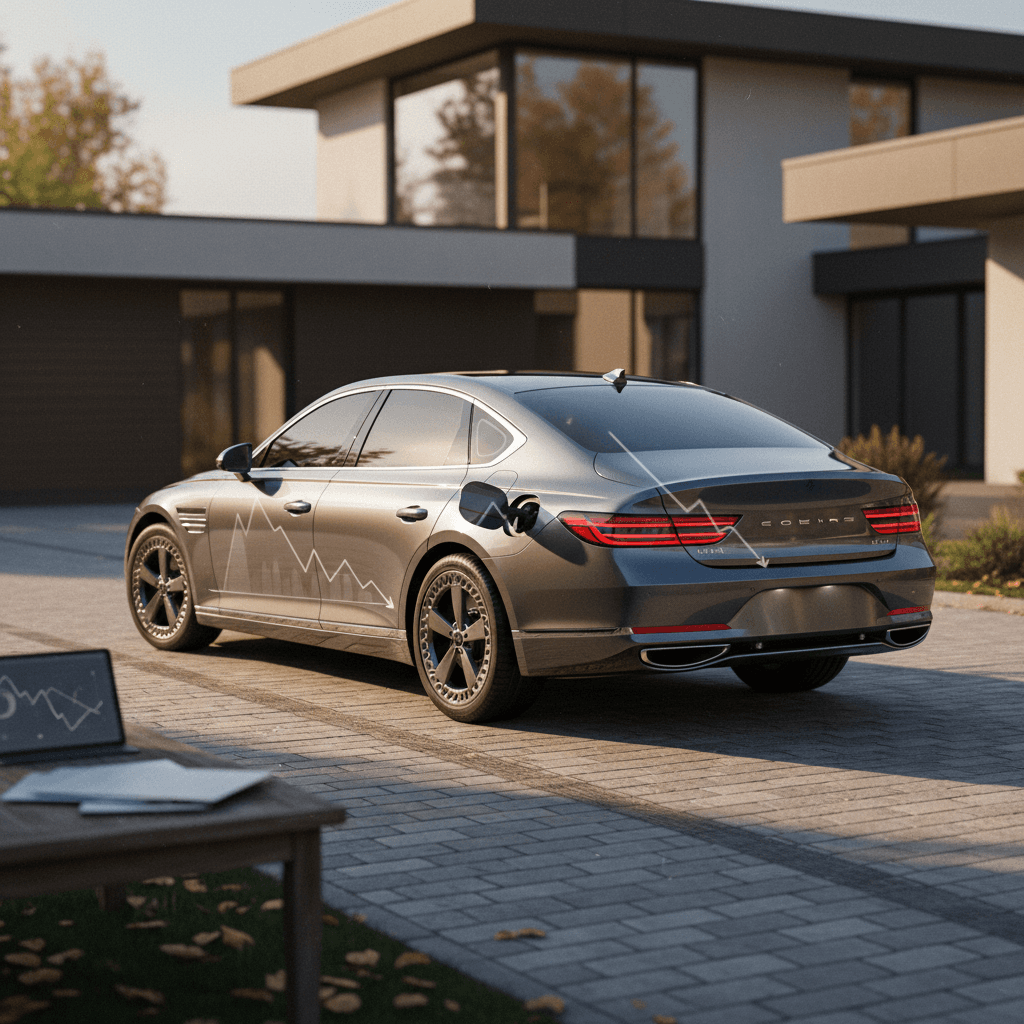
If you own a Genesis Electrified G80, you’re sitting on one of the most distinctive luxury EV sedans out there, and one of the hardest to price. Genesis has already pulled the Electrified G80 from the U.S. market, and aggressive depreciation means timing your sale can swing the value by thousands of dollars. Let’s break down the best time to sell a Genesis Electrified G80, and how to walk away with the most money in your pocket.
Quick take
Why timing matters for the Electrified G80
Every car loses value over time, but the Electrified G80 loses value faster than most gas luxury sedans. Third‑party depreciation tools show five‑year value loss in the 60%+ range for this model, which is steep even by EV standards. Combine that with the fact that Genesis has already exited the U.S. market for this car, and you’ve got a model that will either look like a hidden gem or yesterday’s news, depending on when you sell and who you sell it to.
Electrified G80 value at a glance (typical patterns)
Why this car is different
How the Electrified G80 depreciates
Think of your Electrified G80’s value as a curve, not a straight line. The front of the curve is brutally steep, then things level off, and eventually age and mileage drag it down again. Here’s how that typically plays out if the car was bought new in the mid‑$70,000s:
Typical Genesis Electrified G80 value curve (from new)
These are generalized examples to illustrate how timing affects value. Real‑world numbers vary by mileage, condition, options, and location.
| Age of car | What’s happening | Typical buyer reaction | Rough value range* |
|---|---|---|---|
| Year 1 | Biggest shock of depreciation hits; incentives and discounts on new cars undercut used prices. | Most buyers prefer new with full incentives; few are shopping used. | ~60–70% of original MSRP |
| Years 2–3 | Depreciation is still significant, but slower than year 1. | Value shoppers and first‑time EV buyers start to notice the deals. | ~50–60% of original MSRP |
| Years 4–5 | Curve flattens; warranty and battery health become bigger questions. | Shoppers worry more about future repair and range, but bargains are compelling. | ~35–45% of original MSRP |
| 6+ years | Older tech, out‑of‑date styling, and out‑of‑warranty repairs loom large. | Only budget‑minded or brand‑enthusiast buyers remain; values soften further. | Under ~35% of original MSRP |
Use this curve as a guide, not a quote, always check live market data before you list.
Check your in‑service date, not just model year
Model year and age: what it means for your sale
2023 models: early adopters’ cars
The first U.S. Electrified G80s were generally 2023s. By 2026, many of these are approaching 3 years in service. That’s right when value buyers start circling and when you can still market the car as a modern, low‑volume luxury EV.
Best time to sell: between year 2 and year 4 of in‑service life. At that point, you’ve already digested the worst of the depreciation but you’re still in the thick of warranty coverage and fresh tech.
2024–2025 models: late‑run and discontinued
Later cars benefit from minor updates and lower mileage, but they’re also firmly associated with Genesis exiting the model from the U.S. lineup. That cuts two ways: some buyers will see a rare future classic; others will see risk.
Best time to sell: roughly years 1.5–4 in service, especially if mileage stays below 40,000. After that, the ‘near‑new’ glow fades and you’re competing with cheaper, newer‑tech EVs.
How the discontinued status affects timing
Market factors that can make your G80 EV worth more or less
Four big levers that move Electrified G80 value
You can’t control the whole market, but you can decide when you sell into it.
1. Competing EV deals and incentives
When mainstream brands flood the market with heavy rebates and subvented leases, bargain hunters shift their attention to new cars. That can pull used values down.
Better time to sell: when new EV incentives are modest and dealer lots aren’t overflowing with discounted stock.
2. Charging and infrastructure news
Announcements about faster‑charging networks, new standards, or major upgrades can make older 400V platforms feel dated overnight.
Better time to sell: before your Electrified G80 starts looking like the ‘slow‑charging’ option next to newer rivals in shopper comparisons.
3. Energy prices and local incentives
When gas prices climb or local utilities push EV charging discounts, demand for EVs usually perks up. The same car suddenly looks like a better monthly‑cost story.
Better time to sell: during a spike in fuel prices or when your state rolls out generous EV‑owner perks that you can tout in your listing.
4. Regional demand
An Electrified G80 in coastal California plays differently than the same car in a cold‑weather rural market. Charging infrastructure, EV adoption, and brand awareness all matter.
Better time to sell: when you’re able to market the car in or near EV‑friendly metros, even if that means using a nationwide platform instead of just your local classifieds.
Win the timing game, don’t chase the last dollar
Calendar timing: best months and seasons to sell
Once you’ve thought about age and market conditions, zoom in on the calendar. The Electrified G80 behaves like other luxury sedans here: seasonality matters.
- Late winter through early summer (roughly February–June): Tax refunds and nicer weather hit at the same time. Buyers are more willing to shop, travel for a car, and pay for something indulgent like a luxury EV sedan.
- Early fall (September–October): New‑model introductions make some buyers reconsider the latest tech, but they also convince others to scoop up ‘last year’s’ car at a discount. This can be a smart time to price your Electrified G80 aggressively and move it quickly.
- Deep winter and holiday weeks: These are typically slower for selling used cars, especially higher‑end ones. Dealers are distracted by year‑end new‑car targets, and private buyers are focused on holidays, not big purchases. If you must sell, expect softer interest or lower offers.
Give yourself at least 30–45 days
Red flags: when you should sell sooner
There are moments when waiting actually costs you money. If any of these sound familiar, the best time to sell your Genesis Electrified G80 might be right now.
Signs it’s time to move on from your Electrified G80
You’re about to cross a mileage milestone
Values often soften at round numbers, 50,000, 60,000, 75,000 miles. If you’re creeping toward one, selling just before you cross it can keep your listing in a more attractive search bucket.
A major warranty cutoff is looming
If your comprehensive or powertrain warranty is about to expire within the next 6–12 months, the car will be less attractive to risk‑averse EV shoppers. Selling while it’s still under significant coverage can bring stronger offers.
You no longer have convenient charging
If you’ve moved or changed jobs and lost easy home or workplace charging, every day you keep the car feels less practical. Buyers will pay more for a car that still ‘fits’ their daily life than you will value owning something that doesn’t fit yours.
You’re eyeing a faster‑charging or longer‑range EV
The moment you start test‑driving newer EVs with better range, software, or charging speed, your Electrified G80 will start collecting mental dust. Selling while you still genuinely like the car, rather than the day after a new‑car impulse buy, lets you negotiate from a calmer place.
Insurance or repair anxiety is creeping in
If parts delays, dealer closures, or rising premiums in your area are making you nervous, the market may be feeling the same way. That’s a cue to list the car before sentiment turns further and values drift down.
Don’t wait for a ‘bad headline’
How to prepare your Electrified G80 to get top dollar
You can’t rewrite the depreciation curve, but you can absolutely decide whether your car lands at the top or bottom of the price range for its year and mileage. Prep matters a lot on niche luxury EVs, because buyers are already taking a leap of faith.
Six smart moves before you list
These steps often add more value than they cost, especially on a premium EV sedan.
Detail it like a dealer would
Luxury buyers shop with their eyes first. A professional interior and exterior detail, including touch‑up of curb rash where possible, makes your Electrified G80 feel ‘new‑dealer‑ready’ instead of ‘used‑car‑lot’.
Handle small fixes upfront
Burned‑out bulbs, minor trim rattles, curb‑rashed wheels, fixing these before listing makes your car feel well‑loved instead of neglected. Small repairs can pay off in easier negotiations and fewer lowball offers.
Document battery health
EV shoppers are laser‑focused on range. Having a recent, third‑party battery health report or clear documentation of real‑world range helps calm fears and keeps serious buyers engaged.
Gather records and original gear
Service history, recall documentation, both key fobs, mobile charge cable, manuals, having it all present sends a strong signal that the car’s been cared for. Missing gear becomes an easy way for buyers to demand a discount.
Invest in great photos
Shoot in good light, show the charging port, instrument cluster, rear legroom, and trunk pass‑through. Buyers of the Electrified G80 often care about comfort and design as much as specs, your photos should sell both.
Price realistically, not aspirationally
Look at live listings for Electrified G80s and similar luxury EV sedans. Price in the top half of the realistic range if your car and prep are truly exceptional; otherwise be willing to come in slightly under the herd and move the car quickly.

Use more than one valuation source
Using Recharged to sell your Electrified G80
A low‑volume luxury EV like the Electrified G80 can confuse generic pricing tools. That’s where a specialist platform helps. Recharged focuses specifically on electric vehicles and plug‑ins, so both the valuation and the buyer pool are tailored to cars like yours.
Transparent pricing with battery health baked in
Every EV sold through Recharged includes a Recharged Score Report that verifies battery health, checks for hidden issues, and compares pricing to the current EV market. That’s especially useful on an Electrified G80, where buyers may not know what ‘normal’ range and degradation look like.
Instead of haggling over vague worries, “What if the battery’s tired?”, you and the buyer can look at real data and price the car accordingly.
Flexible ways to sell, from your couch
Recharged can help you get an instant offer, trade in your Electrified G80 toward another EV, or list it on consignment so an expert team handles the marketing, questions, and paperwork. With a fully digital experience and nationwide reach, plus an Experience Center in Richmond, VA, you’re not limited to whoever happens to walk onto a local lot.
If your timing is good, these tools help you actually capture that advantage instead of letting it slip away in a stressful, one‑off negotiation.
FAQ: Best time to sell a Genesis Electrified G80
Your Electrified G80 timing questions, answered
The Genesis Electrified G80 is a rare bird, a gorgeous, quiet, seriously quick luxury sedan that slipped into and out of the U.S. market before most drivers even realized it existed. That combination of low awareness and fast depreciation makes timing your sale more than an academic exercise. If your car is in its 2–5‑year window, has reasonable miles, and you’re seeing solid demand for used EVs in your area, you’re already in the right neighborhood. Prep it well, price it with real‑world data, and consider using an EV‑savvy partner like Recharged to put your Electrified G80 in front of buyers who actually know what they’re looking at.