If you own a Chevrolet Blazer EV, you’ve been on a roller coaster: early software issues, a high‑profile stop‑sale, price cuts, and fast depreciation compared with some rivals. That history makes the best time to sell a Chevrolet Blazer EV a more strategic decision than it is for most EVs. In 2026, timing can easily mean several thousand dollars gained or lost.
Quick answer
How Blazer EV history shapes the best time to sell
You can’t talk about timing a Blazer EV sale without understanding its backstory. The Blazer EV launched in 2023 as one of the first high‑volume GM Ultium SUVs. Within months, Chevy had to issue a stop‑sale over software and charging issues, and owners endured buybacks, long dealer visits, and public scrutiny. GM later restarted sales with fixes and **cut MSRPs by roughly $6,000** on many trims for the 2025 model year, instantly hitting used values.
- Early owners paid higher MSRPs than 2025 buyers, creating negative equity for some.
- Software and charging bugs hurt buyer confidence, especially for 2023–early‑2024 builds.
- GM’s own price cuts dragged resale values down faster than a typical midsize SUV.
- At the same time, overall EV tax credits were phased out by late 2025, reducing new‑EV demand but helping used EVs look relatively cheaper to some buyers.
Why this matters for timing
Blazer EV depreciation in 2024–2026: what the numbers say
Chevy Blazer EV value snapshot (early 2026)
Multiple valuation tools and resale forecasts now agree on the broad story: **Blazer EVs depreciate faster than the average midsize SUV and faster than many rival EVs**. Early 2024s have already lost close to 60% of their original sticker within roughly two years, a pace more typical of an unpopular luxury car than a mainstream Chevy crossover.
Rule of thumb
Key moments when it makes sense to sell your Blazer EV
Four smart timing windows for selling a Blazer EV
Different owners, different triggers, but the same underlying economics.
1. Before 40k–45k miles
Many buyers (and lenders) see 40,000–45,000 miles as a psychological and practical threshold. Above that, they start to worry more about wear and tear.
- Certified and warranty coverage feels more valuable under 40k miles.
- Online shoppers often filter out higher‑mileage EVs entirely.
2. After major software fixes, before the next scare
If your Blazer EV has just received a big software update that finally stabilizes infotainment and charging, that’s a good moment: you can honestly market it as “up to date.”
Waiting until the next high‑profile bug or recall lands in the headlines can knock thousands off your ask.
3. Right before a lifestyle change
Moving, a new job, adding a second child, or losing home charging, all can make the Blazer EV a worse fit.
Sell while the vehicle still fits your life, not six months after you’ve started to resent it. You’ll take better care of it and photograph it in better shape.
4. Ahead of big GM or market announcements
GM is still filling out its Ultium lineup. A significantly better‑value Ultium SUV, or another big price cut on new Blazer EVs, will hit your resale overnight.
When rumors of a new model year refresh or incentive wave get credible, it’s often safer to sell *before* they’re official.
If you’re on the fence right now
2026 timing strategy by Blazer EV model year
2024 Blazer EV: the "sell sooner" case
The 2024s carry the baggage: stop‑sale history, early software bugs, and the steepest price cuts. They’re also the ones that have already lost the most value.
- Best timing window (2026): Now through the end of 2026 for most owners, especially between 20,000–45,000 miles.
- Sell sooner if: You experienced repeated software issues, you’re nervous about long‑term reliability, or you’re upside‑down on your loan but depreciation is still outrunning your principal payments.
- Can wait a bit if: Your 2024 has been trouble‑free post‑updates and you’re under 15,000 miles, there’s still some relatively flatter depreciation left.
2025–2026 Blazer EV: more flexibility, but don’t get complacent
The 2025s benefited from price cuts, range and power tweaks, and software maturity. That helps, but they still share the same platform and brand story.
- Best timing window: Year 2–3 of ownership (roughly 2027–2028 if bought new), but 2026 can still make sense for low‑mileage examples.
- Sell earlier if: You can capture strong trade‑in offers toward a more efficient or better‑packaged EV (for example, a newer Ultium SUV or a used Tesla Model Y) while your mileage is still low.
- Hold if: You like the vehicle, have had minimal issues, and your payment is comfortable. Just keep an eye on new‑model announcements and your loan balance.
When waiting is risky
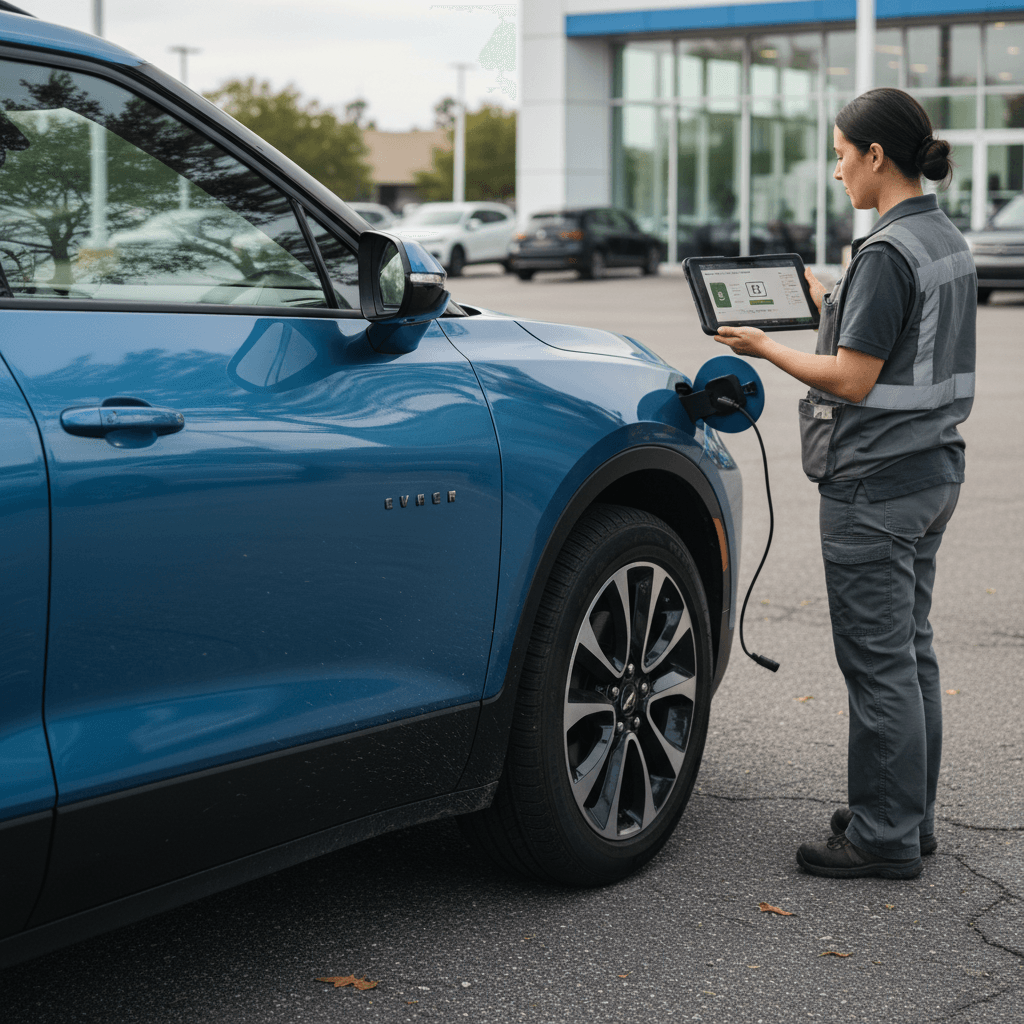
Mileage, usage, and battery-health tipping points
With EVs, **battery health** matters as much as mileage. The Blazer EV’s pack has a robust warranty, but buyers don’t think in legal language, they think in simple heuristics: miles, age, and visible range.
Checklist: Are you approaching a value cliff?
1. Odometer nearing 36,000 miles
Many shoppers see 36,000 miles as the end of a notional “bumper‑to‑bumper” period, even if GM’s actual coverage is more complicated. If you’re close, you still have a good story to tell a buyer or dealer.
2. Annual mileage over 15,000
High annual mileage signals ride‑share use, long commutes, or harder wear. If you drive 18,000–20,000 miles a year, selling sooner compresses the high‑miles discount.
3. Noticeable real‑world range drop
If you charged to 100% on day one and saw 270 miles, but now consistently see only ~230 under similar conditions, range‑sensitive buyers will notice. A <strong>verified battery‑health report</strong> can turn that from a fear factor into a point of confidence.
4. Upcoming tire or brake work
Needing $1,200+ in tires or significant brake work is often a good moment to ask if you’d rather put that cash into a different EV. You won’t recover that spend dollar‑for‑dollar at sale time.
5. Interior and tech starting to feel dated
When your infotainment looks a generation behind newer crossovers at the same price, your Blazer EV’s market appeal is eroding. Selling before that gap gets stark preserves value.
Use battery health to your advantage
How incentives and policy changes affect when to sell
The policy backdrop has shifted under EVs just as fast as the technology. In the U.S., the headline federal EV tax credits that boosted new‑car demand effectively ended for many buyers in late 2025, and clean‑vehicle incentives are now narrower and more complex. That has two big effects on when to sell a Blazer EV.
- New EVs are slightly less subsidized than they were in 2023–2024, which can make used EVs look more attractive at the right price point.
- Leasing incentives and manufacturer subvented financing still matter. If GM runs a heavy lease or APR special on new Blazer EVs, your used example has to be priced aggressively to compete.
- State‑level rebates and utility programs increasingly favor home charging installations and infrastructure over individual vehicles, good for the ecosystem, but they don’t directly support your resale value.
When incentives help you sell
- When buyers can still get EV‑adjacent benefits like home‑charger credits or utility rebates. These make the whole EV ownership package more appealing.
- When gas prices spike, even modestly, and local media starts talking about EV savings again.
- When insurance and maintenance cost stories for large ICE SUVs hit the news, your Blazer EV starts to look like the practical alternative.
When incentives make waiting a bad idea
- If policymakers signal more relaxed emissions rules or fewer EV mandates, automakers may slow EV investment or discount current stock.That usually pushes used prices down, not up.
- If GM or rivals introduce cheaper, better‑range EV crossovers without substantial tax support, they’ll siphon demand from used Blazer EVs.
Think relative, not absolute
Selling vs. trading in your Blazer EV
For a model with a choppy reputation like the Blazer EV, the channel you use to exit matters almost as much as timing. Some shoppers will happily take a discounted, known‑issue model from a trusted retailer; others won’t touch one privately without heavy discounts.
Selling your Chevrolet Blazer EV: options at a glance
How different paths line up for most Blazer EV owners in 2026.
| Option | Best for | Typical pricing outcome | Pros | Cons |
|---|---|---|---|---|
| Trade‑in at dealer | Owners with loans, wanting a quick swap | Lower than private sale, but sales‑tax benefit can narrow the gap | Fast, convenient; good if you’re rolling into another vehicle; tax savings in many states | Less transparency; dealers may be conservative on a polarizing model |
| Instant offer / online buyer | Owners wanting speed + nationwide demand | Similar to or slightly above local trade‑in | Quick quotes from home; easy logistics; may have EV expertise | Service fees; you still need to comparison‑shop offers |
| Consignment with EV‑focused marketplace | Owners with clean titles, willing to wait for top dollar | Often higher net than trade‑in, especially for low‑mileage or well‑optioned trims | Retail‑level marketing, professional listing, and buyer screening while you keep title | Takes more time; you share the upside via a fee |
| Private‑party sale | Owners with time, strong photos, and a clean history | Highest possible price if you find the right buyer | Maximum control over price; no middleman | You handle advertising, test drives, and paperwork; some buyers may be wary of Blazer EV history |
Your local market and individual vehicle condition ultimately decide the numbers, but the trade‑offs are consistent.
Where Recharged fits in
How Recharged can help you time the market
You don’t need to guess whether it’s the best moment to sell your Chevrolet Blazer EV. Data and EV‑specific diagnostics can do most of the heavy lifting if you work with the right partner.
Using Recharged to make a smarter Blazer EV exit
Tools and services built around EVs, not an afterthought on an ICE lot.
Data‑driven pricing
Recharged taps live market data for Blazer EV transactions, not just generic SUV curves. That helps you understand what similar vehicles are actually selling for, and whether your local market is hot or soft.
Recharged Score battery report
Every vehicle we list gets a Recharged Score with verified battery condition. For a model whose reputation centers on software and reliability stories, showing a clean, transparent battery report can separate your Blazer EV from anonymous auction metal.
Flexible exit paths
Whether you want instant cash, a trade‑in, or a consignment‑style listing with nationwide reach, Recharged can structure the deal and handle paperwork and nationwide transport for qualified vehicles.
Ready to find your next EV?
Browse VehiclesIf you’re even mildly Blazer‑EV‑curious about selling, you can start with a no‑obligation value estimate and battery‑health check instead of jumping straight to a listing. That gives you a clear picture of **what you’d walk away with today versus in 6–12 months**, and whether it’s worth holding or getting out ahead of the next model‑year shift.
FAQ: Best time to sell a Chevrolet Blazer EV
Frequently asked questions about selling a Blazer EV
The best time to sell a Chevrolet Blazer EV isn’t about catching a magic peak, it’s about recognizing that this model’s story has already been written in broad strokes. Early years were bumpy, depreciation has been sharp, and the EV market around it keeps evolving. If your Blazer EV is still relatively young, reasonably low‑mileage, and you’re feeling even mildly uncertain about its long‑term fit, **2026 is a logical moment to at least price your options**. With EV‑specific tools, verified battery‑health reports, and flexible exit paths, Recharged can help you decide whether it’s smarter to cash out now or keep driving and let the market do what it will.