If your weekday driving is basically **home → work → coffee → home**, you’re the kind of driver electric cars were born for. The best electric car for a short commute doesn’t need 300 miles of range or six-figure tech; it needs to be cheap to run, easy to park, and reliable on cold Monday mornings.
Who this guide is for
Why Short Commutes Are Perfect for Electric Cars
Short commutes are where EVs quietly embarrass gasoline cars. Most modern electric cars use **25–35 kWh per 100 miles** in real-world driving, which means your 20‑mile round trip might use 5–7 kWh of energy. At common residential electricity rates, that’s well under the cost of a latte per day. There’s no cold-start wear, no idling in traffic, and no oil changes piling up just because you spent an hour in a drive‑thru queue.
- Instant torque makes merging and darting through city traffic effortless.
- One‑pedal driving and regenerative braking make stop‑and‑go traffic smoother.
- You can "refuel" at home overnight instead of visiting gas stations.
- Even older, lower‑range EVs easily cover a short daily commute.
Good news for bargain hunters
How Much EV Range Do You Really Need for a Short Commute?
Simple Range Rules for Short‑Commute Drivers
For commuting, you don’t buy range; you buy **headroom**. If your round trip is 30 miles, an EV that can realistically deliver 120–150 miles in your climate gives enough buffer for errands, bad weather, and a couple of days off charging if you forget to plug in.
Don’t forget winter
Best Electric Cars for Short Commutes: Quick Overview
Top Short‑Commute EV Picks by Type
New and used options that shine in city and suburban duty
Budget Used Commuter
Best for: Drivers who just need a reliable city runabout with home charging.
- Older Nissan Leaf (24–40 kWh)
- 2017–2022 Chevrolet Bolt EV
- 2019–2021 BMW i3
Ideal if your commute is short and you want the lowest purchase price.
Stylish City Specialist
Best for: Urban dwellers prioritizing size, parking and charm over big range.
- Fiat 500e (current gen)
- MINI Cooper SE
Perfect when most of your life fits inside the ring road.
Do‑It‑All Compact
Best for: Short commute plus regular weekend trips and family duty.
- Chevrolet Bolt EUV
- Hyundai Kona Electric
- Kia Niro EV
More space, more range, still easy to park.
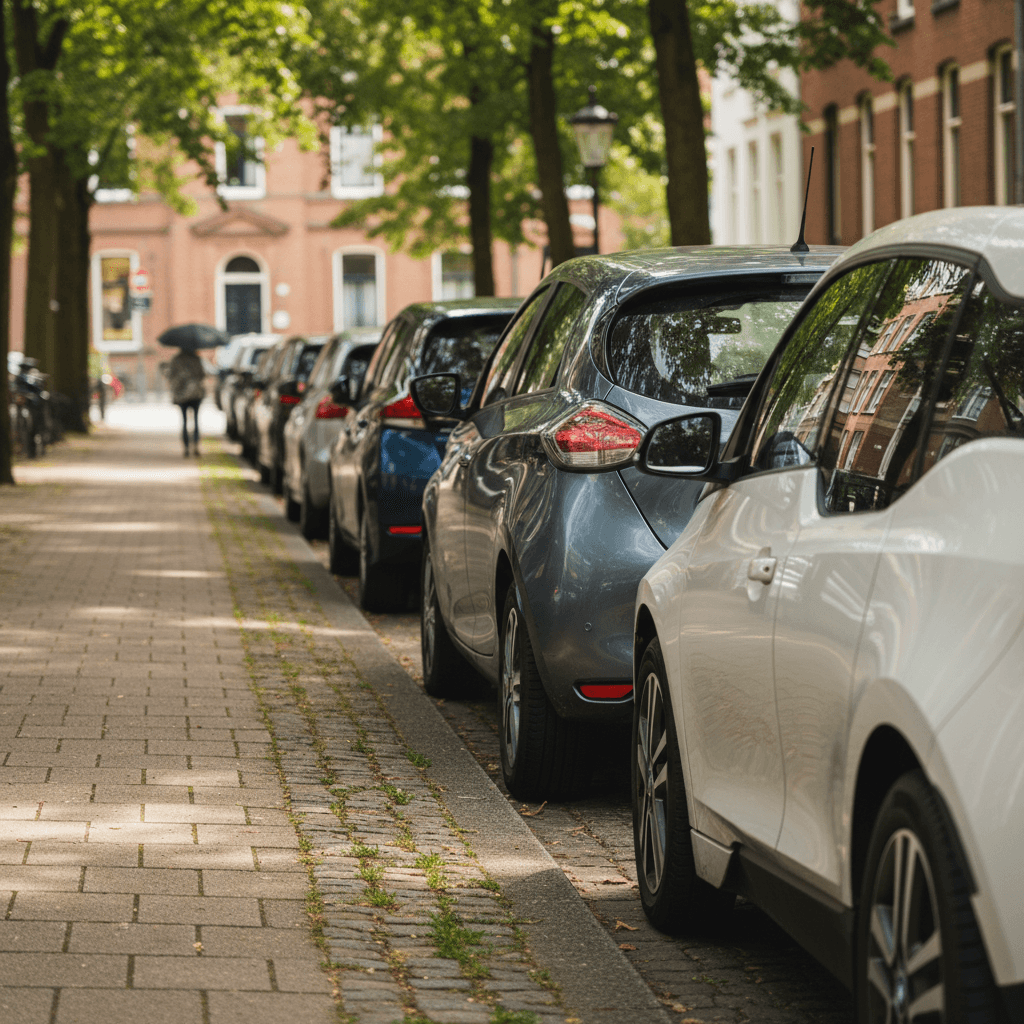
Best Used EVs for Short Commutes (Budget-Friendly Picks)
If your commute is short, the **used EV market** is your playground. Range that looks modest on a spec sheet is plenty in the real world, and depreciation has already done you a favor. Here are standout used options that pair well with short daily drives.
Used EVs That Shine on Short Commutes
Approximate EPA ranges when new; expect some reduction with age and battery health.
| Model | Typical Used Price Range* | EPA Range (new) | Why it Works for Short Commutes |
|---|---|---|---|
| Nissan Leaf (2016–2019, 24–40 kWh) | ~$7,000–$14,000 | 84–150 mi | Very affordable, smooth, quiet, ideal if you mostly stick to city speeds. |
| Nissan Leaf Plus (2019–2022) | ~$14,000–$22,000 | ~215–226 mi | Extra range without a huge price jump; good if you occasionally road‑trip. |
| Chevrolet Bolt EV (2017–2022) | ~$11,000–$22,000 | ~238–259 mi | Compact but roomy, great efficiency, DC fast charging for weekend trips. |
| Chevrolet Bolt EUV (2022–2023) | ~$18,000–$25,000 | ~247 mi | More rear legroom and a smoother ride; still compact enough for city parking. |
| BMW i3 (2017–2021, BEV) | ~$13,000–$23,000 | ~114–153 mi | Premium feel, tiny footprint, quick in traffic; range is plenty for urban life. |
| MINI Cooper SE (2020–2023) | ~$15,000–$24,000 | ~110–114 mi | Short range but a riot to drive; works brilliantly for very short commutes. |
These models are common, relatively affordable, and well‑suited to U.S. city and suburban commutes when bought used.
Use battery health to your advantage
Best New EVs for Short Commutes
If you want the latest safety tech, warranties, and infotainment, plenty of new EVs are great for short commutes without feeling like overkill. The trick is to avoid paying for range you’ll rarely use.
New EVs That Make Daily Commuting Easy
Compact, efficient options that shine in city traffic
Fiat 500e
Why it’s great: A purpose‑built city car with a small footprint, light steering, and range well‑matched to urban living.
Best if: Your driving is almost entirely city and suburban, and you prize style and size over long‑range capability.
Hyundai Kona Electric
Why it’s great: One of the most efficient small crossovers on sale, with comfortably over 200 miles of range and a pleasant ride.
Best if: You want one car to cover commuting, Costco runs, and the occasional weekend away.
Kia Niro EV
Why it’s great: Practical, upright hatchback with good efficiency and usable rear space; a natural commuter and family car.
Best if: You like a more traditional crossover feel but still want compact dimensions.
New vs. used for short commutes
Charging Strategy: What Short-Commute Drivers Actually Need
Home Charging: The Short‑Commute Superpower
If you can plug in where you live, your life gets simple fast. With a short commute, even a standard 120V outlet (Level 1) can work surprisingly well.
- 120V (Level 1): Adds roughly 3–5 miles of range per hour.
- 240V (Level 2): Adds roughly 20–40 miles of range per hour.
For a 20‑mile daily commute, that 120V outlet can replace your used energy while you sleep. Level 2 is nice to have, not mandatory.
Public Charging: When Home Plug‑In Isn’t Possible
No driveway? You’re not out of luck, but you do need a plan.
- Look for workplace charging; it turns your parked hours into free or cheap miles.
- Favor EVs with DC fast‑charging if you’ll rely on public stations.
- Know your local rates, some fast chargers cost roughly what gasoline would.
If you can’t charge at home at all, consider cars with more range (Bolt EV/EUV, Kona, Niro) or even a plug‑in hybrid, covered below.
Short‑Commute Charging Checklist
1. Measure your true daily miles
Track your driving for a normal week. Include errands, kid drop‑offs, and surprise trips. Your real daily mileage is the foundation for choosing range and a charging plan.
2. Confirm where you can plug in
Do you have a garage outlet, a shared parking spot, or workplace charging? Take photos of outlets and panel labels; an electrician (or installer) can use them to recommend Level 1 vs. Level 2.
3. Decide how often you want to plug in
If you hate the idea of plugging in daily, aim for an EV with at least 150–200 miles of range and consider Level 2. If plugging in most nights is fine, a lower‑range car is no problem.
4. Check your local public network
Open apps like ChargePoint, Electrify America, or your utility’s map. See how many stations are near home and work, what they cost, and whether they’re usually busy.
Will Short Trips Hurt an EV Battery? What to Know
Short hops are notorious for beating up gasoline engines and 12‑volt batteries. EVs work differently. There’s no oil to warm up and no idling, so **lots of short trips aren’t inherently bad** for the main traction battery. The bigger risks are parking fully charged all the time and repeated fast‑charging on long trips, neither of which is required for a short commute.
EV battery best practices for short commuters
- If your commute is very short (say, 5 miles each way), it’s fine to charge only a couple times a week instead of every night.
- Use the car’s charge‑limit setting if available, many EVs let you cap daily charging at 70–80%.
- Don’t panic about occasional 100% charges; they’re fine for road trips and occasional use. Just avoid leaving the car at 100% for days on end.
How Recharged helps you buy the right battery
Ready to find your next EV?
Browse VehiclesHow to Choose the Right EV for Your Short Commute
The best electric car for a short commute isn’t necessarily the one with the longest range; it’s the one that fits your life, your parking situation, and your budget. Use these lenses to narrow your search.
Four Lenses for Choosing a Short‑Commute EV
Range is just one piece of the puzzle
Total Cost
Look beyond the sticker price: electricity vs. gas, maintenance, potential tax credits, and insurance. A cheaper car with slightly more battery wear can make perfect sense for a short commute.
Charging Access
Home garage, shared parking, street parking, or workplace chargers will strongly shape what range and onboard charger you actually need.
Size & Parking
Urban street parking favors small hatches like the Bolt EV, Leaf, or i3. Suburban garages can swallow slightly larger crossovers like the Kona Electric or Niro EV.
Comfort & Features
Even on short drives, a good seat, heated steering wheel, and modern driver‑assist features make daily commuting much less fatiguing.
Short‑Commute EV Shopping Checklist
Verify realistic range with battery health info
Use tools like the <strong>Recharged Score Report</strong> to understand current battery health and how much real‑world range to expect today, not just when the car was new.
Test‑drive in your actual environment
Drive the car on the same kind of roads you use for your commute, including rough pavement, tight parking, or hills. City manners matter more than highway composure here.
Check charging speed and connector type
Confirm whether the car supports DC fast‑charging and whether it uses CCS, NACS, or CHAdeMO. For a short‑range commuter, slow DC speeds aren’t a deal‑breaker, but an obsolete connector can be.
Run the math on your energy bill
Estimate your daily kWh use from your commute and multiply by your utility’s rate. You’ll likely find that your monthly energy cost is dramatically lower than your previous fuel bill.
Plan for occasional longer trips
If you’ll road‑trip a few times a year, favor models with decent DC fast‑charging and better highway efficiency, or pair a short‑range EV with a second gas or hybrid vehicle.
When a Plug‑In Hybrid Might Make More Sense
If your commute is short but you regularly take longer drives into areas with scarce charging, a **plug‑in hybrid (PHEV)** can be a clever compromise. You run on electricity for day‑to‑day errands and use gasoline only when you go beyond the battery’s limited range.
Good PHEV Use Cases
- You have a short weekday commute but frequent 150–300 mile weekend trips.
- You can charge at home but don’t trust your local public fast‑charging network yet.
- You live in an apartment and sometimes can’t plug in overnight.
In these scenarios, a PHEV lets you treat gas as a backup rather than a daily habit.
When to Stick With a Full EV
- You have reliable home or workplace charging.
- Your household has a second gasoline or hybrid car for long trips.
- You want the lowest maintenance and the simplest powertrain.
For many short‑commute drivers, a used EV is still the most cost‑effective and least complicated choice.
FAQ: Best Electric Car for a Short Commute
Frequently Asked Questions
Bottom Line: The Smart Way to Buy an EV for a Short Commute
For a short commute, the EV game is tilted in your favor. You don’t need an enormous battery or a brand‑new SUV; you need a car that’s cheap to run, easy to live with, and healthy enough to give you comfortable range in bad weather. That’s why so many smart shoppers end up in used Leafs, Bolts, i3s, or small new city cars like the Fiat 500e and MINI Cooper SE.
Start by measuring your true daily miles and understanding where you can charge. From there, look for an EV with roughly three times your daily distance in realistic range, prioritize battery health over bragging‑rights numbers, and test how the car feels in your actual commute. If you want help matching the right used EV to your lifestyle, Recharged can pair you with **battery‑health‑verified cars**, transparent pricing, and EV‑savvy advisors so your next commute starts with a full charge and a clear conscience.