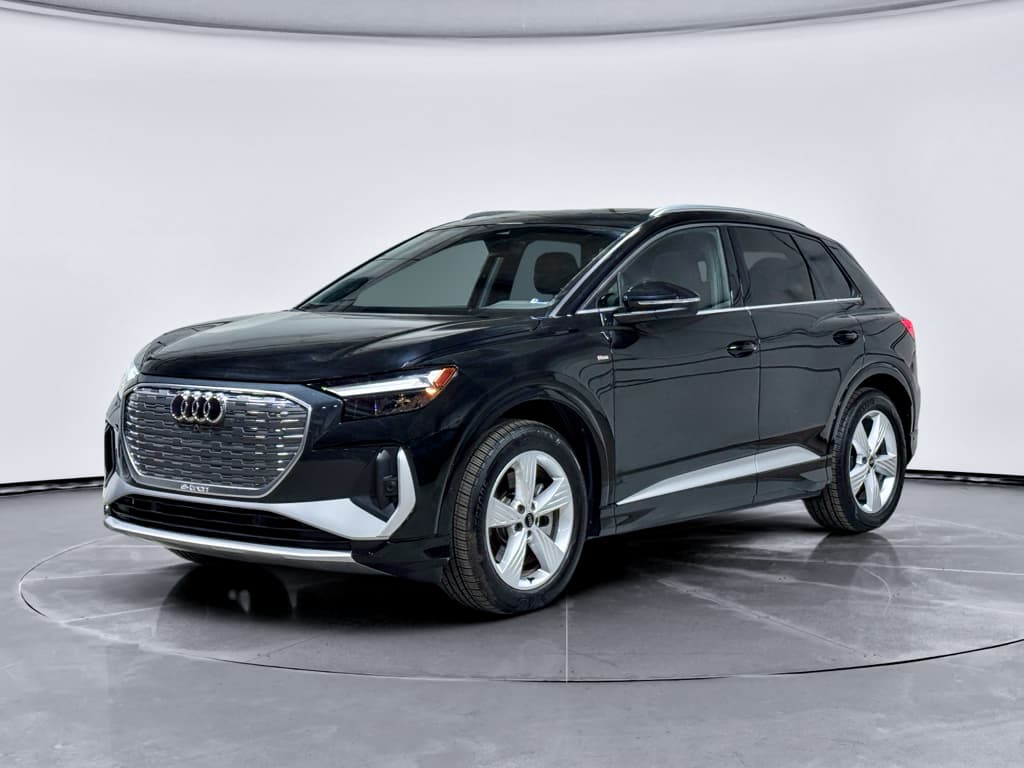
If you’re eyeing an Audi Q4 e-tron, or already own one, the uncomfortable question is the same: what will this pretty little electric SUV actually be worth in a few years? The Audi Q4 e-tron resale value forecast is more sobering than many buyers expect, but that doesn’t mean you should run. It means you should go in with your eyes wide open, and ideally, with good data on the specific car in front of you.
Quick take
Overview: Q4 e-tron and today’s EV resale landscape
The Audi Q4 e-tron arrived for the 2021 model year as Audi’s compact electric SUV, sharing the VW Group MEB platform with the Volkswagen ID.4 and Skoda Enyaq. It slots beneath the larger Q8 e-tron, aiming squarely at shoppers who want a premium badge, usable range, and a more city-friendly footprint.
The complication is timing. The Q4 launched into a period of violent price swings in the EV market. Used EV prices dropped by roughly a third in 2024 alone, while new EV incentives and rapid tech upgrades pushed down values on early models. Luxury compact electric SUVs, exactly where the Q4 lives, have been hit particularly hard as shoppers migrate to newer, longer-range, often cheaper competitors.
Audi Q4 e-tron depreciation at a glance
Those numbers paint an unflattering picture. A Q4 e-tron is not a depreciation hero; it’s closer to a sacrificial lamb. But again, that’s only half the story. Massive depreciation is pain for first owners and a potential windfall for second and third owners, if the underlying car is solid.
Hard numbers: How the Q4 e-tron depreciates
Let’s translate the percentages into something you can feel in your wallet. Exact figures vary by trim, options, mileage and market, but current data on the Audi Q4 e-tron points to the following pattern for a typical U.S. example bought new at roughly $50,000 MSRP:
Illustrative Audi Q4 e-tron depreciation curve
Approximate retained value for a typical Q4 e-tron relative to its original MSRP, based on current resale data and category norms. Your local market and specific spec will vary.
| Vehicle age | Approx. % of original MSRP retained | Illustrative resale value | What this feels like |
|---|---|---|---|
| 3 years | ~43% | ≈ $21,500 | Big early hit; competing with newer, longer-range rivals. |
| 5 years | ~30% | ≈ $15,000 | Deep-depreciation territory; great hunting ground for value buyers. |
| 7 years | ~20% | ≈ $10,000 | Now priced like an older gas crossover, but with far lower running costs. |
| 10 years | ~15% | ≈ $7,500 | Mostly condition- and battery-dependent; niche but compelling if well cared-for. |
Think of this as a weather forecast, not a timestamped stock quote: directionally reliable, not a guarantee.
By contrast, the average SUV keeps about half its value after five years. The Q4 e-tron, if current patterns hold, keeps closer to a third. That’s a substantial gap, and it’s why you see relatively young Q4s advertised for surprisingly modest money.
MSRP vs. transaction price
Why the Q4 e-tron drops faster than you expect
Key forces pushing Q4 e-tron values down
Some are Audi-specific, most are about where the EV market is right now.
Rapid tech turnover
Crowded luxury EV field
Battery anxiety
Brand vs. halo
The good news is that beneath the market noise, the Q4 itself is not some engineering catastrophe. Early reliability data, including inspection results in Europe, show a high percentage of Q4s passing their first major inspection without faults. The platform is mature, shared with mainstream siblings, and much of the hardware is proven rather than experimental. In other words: the car’s reputation is suffering because of the market, not because it’s inherently fragile.
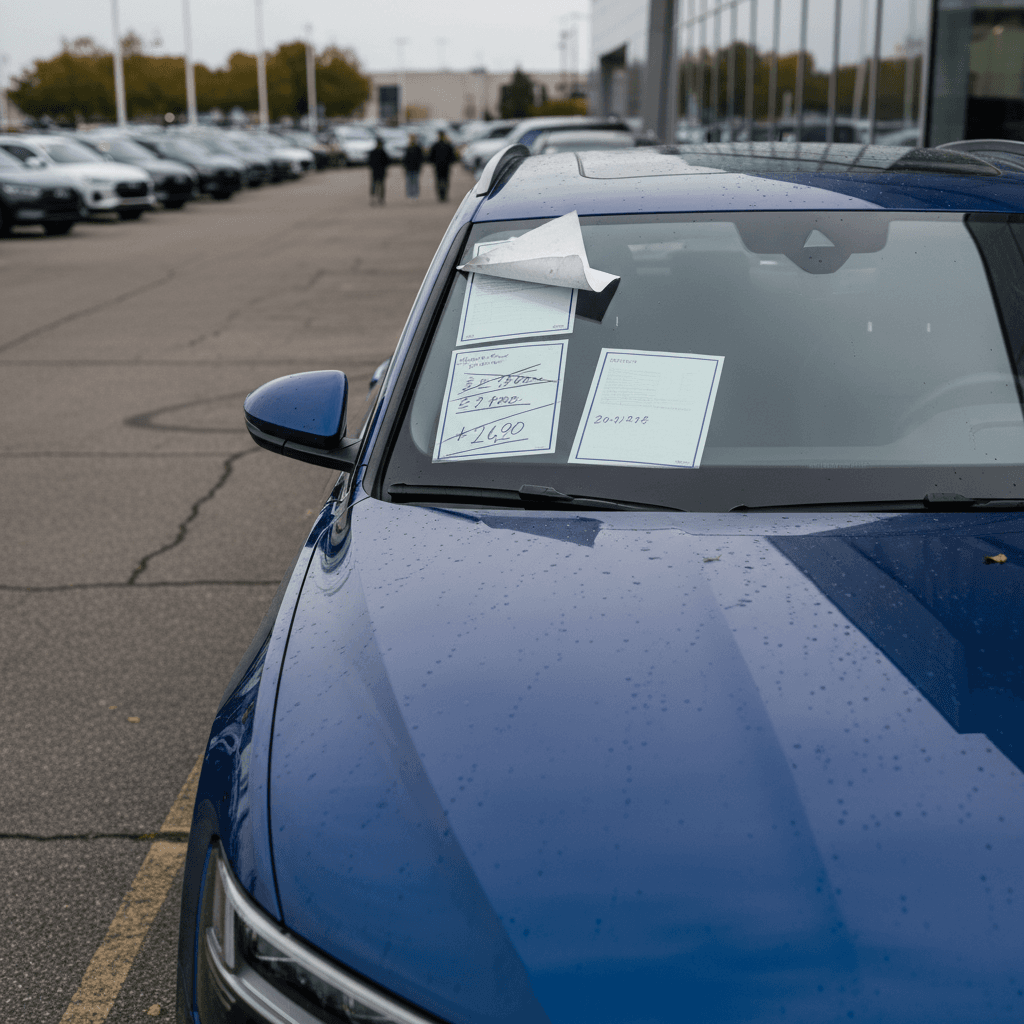
2026–2030 resale value forecast
Forecasting resale value is part economics, part psychology. Below is a directional forecast for a typical Q4 e-tron bought new between 2022 and 2025 and resold in the 2026–2030 window, assuming normal mileage and no major accidents or battery drama.
How Q4 e-tron value is likely to evolve
2026–2027: The big adjustment years
Many three- to five-year-old Q4s will hit the market as leases end. Expect aggressive pricing and plenty of choice. Nicely optioned cars with clean battery reports will sell; plain-spec cars will linger.
2028: Stabilization phase
By this point, the Q4 is "yesterday’s tech" but still a modern, usable EV. Once prices fall into the mid-teens, demand from pragmatic commuters, rideshare drivers and first-time EV shoppers should create a floor.
2029–2030: Separation by condition
The market will increasingly sort good Q4s from bad ones. Cars with documented battery health and uneventful histories hold value; neglected examples and high-mile lease returns slide into bargain-bin territory.
Beyond 2030: Enthusiasts and pragmatists
Well-kept Q4s with strong packs become interesting niche buys, similar to how clean diesel wagons or V8 sedans now have cult followings. The rest quietly exit via wholesale auctions and export.
Where Recharged fits in
Trim, battery and options: Which Q4s age best?
Not all Q4s are created equal in the eyes of second and third owners. The way yours is configured can shift resale value by thousands of dollars, even when the underlying hardware is similar.
Q4 e-tron specs the used market tends to reward
Think about what a second owner will care about at 60,000 miles, not what dazzles in a showroom at six.
Longer-range battery variants
Fast-charging capability
All-wheel drive & winter packs
Conservative wheel/tire choices
Popular colors & interiors
Up-to-date infotainment
If you’re shopping used, you don’t have to chase a unicorn spec. But you should prioritize the fundamentals that survive fashion cycles: battery health, range, charging performance and basic comfort features. A boringly specified Q4 with a great battery beats a fully loaded one with a tired pack every time.
How policy and market shifts will shape values
No resale value forecast lives in a vacuum. Over the next few years, three external forces will do more to shape Audi Q4 e-tron values than any single option on the window sticker.
1. The end of generous federal tax credits
With the federal EV tax credit slated to sunset in late 2025, the price gap between new and used EVs will feel very different. When new cars lose a big chunk of their subsidized advantage, well‑priced used EVs, Q4 included, suddenly look smarter. That can help firm up resale values after the current slide.
2. Charging standard consolidation & infrastructure
As more automakers adopt the North American Charging Standard (NACS) and non‑Tesla networks improve, range anxiety eases. Better charging access makes slightly older EVs more livable, which can slow depreciation. The Q4’s long‑term fate will partly hinge on how easily owners can plug into the dominant networks.
The wild card: used EV demand
Buying a used Q4 e-tron: How to avoid a depreciation disaster
If you’re coming to the Q4 party in the second or third ownership round, you have leverage. Depreciation has already done its ugly work. Your job is to make sure you’re not inheriting somebody else’s mistakes.
Used Audi Q4 e-tron buying checklist
1. Demand objective battery health data
Do not rely on a guess or a bar-graph on the dash. Look for a seller who can provide independent battery diagnostics or a structured report, like the <strong>Recharged Score</strong>, showing state of health, fast‑charging history and any notable degradation.
2. Check DC fast-charging history
Heavy, repeated fast charging isn’t automatically bad, but combined with high mileage it can accelerate wear. Ask for service records and usage reports where available. A car that lived mostly on home Level 2 charging tends to age more gracefully.
3. Inspect for software currency
Outdated software can impact charging behavior, driver assistance and even range estimation. During a test drive, confirm that major software campaigns and recalls have been applied. An Audi dealer or a specialist EV retailer can verify this quickly.
4. Look beyond the battery
Suspension clunks, uneven tire wear, panel misalignment and water leaks around the hatch or charge port are all red flags. A Q4 is still an Audi; repairs aren’t cheap. A thorough pre‑purchase inspection is money well spent.
5. Compare price against current market
Because the Q4 is depreciating faster than average, lazy pricing happens. Use multiple valuation tools, then compare against curated marketplaces like Recharged that price vehicles against real‑time used EV transactions, not wishful thinking.
6. Run the math on total cost of ownership
Lower fuel and maintenance costs can offset steep depreciation. Compare your likely electricity costs and service needs to a similar gas Q5 or X3 over five years rather than obsessing over resale alone.
Why marketplace choice matters
Ready to find your next EV?
Browse VehiclesSelling or trading in: Strategy for current owners
If you already own a Q4 e-tron, your incentives are flipped. You’re not trying to exploit someone else’s depreciation; you’re trying to stop your own from getting worse. The approach depends heavily on how long you’ve had the car and how you acquired it.
Owner playbook by situation
Three common scenarios, three different strategies.
You’re coming off a lease
You bought new and are under 3 years in
You bought used at a discount
What not to do
FAQ: Audi Q4 e-tron resale value
Frequently asked questions about Q4 e-tron resale
Bottom line: Is the Audi Q4 e-tron a good resale bet?
If your primary goal is to own a prestige badge that shrugs off depreciation like a Rolex, the Audi Q4 e-tron is not that car. Its early resale record is rougher than the segment average, shaped by a hyper‑competitive EV market and the end of the easy‑money tax‑credit era.
But if your goal is to drive a comfortable, well‑made electric Audi for the price of a used mainstream crossover, the very same depreciation that stings first owners can work dramatically in your favor. The winners in this story will be the shoppers who buy at the bottom of the curve, insist on hard data about battery health and charging history, and use platforms that treat used EVs as a specialty, not a sideline.
That’s exactly the gap Recharged is built to fill: helping you sort the great Q4 e-trons from the merely cheap ones, with transparent diagnostics, fair pricing, and EV‑savvy guidance from start to finish.