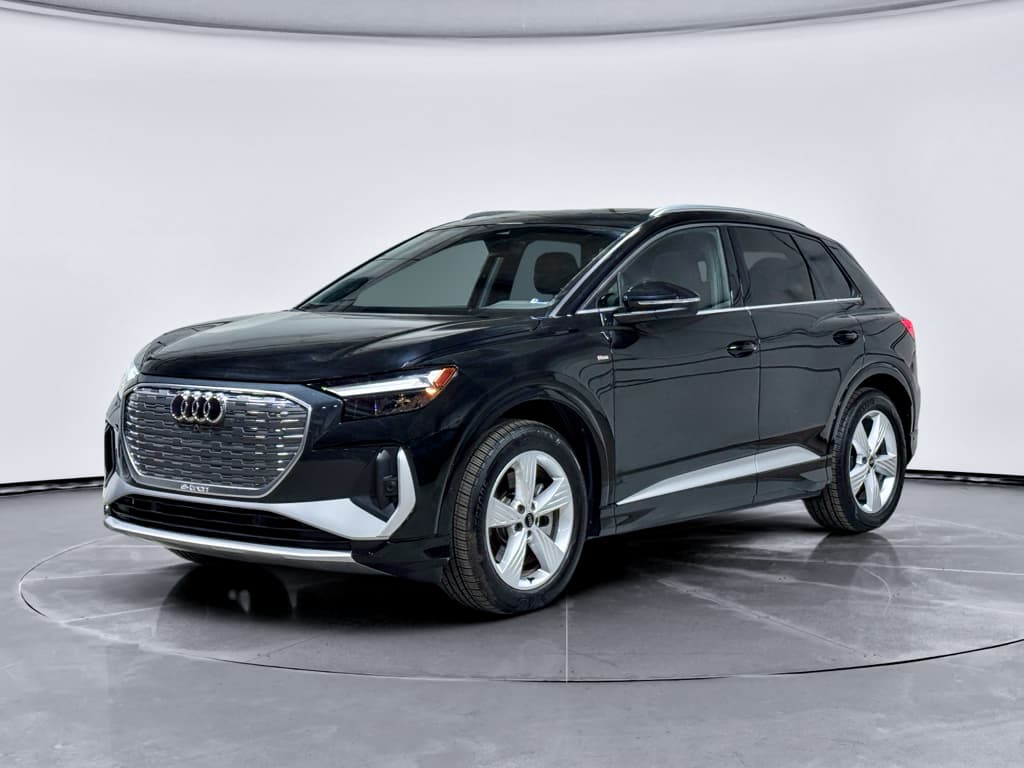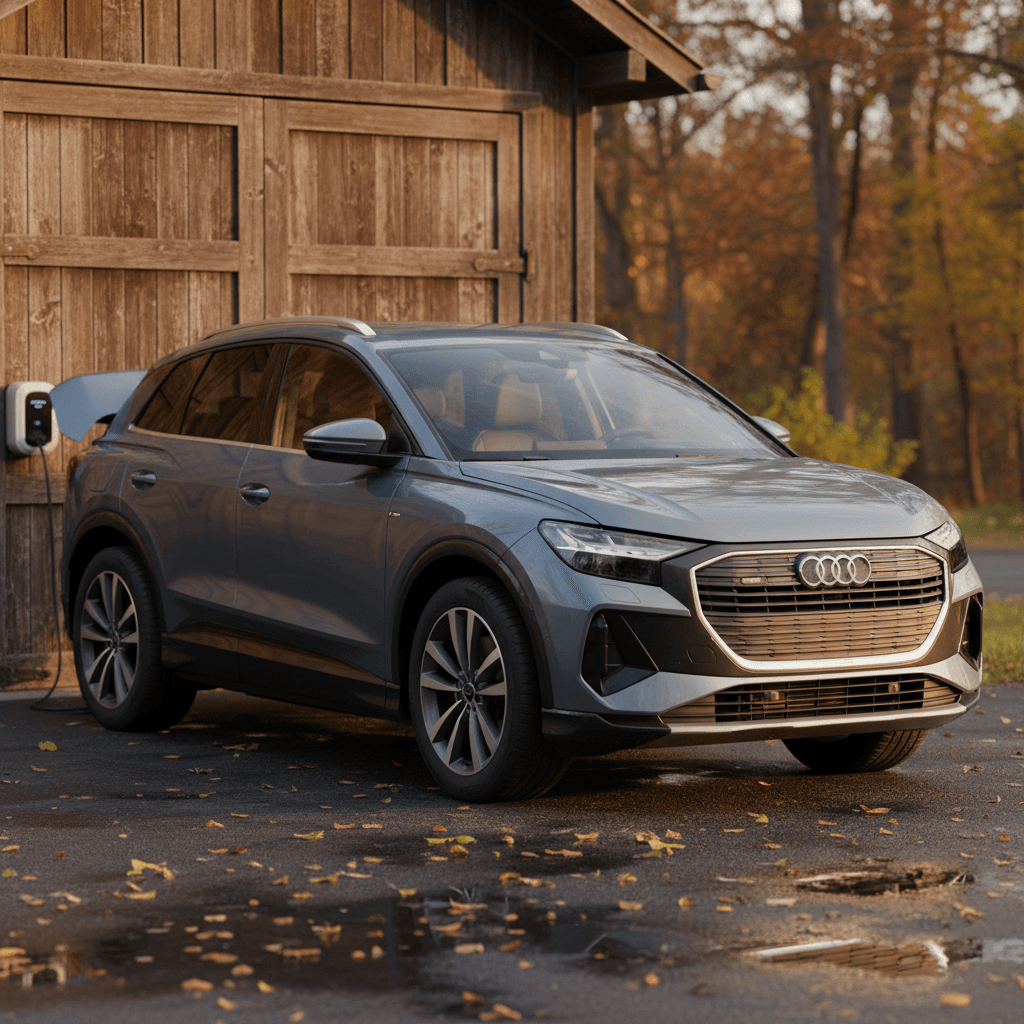
If you’re looking at an Audi Q4 e-tron in 2026, you probably don’t want another breathless first-drive. You want to know what happens after the new-car smell fades: real-world range, how the battery is holding up, what breaks, and whether the depreciation curve has finally stopped falling off a cliff. That’s what this long-term review is about.
Who this review is for
Overview: What this 2026 long-term review covers
- How early (2022–2023) Q4 e-trons compare to updated 2024–2025 models
- Real‑world range at highway speeds versus the EPA window sticker
- Home and DC fast‑charging behavior as the car ages
- Battery health and early data on degradation from high‑mileage owners
- Comfort, noise levels, and tech usability in daily driving
- Reliability patterns and common service complaints
- What’s happening to depreciation in 2026, and where the value sweet spots are
- A practical checklist if you’re buying a used Q4 e-tron, plus how Recharged can help you verify battery health
Key specs and updates: early Q4 vs 2024–2025 models
All U.S. Q4 e-trons share the same basic formula: a compact crossover built on the VW Group’s MEB platform, with a big battery under the floor and either rear‑wheel or all‑wheel drive. But if you’re shopping used in 2026, it matters which year you’re looking at, because Audi has quietly improved range, power, and charging over time.
Audi Q4 e-tron evolution (simplified U.S. view)
How key specs changed across the main Q4 e-tron model years you’ll see on the used market in 2026.
| Model year | Common trims (US) | Battery (usable) | EPA-rated range (approx) | Max DC fast charge | Notable changes |
|---|---|---|---|---|---|
| 2022 | Q4 40, Q4 50 | ~77 kWh | mid‑240s–260 miles | up to ~125 kW | Launch year; solid but unremarkable charging performance |
| 2023 | Q4 40, Q4 50 | ~77 kWh | similar to 2022 | up to ~135 kW | Software tweaks; still first‑gen feel |
| 2024 | Q4 55 (replaces 50) | ~77 kWh | up to high‑250s | ~175 kW (AWD), ~135 kW (RWD) | More power, retuned suspension, improved efficiency and faster DC charging |
| 2025 | 40, 45, 55 (varies by market) | 59–77 kWh (usable) | broader spread; more efficient | similar peak but better curve | Battery chemistry and tuning updates, better range and charge profile, more connected features |
Exact EPA figures vary by trim and wheel choice; think of these as directional guideposts.
Model‑year tip
Real-world range: What you actually see after a few years
Window stickers are marketing; long‑term owners are the reality check. Across hundreds of owner reports and instrumented tests, a picture emerges: the Q4 e-tron is efficient enough, but not a range monster. Think honest, not heroic.
Real-world range snapshots (typical owners, healthy battery
In other words, if you buy a 2024–2025 Q4 e-tron with the larger battery and plan like a realist, figure on roughly 220 miles of comfortable highway range between DC fast‑charge stops, and closer to 260 miles in mixed commuting. Earlier 2022–2023 cars trend slightly lower, especially on big wheels or in cold climates.
Mind your wheels and climate
Charging experience: Home, public, and road-trip manners
Where the Q4 e-tron redeems its merely adequate range is in how it charges, especially in later model years. For most owners, “fast enough” beats “fastest on the spec sheet,” and that’s where recent Q4s live.
How the Q4 e-tron charges in the real world
What long‑term owners report after living with the car for years
Home charging
On a 40‑amp Level 2 home charger, most Q4 e-trons will go 10–12 hours from near empty to full. In real life you’ll top up nightly from 30–60% back to 70–80%, which takes a few relaxed evening hours.
Public Level 2
At malls or offices, expect 20–25 miles of range per hour of charge. It’s enough to turn a workday stop into a meaningful top‑off, but not a road‑trip solution.
DC fast-charging
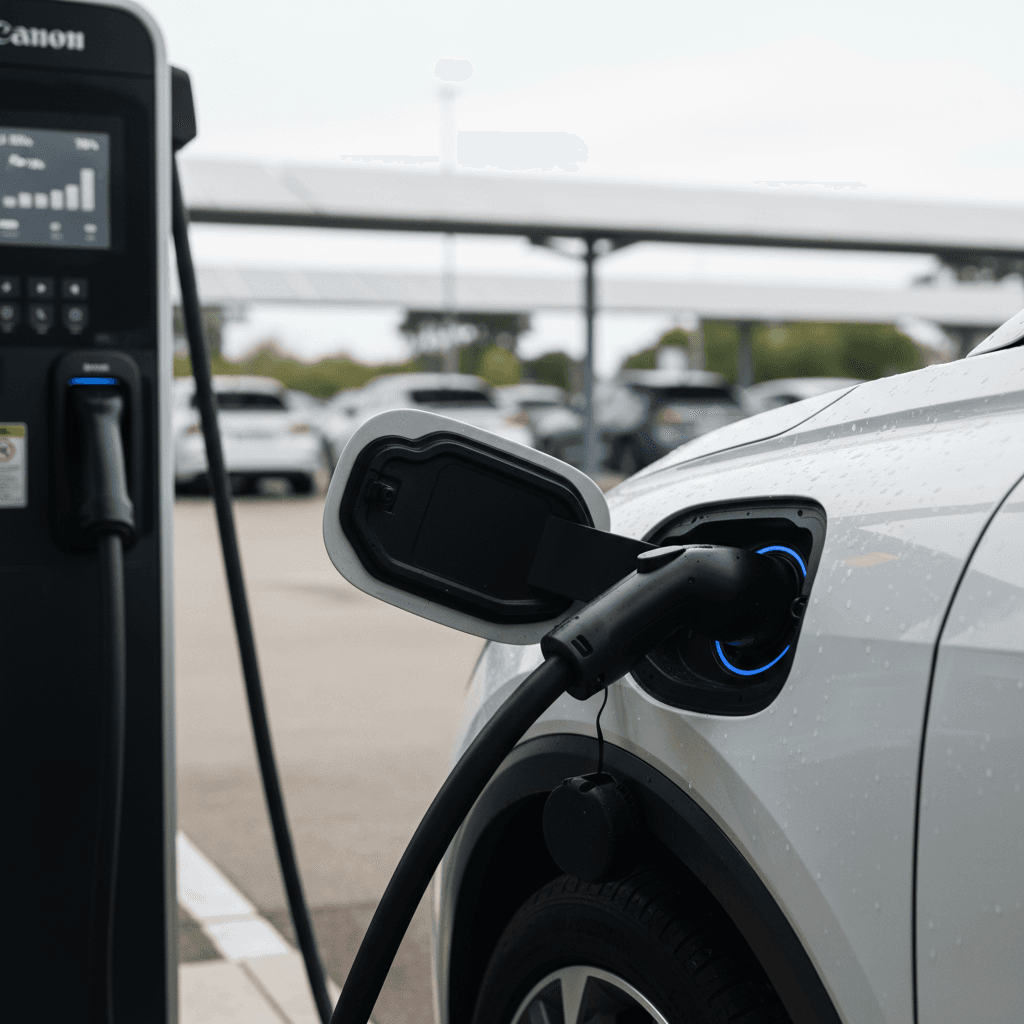
Older Q4s hover around 125–135 kW peaks; 2024+ models commonly hit the mid‑100s and, more importantly, hold higher rates longer, cutting 10–80% sessions into the 30‑ish‑minute zone when the charger cooperates.
Road‑trip rhythm
Audi has also improved the software side. Newer Q4s can precondition the battery when you set a fast‑charger as your destination, so you arrive with a warm pack and better charge rates. Earlier builds didn’t always pre‑heat aggressively enough in winter, which made some early owners grumpy in front of slow chargers.
Battery health & degradation: How the pack is aging
The good news: despite a few headline‑grabbing failures, the Q4 e-tron’s big pack appears to be aging about as expected for a modern liquid‑cooled EV. High‑mileage owners in the wild are typically reporting first‑decade degradation in the single‑digit to low‑teens percent range, depending on use.
What long‑term owners are seeing
- After ~50,000–80,000 miles, many report 5–12% loss in usable capacity.
- Home‑charging‑heavy cars (slow AC, 20–80% cycling) tend to look healthier than DC‑fast‑charging warriors.
- Range loss is most obvious in winter, but that’s largely temperature, not permanent degradation.
What to watch for on a used Q4
- Big gaps between indicated range and EPA rating at high state of charge.
- Patchy DC fast‑charge curves, sudden drops in power can hint at a conservative BMS protecting a tired module.
- Any history of battery‑module replacement; rare, but worth documenting.
Use data, not vibes
Comfort, space, and tech in daily use
If the Tesla Model Y is the disruptor in a hoodie, the Q4 e-tron is the compact luxury SUV in a tailored blazer. It’s not the biggest, flashiest, or quickest in class, but as a daily tool it’s surprisingly well‑judged, especially after a couple of years, when the gimmicks wear off and what you’re left with is the seat, the ride, and the sound level at 75 mph.
Living with the Q4 e-tron day to day
Where it quietly succeeds, and where it just treads water
Seating & space
Front seats are classic Audi: firm but supportive, with enough adjustment for long‑torso drivers. Rear space is generous for a compact SUV; two adults will be fine, three will tolerate. The flat EV floor helps legroom.
Noise & ride
The Q4 rides with a mature, slightly firm German tune. Updated 2024+ cars got retuned suspension that knocks some edges off potholes. Wind and road noise are well controlled, giving the car a calm, upscale feel on the highway.
Infotainment & UX
MMI is no minimalist revelation, but after the initial learning curve it’s logical. The steering‑wheel touch controls are fussy, and wireless CarPlay/Android Auto is where most owners live. Over‑the‑air updates have been slowly improving responsiveness and feature set.
Family‑friendly, without the circus
Reliability, software quirks, and ownership hassles
Here’s where the story gets more nuanced. Mechanically, the Q4 e-tron has been fairly solid so far, no systemic motor failures or widespread pack disasters, but long‑term owners regularly complain about two things: software gremlins and dealer service experiences that haven’t fully caught up to EV reality.
- Occasional infotainment freezes and laggy responses, especially on early software builds
- Random sensor or driver‑assist warnings that clear themselves but erode confidence
- Slow parts availability for rare but painful issues like individual battery‑module failures
- Dealerships more practiced at oil changes than diagnosing complex high‑voltage or connectivity issues
- Some squeaks and rattles emerging after rough‑road use, especially on big‑wheel trims
Don’t skip the software history
Depreciation: 2026 used prices and value sweet spots
Luxury EV crossovers took their depreciation medicine early, and the Q4 e-tron was no exception. The upside in 2026 is that the bottom part of that curve is now your friend if you’re buying used.
Audi Q4 e-tron value picture in 2026 (typical U.S. market)
Compared with a Tesla Model Y, the Q4 generally depreciates a bit harder from new, but then stabilizes into a predictable luxury‑EV curve. That creates opportunity: a three‑year‑old, well‑optioned Q4 can undercut a comparable German ICE SUV on payment, while still feeling thoroughly modern inside.
Leverage the depreciation curve
Which Q4 e-tron years to buy (and which to think twice about)
Most compelling buys in 2026
- Late‑build 2023 Q4 50/55 – Often heavily discounted versus new, but with many early kinks ironed out.
- 2024 Q4 55 – Better power, smoother suspension, stronger DC fast‑charging, more efficient software. Ideal mix of performance and value if you find one off‑lease.
- Lightly used 2025 models – If you want newer chemistry and the latest feature set and can stomach higher pricing.
Approach with more scrutiny
- High‑mileage early 2022 builds – Not a dealbreaker, but you’ll want very clear battery‑health data and software‑update history.
- Cars with repeated electrical or charging complaints – A stack of charging‑system or BMS codes in service records is your cue to walk away.
- Big‑wheel Sportback vanity specs – They look great, but range and ride quality suffer noticeably, especially in harsh climates.
Don’t buy on looks alone
Buying a used Audi Q4 e-tron: Checklist
Pre‑purchase checks for a 2026 Q4 e-tron shopper
1. Pull a battery‑health report
Ask the seller for recent battery diagnostics, or use a platform like <strong>Recharged</strong> where every vehicle includes a Recharged Score and pack‑health assessment. You want a clear picture of usable capacity versus original spec.
2. Verify software and recall history
Confirm that major software updates and any recalls have been performed. A fully updated Q4 is less likely to suffer from lingering bugs and will generally charge and precondition more intelligently.
3. Test DC fast-charging
If possible, take the car to a DC fast‑charger and watch the curve from 10–60%. You’re looking for smooth ramp‑up and no abrupt drops in power that might signal an unhappy module or conservative BMS limits.
4. Inspect tires and wheels
Oversized wheels with cheap replacement tires are a red flag for both ride quality and range. Uneven wear can also hint at alignment issues or a history of curb strikes.
5. Listen on a rough road
During a test drive, find coarse pavement and a few expansion joints. Listen for rattles and buzzes from the hatch area and interior trim. A good Q4 should feel tight and calm, not like a maraca.
6. Confirm charging hardware
Make sure the portable EVSE, any wallbox documentation, and at least two working keys are included. Replacing missing charging hardware can add hundreds of dollars to your purchase.
FAQ: Audi Q4 e-tron long-term ownership
Frequently asked questions about long‑term Q4 e-tron ownership
Bottom line: Is the Audi Q4 e-tron a smart used EV in 2026?
If you want the longest‑range EV or the flashiest tech, the Audi Q4 e-tron has never been the headline act. But that’s not really the point. Viewed through a 2026, long‑term lens, the Q4 emerges as a quietly competent electric crossover: comfortable, refined, efficient enough, and now, crucially, priced where its talents make real sense.
The early cars demand more homework: you’ll want rock‑solid evidence of battery health and a clear software‑update and service trail. The updated 2024–2025 models, meanwhile, finally align the spec sheet with the promise, bringing better range, brisker charging, and more polished road manners. Those are the ones to target if your budget allows.
This is exactly where a used‑focused EV marketplace like Recharged shines. Every Q4 e-tron listing includes a Recharged Score, verified battery diagnostics, fair‑market pricing, and access to EV‑savvy specialists who can walk you through trade‑in, financing, and even nationwide delivery. If you like the idea of a compact Audi that just happens to be electric, and you buy with your head as well as your heart, the Q4 e-tron can be a very smart move in 2026.