If you’re eyeing a three‑row electric SUV, the 2026 Volvo EX90 is probably on your short list. The obvious next question is: what does the **2026 Volvo EX90 reliability rating** actually look like after Volvo’s rocky launch and software struggles with earlier model years?
Quick context
2026 Volvo EX90 reliability at a glance
Early 2026 Volvo EX90 reliability snapshot
Important caveat
How the 2026 EX90 is rated today
When shoppers search for a **2026 Volvo EX90 reliability rating**, what they usually find isn’t a single official score, but a patchwork of early information: owner reviews, recall databases, and safety organizations.
- Consumer and editorial outlets that have road‑tested the EX90 generally praise refinement, comfort, and safety tech, while flagging software glitches and occasional sensor faults as the primary negatives.
- Owner review averages for 2025–2026 EX90s hover around the middle of the pack (roughly 3 out of 5 stars), with a real split between owners who’ve had almost no issues and those whose vehicles have spent weeks in service bays.
- Mainstream reliability guides often list the EX90 as “unknown” or “too new to rate,” which is accurate: there simply hasn’t been enough time for multi‑year data yet.
How to interpret early ratings
Software vs. hardware: what has actually gone wrong?
Most of the EX90’s trouble so far has come from its ambition: Volvo tried to leap into full “software‑defined vehicle” territory, and early production cars paid the price. For reliability, it’s crucial to separate **software headaches** from true **hardware failures**.
Common software and UX issues
- Glitchy infotainment: Screens freezing, lag, random reboots, or settings not saving.
- Digital key problems: Phones not unlocking or starting the car, repeated PIN prompts, or Bluetooth dropouts.
- Charging communication: Occasional failures to start or stop charging, or mis‑reported charge status in the app.
- ADAS quirks: Driver‑assist features (lane keeping, pilot assist, parking aids) that disengage unexpectedly or throw false warnings.
On a bad day these feel like reliability failures, even if nothing mechanical is broken.
Hardware and build issues
- Module failures: Individual control modules (for charging, safety systems, or suspension) that fail and need replacement.
- Interior rattles or trim problems: Minor build‑quality defects that don’t strand you but undermine the premium feel.
- Early LiDAR/computer mismatch: First‑wave cars shipped with hardware that couldn’t fully support the promised driver‑assist stack until upgraded.
- Seat/anchor recalls on 2025 models: A small but important hardware recall that shows how Volvo responds to defects.
These issues are rarer than software complaints, but they’re what most shoppers think of when they hear “reliability problem.”
The good news for 2026
Safety ratings vs. reliability ratings
The EX90 is a very modern Volvo, which means safety is a core part of its pitch. But it’s vital not to confuse **safety** with **reliability**.
How the EX90 scores on safety vs. reliability
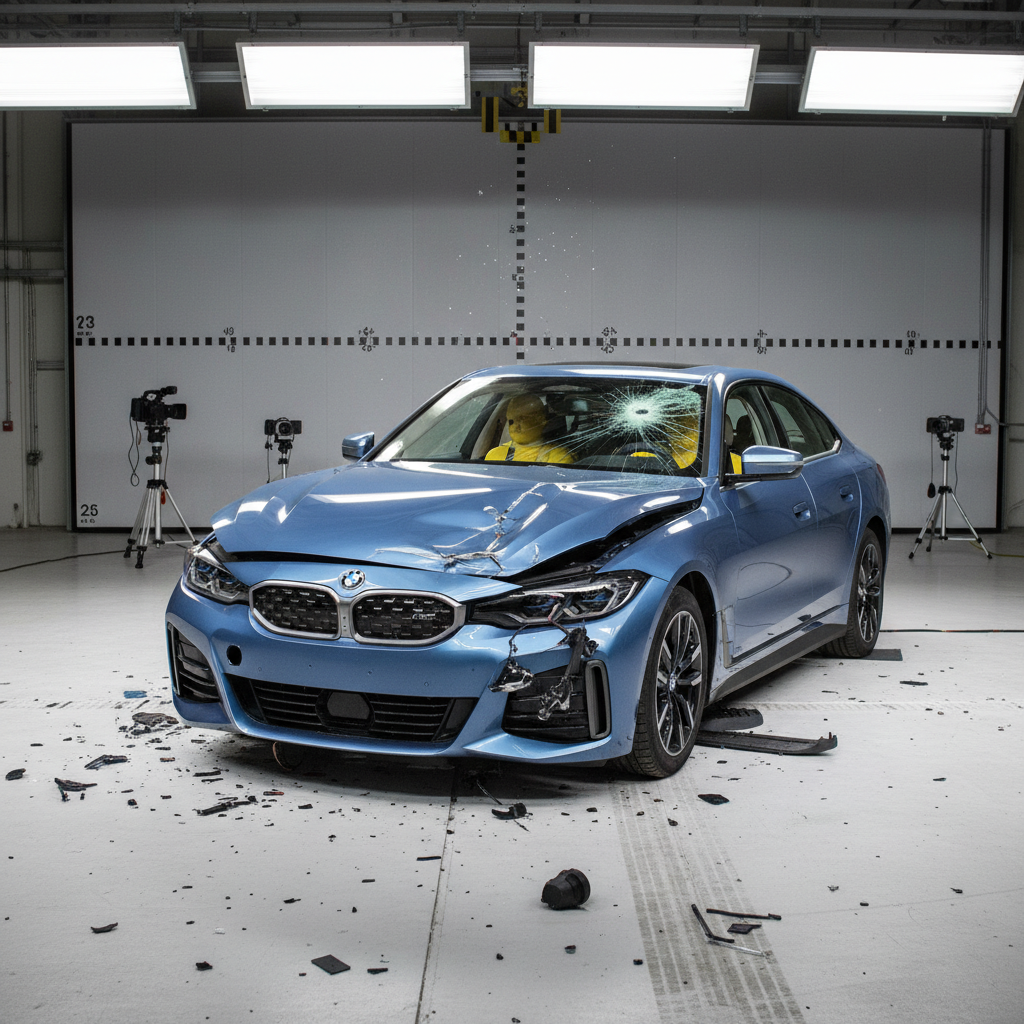
Top marks in crash protection, mixed marks in day‑to‑day uptime
Crash & protection performance
- Top crash scores from major test programs, including 5‑star results.
- Advanced occupant protection, including center airbags and robust side‑impact structure.
- State‑of‑the‑art sensor suite (camera, radar, LiDAR) watching for hazards 360° around the vehicle.
Takeaway: If the worst happens, the EX90 is exactly the kind of vehicle you want to be in.
Day‑to‑day reliability picture
- Some owners sail through the first year with only routine updates.
- Others report repeated dealer visits for software and sensor issues.
- Longer‑term durability data (5–10 years) does not exist yet.
Takeaway: Great crash safety does not automatically mean trouble‑free ownership.
Don’t mix up safety and reliability
Battery and drivetrain reliability
Underneath the software drama, the EX90’s basic EV hardware, battery, motors, and 800‑volt electrical architecture, has shown fewer red flags so far than its infotainment stack.
- Volvo backs the EX90’s high‑voltage battery with an 8‑year/100,000‑mile warranty typical of modern EVs, which generally includes a minimum state‑of‑charge guarantee (often around 70% capacity) if degradation becomes severe.
- Real‑world range for 2025–2026 EX90s tends to track reasonably close to EPA estimates when driven at moderate highway speeds, assuming software reports charge state accurately.
- There are scattered reports of on‑board charger or DC fast‑charge module replacements, but no systemic pattern yet that would point to a fundamentally weak drivetrain design.
- The 800‑volt system on newer EX90s improves fast‑charging efficiency and heat management, which should actually help long‑term battery health if you road‑trip frequently.
Battery health and used EX90s
2026 EX90 recalls and TSBs
As of April 10, 2026, the 2026 EX90 looks clean on paper: US‑market safety databases show **no recalls or formal complaints** specifically tagged to the 2026 model year. That’s encouraging, but it doesn’t mean issues don’t exist, it often means they’re being handled with software updates or Technical Service Bulletins (TSBs) instead of full recalls.
How to read EX90 recall and service information
Use this framework when you look at a 2026 EX90’s history report.
| Item | What it is | Why it matters for 2026 EX90 |
|---|---|---|
| Safety recalls | Legally mandated repairs for safety defects, handled at no cost. | Shows where serious design or manufacturing issues surfaced. Earlier EX90 recalls (e.g., seat or hardware issues) are worth confirming were completed. |
| Service campaigns | Non‑safety repairs that Volvo offers voluntarily, often software or minor hardware fixes. | Indicates known weak spots that Volvo is proactively cleaning up. |
| TSBs | Guidance to dealers on diagnosing and repairing recurring issues. | If a prior owner visited repeatedly for the same EX90 issue, there’s probably a TSB behind it, helpful to know it’s a recognized pattern. |
| OTA updates | Over‑the‑air software updates delivered without a dealer visit. | On a modern EV like the EX90, OTA history is as important as oil‑change history was on a gas SUV. You want a car that’s fully up to date. |
Combine official recalls with TSBs and dealer records for the full picture.
What to ask the seller
Ownership experience: what early owners report
Read through owner forums and you’ll see two very different EX90 stories. That split is exactly why the **2026 Volvo EX90 reliability rating** is hard to pin down in a single number.
Two common 2024–2026 EX90 owner stories
Same hardware, very different experiences
Story A: “Best car I’ve owned”
- Minor software bugs early on, mostly fixed after one or two big OTA updates.
- No drivetrain or high‑voltage issues; only scheduled maintenance visits.
- Owners praise comfort, sound system, safety tech, and overall refinement.
- They’d happily buy another EX90 or recommend it to friends.
Story B: “23 days in the shop”
- Multiple returns to the dealer for ghost warnings, module failures, or charging faults.
- Vehicles spending weeks offline waiting for parts or engineering guidance.
- Frustration with Volvo corporate communication and slow resolution time.
- Some owners invoke lemon laws or switch back to a conventional XC90 or a different EV brand.
Why this split matters for used buyers
Should you buy a 2026 Volvo EX90 (new or used)?
Whether the 2026 EX90 is a smart buy comes down to your risk tolerance and what you’re optimizing for: maximum tech and safety, or minimal drama.
Good fit if…
- You want one of the **safest three‑row EVs** on the market and will actually use the third row.
- You’re comfortable being an early adopter in software terms, even if the basic platform is no longer brand‑new.
- Your local Volvo dealer has a strong EV reputation and loaner support if repairs are needed.
- You value Volvo’s design and quiet, refined ride more than razor‑edge performance.
Maybe wait or look elsewhere if…
- You absolutely cannot tolerate software quirks or repeated dealer visits.
- You live far from a Volvo dealer and would struggle if the car were down for a week.
- You’re indifferent to the EX90’s specific strengths and could be equally happy in a Kia EV9, Mercedes EQE SUV, or a used Tesla Model X.
- You prefer to buy only after long‑term reliability data is available, which likely means waiting until 2027+ for a clearer picture.
How Recharged can de‑risk the decision
Ready to find your next EV?
Browse VehiclesHow reliability affects used EX90 prices
Markets are pretty efficient at pricing risk, and the used EX90 is no exception. Early reliability uncertainty tends to show up in **faster depreciation** than you’d see for a long‑proven model like a gas XC90.
- News about software issues and recalls usually creates a discount window, especially for high‑spec trims that were expensive new.
- Vehicles with documented buybacks or long repair histories tend to sell at a noticeable discount, or go straight to auctions instead of retail lots.
- Clean‑history examples, especially later‑build 2025 and 2026 EX90s that have had all updates applied, often retain value better than the averages suggest.
- As Volvo stabilizes the software stack and owners report more “boring” reliability, expect depreciation curves to smooth out closer to other luxury EV SUVs.
Smart shopping move
Checklist: evaluating a used Volvo EX90’s reliability
Used 2025–2026 Volvo EX90 reliability checklist
1. Confirm build date and model year
Look at the driver‑door jamb label and registration. Later‑build 2025 and 2026 EX90s typically have more of the early bugs ironed out. Ask the seller if any major hardware (compute, charger, LiDAR‑related parts) has been updated.
2. Pull full recall & campaign history
Get a VIN‑based report and confirm all EX90 recalls and service campaigns are completed. Pay special attention to any notes about seat hardware, restraint systems, or driver‑assist components.
3. Review dealer service records
You’re looking for patterns: repeated visits for charging faults, digital key failures, or warning lights. One fix is normal; four visits for the same issue is a red flag.
4. Inspect software & app behavior
During the test drive, cycle the car on and off, connect your phone, use the digital key, and run the navigation and audio systems. Watch for lag, reboots, or strange error messages.
5. Test charging at multiple power levels
If possible, plug into Level 2 AC and a nearby DC fast charger. Confirm the EX90 starts and stops charging cleanly, reports the correct charge rate, and doesn’t throw charging‑system warnings.
6. Get an independent EV health report
Ask for a recent battery health scan and fault‑code report. A Recharged Score report, for example, shows measured capacity, fast‑charging history, and unresolved diagnostic trouble codes that might hint at reliability problems.
FAQ: 2026 Volvo EX90 reliability questions
Frequently asked questions about 2026 Volvo EX90 reliability
Bottom line: is the 2026 EX90 a reliable EV SUV?
The honest answer is that the **2026 Volvo EX90 reliability rating** is still “in progress.” Volvo has clearly learned from the EX90’s painful software launch, and 2026 models are better for it. Crash safety is outstanding, the battery and motors look solid so far, and many owners are quietly racking up miles with minimal drama. At the same time, the vehicle’s complexity means there’s more to go wrong than on a conventional XC90, and a minority of owners have lived that reality.
If you value cutting‑edge safety tech and a genuinely family‑friendly three‑row layout, the EX90 deserves a spot on your shortlist, as long as you go in with open eyes, a strong local dealer, and a plan to vet each individual car’s history. And if you’d rather have that legwork done for you, consider shopping for a used EX90 through Recharged, where every vehicle comes with a Recharged Score report so you can see past the marketing to the real‑world reliability story.