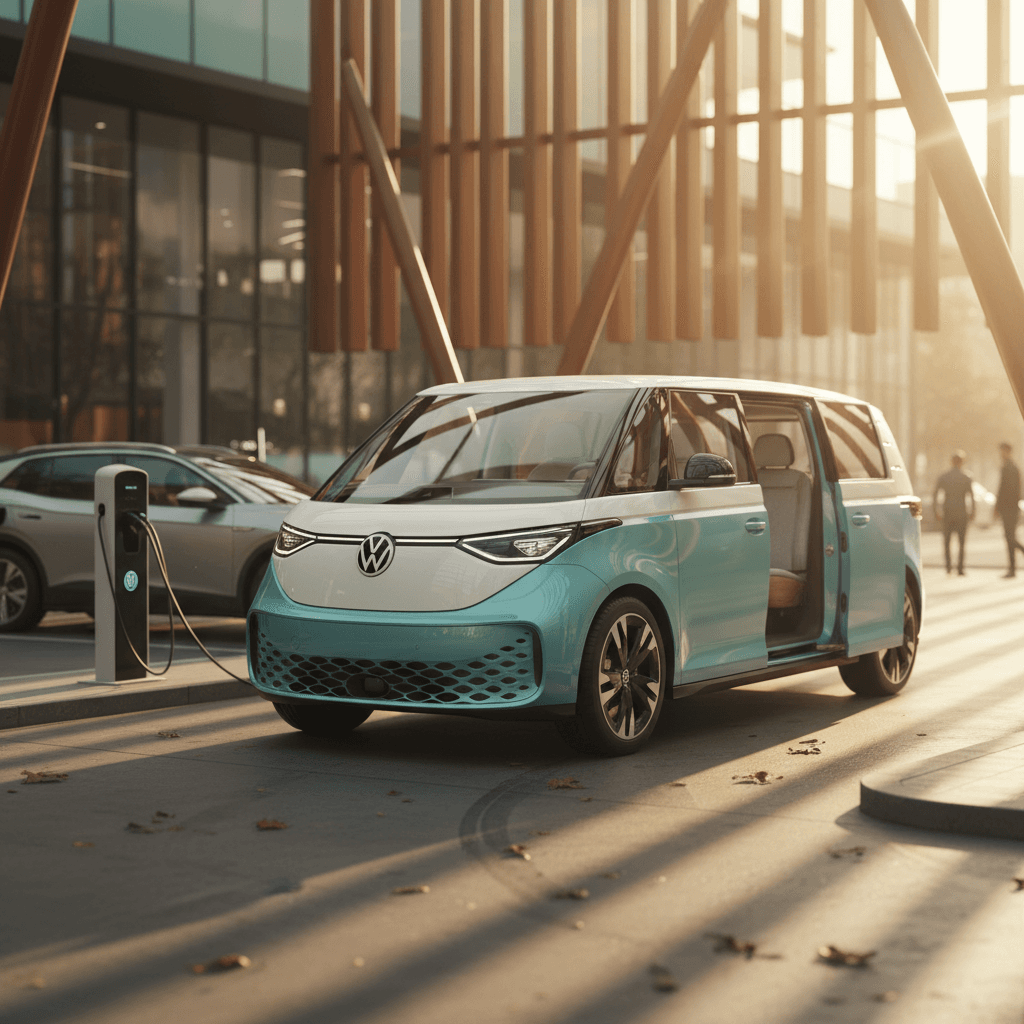
If you love the idea of an all‑electric, retro‑styled van, you’ve probably had the Volkswagen ID. Buzz on your wish list for years. But shopping for one in 2026 is not as straightforward as walking onto a lot and pointing at the two‑tone one in the window. This 2026 Volkswagen ID. Buzz buying guide walks you through what’s really happening with model years, pricing, range, and options, and how the ID. Buzz stacks up against used EVs that might deliver similar practicality for less money.
Quick takeaway
2026 ID. Buzz reality check: model-year and availability
Before you dive into colors and wheel designs, you need to understand a critical point: Volkswagen is not selling a 2026‑model‑year ID. Buzz in the U.S. The long‑wheelbase ID. Buzz launched here as a 2025 model, and VW has confirmed that the van will skip the 2026 model year and return as a 2027 model instead. That means your 2026 shopping experience will revolve around three buckets of inventory:
- New 2025 ID. Buzz vans still on dealer lots (some likely discounted if they’ve been sitting for a while).
- Lightly used 2025 ID. Buzz models being traded in or resold after a year or less of use.
- Alternative EVs, often two‑row crossovers or three‑row SUVs, that may not look like a Microbus, but can play a similar family‑hauler role.
Don’t get hung up on the “2026” badge
From a buyer’s standpoint, that’s not necessarily bad news. Many dealers get aggressive on pricing when a model year is orphaned, especially on a niche vehicle like the ID. Buzz that has passionate fans but a narrower mainstream audience. If you’re flexible on color and options, 2026 could be the easiest time to negotiate on a new‑but‑prior‑year ID. Buzz.
ID. Buzz trims, pricing, and key specs
Volkswagen’s U.S.‑spec ID. Buzz is a three‑row, long‑wheelbase electric van with standard rear‑wheel drive and available all‑wheel drive. Exact trim names vary by market and dealer marketing, but most U.S. buyers will see a familiar structure: an entry model, a well‑equipped mid‑grade, and a range‑topping trim with all the design and tech goodies.
Volkswagen ID. Buzz (U.S. long‑wheelbase) – core specs to know
Approximate U.S.‑market specs based on 2025 models, which will be the ones you actually find in 2026.
| Spec | What most U.S. 2025 ID. Buzz buyers get |
|---|---|
| Seating | 3 rows, 6 or 7 passengers depending on seat configuration |
| Drivetrain | Standard rear‑wheel drive; optional dual‑motor all‑wheel drive |
| Power | Around mid‑200s hp RWD; 300+ hp with AWD (estimate based on VW disclosures) |
| Torque | Over 400 lb‑ft on some AWD versions |
| Battery | Large pack in the mid‑80‑kWh usable range (similar to ID.4/ID.7 family) |
| DC fast‑charging | Peak speeds roughly in the 170–200 kW ballpark on higher‑spec packs |
| On‑board AC charger | 11 kW Level 2 (typical VW spec, plan on a 48‑amp home charger to match) |
| EPA range (estimate) | Low‑ to mid‑200‑mile range depending on configuration and wheels |
Always verify exact specs for the VIN you’re considering, especially battery size and driven wheels.
Why specs vary
Expect U.S. pricing on remaining 2025 ID. Buzz models to cluster around the low‑$60,000s for well‑equipped rear‑drive vans, climbing higher for all‑wheel drive and special appearance packages. Many shoppers will also compare it with three‑row electric SUVs, Kia EV9, Hyundai Ioniq 7, Mercedes EQB/EQE SUV, and with used EVs like the VW ID.4 or Tesla Model Y that don’t match the Buzz’s charm but can be thousands less.
Range, battery, and charging: what to expect
If you’re looking at an ID. Buzz as a family road‑trip machine, range and charging deserve close scrutiny. The long‑wheelbase body, boxy aerodynamics, and three‑row interior all work against outright efficiency. You’re trading some miles for space and style.
ID. Buzz range and charging at a glance
Plan around realistic, not theoretical, numbers.
Realistic highway range
Expect practical highway range in the 190–220 mile zone from most U.S.‑spec ID. Buzz vans when loaded with people and gear and driven at modern interstate speeds.
DC fast charging
The large battery and VW’s modern architecture support solid DC fast‑charge speeds, roughly in the 170–200 kW neighborhood on higher‑spec packs. That’s enough to go from a low state of charge to about 80% in 30–40 minutes under ideal conditions.
Home charging
An 11 kW on‑board charger means a 48‑amp Level 2 home station can comfortably replenish a day’s driving overnight. For most families, that’s the difference between living with an EV and loving it.
Cold‑weather reality check
One advantage of a young electric platform is battery longevity. Volkswagen’s other EVs, like the ID.4, carry an 8‑year/100,000‑mile high‑voltage battery warranty, and the ID. Buzz follows a similar pattern. That warranty typically guarantees your pack won’t fall below a defined capacity threshold (often around 70%) within the coverage window. For a family vehicle you plan to keep, that’s a meaningful hedge against early degradation.
Space, seating, and everyday practicality
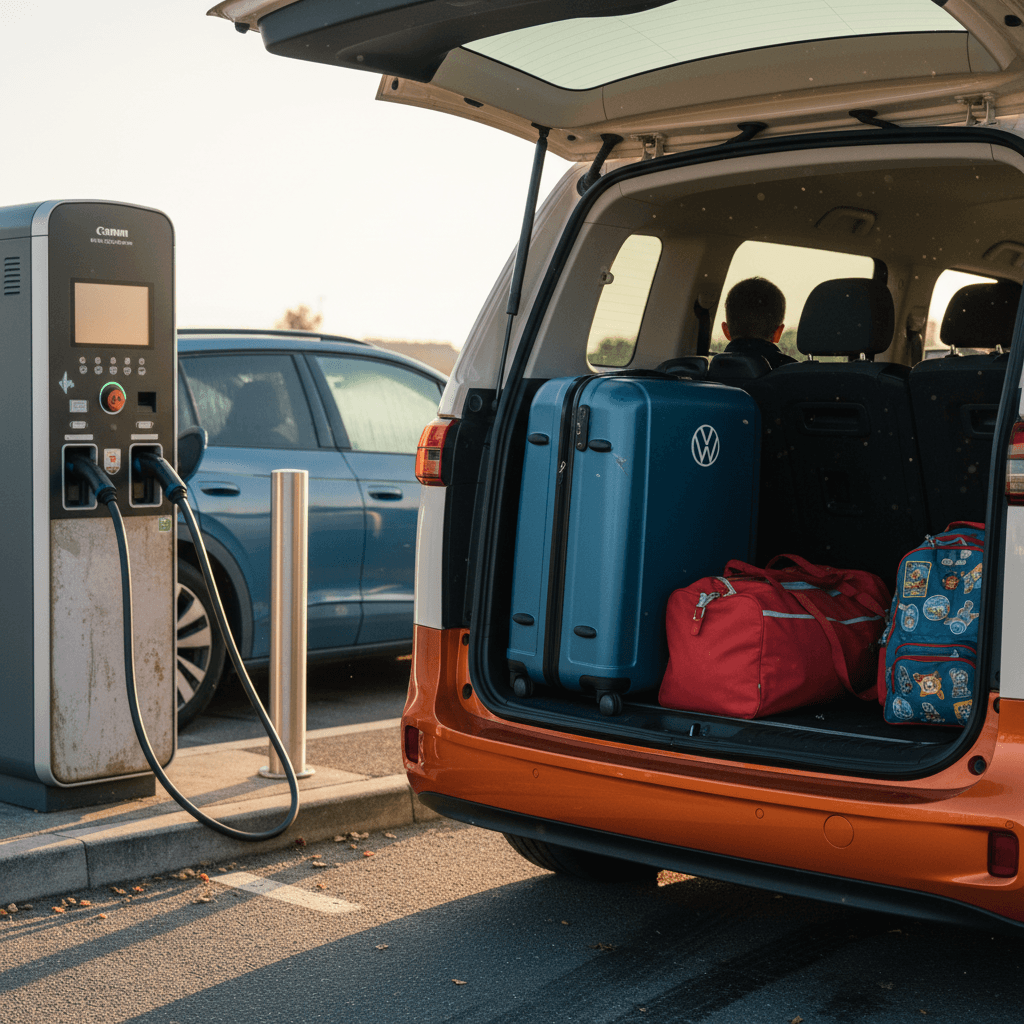
On paper, the ID. Buzz doesn’t look dramatically different from a three‑row crossover. In person, its tall roof, upright seating, and big glass area make it feel more like a modern take on a minivan, just without the minivan stigma.
Seating and flexibility
- Three rows standard: Most U.S. vans offer a 2–3–2 or 2–2–3 seating layout.
- High seating position: The upright chairs give you a commanding view, helpful in traffic and on long drives.
- Sliding and folding: Second and third rows slide, recline, and fold to juggle people and cargo. Some versions offer removable second‑row seats for camper‑style flexibility.
Cargo and daily use
- Big hatch, low load floor: Easy to toss in strollers, bikes, or large grocery runs.
- Real third‑row space: Adults can actually sit in the way‑back without feeling punished, something few midsize SUVs can claim.
- Cabin storage: Open shelves, bins, and clever cubbies make it family‑friendly, though exact details vary by trim.
Where the ID. Buzz shines
Safety, IQ.DRIVE, and driver assistance tech
Volkswagen has leaned hard into active safety on its latest vehicles, and the ID. Buzz benefits from that approach. It’s built on a modern EV platform engineered for crash performance, and it layers on VW’s IQ.DRIVE suite of driver‑assistance tech.
ID. Buzz safety and driver‑assistance highlights
On most U.S.‑spec ID. Buzz models, you can expect standard features like automatic emergency braking with pedestrian detection, lane‑keeping assist, and blind‑spot monitoring with rear cross‑traffic alert. Higher trims or option packages may add Travel Assist (hands‑on lane centering and adaptive cruise), automatic high beams, and a 360‑degree camera system.
Know your assist limits
Total cost of ownership and incentives
Sticker shock is real with the ID. Buzz. A well‑equipped van sits in the same ballpark as many luxury three‑row SUVs. But over a five‑ to eight‑year ownership window, the cost picture looks different once you factor in fuel savings, maintenance, and potential incentives.
Where the ID. Buzz can save you money over time
Big up‑front cost, but fewer moving parts and no gasoline.
Fuel savings
Even at today’s electricity rates, driving on electrons is typically cheaper per mile than burning gasoline, especially if you charge at home overnight on a time‑of‑use plan.
Lower routine maintenance
No oil changes, no timing belts, fewer fluids. You’ll still have tires, brakes, cabin filters, and brake fluid, but the typical EV service schedule is simpler than a comparable gas van or SUV.
Potential incentives
Federal and state incentives evolve, and imported EV vans like the ID. Buzz may not qualify for every program. Still, depending on your state and local utilities, you may see rebates for home chargers or off‑peak charging.
Compare TCO, not just MSRP
New ID. Buzz vs used EV alternatives
The question many families face in 2026 is simple: do you stretch for a new ID. Buzz because you love the idea of a modern Microbus, or do you buy a used EV that covers 80–90% of the function for much less money? That’s where a platform like Recharged can tilt the scales in favor of used.
New ID. Buzz vs popular used EV alternatives
High‑level comparison points; exact prices depend on year, mileage, and condition.
| Vehicle | Typical seating | Real‑world range | Shopping price in 2026 (approx.) | Best for |
|---|---|---|---|---|
| New VW ID. Buzz (2025 MY) | 3 rows, 6–7 seats | ~200+ highway miles, more in city | Low‑ to mid‑$60,000s new | Buyers who want the design, space, and latest tech in a van shape. |
| Used VW ID.4 | 2 rows, 5 seats | 200–260 miles depending on pack and year | Often $25,000–$38,000 via used channels | Smaller families who value VW’s driving feel but don’t need three rows. |
| Used Tesla Model Y | 2 rows (some early 3‑row options) | 260–300+ miles depending on version | Commonly $28,000–$45,000 used | Range‑focused shoppers who can live without the Buzz’s interior space. |
| Used Kia EV6 / Hyundai Ioniq 5 | 2 rows, 5 seats | Real‑world 230–280 miles | Roughly $30,000–$45,000 used | Drivers prioritizing fast charging and sharp driving dynamics. |
A used EV can often deliver the range and space you need at a much lower entry price, especially when you understand its battery health.
Where Recharged fits in
How to shop smart for an ID. Buzz in 2026
Shopping smart for an ID. Buzz in 2026 means embracing its unique situation: you’re likely dealing with 2025 inventory, a niche buyer base, and a van that sits at the intersection of nostalgia and modern EV realities. Here’s how to approach the process like a pro.
1. Start with use‑case, not looks
Ask yourself how you’ll really use the van:
- Daily family commuting and school runs?
- Weekend camping and bike trips?
- Long‑distance road trips to visit relatives?
If you rarely use a third row and mostly drive in town, a used two‑row EV might be the financial sweet spot. If you constantly max out seating and cargo, the Buzz’s packaging can justify the premium.
2. Test‑drive with a full crew
Don’t just drive solo around the block. Load up kids, friends, or co‑workers and see how the ID. Buzz copes with real‑world life:
- Is third‑row access easy with car seats in the second row?
- Does anyone feel carsick in the tall, airy cabin?
- Can you live with the way it accelerates, brakes, and rides when fully loaded?
Watch for “trophy car” pricing
Buying checklist for ID. Buzz shoppers
10 steps to a smarter ID. Buzz purchase
1. Confirm model year and build date
Since there’s no 2026‑model‑year ID. Buzz in the U.S., you’ll be looking at 2025 vans. Verify the build date on the door jamb sticker so you know how old the vehicle actually is.
2. Verify battery warranty coverage
Ask the dealer to show you the battery warranty terms in writing. For most modern VWs, that’s around 8 years/100,000 miles on the high‑voltage pack, with a minimum capacity guarantee.
3. Check the EPA range label
Look at the Monroney sticker or window label for the official EPA range rating. Wheel size, trim, and options affect this number, don’t rely on generic online estimates.
4. Test DC fast‑charging behavior
If possible, do a brief DC fast‑charge session from a low state of charge. You’re looking for stable charging behavior and no errors or warnings, not peak numbers in a single session.
5. Assess cargo and seating flexibility
Fold seats, slide them, climb into the third row. Make sure the way the interior transforms matches your real‑world needs, especially if you plan DIY camper or bike‑hauling duty.
6. Inspect software and infotainment
VW has improved its infotainment, but early software can be glitchy on some models. Test navigation, smartphone integration, driver‑assist settings, and over‑the‑air update menus.
7. Review driver‑assistance features
Confirm which IQ.DRIVE features your specific van includes. Some systems are optional or trim‑dependent; don’t assume your Buzz has everything you saw in a commercial.
8. Get a trade‑in or instant offer
If you’re moving out of a gasoline vehicle or older EV, consider an instant offer or consignment. Platforms like Recharged can help you value your current car and avoid leaving money on the table.
9. Run the numbers on home charging
Plan your Level 2 setup before you sign. Check panel capacity, get an electrician quote if needed, and price a 40–48‑amp charger. Many utilities and some marketplaces offer rebates.
10. Compare to a used EV with a battery report
Before you commit to a $60,000+ ID. Buzz, cross‑shop a few used EVs that meet your seating or range needs. On Recharged, every car includes a Recharged Score Report so you can see verified battery health before you buy.
Frequently asked questions about the ID. Buzz
Volkswagen ID. Buzz FAQs for 2026 shoppers
Is the Volkswagen ID. Buzz right for you?
The Volkswagen ID. Buzz is not the rational choice on a spreadsheet, and that’s exactly why so many shoppers are drawn to it. You’re buying a blend of nostalgia, clever packaging, and modern EV tech in a shape that makes kids smile and strangers wave. In 2026, the twist is that you’re really choosing among 2025 vans, future 2027 allocations, and a growing pool of used EVs that quietly undercut the Buzz on price and range.
If you regularly fill all three rows, crave the flexibility of a tall, airy cabin, and are willing to invest in proper home charging, an ID. Buzz can be a deeply satisfying electric family hauler. If you mostly drive solo or with a partner, or if your budget is tight, a well‑chosen used EV, especially one with a Recharged Score Report documenting its battery health, may deliver 90% of what you need for far less money.
Either way, take your time. Drive the ID. Buzz back‑to‑back with a few used EV contenders, run the total‑cost‑of‑ownership numbers, and don’t be afraid to negotiate on those orphaned 2025 vans. The right answer isn’t what looks best on Instagram; it’s the electric vehicle that fits your life, your family, and your finances for years to come.