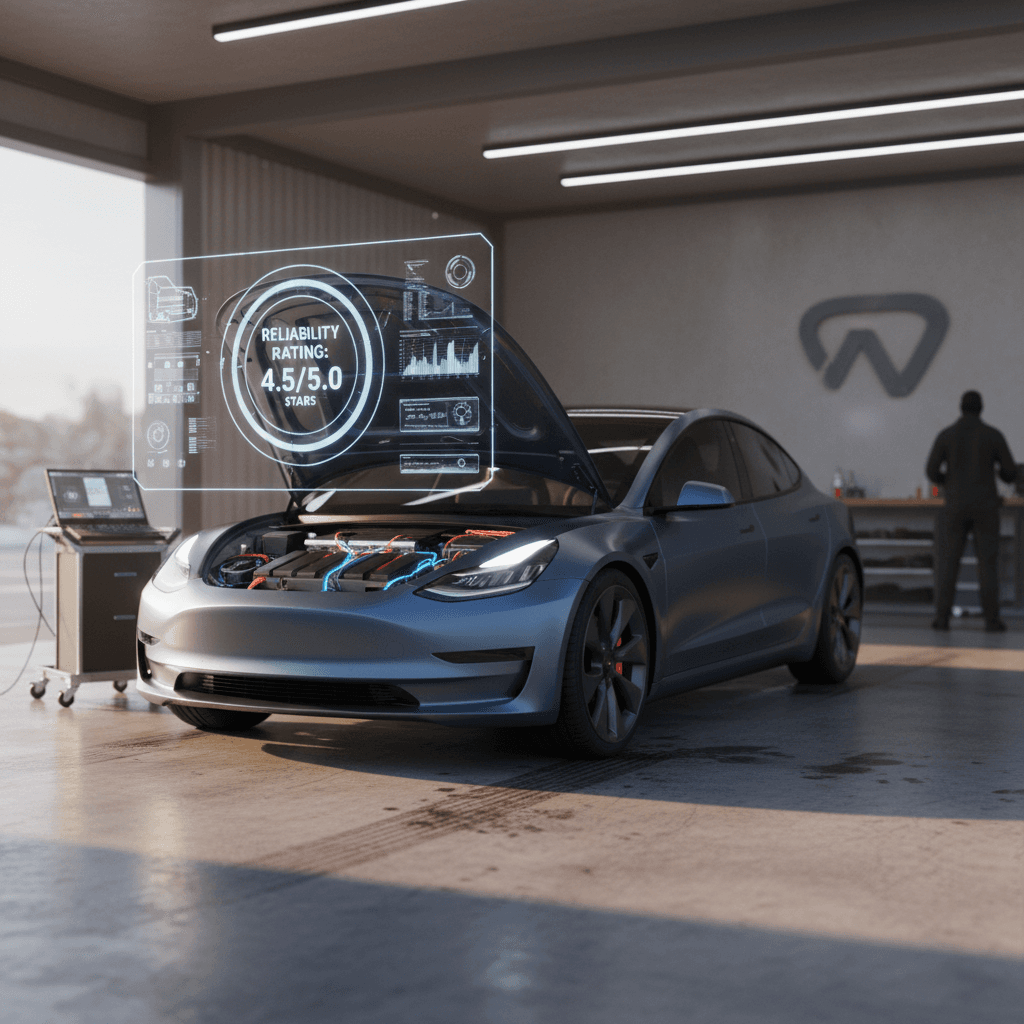
If you’re trying to figure out the 2026 Tesla Model 3 reliability rating, you’ll quickly run into a problem: there is no official score yet. Consumer Reports, J.D. Power, and others won’t rate the 2026 Model 3 until owners have driven it and reported issues. But we don’t have to guess in the dark. With nearly a decade of Model 3 data behind us, we can make a grounded, realistic forecast of how the 2026 car is likely to behave, especially once it enters the used market.
Quick takeaway
How reliable will the 2026 Tesla Model 3 be?
Model 3 reliability snapshot (what we know today)
Put simply, the 2026 Model 3 is likely to be a long‑lasting EV with some nuisance issues. The battery and motors tend to hold up extremely well; the weak spots are more traditional car stuff: trim, squeaks and rattles, suspension wear, and the occasional software or electronics headache. If you go in expecting Toyota‑like bulletproof reliability across the board, you may be disappointed. If you focus on the fundamentals, battery, drivetrain, and total cost of ownership, the Model 3 stacks up far better.
How to use this guide
Why there is no official 2026 Model 3 reliability rating yet
- Consumer Reports, J.D. Power and others base reliability scores on owner‑reported problems over time. You need at least a model year or two of data before a trustworthy score exists.
- As of April 2026, major outlets either list the 2026 Model 3 reliability as “N/A” or roll it into a broader "Model 3" line item that’s dominated by earlier years.
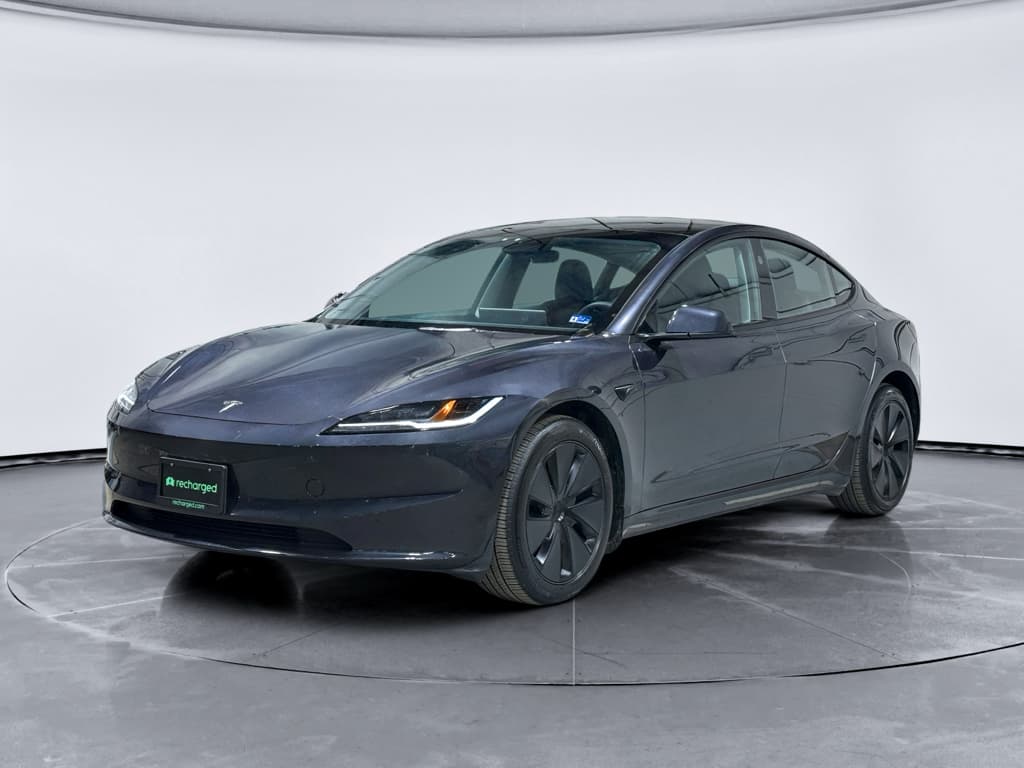
- The 2024–2025 “Highland” refresh changed suspension tuning, interior, and electronics. That means older pre‑refresh reliability data only goes so far when predicting how the latest cars will age.
When you see a site claiming a precise 2026 Tesla Model 3 reliability rating today, it’s usually just recycling older Model 3 scores or guessing. The right question isn’t “What’s the number?” but “What do we know from the last 7–8 years of Model 3 production that applies to this car?” That’s the approach we’ll take here.
What past Model 3 data tells us about 2026 reliability
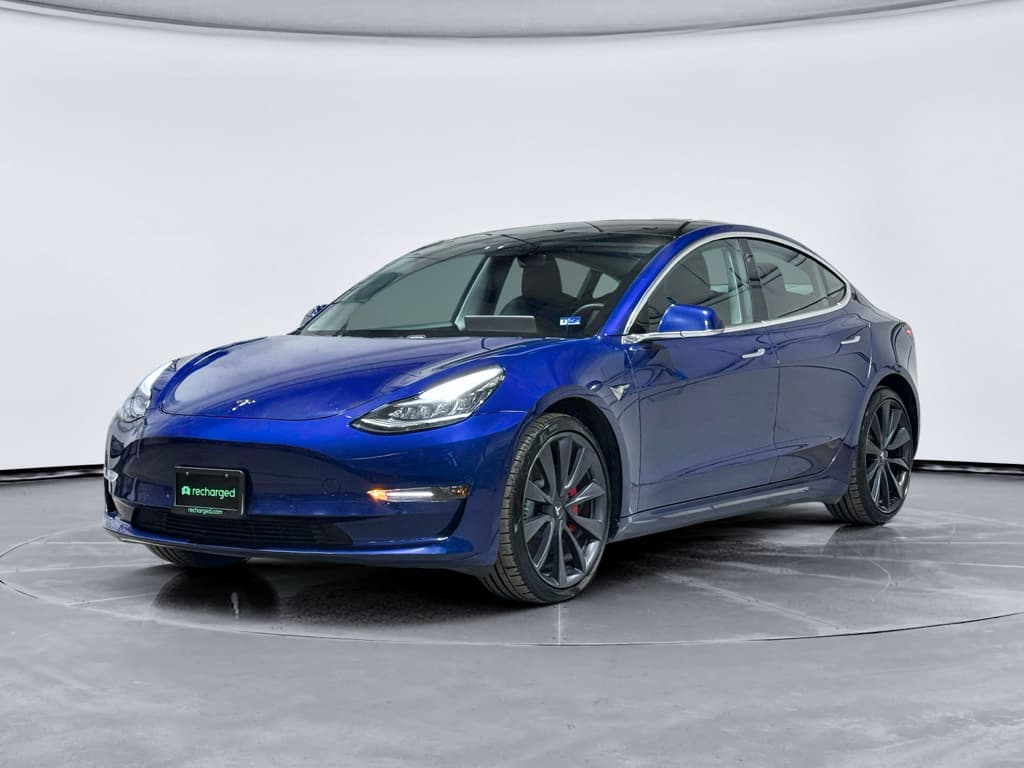
Early‑build Model 3s (2017–2020)
- Below‑average overall reliability in many surveys due to rushed scaling and inconsistent build quality.
- Panel gaps, wind noise, paint defects, door handles, and interior rattles were common owner complaints.
- Still, batteries and motors held up better than most internal‑combustion powertrains.
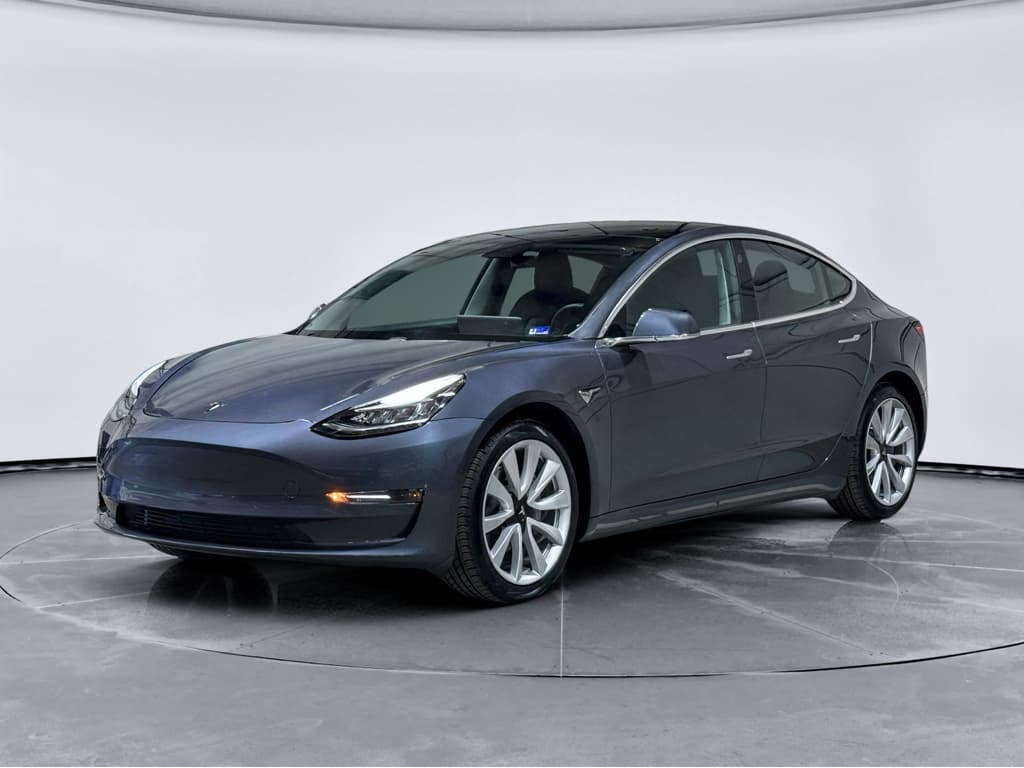
Later Model 3s (2021–2025)
- Body and interior quality improved; software grew more mature, but new bugs appeared with frequent updates.
- Major surveys shifted the Model 3 into the “average” reliability band among new vehicles.
- Real‑world battery data started to show slow, predictable degradation on most cars.
If you blend these eras together, a clear pattern emerges: the 2026 car is inheriting a powertrain with a strong track record and a body/electronics package that has steadily improved but still isn’t class‑leading for defect rates. That likely places the 2026 Model 3 in the same neighborhood as other average‑reliability compact luxury cars, just with far fewer moving parts under the hood.
European inspection data is a caution flag
Battery life and degradation on the Model 3
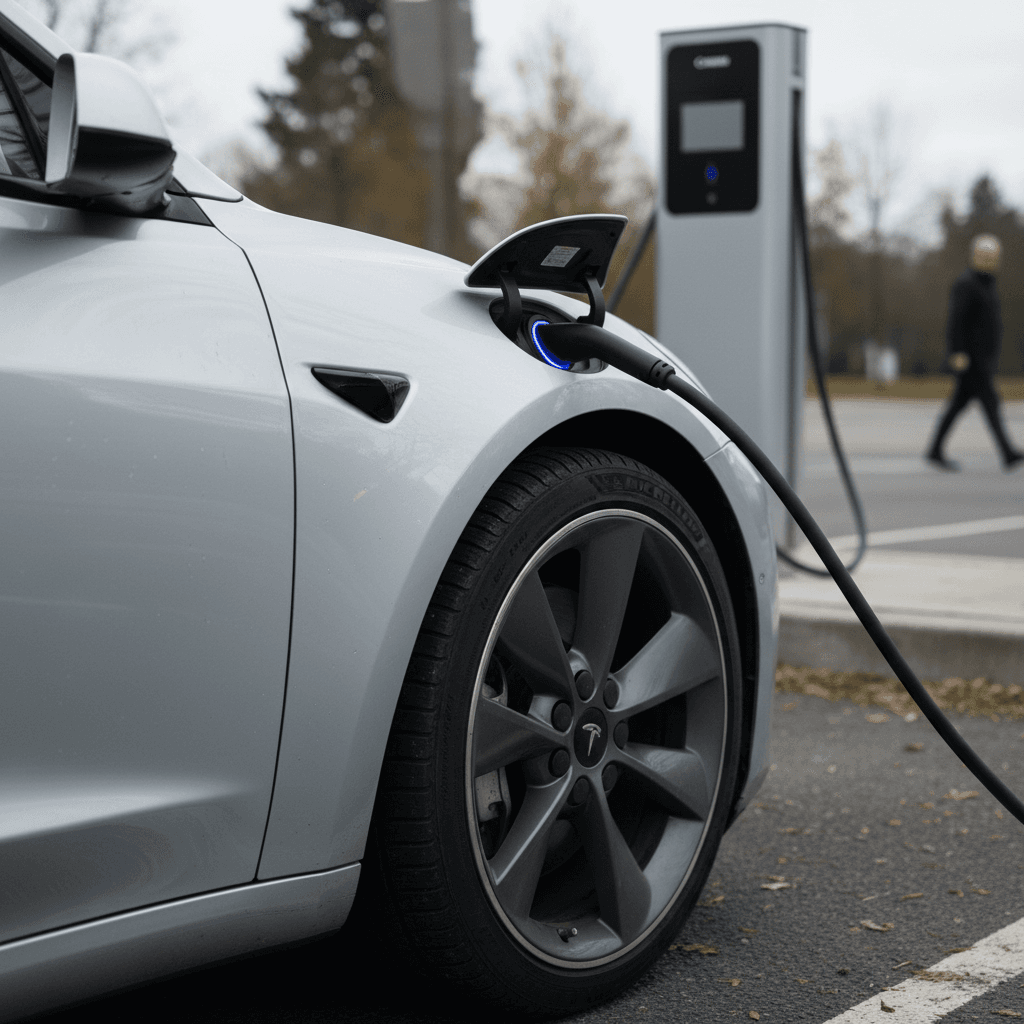
If you care most about whether a 2026 Model 3 will still be usable in 8–12 years, battery health matters more than panel gaps. Here, the Model 3 looks genuinely strong.
What long‑term data shows about Model 3 batteries
Estimates based on owner datasets and independent analysis of earlier model years
Early drop, then a long plateau
Most Model 3s show a small capacity drop in the first 1–2 years, then much slower degradation. Think ~5% loss fairly quickly, followed by a very gradual slide.
3–5 year outlook
Aggregated battery‑health datasets suggest the average Model 3 keeps around 90–94% of its original capacity by year three, with many cars still above 85–90% at much higher mileages.
Warranty backstop
Tesla’s typical warranty promises at least 70% capacity for 8 years or 100,000–120,000 miles (trim‑dependent), which provides a clear floor for worst‑case scenarios.
How to protect a Model 3 battery
From a used‑EV perspective, this is the Model 3’s ace in the hole. A 2026 car that’s driven and charged reasonably is very likely to deliver hundreds of thousands of miles of useful range before its pack becomes the limiting factor. At Recharged, that’s exactly why our Recharged Score puts so much emphasis on verified battery health instead of cosmetic flaws.
Common Model 3 problems to watch for
Battery aside, there are recurring themes in Model 3 owner complaints. Not every car will have these issues, but they’re common enough that any honest look at 2026 Tesla Model 3 reliability has to keep them front and center, especially if you’re shopping used in a few years.
Frequent Model 3 trouble spots (based on earlier years)
Patterns from long‑term tests, owner surveys, inspection data, and recall campaigns.
| Area | Typical issues | Impact on you | Rough cost & hassle |
|---|---|---|---|
| Body & trim | Panel alignment, hatch and door misalignment, weatherstripping noise, interior squeaks and rattles | Annoying more than dangerous; can hurt resale if very visible | Often covered under warranty early on; out of warranty, fixes range from DIY adjustments to a few hundred dollars at a shop |
| Paint & corrosion | Thin paint, chips on lower rocker panels, underbody rust where protection is minimal (varies by climate) | Cosmetic at first, but can balloon into structural rust if ignored in harsh climates | Touch‑up work is cheap; professional correction, film, or rust repair can run from hundreds to thousands |
| Suspension & steering | Premature wear on control arms, bushings, and links; clunks or looseness over bumps | Noisy ride and vague steering; eventually a safety and tire‑wear concern if left unresolved | Suspension components can cost several hundred to $1,500+ installed depending on how much needs replacement |
| Electronics & infotainment | Screen glitches, Bluetooth oddities, camera malfunctions, occasional lockups after software updates | Inconvenience, especially as most controls live in the touchscreen | Often fixed with software updates or reboots; hardware replacements vary widely in cost |
| Climate control | Noisy fans, AC performance complaints in very hot climates | Comfort issue more than a fundamental failure | Warranty coverage on newer cars; out of warranty, AC work can be pricey like any modern vehicle |
| Tires & alignment | Rapid tire wear, especially on Performance trims or if alignment is off | Higher ongoing operating cost; can amplify ride harshness and noise | A full set of quality tires can cost $900–$1,400+; alignments are modest but need to be done proactively |
Use this as a checklist when inspecting any used Model 3, including future 2026 cars.
Don’t ignore clunks or uneven tire wear
Recalls and safety issues affecting 2024–2026 Model 3s
Another piece of the reliability story is recall activity. Tesla uses over‑the‑air updates aggressively, which means some recalls feel more like software patches than traditional service visits. But regulators don’t distinguish: a recall is still a reliability blemish.
- Recent years have seen multiple Model 3 recall campaigns covering everything from Autopilot behavior to warning‑light logic and hood‑latch detection.
- Real‑world defect investigations, such as door‑latch and handle concerns on other Tesla models, show that low‑voltage or software issues can have very tangible consequences, even if they’re ultimately fixable with updates or minor hardware tweaks.
- For 2024–2025 “Highland”‑era Model 3s, several recalls have focused on updated driver‑assistance stacks and lighting/visibility issues rather than catastrophic mechanical failures. Expect similar patterns for early‑build 2026 cars.
How to check recall status on a Model 3
Ownership costs: tires, brakes, and maintenance
Reliability isn’t just about whether the car breaks; it’s also about what it costs to keep on the road. Here the Model 3 is a bit of a paradox: fewer fluids and moving parts than a gas car, but some line items, like tires, can bite harder than you’d expect.
Where Model 3 ownership costs tend to show up
Assuming typical U.S. driving and charging habits
Battery & motors
Very few catastrophic failures reported relative to the number of cars on the road. Most owners never pay out of pocket for pack or drive‑unit replacement within the warranty window.
Routine maintenance
No oil changes, spark plugs, or transmission services. Instead you’ll face tire rotations, cabin filters, brake fluid checks, and occasional coolant service, generally lower than a comparable ICE sedan.
Tires & brakes
High torque, curb weight, and sticky tires mean many Model 3s eat through rubber faster than economy sedans. Expect more frequent tire replacement, though regen braking usually reduces brake wear.
Budgeting rule of thumb
How Recharged evaluates used Tesla Model 3 reliability
Because Tesla’s official reliability scores lag reality by a model year or more, you need more than a single number on a ratings site. That’s why every Model 3 sold through Recharged comes with a Recharged Score Report that goes deeper than a Carfax entry or a quick test drive.
Inside a Recharged Score for a Tesla Model 3
1. Verified battery health diagnostics
We use specialized EV battery‑health tools, not just the dashboard range estimate, to understand how much usable capacity a pack still has and how evenly it’s aging across modules.
2. Charging and thermal‑management history
Abuse is the enemy of reliability. Frequent DC fast charging from 0–100% or overheating events can leave fingerprints in the data; we look for those patterns.
3. Suspension, steering, and tire inspection
Given the Model 3’s track record on tires and suspension, we put extra emphasis on clunks, alignment, uneven wear, and leaks that may not show up in a basic visual once‑over.
4. Body, glass, and water‑leak check
Panel alignment and seals aren’t just cosmetic. We look for evidence of leaks, prior repairs, and accident damage that could cause long‑term headaches.
5. Software, cameras, and safety systems
We verify that driver‑assistance features, cameras, sensors, and the main infotainment system function correctly and are on current software, since many issues are fixed, or occasionally caused, by updates.
6. Recall and service‑history review
Open recalls are flagged, and where service history is available, we look for patterns: repeated suspension work, charging issues, or chronic infotainment problems.
Why this matters more than a single rating
Ready to find your next EV?
Browse VehiclesShould you buy a 2026 Tesla Model 3 (new or used)?
If you’re buying new in 2026
- Expect average overall reliability with unusually strong fundamentals in the battery and drive units.
- Be prepared for a few teething issues or software quirks, especially in the first year of ownership, some of which will be handled via over‑the‑air updates.
- If you’re sensitive to squeaks, rattles, or panel alignment, inspect your specific car carefully at delivery and be persistent about getting warranty fixes documented early.
If you’re shopping used in 2028–2032
- Focus on verified battery health, charging history, and suspension condition rather than obsessing over small cosmetic flaws.
- Factor in the cost of a fresh set of tires, potential suspension work, and catching up on any open recalls.
- Consider buying through a specialist like Recharged, where you get a Recharged Score Report and EV‑savvy support rather than rolling the dice in a general‑purpose used‑car lot.
So where does that leave the 2026 Tesla Model 3 reliability rating? Until the survey data catches up, the fairest summary is that it’s likely to be average as a car, and above average as an EV powertrain. If you understand where the weak spots tend to be, and you shop with battery health and inspection data in hand, the Model 3 can be a very smart long‑term bet in the used market, not just a shiny tech gadget for the first owner.