If you’re eyeing a 2025 Volkswagen ID.4, you’ve probably heard the chatter: battery recalls, glitchy software, charging gremlins. The phrase “2025 VW ID.4 problems” shows up a lot in searches, and not by accident. The good news is that most issues are manageable once you know what to look for. The better news: if you’re shopping used, there are concrete ways to separate a good ID.4 from a headache.
Quick take
Overview: Should You Worry About 2025 VW ID.4 Problems?
VW ID.4 reliability snapshot (2021–2025)
Volkswagen’s first mass‑market EV SUV has had a rockier start than the company hoped. Early model years were plagued by software hiccups and scattered hardware issues. By 2023–2025, the ID.4 had improved in some ways, but fresh problems, especially around the high‑voltage battery, on‑board charger, and infotainment, kept popping up.
If you’re considering a 2025 ID.4, the key question isn’t “Is this car doomed?” It’s “Which problems actually affect this specific car, and have they been fixed?” That’s where recall status, software version, and real battery‑health data matter far more than internet horror stories.
Important for 2023–2025 ID.4 shoppers
What’s New for 2025, and Why It Matters for Reliability
Volkswagen hasn’t reinvented the ID.4 for 2025. It’s still a compact, family‑friendly SUV on the same MEB platform with familiar battery sizes and powertrains. Most of the changes from 2023 onward are under the skin: updated software, tweaks to the infotainment system, and ongoing running changes in hardware and battery management.
Software and interface tweaks
- Volkswagen has been steadily revising ID.4 software to speed up boot times and reduce random glitches.
- Owners of 2023–2024 cars report that newer software versions feel more stable, but not perfect.
- VW has publicly committed to bringing back more physical controls across its EVs, which may gradually benefit the ID.4’s usability.
Same bones, evolving hardware
- Battery packs and motors are evolutionary, not all‑new, which means known strengths and known weaknesses.
- On‑board charger and high‑voltage components have been the subject of recent recalls rather than full redesigns.
- Because of this continuity, looking at 2021–2024 owner experiences tells you a lot about 2025 VW ID.4 problems you might see down the road.
Why model‑year matters less with EVs
High-Voltage Battery Recall on 2023–2025 ID.4s
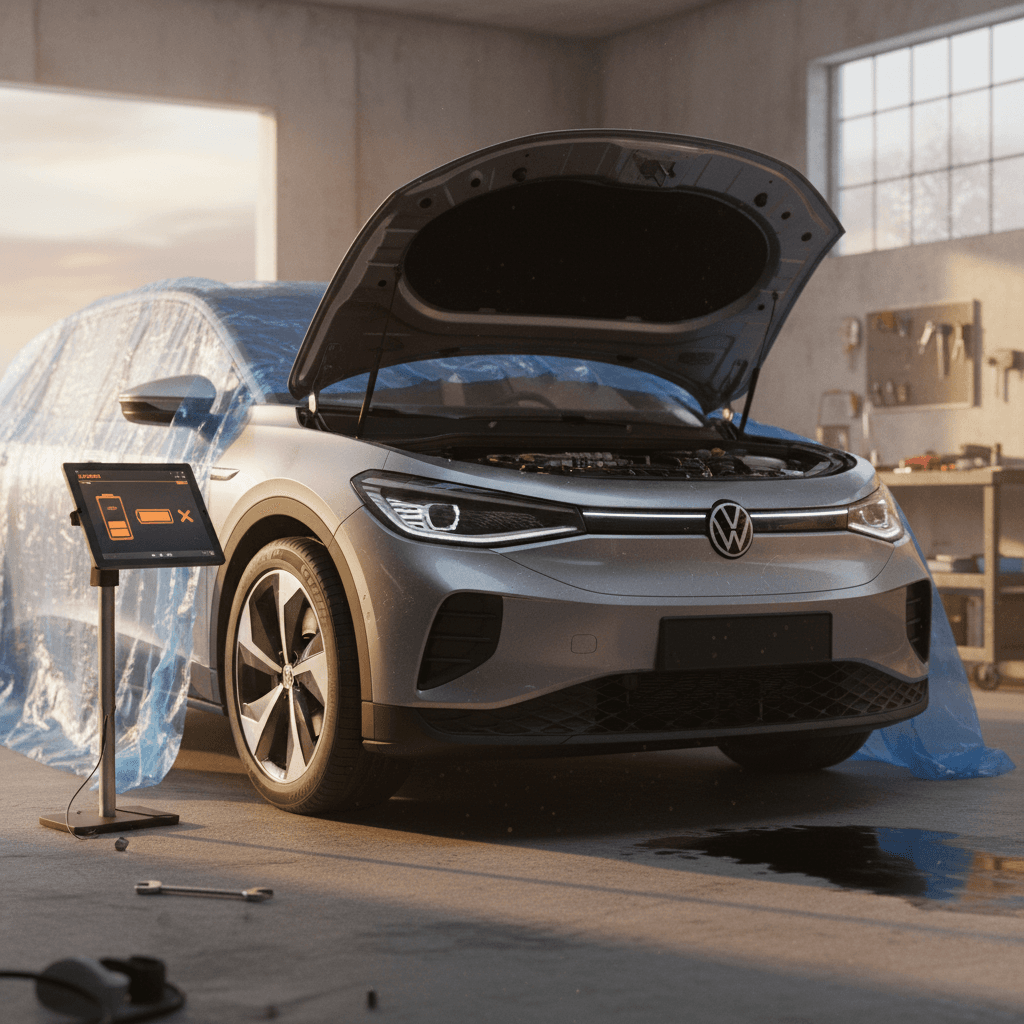
The headline issue for anyone searching for 2025 VW ID.4 problems is the high‑voltage battery recall announced in early 2026. Roughly 44,000 ID.4s from the 2023–2025 model years are affected by battery software concerns and, in a smaller batch, possible internal battery defects that could increase fire risk.
Key facts: recent ID.4 battery recalls
Always verify individual VINs with an official recall lookup before you buy.
| Issue | Model years affected | What VW is doing | What owners are advised to do |
|---|---|---|---|
| High-voltage battery software & monitoring | 2023–2025 | Updating battery management software; replacing packs if diagnostics fail | Charge to ~80%, avoid DC fast charging, park outside until fixed. |
| Potentially misaligned battery cell modules | 2023–2024 subset | Inspecting and replacing suspect battery modules or packs | Same precautions; follow dealer instructions closely. |
| On-board charger / 12-volt charging fault | Primarily 2024, some 2025 | Replacing faulty on‑board chargers and updating software | Watch for warning lights, no‑start situations, or sudden loss of power. |
Recalls don’t automatically make a car unsafe, but they do demand attention and documentation.
Don’t ignore recall instructions
From a buyer’s perspective, a recall isn’t automatically a deal‑breaker. In fact, a car that’s had recall work done and documented can be a safer bet than one built before a problem was discovered. The risk is in the limbo: cars that haven’t yet been inspected, or that bounced in and out of service without clear paperwork.
Software and Infotainment Bugs: The Most Common Complaint
If you talk to real ID.4 owners, the story you’ll hear over and over isn’t catastrophic failures, it’s daily annoyances. Slow‑to‑wake infotainment, blank screens, frozen navigation, flaky smartphone connections, and a companion app that sometimes seems to live in its own reality.
Typical software problems ID.4 owners report
Not every 2025 ID.4 will do all of these, but you should test for them.
Laggy infotainment
- System takes a long time to boot when you get in.
- Touch inputs lag or miss entirely.
- Screen occasionally goes dark and needs a restart.
Phone & app glitches
- Android Auto / Apple CarPlay randomly fail to connect.
- VW app doesn’t always start pre‑conditioning as scheduled in cold weather.
- User profiles don’t reliably load seat and lighting settings.
Navigation quirks
- Built‑in nav losing GPS accuracy.
- Route guidance freezing or rebooting mid‑trip.
- Dealers sometimes tell owners to “just use CarPlay” while they wait for software fixes.
How to spot a problem car in 10 minutes
"The car drives great once it’s moving. It’s everything between my driveway and the open road that drives me nuts, profiles not loading, the app flaking out on cold mornings, and random warning chimes that mean nothing."
Charging and 12‑Volt Battery Issues
Underneath the big high‑voltage pack, the ID.4 still relies on an old‑fashioned 12‑volt battery to wake everything up. When the supporting cast misbehaves, on‑board charger, software, 12‑volt system, you can see some odd charging behavior and even no‑start situations.
- Failure to start charging or random charging stops at home or public stations.
- Error messages at fast‑chargers that clear after a reboot but leave you wondering what went wrong.
- 12‑volt battery failures that leave the car dead until the battery or charging module is replaced.
- Overly cautious charging limits imposed by recall instructions (for example, capping charge at around 80%).
Red flags during a test charge
The flip side: once an ID.4 has had its on‑board charger and 12‑volt issues addressed, most owners report predictable charging and smooth road‑trip behavior. This is why service history and recall documentation are so important, you’re not just buying a car, you’re buying its repair story.
Build Quality and Hardware Niggles
You’ll find ID.4 owners who’ve driven tens of thousands of miles with nothing worse than a quirky software moment. You’ll also find people who feel like they’re on a first‑name basis with their service advisor. The difference often comes down to hardware gremlins that are annoying rather than dangerous, but they still cost time and money.
Real‑world hardware complaints from ID.4 owners
These don’t affect every car, but they’re worth checking on inspection.
Exterior & body hardware
- Door handles and locks requiring repeated replacements.
- Window switches that feel unintuitive or fail intermittently.
- Moisture or condensation in tail lights; occasional light‑strip defects.
- Random creaks or interior trim noises on rough roads.
Weather‑related components
- Rain‑sensing wipers that either don’t trigger or act erratically.
- Ice buildup around wiper blades and cowl in harsh winters.
- Driver‑assist features (lane keeping, sign recognition) disabled in cold or snow more often than expected.
The upside to "little" problems
How 2025 VW ID.4 Problems Compare to Other EV SUVs
Zoom out, and the ID.4’s story looks familiar: early‑generation EV on a new platform, rushed software, rapid over‑the‑air updates, and a long list of recalls. Hyundai, Kia, Ford, GM, and even Tesla have walked this same path. The difference is where each brand chooses to stumble.
Volkswagen ID.4
- Strengths: Comfortable ride, spacious interior, competitive pricing on the used market.
- Weaknesses: Below‑average reliability scores, battery‑related recalls, fussy software and app.
Kia EV6 / Hyundai Ioniq 5
- Generally better reliability so far, but not flawless.
- Very fast DC charging; some recalls for 12‑volt and charging quirks of their own.
Tesla Model Y
- Strong fast‑charging ecosystem and range.
- Build quality complaints (panel gaps, wind noise), but fewer battery‑recall headlines recently.
Where the ID.4 really stands
Checklist Before You Buy a New or Used ID.4
Here’s where you turn research into action. Whether you’re looking at a brand‑new 2025 VW ID.4 or a used 2021–2024 model, this checklist will help you separate the solid cars from the science experiments.
Pre‑purchase checklist for a VW ID.4
1. Run a full recall and campaign check
Use the VIN in an official recall lookup and ask the seller for service records. Confirm whether the high‑voltage battery, on‑board charger, and any 12‑volt issues have been addressed, and get documentation of completed work.
2. Ask about software version and update history
Have the seller or dealer show you the current software version on the main screen. Ask when it was last updated and whether any open software campaigns remain. An ID.4 stuck on old code is more likely to feel glitchy.
3. Cold-start the infotainment and app
Arrange to see the car after it’s been parked for several hours. Unlock it, get in, and watch how quickly the infotainment wakes up. Connect your phone, launch navigation, and try a short drive while using the system heavily.
4. Do a real charging test
If possible, test both home‑style Level 2 charging and a public fast‑charger. Watch for error messages, repeated charge interruptions, or a car that simply refuses to hand‑shake with the station.
5. Inspect hardware and trim closely
Check every door handle, window switch, wiper setting, light, and camera. Look for moisture in lamps, odd rattles, and uneven panel gaps around the hatch and doors that might hint at prior repairs.
6. Get independent battery health data
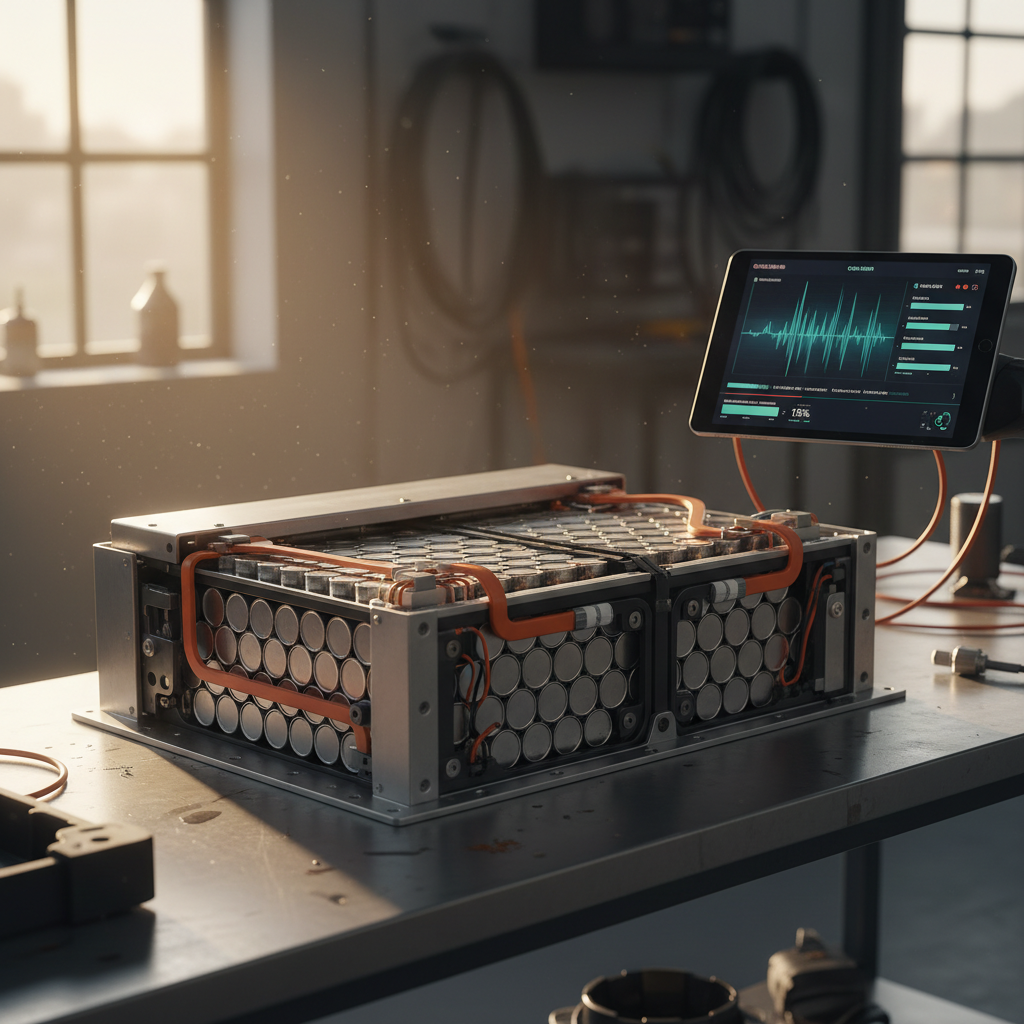
For a used ID.4, don’t guess about the battery. Ask for a recent <strong>battery health report</strong> or arrange an independent evaluation. Knowing real state of health can make the difference between a great deal and an expensive gamble.
Bring the car’s paper trail to the test drive
How Recharged Evaluates Used VW ID.4s
If all of this sounds like a lot of homework, that’s because it is. Early EVs reward informed buyers and punish casual ones. That’s exactly why Recharged leans so hard on data and inspection when we bring a used ID.4 into our marketplace.
What Recharged looks at on every ID.4
Our goal is to take the guesswork, and the stomach‑clench, out of used EV shopping.
Recharged Score battery diagnostics
Recall & repair audit
EV‑specialist inspection
Ready to find your next EV?
Browse VehiclesFrom there, we price the car fairly against the market, factoring in its battery health, recall status, and any remaining quirks we’ve already addressed. If you’re trading into an ID.4, our experts can also talk through whether it makes sense for your driving patterns, or if another EV might fit you better.
Shop smarter, not braver
FAQ: 2025 VW ID.4 Problems
Frequently asked questions about 2025 VW ID.4 problems
Bottom Line: Is the 2025 VW ID.4 Worth It?
The 2025 VW ID.4 is not the quiet, drama‑free appliance some shoppers want. It’s a comfortable, capable electric SUV built on forward‑thinking hardware that’s been tripped up by software growing pains and a string of battery‑related recalls. If you go in blind, you might inherit someone else’s frustration. If you go in prepared, with recall checks, software updates, and real battery‑health data, you can land a roomy, easy‑driving EV for less than many rivals.
If you’re shopping used, consider working with a specialist that lives and breathes EVs. At Recharged, every ID.4 comes with a Recharged Score battery health report, transparent history, and EV‑savvy support from test drive to delivery. Whether you end up in a VW ID.4 or another electric SUV entirely, the right information will make that decision feel a lot less like a gamble and a lot more like a smart move.