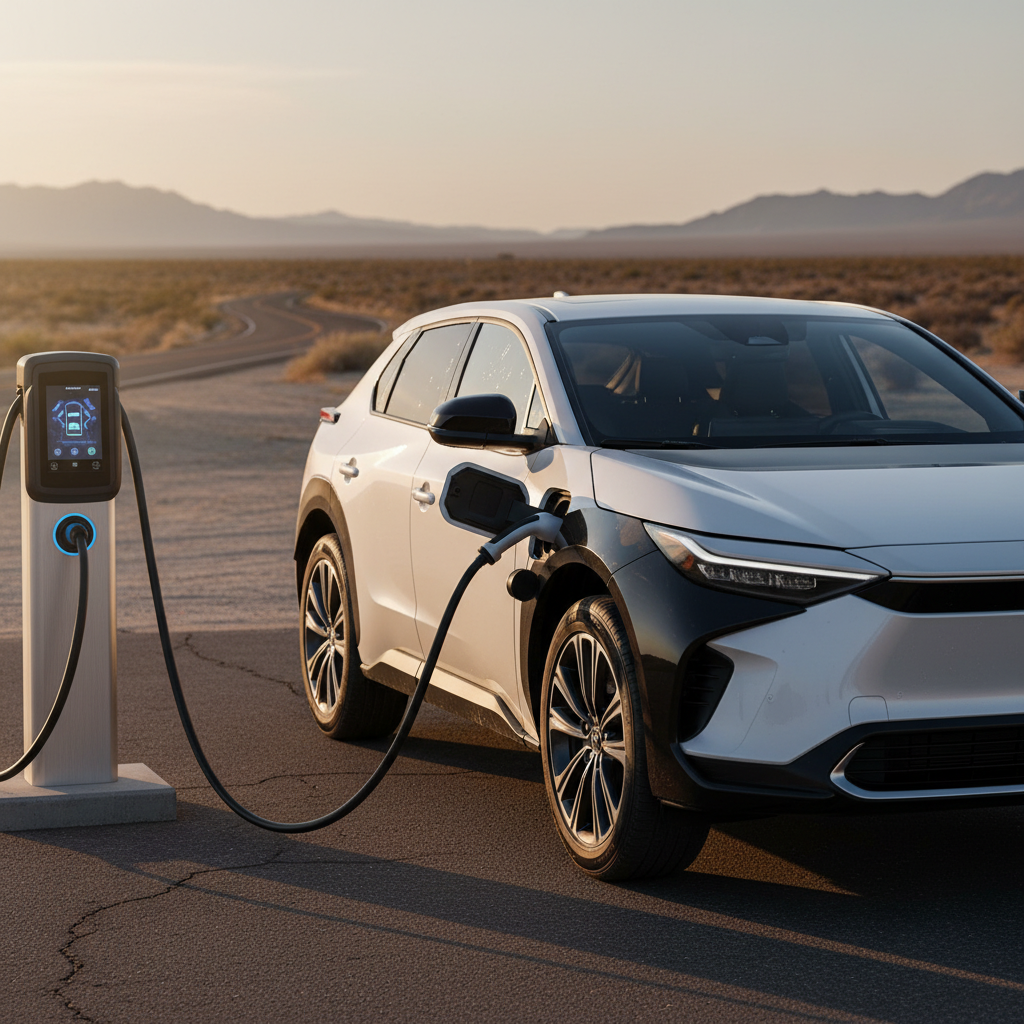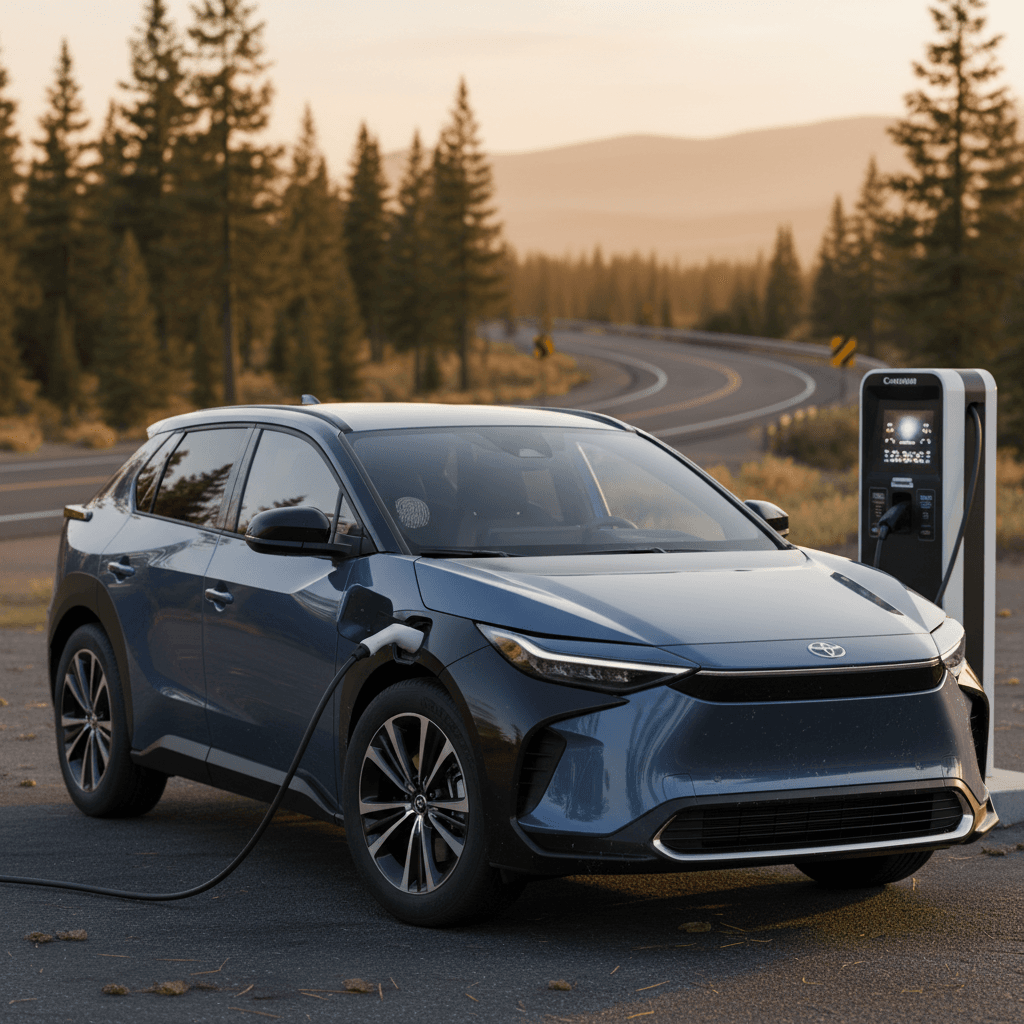
The 2025 Toyota bZ4X lands in an awkward but interesting spot. It’s no longer the brand‑new experiment it was in 2023, and it’s not the heavily updated 2026 “bZ” that’s waiting in the wings. Instead, the 2025 bZ4X quietly becomes the most affordable version yet of Toyota’s compact electric SUV, sweetening the deal with more standard safety tech and a new Nightshade edition, while still carrying some of the same strengths and weaknesses that defined the original.
Model-year context matters
2025 Toyota bZ4X overview: what changed this year
For 2025, Toyota keeps the core hardware of the bZ4X largely the same but tweaks pricing and features to make it more appealing in a tougher EV market. The big story is price: Toyota knocked roughly $6,000 off the starting MSRP compared with earlier years and trimmed Limited prices by about $5,000, putting the bZ4X firmly into the value end of the compact EV‑SUV segment.
- New Nightshade Edition with blacked‑out trim and AWD only
- Price cuts across the lineup (XLE FWD now in the high‑$30Ks including destination)
- More advanced driver‑assist features on Limited trims, including Traffic Jam Assist and Front Cross‑Traffic Alert
- No major changes to battery size, output, or DC fast‑charging performance compared with the 2024 U.S. model
Think of 2025 as the sweet‑spot year
Pricing and trims: XLE, Limited, and Nightshade
The 2025 Toyota bZ4X lineup is simple: XLE and Limited trims, each available with front‑wheel drive (single motor) or all‑wheel drive (dual motor), plus a new Nightshade appearance package that’s AWD‑only. Exact MSRPs vary by region and dealer, but national guidance puts the 2025 XLE FWD around the high‑$30,000s including destination, with AWD and Limited trims stair‑stepping up from there.
2025 Toyota bZ4X pricing snapshot (approximate)
Typical MSRP including destination; check local dealers and incentives for exact numbers.
| Trim | Drivetrain | Approx. MSRP (incl. destination) | Who it fits best |
|---|---|---|---|
| XLE | FWD | ~$38,000–$39,000 | Budget‑minded commuters who don’t need AWD |
| XLE | AWD | ~$40,000–$41,000 | Drivers in snowbelt states or who want better traction |
| Limited | FWD | ~$43,000–$44,000 | Shoppers who want more comfort and tech features |
| Limited | AWD | ~$45,000–$46,000 | Fully loaded, all‑weather family hauler |
| Nightshade | AWD | Low‑$41,000s | Style‑focused buyers who like the blackout look |
Toyota cut bZ4X pricing significantly for 2025, making the base XLE one of the more affordable compact EV SUVs.
Watch destination and dealer fees
Range, battery, and charging: where the 2025 bZ4X stands
Toyota didn’t give the U.S.‑spec 2025 bZ4X the big battery and horsepower bump that’s coming with the 2026 redesign and already rolling out in some global markets. Instead, you’re looking at essentially the same powertrains as before: a mid‑70‑kWh lithium‑ion battery pack, modest power, and DC fast‑charging speeds that are fine for occasional road trips but not class‑leading.
2025 Toyota bZ4X key range & charging numbers (U.S. estimates)
Front‑wheel‑drive models deliver the best range, up to the low‑250‑mile ballpark when new, while dual‑motor AWD versions land closer to 220–230 miles. That’s enough for most daily driving and moderate‑length weekend trips, but if you’re a frequent highway road‑tripper, some rivals offer 280–320 miles and faster DC charging.
Living with the bZ4X’s charging limitations
Practical expectations help you decide if the 2025 bZ4X fits your life.
Home charging sweet spot
If you can install a 240‑volt Level 2 charger, you’ll wake up to a full battery most mornings. The bZ4X’s 7.6‑kW onboard charger isn’t the quickest, but it’s perfectly adequate for overnight top‑ups.
Road‑trip realities
Think of the 2025 bZ4X as a relaxed cruiser, not a Supercharger king. Plan for longer DC fast‑charge stops than you’d take in a Tesla Model Y or Hyundai Ioniq 5, especially in cold weather.
Cold‑weather caution
Early bZ4X models were notorious for slow fast‑charging in the cold. Toyota has been improving battery pre‑conditioning in global updates, but U.S. 2025 models still won’t be the winter‑charging champs of the segment.
Don’t count on back‑to‑back fast charges
On the road: driving impressions and comfort
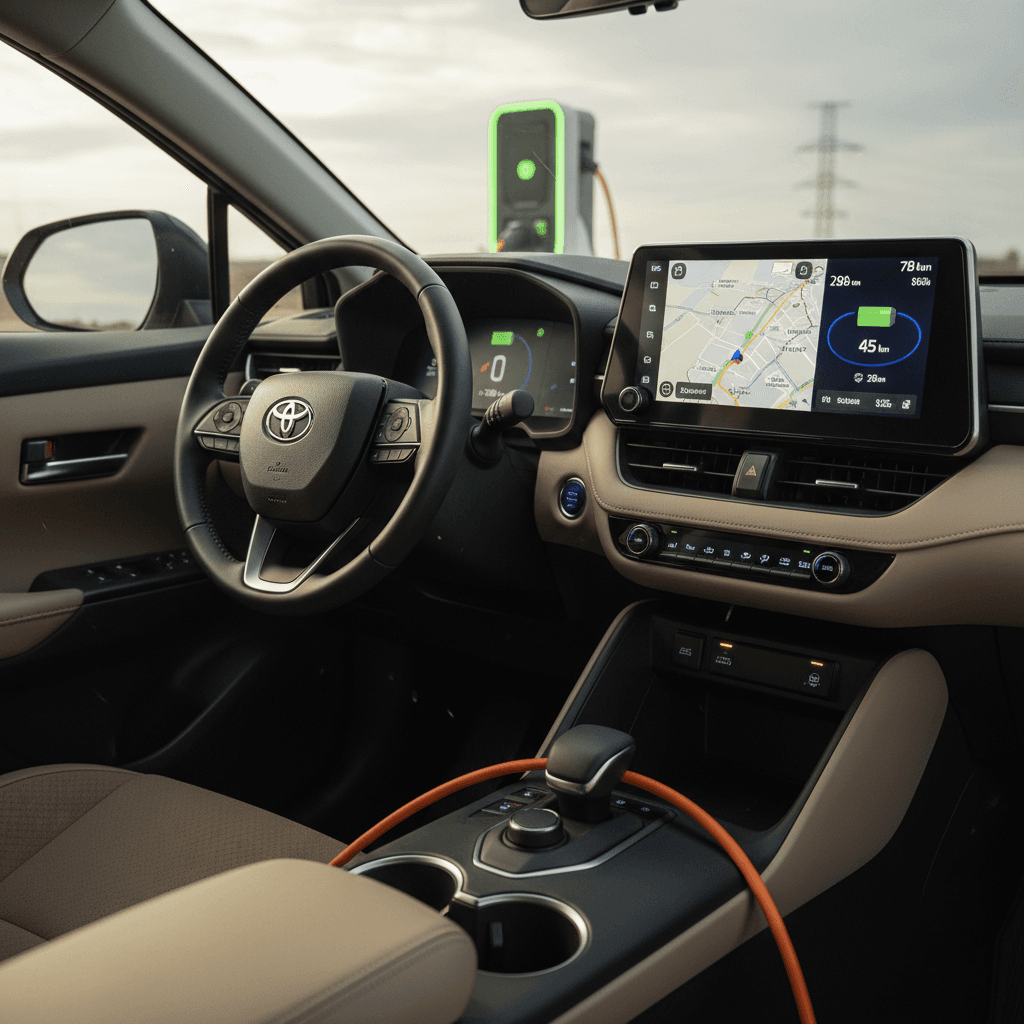
If you’ve driven a recent RAV4 Hybrid, the 2025 bZ4X will feel familiar in all the right ways. It’s not the quickest EV, and it doesn’t try to be. Instead, it majors in smoothness, quietness, and composure, exactly what most families actually want, even if the spec‑sheet race says otherwise.
Power and performance
- FWD: About 201 hp from a single front motor. 0–60 mph in the mid‑7‑second range, peppy enough around town, modest at highway speeds.
- AWD: Dual motors with roughly 214 hp combined. A bit more punch off the line and more confidence in poor weather, but still not a tire‑shredder.
- Power delivery is smooth and predictable rather than neck‑snapping. If you’re chasing Tesla‑style acceleration, this isn’t your car.
Ride and refinement
- Comfort‑biased suspension soaks up broken pavement well, especially on XLE trims with smaller wheels.
- The cabin is impressively quiet at city speeds; wind and tire noise creep in above 70 mph but never become intrusive.
- Steering is light and consistent, making the bZ4X easy to maneuver in parking lots and dense urban traffic.
Easygoing daily driver
Tech, safety, and driver assistance updates
Toyota uses the 2025 model year to lean harder on driver‑assist and connected‑car features rather than raw hardware changes. The bZ4X comes standard with Toyota Safety Sense, and Limited trims now add features that were previously reserved for pricier packages.
2025 bZ4X technology & safety highlights
Comfortable, conservative tech that favors ease of use over flash.
Infotainment & connectivity
- Large central touchscreen with Toyota’s latest infotainment software
- Wireless Apple CarPlay and Android Auto on higher trims
- Over‑the‑air updates and available cloud‑based navigation
Safety Sense suite
- Automatic emergency braking with pedestrian detection
- Adaptive cruise control with lane‑keeping assistance
- Road sign assist and blind‑spot monitoring
New 2025 driver aids
- Traffic Jam Assist on Limited trims for low‑speed semi‑hands‑free driving (subscription‑linked)
- Lane Change Assist and Front Cross‑Traffic Alert join the options list
- Some features require an active connected services subscription after the trial period
Connected feature subscriptions
Interior, cargo space, and family practicality
Inside, the 2025 bZ4X splits the difference between futuristic and familiar. The dash sits low with a digital instrument display set up high, almost like a head‑up display, while the center screen and physical controls feel reassuringly Toyota. Materials are solid rather than luxurious, but everything you touch most often has a quality heft.
- Roomy front seats with plenty of adjustment and good outward visibility
- Rear legroom that’s competitive with other compact SUVs, though not quite as generous as a Hyundai Ioniq 5 or VW ID.4
- Cargo area around 27–28 cubic feet behind the second row, enough for strollers and groceries but not a moving day all‑star
- No front trunk (frunk); Toyota uses that space for power electronics and crash structures
- Flat floor and wide rear door openings make kid seats and pet crates easier to handle
XLE cabin feel
Think durable family hauler. Cloth seats, simpler interior trim, and fewer bells and whistles, but everything you need for daily duty. If you’re coming out of a RAV4 LE or XLE, you’ll feel right at home.
Limited & Nightshade
Limited adds SofTex‑style synthetic leather, more power adjustments, and upgraded audio. Nightshade layers the blackout look on top of the XLE formula, so you get the style bump without going all‑in on Limited‑grade luxury.
Check car‑seat fit before you sign
How the 2025 Toyota bZ4X compares to its rivals
The 2025 Toyota bZ4X swims in the same pool as the Tesla Model Y, Hyundai Ioniq 5, Kia EV6, Ford Mustang Mach‑E, and Volkswagen ID.4. In that crowd, it’s not the quickest, longest‑range, or flashiest option, but the 2025 price cut and Toyota’s reliability reputation change the calculation.
2025 bZ4X vs key compact EV‑SUV rivals (high‑level view)
How the bZ4X stacks up on the big things shoppers care about.
| Model | Base price (approx.) | Max range (mi) | Charging speed (DC max) | Standout strength |
|---|---|---|---|---|
| Toyota bZ4X (2025) | High‑$30Ks | ~252 | Up to ~100–150 kW | Value pricing, Toyota familiarity |
| Tesla Model Y | Low‑$40Ks (before incentives) | Up to ~330 | Up to 250 kW (Supercharger) | Range and charging network |
| Hyundai Ioniq 5 | Low‑$40Ks | Up to ~303 | Up to 235 kW (800V) | Very fast charging, bold design |
| VW ID.4 | Mid‑$30Ks | Up to ~291 | Up to 175 kW | Spacious cabin, comfortable ride |
The bZ4X gives up some range and charging speed to rivals but claws back ground on price and perceived reliability.
The bZ4X’s real competitive edge
Ownership costs, reliability, and battery warranty
Toyota took some public lumps when the early bZ4X was recalled for wheels that could loosen, and for sluggish fast‑charging and conservative battery management. The company has spent the last few years quietly tightening the bolts, literally and figuratively. By 2025, most of the teething issues have been addressed, and the bZ4X benefits from Toyota’s typically conservative engineering ethos.
Key ownership points for the 2025 Toyota bZ4X
Generous battery warranty
Toyota backs the bZ4X’s high‑voltage battery for up to <strong>8 years or 100,000 miles</strong> (check your region), with degradation protections designed to reassure first‑time EV owners.
Low routine maintenance
No oil changes, fewer moving parts, and standard ToyotaCare‑style service coverage for the first couple of years help keep early ownership costs tame.
Insurance and tires
Insurance for EVs can be higher than for equivalent gas crossovers, and the bZ4X’s relatively heavy curb weight can mean more frequent tire replacements, budget accordingly.
Charging costs
Home charging is usually far cheaper per mile than gasoline, especially if you can take advantage of off‑peak rates. Public DC fast‑charging, by contrast, can cost as much or more than gas on a per‑mile basis.
Leasing vs buying a bZ4X
Used Toyota bZ4X: smart buying tips
Because the bZ4X launched for the 2023 model year and Toyota has already announced a major refresh for 2026, depreciation has been steeper than many people expect from this brand. That’s bad news for first owners, and potentially great news if you’re shopping used.
Why a used bZ4X is appealing
- Steep early depreciation makes 2023–2024 models significantly cheaper than new 2025s.
- Many examples have low miles thanks to conservative early adopters and fleet demo use.
- Toyota’s long battery warranty transfers to subsequent owners in most regions.
What to watch out for
- Confirm recall work, including the early wheel‑hub fix, has been completed.
- Ask for a detailed battery health report, not just a range estimate or dash readout.
- Test DC fast‑charging behavior if you plan to road‑trip; some early cars still exhibit slower charge curves in the cold.
How Recharged can help with a used bZ4X
Ready to find your next EV?
Browse Vehicles2025 Toyota bZ4X FAQ
Frequently asked questions about the 2025 Toyota bZ4X
Verdict: should you buy a 2025 Toyota bZ4X?
The 2025 Toyota bZ4X is not the headline‑grabbing EV in its segment, and that’s exactly why it might be the right choice for you. It’s a calm, comfortable electric crossover with honest range, a familiar Toyota dealership network, and significantly improved pricing that undercuts many flashier rivals. If your driving life is mostly about commuting, errands, and the occasional weekend trip, and you can charge at home, the bZ4X delivers everything you need with very little drama.
If, however, you live on DC fast‑chargers, crave long‑legged road‑trip range, or insist on cutting‑edge charging tech and performance, you’ll be better served by waiting for the 2026 bZ or shopping competitors like the Ioniq 5, EV6, or Model Y. And if you’re open to the used market, a low‑mileage bZ4X with a verified battery health report from a marketplace like Recharged can be an even stronger value, letting you enjoy Toyota’s first mass‑market EV without paying new‑car money.