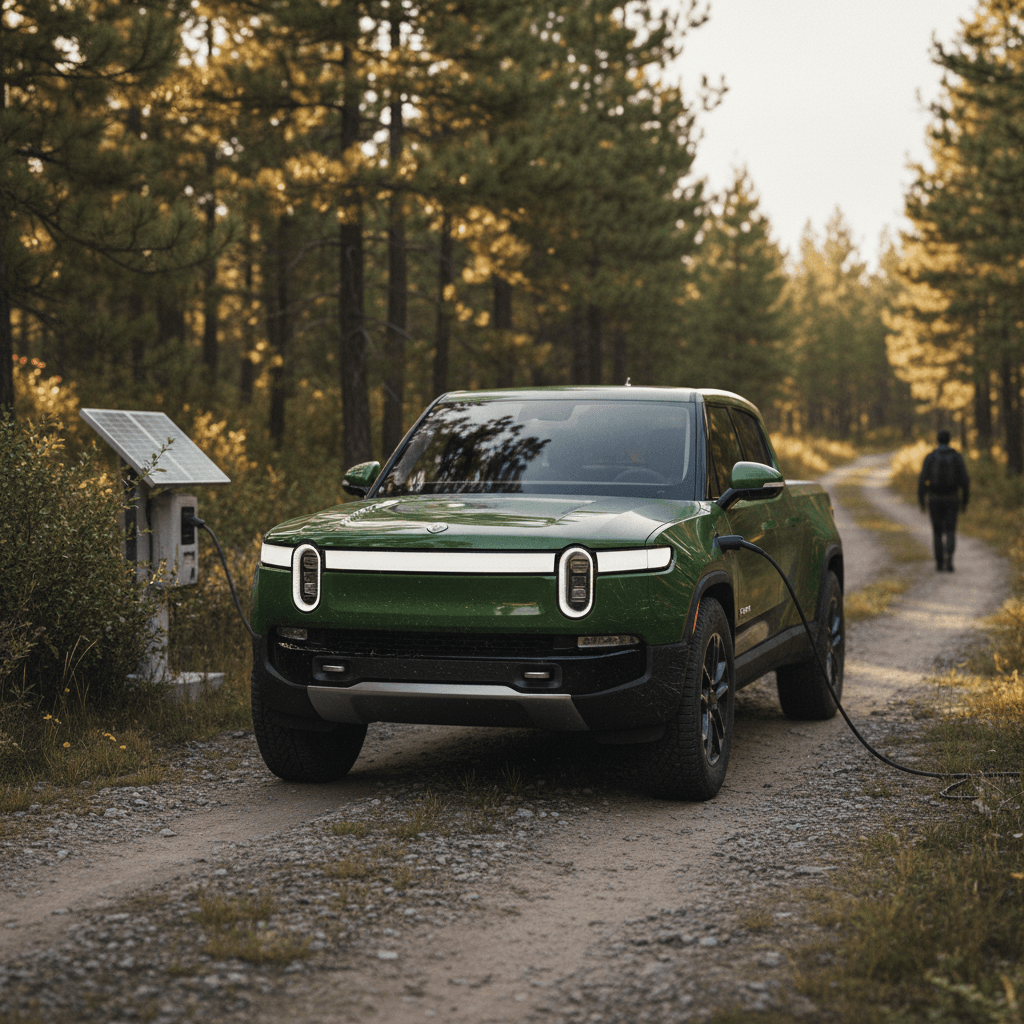
If you’re eyeing a 2025 Rivian R1T, you probably already know it’s one of the most exciting electric trucks on sale. Quad motors, air suspension, real off‑road chops, it’s a dream spec sheet. But the big question for most shoppers isn’t performance anymore. It’s 2025 Rivian R1T reliability: will this truck behave like a trusted tool or an expensive beta test?
New truck, young brand
2025 Rivian R1T reliability at a glance
Rivian R1T reliability snapshot
The short version: the 2025 R1T is not a reliability champ, especially compared to longtime players like Toyota or Lexus. Third‑party data and owner stories both point to more issues than average, especially with electronics, trim, and some mechanical components. At the same time, serious powertrain failures are rare, and many owners rack up tens of thousands of miles with only minor annoyances.
What “unreliable” really means here
How do the experts rate Rivian R1T reliability?
Let’s start with the big scorecards. In recent reliability surveys, the Rivian R1T scores around the bottom of the pack. Consumer Reports has published reliability scores in the neighborhood of 18–20 out of 100 for the R1T, and ranked Rivian near the bottom of all brands. J.D. Power’s predicted reliability scores for Rivian land in the high‑60s out of 100, below industry average.
Meanwhile, many reviewers still put the R1T at or near the top of their electric truck rankings for performance, capability, and design. That split personality, brilliant truck, fussy execution, is exactly what you need to keep in mind if you’re considering a 2025 model.
- Strong scores: performance, off‑road capability, towing, interior design, and overall owner satisfaction.
- Weak scores: body hardware (rattles, panel gaps), in‑car electronics, software stability, and some suspension components.
- Brand reality: Rivian behaves like a startup, fast on updates, generous on goodwill fixes, but still learning how to build bulletproof trucks at scale.
How to read those scores
Common 2025 Rivian R1T issues owners report
By 2025, Rivian has already revised the R1T’s hardware and software multiple times. Some early‑build problems have been dialed back, but owner forums and service records still show recurring trouble spots you should know about.
Typical problem areas on the R1T
Not every truck will see these issues, but they’re common enough to check for.
Suspension & half‑shafts
Owners report front half‑shaft noise (clicks, clunks) and sometimes replacements, plus occasional suspension creaks or uneven height. Rivian has updated parts and procedures over time, but it’s still a watch item, especially on higher‑mileage trucks.
Build & trim quality
Panel gaps that don’t match side‑to‑side, paint flaws, rattles from doors or headliner, and minor water leaks around seals show up in owner stories. Many are fixable under warranty, but you may be making more trips to the service center than you would with a traditional full‑size truck.
Software & screens
Glitches with the center screen, cameras, phone‑as‑key, or driver‑assist features pop up regularly. Hard resets and over‑the‑air updates often fix them, but you should be comfortable living in a truck that behaves a bit like an early‑adopter smartphone.
You’ll also see scattered reports of things like 12‑volt battery replacements, charging hiccups that require rewiring or inverter work, and misbehaving door handles or windows. None of these should scare you off alone, but together they paint a picture: the R1T isn’t a set‑it‑and‑forget‑it pickup yet.
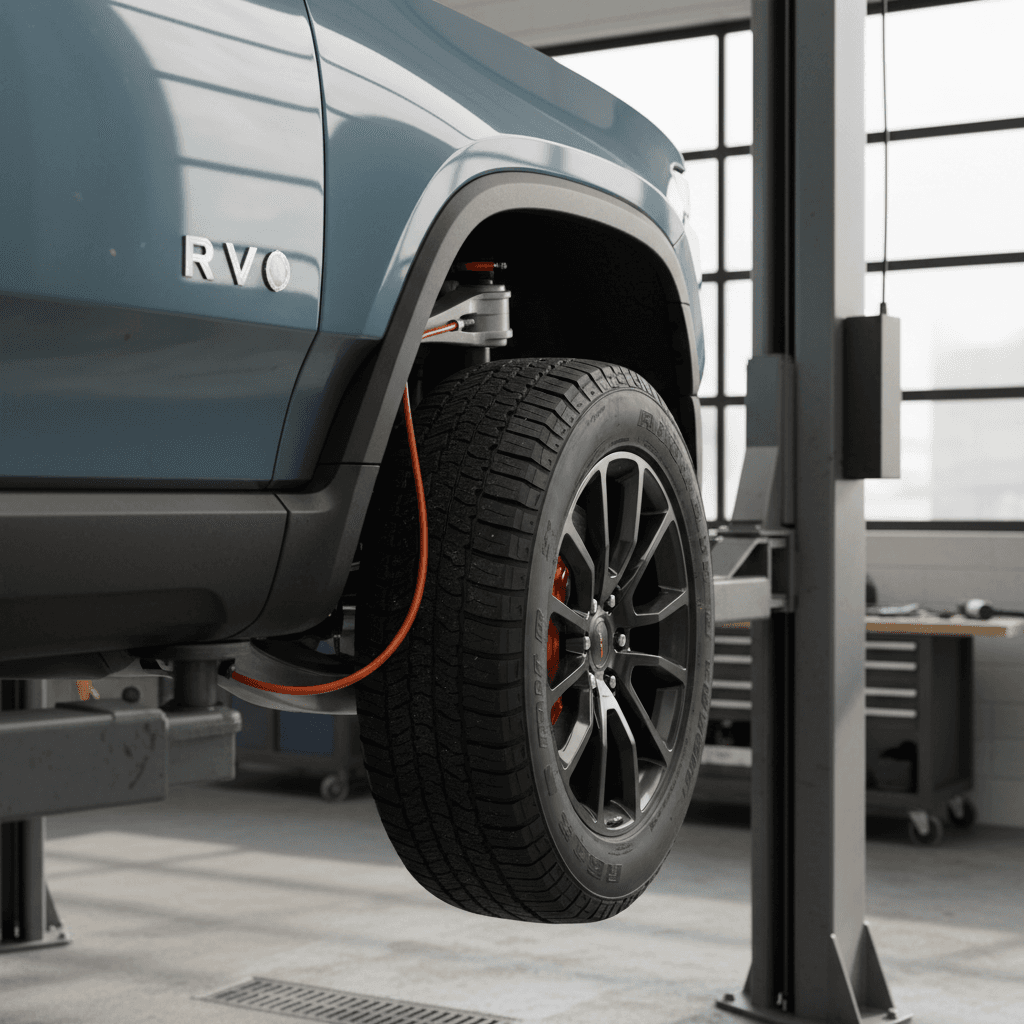
Walk‑away signs on a test drive
Recalls affecting 2025 Rivian R1T models
Like most young EV makers, Rivian has issued several recalls that touch 2025 R1T trucks. Some are simple software fixes delivered over the air; others involve physical inspection and parts replacement at a service center.
Key recalls that may include 2025 R1T trucks
Always run a VIN check to confirm recall status on any R1T you’re considering.
| Recall type | Model years affected | What can go wrong | Typical fix |
|---|---|---|---|
| Hands‑Free Highway Assist software | 2025 R1T & R1S using older software | Driver‑assist may fail to properly detect a lead vehicle, increasing crash risk when HWA is engaged. | Over‑the‑air software update plus owner notification; no hardware needed in most cases. |
| Rear suspension toe‑link service | 2022–2025 R1T & R1S that had rear‑suspension service before March 10, 2025 | Improperly reassembled rear toe link could separate and affect stability. | Inspection and replacement of rear toe‑link hardware at a Rivian service center. |
| Assorted earlier recalls | 2021–2024 primarily, some units still on road as used 2025 purchases | Issues from seat‑belt components to body hardware and minor structural items. | Inspection, reinforcement, or replacement of specific parts; many trucks are already updated. |
Recall coverage and dates can change; use this as a starting point, not a substitute for an official VIN lookup.
How recalls affect your buying decision
Battery and drivetrain reliability
Here’s the good news: the parts that make an EV scary‑expensive to fix, the big battery and the electric drive units, have not been the main source of trouble for most R1T owners. The 135+ kWh battery pack and dual‑ or quad‑motor setups in 2025 trucks are proving to be robust so far, especially compared with the body and trim issues that dominate complaint lists.
- No widespread pattern of catastrophic pack failures in normal use reported to date.
- Typical range loss so far appears modest; many early R1Ts still report strong real‑world range after tens of thousands of miles.
- Individual motor or inverter failures do happen but are relatively rare and generally handled under warranty.
Battery and drivetrain warranty coverage
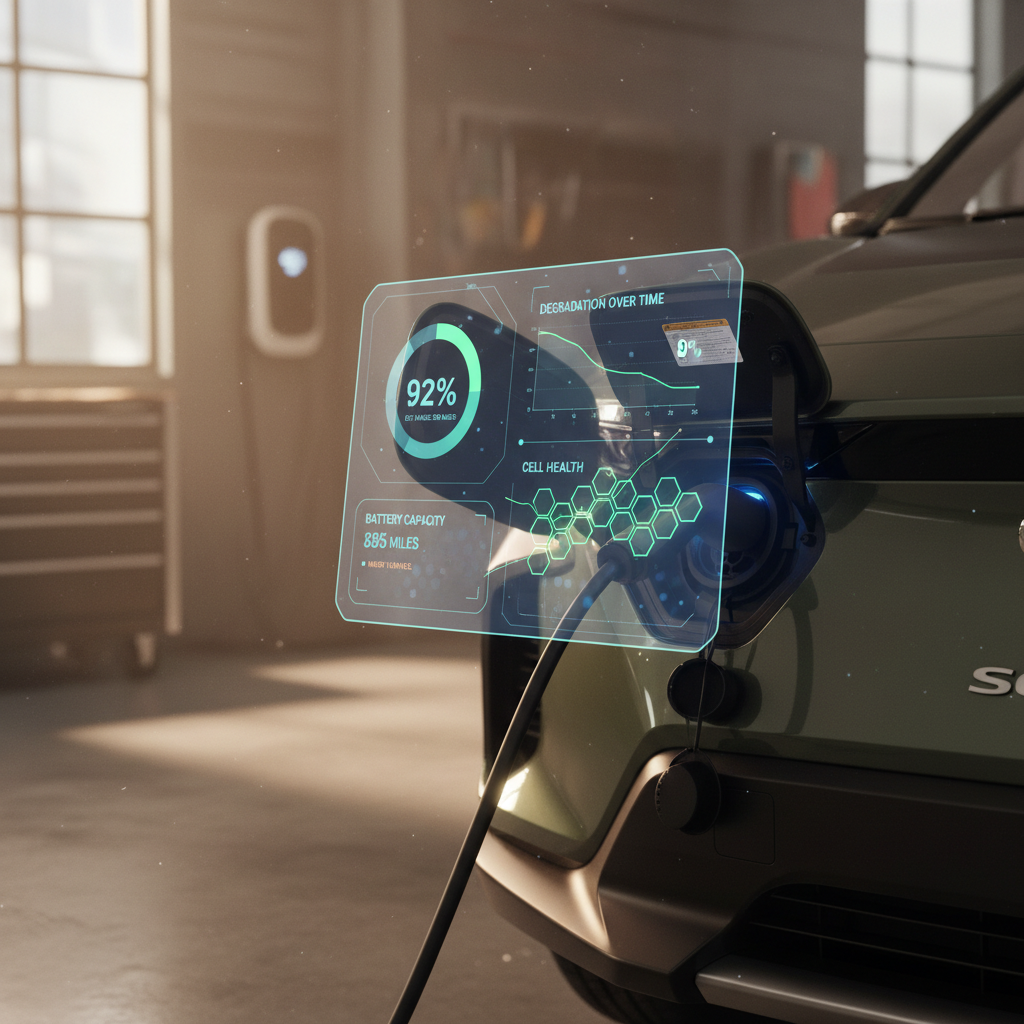
Where battery reliability still matters is on the used side. A 2025 R1T that’s spent its life towing heavy loads or fast‑charging daily on road trips could show more degradation than a gently‑used commuter. This is where having verified battery‑health data, not just a dash readout, becomes incredibly valuable when you’re comparing trucks.
Software and electronics: the double‑edged sword
Rivian leans hard on software. The R1T’s climate controls, drive modes, suspension, navigation, and driver‑assist systems all live behind that big center screen. When everything works, it feels futuristic. When it doesn’t, you’ll know about it.
Where software shines
- Over‑the‑air (OTA) updates can add range, refine ride quality, and patch bugs without a shop visit.
- Rivian frequently rolls out new features and improvements, so a 2025 truck will likely get better over time.
- Navigation, trip planning, and drive‑mode customization are genuinely thoughtful and well integrated when stable.
Where it creates headaches
- Updates occasionally introduce new glitches, a camera that won’t load, Bluetooth that drops, or a driver‑assist system that needs a reset.
- A frozen screen can impact everything from climate to mirrors, which makes simple tasks annoyingly complex.
- You have to be comfortable living with a truck that behaves more like a constantly‑updating gadget than a traditional pickup.
Your best defense against software drama
What it’s like to live with an R1T
If you read only horror stories, you’d think every Rivian owner is stranded in a loaner car. The reality is more mixed. There are definitely owners whose trucks have spent weeks in service. There are also drivers past 80,000 miles with nothing more than tires and washer fluid on the invoice, and an ear‑to‑ear grin every time they hit the accelerator.
Real‑world ownership: the good and the bad
Most 2025 R1T stories land somewhere between these two extremes.
When it goes right
Plenty of owners report tens of thousands of trouble‑free miles, praising the R1T as the best vehicle they’ve ever owned. They love the acceleration, the quiet cabin, the utility of the gear tunnel, and the sense that the truck is always improving via updates.
When it goes wrong
Others describe a laundry list of small to medium issues, from half‑shaft noise to cosmetic fixes, that add up to frustration. The common themes: more service appointments than expected, occasional parts delays, and a sense of being a beta tester for build quality.
Service experience matters as much as the truck
Is a used 2025 Rivian R1T a good buy?
For the right driver, yes, especially as gently‑used 2025 trucks start hitting the market with substantial warranty left. You’re trading traditional full‑size‑truck predictability for huge performance, adventure capability, and a bit more risk around build consistency and downtime.
- If you want bulletproof, zero‑drama ownership: a used hybrid pickup from an established brand will still be less risky.
- If you’re comfortable with tech, can live with the occasional rattle or service visit, and crave an electric truck that can genuinely go off‑road, the R1T belongs on your short list.
- If you tow heavy often or live far from a Rivian service center, you’ll want to be extra picky about which truck you buy and how its first owner used it.
Distance to service is a real factor
How Recharged evaluates used Rivian R1T trucks
When you’re shopping a truck with this much tech baked in, you want more than shiny paint and a Carfax printout. At Recharged, every R1T we list goes through a process designed specifically for modern EVs, not just repurposed from gas trucks.
What goes into a Recharged Score for an R1T
Unique EV data plus old‑school inspection where it counts.
Verified battery health
We pull data directly from the truck to understand usable capacity and degradation rather than guessing from range estimates. That helps you distinguish between a hard‑used adventure truck and a lightly‑driven commuter.
Drivetrain & suspension checks
Technicians road‑test each R1T, listening for half‑shaft clicks, suspension creaks, and steering shake. We inspect underbody components, look for uneven tire wear, and confirm any recall‑related suspension work is complete.
Transparent history & pricing
Every listing includes a Recharged Score Report that rolls battery health, service history, and market pricing into one plain‑English summary, so you’re not left decoding reliability on your own.
Ready to find your next EV?
Browse VehiclesBecause we specialize in EVs, not just anything with four wheels, you also get support from EV‑savvy specialists who can talk you through how an R1T’s quirks might compare to, say, a used Model Y or F‑150 Lightning for your specific needs.
Checklist before you buy a 2025 R1T
11 things to check on a 2025 Rivian R1T
1. Confirm warranty in-service date
Ask for the original in‑service date so you know exactly how much of the 5‑year / 60,000‑mile basic and 8‑year battery/drivetrain coverage remains.
2. Run a full VIN recall check
Verify that all relevant Rivian recalls, including any 2025 software or suspension campaigns, have been completed. Avoid trucks with open recalls and vague paperwork.
3. Inspect panel gaps and paint
Walk the truck in good light and look for mismatched gaps, chipped edges, or repainted panels. Cosmetic fixes are fine; sloppy bodywork isn’t.
4. Listen for suspension and half‑shaft noise
On the test drive, make low‑speed turns in a parking lot and roll over small bumps. Clicking, clunking, or harsh impacts from the front end are your cue to dig deeper.
5. Check for water leaks and musty smells
Lift floor mats and check under the front seats and in the gear tunnel. Any signs of moisture, staining, or mold deserve serious attention.
6. Stress‑test the software
Cycle drive modes, adjust the air suspension, pair a phone, run navigation, and try the cameras. You’re looking for <strong>repeatable glitches</strong>, not a one‑time hiccup after a reboot.
7. Verify charging behavior
If possible, plug into both Level 2 and DC fast charging. Confirm the truck starts charging promptly, holds a steady rate, and doesn’t throw random charging errors.
8. Ask how the truck was used
Heavy towing, frequent off‑roading, or constant fast‑charging aren’t deal‑breakers by themselves, but they do increase wear. Make sure the price and condition reflect that history.
9. Review service records
A thick folder of resolved issues can actually be a positive sign. What you want to avoid is a pattern of the <em>same</em> problem returning over and over.
10. Confirm service access in your area
Check Rivian’s site for the closest service center and whether mobile service covers your ZIP code. If you buy through Recharged, we’ll help you understand realistic service expectations for your location.
11. Get an independent EV‑savvy inspection if buying private party
If you’re not buying from a specialist retailer like Recharged, consider paying a technician with EV experience to look over the truck before you sign anything.
2025 Rivian R1T reliability FAQ
Frequently asked questions about 2025 Rivian R1T reliability
Bottom line: should you trust a 2025 Rivian R1T?
If your definition of “reliable” is a truck that never squeaks, never flashes a warning, and never visits the shop outside of scheduled maintenance, the 2025 Rivian R1T probably isn’t your truck. It’s a first‑generation, software‑heavy adventure rig from a young automaker, and that shows up in higher‑than‑average rates of small and medium‑size issues.
If, on the other hand, you’re looking for one of the most capable and satisfying electric trucks on the road, and you’re willing to trade some extra vigilance and the occasional service visit for that experience, the R1T can absolutely be worth it. The key is buying the right example, with a clean history, strong battery, completed recalls, and that all‑important absence of mystery noises on a test drive.
That’s where Recharged comes in. Our Recharged Score Report gives you verified battery health, transparent pricing, and expert eyes on the R1T’s known trouble spots before you sign anything. So you can enjoy the wild‑trail capability and quiet torque of a Rivian, without feeling like you’re test‑driving the future on your own dime.