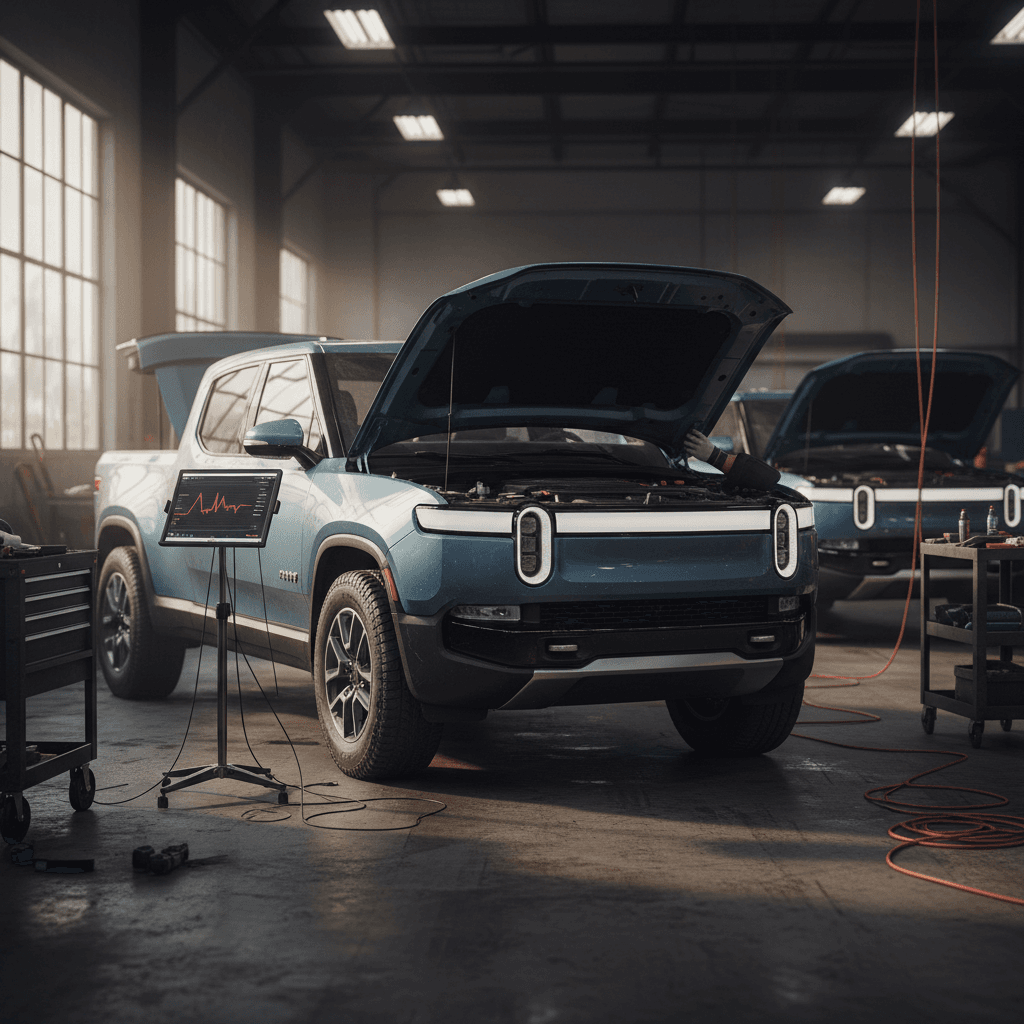
The 2025 Rivian R1T is a second‑generation electric pickup with supercar thrust and REI‑catalog aesthetics. It’s also a rolling software lab, which means recalls aren’t a matter of “if” but “how many and how serious.” This guide walks you through the current 2025 Rivian R1T recalls list, what each campaign actually fixes, and how to be smart, whether you already own an R1T or you’re eyeing one on the used market.
A quick reality check
Overview: Why 2025 R1T recalls matter
For the 2025 model year, Rivian treated the R1T as a major refresh: new drive units, revised suspension bits, updated driver‑assist hardware and a heavier reliance on over‑the‑air software. That cocktail has produced an unusually busy recall calendar. By early 2026, the 2025 R1T had multiple safety recalls on file, many of them shared with the R1S SUV.
2025 Rivian R1T recalls at a glance
Model year vs. build date
Quick 2025 Rivian R1T recalls list
Summary of key 2025 Rivian R1T recalls
Major NHTSA safety recalls known to affect at least some 2025 model‑year R1T trucks. Exact coverage depends on VIN and build configuration.
| Issue area | What can go wrong | Typical fix | Risk level* |
|---|---|---|---|
| Hands‑free driving / Highway Assist | May not reliably detect or react to vehicles ahead at low speeds | Over‑the‑air software update plus, if needed, sensor calibration | High when using system |
| Headlights (low beam in cold weather) | Low beams may fail to illuminate in cold conditions | Replace or update headlamp assemblies; software calibration | Medium–High |
| Seat belt retractor mounting | Seat belt may not properly restrain occupant if mounting is loose | Inspect and correctly torque or replace retractor and hardware | High |
| Rear suspension toe link (after service) | If reassembled incorrectly, rear suspension alignment can change suddenly | Inspect joint, correct assembly and torque, replace hardware if needed | High |
| Misc. software & warning telltales | Driver assistance or warning lights may behave incorrectly | Over‑the‑air firmware update | Low–Medium |
Use this as a roadmap, then run the specific VIN through NHTSA or Rivian to confirm what applies.
About this list
Hands-free driving software recall
Rivian’s hands‑free highway driving suite, often marketed as an advanced driver‑assistance system capable of limited hands‑off operation, earned its own recall when regulators found that, at very low speeds, the truck might not detect and respond correctly to a vehicle ahead. In plain English: the system could let the R1T roll into the car in front instead of gracefully coming to a stop.
What vehicles are affected?
- Certain 2025 R1T and R1S trucks with the upgraded hands‑free suite
- Typically those running early 2025 software builds (before later 2025.x updates)
- Exact coverage is defined by VIN ranges in the recall notice
What Rivian does to fix it
- Applies an over‑the‑air software update to refine object detection and behavior
- May instruct service centers to verify sensor alignment and run diagnostics
- Documents completion in Rivian’s system and NHTSA’s recall database
Why this one matters
Headlight failure in cold weather
Another big‑ticket item: a recall covering roughly 17,000‑plus R1T and R1S vehicles for headlight issues in cold weather. On some 2025 trucks, the low‑beam modules can fail to illuminate when the temperature drops, turning your adventure truck into a 7,000‑pound guessing game after dark.
- Applies to specific 2025 R1T and R1S VIN ranges, often in colder‑climate states but not limited to them
- Owners may notice intermittent or total loss of low beams after parking outside in freezing temperatures
- High beams or daytime running lights might still work, which can mask the issue until you need proper low beams
Driving with bad headlights
Rivian’s remedy typically involves replacing the affected headlamp assemblies or updating internal components and then running diagnostic checks to verify the beams behave correctly across temperature ranges. Once that’s done, the recall status for that VIN should show as “remedied.”
Seat belt retractor assembly recall
Seat belts are the quiet heroes of every crash test, and regulators get very jumpy when there’s even a hint they might not perform perfectly. In a recent campaign, Rivian recalled fewer than a thousand vehicles, roughly split between R1S and R1T trucks built between 2022 and 2025, for improperly secured seat belt retractors.
Seat belt retractor recall: what owners should know
A small population, but a high‑priority safety item.
The issue
Some front seat belt retractors may not be mounted or torqued exactly to spec. In a serious crash, that can mean less effective restraint for front occupants.
The fix
Service techs inspect the mounting points, re‑torque hardware, and replace the retractor and bolts if anything looks suspect.
The risk
Because this affects core crash protection, it’s treated as a high‑priority recall. Don’t shrug this one off or assume “mine is probably fine.”
Good news for shoppers
Toe link service recall after repair
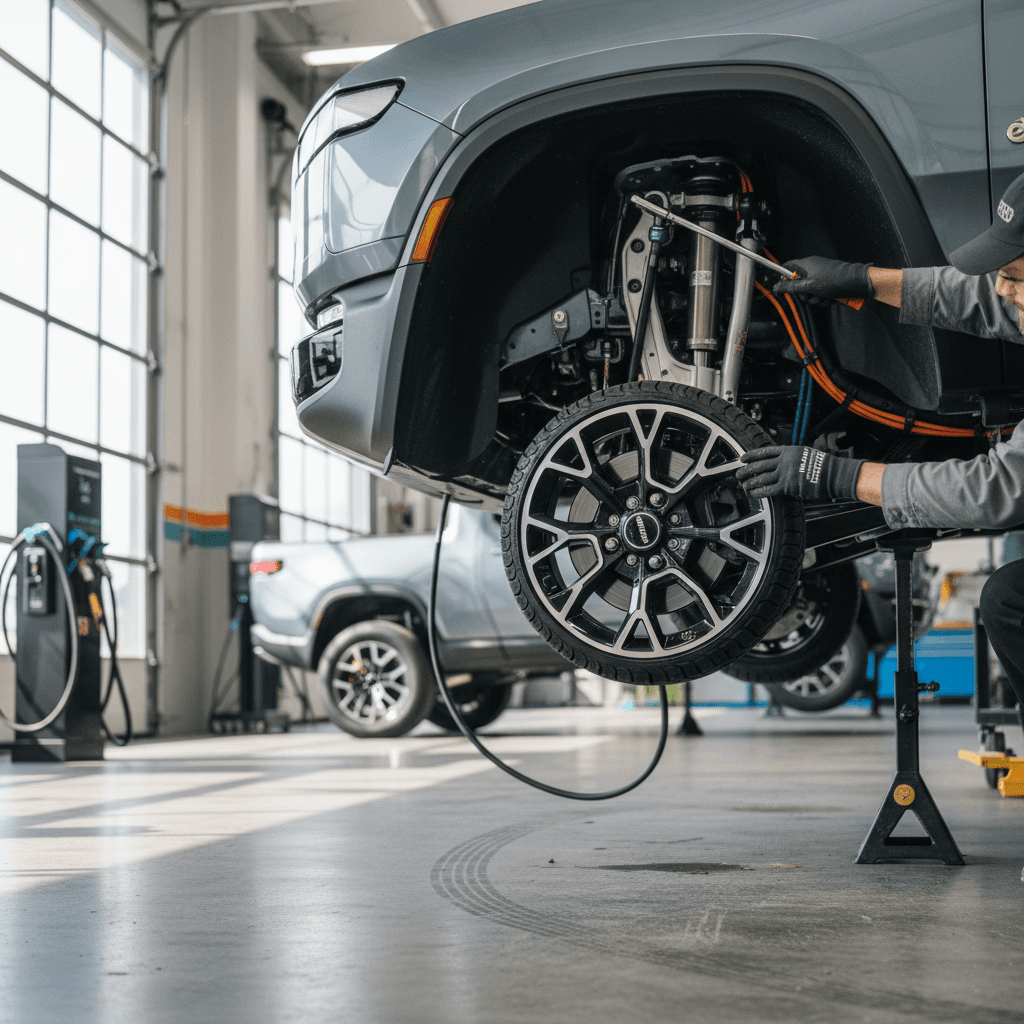
One of the more subtle but serious recalls doesn’t target a factory defect so much as a service error. Certain 2022–2025 R1T and R1S vehicles that had suspension work done before March 10, 2025 were flagged after Rivian discovered that a rear toe link joint could be reassembled incorrectly during repairs.
If that joint isn’t put back together exactly to spec, the rear suspension’s alignment can change suddenly, imagine the truck deciding, mid‑corner, that it would rather point somewhere else. That’s the kind of problem regulators classify as a bona fide safety defect, even if it originates in the service bay rather than the assembly line.
How to know if the toe link recall applies to your R1T
1. Check if your truck had rear suspension work
The recall specifically targets vehicles that previously received repairs or service requiring the rear toe link joint to be separated and reassembled before March 10, 2025.
2. Run the VIN through NHTSA and Rivian
Even if you’re not sure about the service history, a quick VIN search will tell you whether this specific recall is open on that R1T.
3. Ask for documentation when buying used
If the seller mentions previous suspension noise or work, insist on seeing invoices and confirming that any related recall has been completed.
4. Take clunks and wandering seriously
If a 2025 R1T feels nervous at highway speed or clunks from the rear when you hit bumps, book Rivian service immediately and mention the toe link recall by name.
Other campaigns & updates not always called “recalls”
Alongside formal NHTSA recalls, Rivian runs a parallel universe of customer satisfaction campaigns and technical service bulletins. These may address things like front half‑shaft noises, HVAC quirks, or minor ADAS behavior, especially on early‑build 2025 trucks.
- Half‑shaft “clunk” campaigns for some 2025 R1T trucks with revised front drive units
- HVAC assembly replacements on a subset of vehicles for noise or performance issues
- Ongoing tweaks to warning chimes, stability‑control thresholds, and driver‑assist visuals via over‑the‑air updates
OTA vs. shop visit
How dangerous are the 2025 R1T recalls?
When you should be concerned
- Any recall involving braking, steering, or seat belts deserves same‑week attention.
- Headlight failures in dark, rural, or winter conditions are a real safety risk.
- Advanced driver‑assist glitches matter if you regularly rely on hands‑free driving.
When you shouldn’t panic
- Software‑only recalls that are already marked as remedied on the VIN.
- Hardware recalls with documented, high‑quality repairs done by Rivian.
- Campaigns that affect a wide range of vehicles but have no recorded injuries.
The silver lining for used buyers
How to check a 2025 Rivian R1T for open recalls
If you take nothing else from this article, take this: never buy a used R1T (or any modern EV) without running the VIN for recalls. The process is free, fast, and utterly non‑negotiable.
Step‑by‑step: run a recall check on a 2025 R1T
1. Grab the VIN
You’ll find the 17‑digit vehicle identification number on the lower driver‑side windshield, the driver‑door jamb sticker, the title, and most digital listings.
2. Use the NHTSA recall lookup
Go to the official NHTSA recall lookup site and enter the full VIN. You’ll see a list of <strong>open safety recalls</strong> plus any that have already been remedied.
3. Cross‑check in the Rivian app or portal
If you already own the truck (or the seller lets you sit in it), open the Rivian app or in‑vehicle menus. Many campaigns and OTAs are listed under service or updates.
4. Ask the seller for proof
Request service invoices or screenshots showing recall completion dates. A conscientious first owner is exactly the sort of person you want to buy an EV from.
5. Build it into your negotiation
Open recalls generally must be fixed for free, but unresolved hardware work means <strong>downtime and hassle</strong>. That’s leverage when you’re negotiating a price or asking a dealer to complete work before delivery.
How Recharged helps with recall checks
Buying a used 2025 R1T: what to watch for
Recalls are just one facet of the 2025 R1T story. The other big themes are battery health, software currency, and how gracefully the truck has aged through road‑salt winters and over‑the‑air experiments. Here’s how to put recalls into a bigger, more useful context when you’re shopping used.
Key checkpoints for a used 2025 Rivian R1T
Blend recall diligence with EV‑specific due diligence.
Battery & charging behavior
Look for consistent DC fast‑charging speeds, healthy range estimates, and no chronic warning lights. Ask for recent photos of the range screen at 100% and typical charging curves if the seller has them.
Service & campaign history
A stack of service receipts showing completed recalls, firmware updates, and proactive campaigns is a green flag, not a red one. It tells you the owner actually read their notifications.
Noise, ride, and tracking
On the test drive, listen for clunks, knocks, or steering wander, especially from the front half‑shafts or rear suspension. Anything suspicious deserves a Rivian inspection before you commit.
Independent inspection
If you’re not buying through Recharged or another EV‑focused retailer, consider paying for a pre‑purchase inspection at a Rivian service center or experienced EV shop.
Don’t ignore soft recalls
When you buy through Recharged, our team folds all of this into the process: recall status, battery diagnostics, and a Recharged Score that lets you see at a glance how a particular R1T compares to others on the market. You still get to fall in love with the truck; we just make sure you’re not falling for the wrong one.
FAQ: 2025 Rivian R1T recalls
Frequently asked questions about 2025 R1T recalls
Bottom line on 2025 R1T reliability
The 2025 Rivian R1T is a deeply impressive truck, a kind of electric Swiss Army knife that also happens to do zero to sixty like a sports car. The cost of that ambition is complexity, and complexity breeds recalls. Taken in isolation, the current 2025 Rivian R1T recalls list looks dramatic. Viewed in context, it’s what happens when young automakers iterate in public and regulators insist on a paper trail for every fix.
If you’re an owner, the assignment is simple: stay on top of notifications, knock out recall work quickly, and treat any hardware‑related campaigns as priority one. If you’re shopping used, don’t let a stack of completed recalls scare you off, let it guide smarter questions about how the truck has been cared for. And if you want help sorting the gems from the science experiments, that’s exactly what Recharged and the Recharged Score are built to do.