If you’re eyeing a 2025 Rivian R1S, you’ve probably heard the horror stories: suspension clunks, warning lights, wonky software updates, even a few tow‑truck tales. At the same time, plenty of owners are quietly racking up miles with no issues at all. This guide breaks down the real‑world 2025 Rivian R1S problems and fixes so you can tell internet drama from issues that actually matter to your wallet.
Context matters
Overview: Are 2025 R1S SUVs Really Problematic?
Owner surveys and complaint data suggest Rivian as a brand still sits below average for reliability, mostly due to electronics, suspension quirks, and a steady stream of recalls across R1T and R1S. The 2025 R1S hasn’t magically escaped that pattern. What’s new for 2025 is more of an evolution than a clean break: many issues are carry‑overs from 2022–2024 builds, mixed with fresh software behavior from newer over‑the‑air updates.
The good news: the most expensive hardware, the big battery, motors, and air suspension, hasn’t developed a reputation for catastrophic, out‑of‑warranty failures yet. Most 2025 R1S problems are fixable under warranty, annoying more than bankrupting. The bad news: owners still report too many trips to service and long waits for parts or appointments, especially if you live far from a Rivian center.
2025 R1S Problem Landscape at a Glance
Quick Summary: Biggest 2025 R1S Problems
Most Common 2025 R1S Problem Buckets
What owners, service departments, and complaint databases talk about most
Electronics & Software
- Infotainment freezes or reboots
- Glitchy key recognition and app access
- Driver‑assist warnings after updates
- OTA updates that hang or brick features
Suspension & Half‑Shafts
- Front‑end clunks, pops, or vibration
- Ride‑height or air‑suspension errors
- Half‑shaft wear and new 2025 replacement campaign
Build Quality & Noise
- Wind noise around mirrors/doors
- Interior squeaks and rattles
- Occasional water leaks at doors or glass
Rare but serious issues
Electronics and Software Bugs
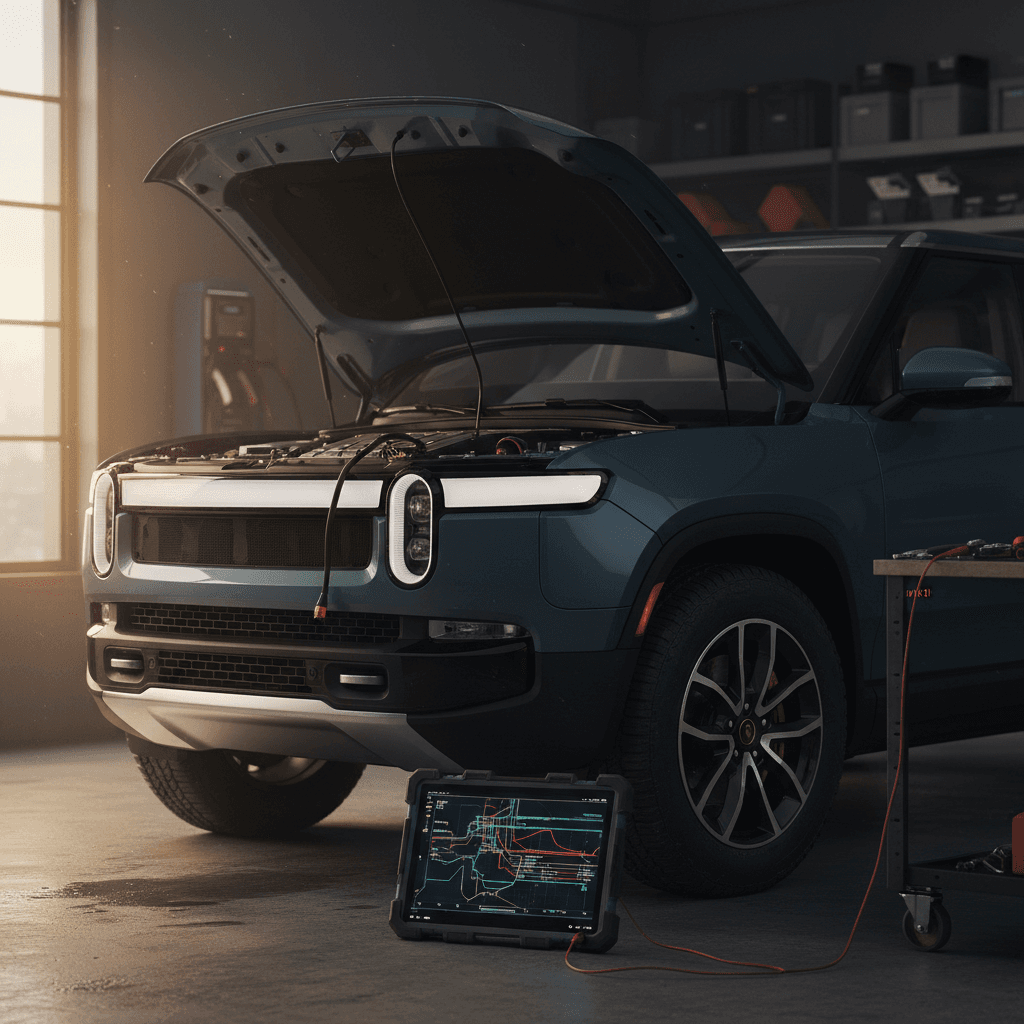
If the R1S has an Achilles’ heel, it’s software. The entire vehicle, locks, drive modes, suspension, climate, driver assist, is orchestrated through a central brain and those two big screens. When it’s right, it feels like the future. When it’s wrong, you’re rebooting your SUV like a misbehaving laptop.
- Infotainment lag, random reboots, or frozen screens
- Map/navigation glitches or losing routing mid‑trip
- Phone key or key‑card failing to unlock or start the vehicle
- Driver‑assist (ACC, lane‑keeping) refusing to engage or dropping out
- OTA updates failing, hanging, or temporarily disabling features
Common Symptoms You’ll Notice
- Screen goes black while driving, then restarts.
- Vehicle shows a forest of warning lights after an update.
- Phone key randomly stops working in a parking lot.
- Navigation becomes jumpy or refuses to load maps.
Annoying? Yes. Generally fixable? Also yes, often without replacing major hardware.
Likely Fixes
- Soft reset of the center display and driver screen.
- Power‑down / sleep cycle: lock it, walk away 15–30 minutes.
- Deleting and re‑adding phone keys in the app.
- Re‑installing a failed OTA update or visiting service for a module flash.
If warnings persist or the vehicle won’t drive, Rivian typically tows the SUV to a service center under warranty.
Owner tip: test updates on your schedule
Suspension, Half-Shafts, and Ride Issues
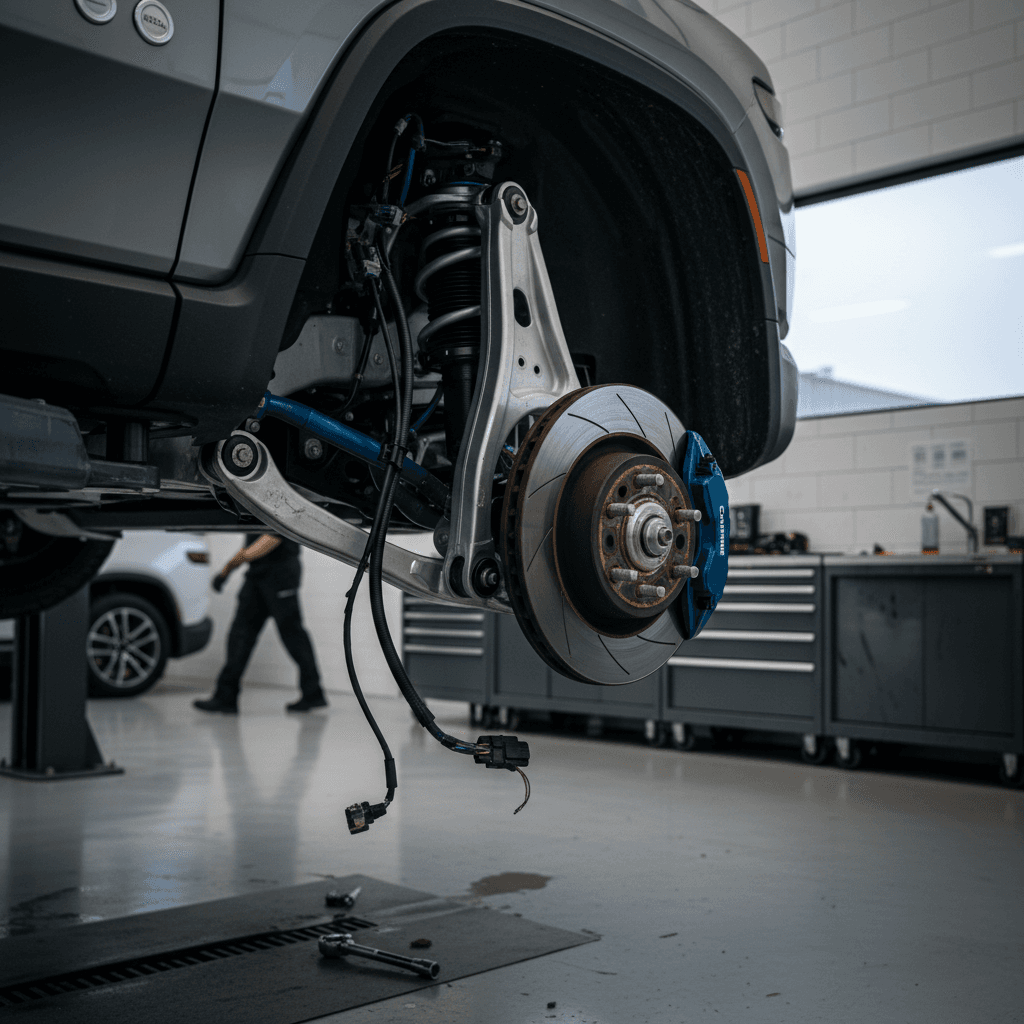
The R1S’s party trick, its adjustable air suspension and off‑road hardware, is also one of its biggest sources of complaints. Earlier model years saw frequent reports of front‑end clunks and half‑shaft wear; by 2025 Rivian has revised parts, but it hasn’t completely escaped the drumbeat.
On top of that, Rivian recently launched a 2025 campaign to replace front half‑shafts in certain R1T/R1S builds where supplier‑made parts could separate at the inner constant‑velocity joint, causing noise and triggering a limited‑performance warning. That’s exactly the kind of issue you want addressed proactively, not after you hear a bang on the highway.
Common 2025 R1S Suspension & Driveline Problems
What you’ll hear or feel from the driver’s seat, and how Rivian typically fixes it.
| Symptom | What It Might Be | How It’s Usually Fixed | What You Should Do |
|---|---|---|---|
| Clunk or thump from front end over bumps | Front half‑shafts or control‑arm bushings | Inspect and replace affected half‑shafts or hardware, often under campaign | Ask for records of any half‑shaft campaign or front‑end repair |
| Grinding/vibration under acceleration | Half‑shaft wear or alignment issues | New half‑shafts, alignment check, software updates for torque management | Test at various speeds and throttle; walk away if seller shrugs it off |
| Air‑suspension warning, ride‑height stuck | Sensor/module glitch or compressor issue | Software reset; if persistent, replace sensors, compressor, or lines under warranty | Check for open campaigns and prior suspension work |
| Harsh, choppy ride in some modes | Calibration or tire pressure issues | Recalibrate ride height, update software, adjust pressures | Confirm alignment and tire wear look even before you buy |
Use this table as a script when you talk to a seller or service advisor.
Don’t normalize loud mechanical noises
Build Quality, Noise, and Water Leaks
If you come from a German luxury SUV, the 2025 R1S will feel slightly more startup‑rough around the edges. Owners complain about wind noise, interior squeaks, panel alignment, and the occasional water leak, especially around doors and roof glass. None of this is unique to Rivian, but the volume of chatter is higher than you’d expect in this price bracket.
- Wind roar around door mirrors or A‑pillars at highway speeds
- Whistles from door seals or pano roof at certain crosswinds
- Rattles from the tailgate, rear seats, or cargo area
- Water tracks on door sills after heavy rain or a car wash
- Panel gaps that are visually uneven from side to side
DIY noise test on a test drive
Battery, Thermal System, and Driveability Faults
Most 2025 R1S owners will never see a failed battery pack, but you will read dramatic stories: an SUV that throws a thermal fault at a few hundred miles, a brand‑new R1S refusing to shift into Drive after an update, or a truck sidelined at a service center for weeks waiting on a cooling valve. These incidents are frightening, but they’re still outliers relative to the total fleet.
Serious but Uncommon Symptoms
- “Thermal system fault” or motor fault with reduced power.
- Vehicle won’t go into Drive or stays in Park after an OTA update.
- Repeated warnings about high‑voltage system or propulsion system.
- Sudden surging or odd braking behavior that feels unsafe.
If you see any of these on a test drive, the correct response isn’t optimism, it’s “no thanks.”
What Fixes Look Like
- Tow to a Rivian service center for diagnostics.
- Replacement of valves, pumps, harnesses, or in rare cases larger components.
- Software updates to stability control, drive inverters, or thermal management.
- Post‑repair road testing and logs to confirm the fault is gone.
These are warranty events on a 2025 R1S, but extended downtime and lack of loaners are what frustrate owners most.
Used‑buying red flag
Lighting and Safety Recalls on 2025 R1S
Like most modern EVs, the 2025 R1S already wears a few recall badges. Some involve lighting behavior in cold weather, where low beams may fail to illuminate on startup; others touch control software or specific hardware batches. On top of that, Rivian uses separate “service campaigns” and technical bulletins for issues that don’t rise to full recall level, such as the 2025 half‑shaft replacement campaign.
2025 R1S Recalls & Campaigns: Owner Cheat Sheet
Exact campaign numbers change, but these are the themes you should ask about.
| Issue Type | Typical Fix | Owner Impact if Unrepaired |
|---|---|---|
| Low‑beam lighting not illuminating in cold starts | Reprogram or replace affected lighting modules; software updates | Reduced night visibility, potential safety risk |
| Control‑unit or stability‑control software behavior | OTA update plus possible module flash at service center | Unpredictable driver‑assist behavior or warnings |
| Front half‑shaft quality campaign | Replace both front half‑shafts with improved parts | Noise, vibration, and in worst cases loss of drive to one axle |
| Misc. component inspections (bolts, brackets, hoses) | Inspect and replace hardware as necessary | Small chance of noise, leaks, or component failure over time |
Always verify campaign completion by VIN with Rivian or NHTSA before you buy used.
How to check recall status
How Rivian Handles Warranty and Service
Rivian backs the 2025 R1S with a generous battery and drivetrain warranty, measured in years, not election cycles, which is essential for peace of mind in a still‑maturing brand. Coverage details vary slightly by build date, but think in terms of 8 years for the high‑voltage pack and drive units, plus separate terms for bumper‑to‑bumper and corrosion.
The execution, however, is uneven. Some owners rave about white‑glove mobile service and quick turnaround; others report vehicles stuck in service for weeks with little communication. Loaner R1S availability is limited in some markets, and if you live hours from a service center, every major problem turns into a logistical operation.
Rivian Service Positives
- Strong coverage on battery, drivetrain, and corrosion.
- Many issues fixed via software updates without parts.
- Mobile technicians can handle minor repairs at your home or office.
- Service advisors often familiar with repeat issues and real fixes.
Where Owners Get Frustrated
- Slow responses when scheduling or escalating complex cases.
- Parts backorders extending downtime to weeks.
- Limited loaners; some owners rely on rentals or second cars.
- “No problem found” verdicts on intermittent noises or software ghosts.
How Recharged can tilt the odds in your favor
Ready to find your next EV?
Browse VehiclesPre‑Purchase Checklist for a Used 2025 R1S
Shopping used is where knowledge really pays off. A clean 2025 R1S with documented campaigns and quiet manners can be a phenomenal EV. A pretty one hiding thermal faults and unresolved driveline work is a six‑figure headache. Use this checklist as your filter.
Used 2025 R1S Inspection Checklist
1. Run the VIN for recalls and campaigns
Confirm all <strong>recalls and half‑shaft campaigns</strong> are completed. Ask for proof from Rivian or a seller’s service advisor. If the seller can’t or won’t show this, treat it as a major strike.
2. Scan the service history for patterns
One or two visits for software or small hardware issues is normal. A pattern of repeated thermal, propulsion, or “vehicle won’t drive” complaints is not. Walk away from any SUV with unresolved major faults.
3. Test suspension and steering on bad pavement
Find a rough road and listen for clunks, pops, or grinding. Try multiple ride heights and modes. A quiet, composed R1S under abuse is worth more than one that only feels good on a glass‑smooth dealer loop.
4. Highway test for wind noise and tracking
At 65–75 mph, the R1S should track straight with light steering corrections and reasonable wind noise. Persistent pull, roar around a specific door, or whistling from the roof suggests alignment or seal work ahead.
5. Cycle all electronics and ADAS
With the vehicle parked, run through windows, locks, phone keys, cameras, and driver‑assist activation. On a short drive, engage adaptive cruise and lane‑assist. Random deactivations or warnings deserve a deeper look.
6. Inspect for water intrusion and smells
Check carpets, cargo floor, and headliner for damp spots, stains, or musty odor. Water leaks are a known, serious issue that can quietly damage wiring and interior materials over time.
7. Verify charging behavior
If possible, plug into both AC and DC fast charging. Confirm the R1S starts charging promptly, shows a believable kW rate, and doesn’t throw charging faults. Weirdness here can point to software or hardware headaches.
8. Review tires, alignment, and underbody
Uneven tire wear, cupping, or feathering can hint at suspension or alignment issues. A quick look underneath should show no major scrapes on battery or underbody panels if the SUV has been off‑roaded hard.
When to Walk Away vs When a 2025 R1S Is a Good Bet
Signs of a "Good" 2025 R1S
- Full recall and campaign completion, documented.
- Service history limited to a few, well‑resolved issues.
- Quiet suspension, no driveline clunks or vibration.
- Clean interior with no leaks, odors, or persistent rattles.
- Electronics behave on a long test drive, no warning‑light roulette.
This is the kind of R1S that lets you enjoy the magic, effortless torque, adventure‑car looks, real utility, without living at the service center.
When You Should Walk Away
- Multiple unresolved thermal, propulsion, or driveability faults.
- Seller hand‑waves away loud mechanical noises as “normal.”
- Open campaigns for half‑shafts, lighting, or control units.
- Evidence of water leaks, mold, or heavy off‑road abuse.
- Owner can’t produce basic service records or recall proof.
Rivian builds more R1S SUVs every month. You don’t need to marry the problem child just because it’s the one in front of you today.
FAQ: 2025 Rivian R1S Problems and Fixes
Frequently Asked Questions About 2025 R1S Issues
Bottom Line: Should You Buy a 2025 R1S?
The 2025 Rivian R1S is not a risk‑free appliance. It’s a charismatic, software‑dense adventure rig from a young automaker still working out the kinks. If your top priorities are bulletproof reliability and never seeing a service bay, you’ll be happier in a more conventional hybrid SUV. But if you understand the 2025 R1S problem patterns, insist on proof of completed campaigns, and choose a quiet, well‑behaved example, you can own one of the most interesting family EVs on sale today without volunteering as Rivian’s long‑term beta tester.
That’s exactly where Recharged comes in. Every used R1S we list goes through a Recharged Score battery‑health test, recall and campaign checks, and an EV‑specialist inspection, not just a quick wash and photos. If you’re thinking about a 2025 R1S, let our team help you find the ones with the magic still intact and the mess mostly sorted.