If you’re shopping for a 2025 Mercedes EQS, you’re looking at one of the cushiest electric luxury sedans on the road, and one of the most heavily discounted, especially used. This buying guide walks you through trims, range, options, pricing, and the surprisingly attractive used market so you can decide whether a brand‑new 2025 EQS or a lightly used example fits you better.
Quick take
2025 Mercedes EQS at a glance
Key 2025 Mercedes EQS numbers
The EQS is Mercedes’ electric flagship sedan: a full‑size liftback that prioritizes silence, smoothness, and tech over track‑day handling. For 2025, Mercedes cleans up the design, bumps battery capacity, and leans harder into rear‑seat comfort, especially important if you’re cross‑shopping it against an S‑Class, BMW i7, or Tesla Model S.
New or used?
What’s new on the 2025 Mercedes EQS?
- Larger 118 kWh usable battery on all sedan trims, up from roughly 108.4 kWh in earlier U.S. cars, for improved range and efficiency.
- Subtle front‑end refresh with a more traditional grille look and AMG‑line bumper to give the car a stronger face.
- Tweaks to brake feel and software for more natural pedal response and smoother regen blending.
- Interior updates that focus on rear‑seat comfort, think plusher headrests, available executive rear package, and small trim/detail revisions.
- Ongoing over‑the‑air software improvements for infotainment, driver assistance, and energy management.
Sedan vs SUV
If you’re coming from a 2022–2023 EQS or cross‑shopping earlier model years, the big story is the battery upgrade. More usable capacity means more real‑world range and a bit more buffer as the pack ages. The 2025 also looks a bit more upright and less jelly‑bean from the front, which some buyers find more in line with a traditional Mercedes flagship.
Trims, range, and performance explained
Exact trim names and equipment can vary slightly by market, but in the U.S. you’ll typically see the EQS sedan sold in three main flavors for 2025: a rear‑drive entry model, a mid‑range dual‑motor 4MATIC, and a high‑output 580. Here’s how to think about them.
2025 Mercedes EQS sedan trims (overview)
Approximate U.S. specs for common 2025 EQS sedan trims. Always confirm final numbers and equipment with your dealer window sticker.
| Trim | Drive | Power (approx.) | Est. EPA range* | 0–60 mph (est.) | Starting price (approx.) |
|---|---|---|---|---|---|
| EQS 450+ | RWD | ≈355 hp | ≈360–390 mi | ≈5.9 s | Low $100,000s |
| EQS 450 4MATIC | AWD | ≈355 hp | ≈340–360 mi | ≈5.6 s | Mid $100,000s |
| EQS 580 4MATIC | AWD | ≈516 hp | ≈330–350 mi | ≈4.1 s | Upper $100,000s |
Range and pricing will vary by wheels, options, and region; use this as a directional guide, not a final build sheet.
Don’t chase horsepower you won’t use
The 450+ is the efficiency play: single motor, rear‑drive, and the best chance of touching that headline range number. The 450 4MATIC adds an extra motor for all‑weather confidence and a bit more punch. The 580 4MATIC piles on power and equipment, and is the one to target if you care about effortless passing and prestige specs more than every last mile of range.
Charging and real-world road-trip range
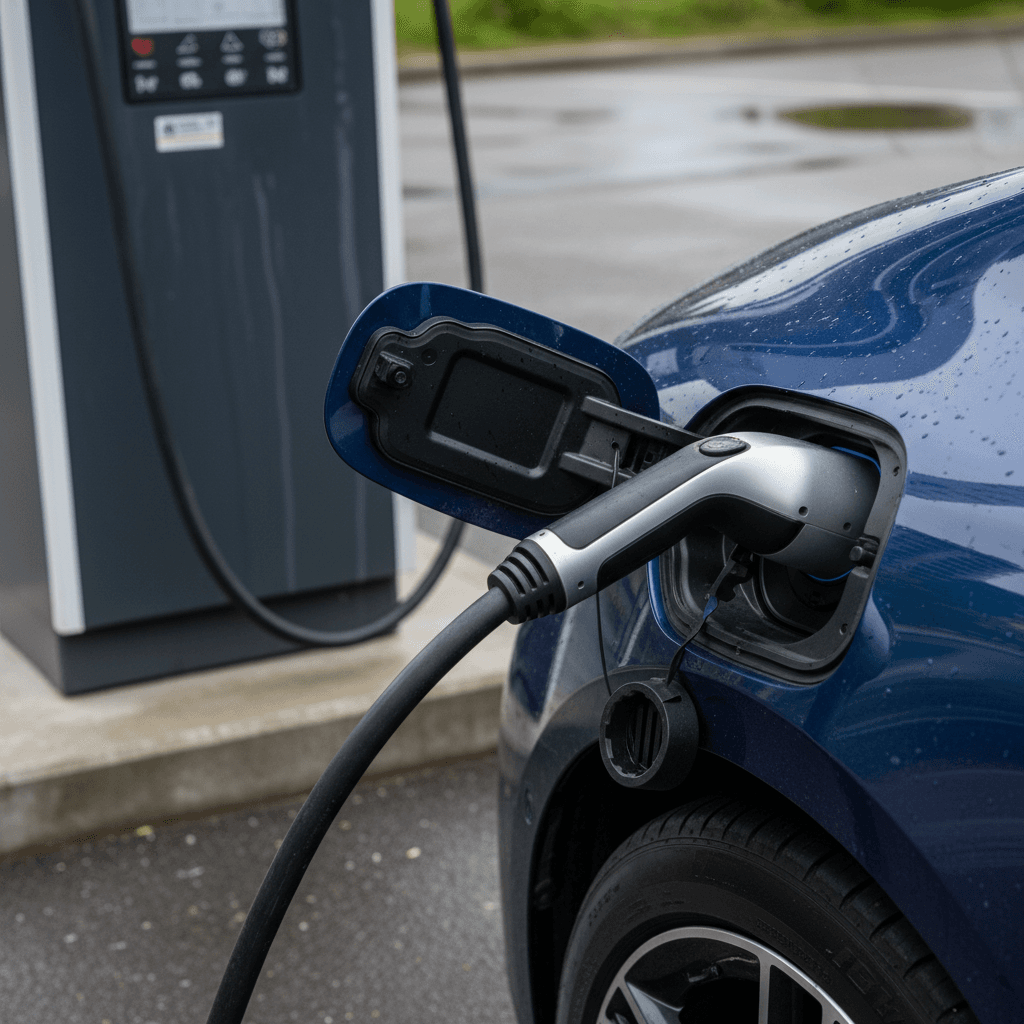
On paper, the 2025 EQS sedan pairs its big battery with solid charging hardware: up to 9.6 kW AC on Level 2 and around 200 kW DC fast‑charging capability at compatible stations. That’s enough to take the battery from 10–80% in roughly 30–35 minutes under ideal conditions.
What EQS charging looks like in the real world
From home overnight to highway fast‑charging, here’s what to expect.
Home Level 2 (240V)
On a typical 40‑amp circuit (9.6 kW), a 10–100% charge on the 118 kWh pack can take 12–13 hours. For most owners, that means plug in at night and wake up with a full “tank.”
Public Level 2
At hotels, parking garages, or workplaces, figure on 20–30 miles of range per hour of charging. Ideal for topping off while you’re doing something else.
DC fast charging
At a 150–350 kW DC fast charger, going from 10–80% can take about 30–35 minutes, adding roughly 220–260 miles depending on trim and conditions.
Road‑trip rule of thumb
The EQS uses the CCS fast‑charging standard on 2025 models in the U.S., with automaker support for the NACS (Tesla‑style) connector rolling in gradually. If you road‑trip often, it’s worth asking your dealer how, and when, NACS support will be handled for your specific car, whether that’s via an adapter or a later hardware refresh.
Pricing, incentives, and whether to lease or buy
Mercedes has already trimmed prices across its EQ lineup, and luxury EVs in general are in a more buyer‑friendly place than they were in 2022. A 2025 EQS 450+ will typically sticker in the low six figures before options; a loaded 580 can shoot deep into the $140,000+ zone.
Leasing a 2025 EQS
- Pros: Lets you sidestep heavy early depreciation, keeps you in warranty, and makes it easy to walk away as battery and charging tech evolve.
- Cons: Mileage limits, potential overage charges, and you never build equity in the car.
- Best for: Drivers who want the newest tech every 2–3 years and don’t rack up big miles.
Buying a 2025 EQS
- Pros: Full control over mileage and modifications, and you can capitalize if used values stabilize.
- Cons: You’re on the hook for depreciation, and long‑term battery health becomes your problem.
- Best for: Long‑term keepers and buyers who can secure strong discounts or plan to keep the car well past the warranty.
Don’t forget incentives
2025 EQS vs used EQS: where the real value is
The elephant in the room with any new EQS is depreciation. Luxury EVs, especially big ones with complex tech, have been shedding value quickly. That’s bad news if you’re the first owner, and excellent news if you’re shopping certified pre‑owned or late‑model used.
New 2025 EQS or late‑model used?
How the equation looks from a value‑focused point of view.
Why consider a new 2025 EQS
- Latest 118 kWh battery from day one for maximum range and future‑proofing.
- Full factory warranty and roadside assistance for years of low‑stress ownership.
- Ability to spec exactly the color, wheels, and options you want.
Why a used EQS is tempting
- Typical 2022–2024 EQS sedans can list tens of thousands below original MSRP.
- Many are low‑mileage lease returns with extensive dealer service history.
- You can step into a higher trim (like a 580) for the price of a new 450+.
How Recharged helps on used EQS
Ready to find your next EV?
Browse VehiclesIf you’re leaning used, give special weight to battery health, warranty coverage, and software update history. A car that’s been regularly updated and fast‑charged reasonably can be a better bet than an ultra‑low‑mile garage queen that’s rarely plugged in.
Options and packages: what to prioritize (or skip)
Like any flagship Mercedes, the EQS can be optioned into the stratosphere. Some features meaningfully improve daily life; others mostly impress the valet. Here’s how to triage the build sheet.
High‑value EQS features to look for
Premium driver-assistance package
Adaptive cruise with lane centering, blind‑spot monitoring, and active steering assistance are must‑haves if you do a lot of highway miles. The EQS’s suite isn’t sci‑fi, but it meaningfully reduces fatigue when traffic stacks up.
Heated and ventilated seats (front and rear)
The EQS excels at being a rolling lounge. Ventilated fronts and at least heated rears make it easier to keep everyone comfortable without cranking cabin temps and eating into range.
Head-up display and 360° camera
The EQS is long, wide, and silent. A good HUD keeps vital info in your line of sight, and the 360° camera makes tight city garages much less stressful.
Air suspension and rear-axle steering
These are often standard or widely bundled, but they’re worth ensuring you have. Rear‑axle steering dramatically shrinks the car’s effective turning circle and makes the EQS feel less like a cruise ship in parking lots.
Heat pump or efficiency-focused climate package
If you live where winters bite, a more efficient heating system helps preserve range. On a used car, test cold‑weather range rather than trusting the brochure.
Skip: oversized wheels on efficiency builds
The biggest, flashiest wheels tend to <strong>knock real‑world range down</strong> and make the ride busier. Unless the look is non‑negotiable, mid‑size aero‑friendly wheels are a better everyday choice.
Beware of ultra‑loaded builds
Ownership costs, depreciation, and resale expectations
Luxury EVs live in a different depreciation universe than gasoline S‑Class sedans used to. The EQS is no exception. Early data on the EQ lineup shows steep first‑owner drops as incentives, tech updates, and shifting demand constantly rewrite what a three‑pointed‑star EV is “worth.”
EQS ownership and value snapshot
Why battery reports matter
If you think you’ll keep your EQS for less than four or five years, strongly consider leasing or buying used. If you’re a long‑term keeper, focus on securing the car you actually want, trim, color, and options, at a number you’re comfortable riding all the way down the depreciation curve.
How the EQS compares to Tesla, BMW, and others
You don’t buy an EQS because you want the quickest 0–60 time or the lowest drag coefficient spreadsheet; you buy it because you want old‑school Mercedes quiet in a new‑school electric wrapper. Still, it helps to know where it stands among other six‑figure EV sedans.
EQS vs key electric luxury sedan rivals (big picture)
High‑level comparison of where the EQS fits against other flagship EV sedans commonly cross‑shopped in the U.S.
| Model | Character | Range emphasis | Tech feel | Ride & refinement |
|---|---|---|---|---|
| Mercedes EQS | Cocoon‑quiet luxury cruiser | High (large battery, efficient RWD trims) | Screen‑heavy, polished, a bit menu‑deep | Extremely soft, isolating, almost limo‑like |
| Tesla Model S | Performance‑leaning all‑rounder | High, especially Long Range | Minimalist, app‑centric, frequent OTA changes | Firm but comfortable, sportier edge |
| BMW i7 | Electric 7‑Series feel | Good, but heavier and more upright | Rich, configurable, not as screen‑wall‑like | Plush with a dynamic streak |
| Porsche Taycan | Driver’s EV sport sedan | Moderate; efficiency plays catch‑up | Driver‑focused, crisp interfaces | Taut, communicative, less isolating |
Specs are approximate and depend on trim, battery, and wheels. Focus on character and mission more than individual numbers.
Ask yourself: what do you want to feel?
How to inspect a new or used EQS before you buy
Whether you’re eyeing a brand‑new 2025 EQS or a used 2022 model that’s just begging you to take advantage of its depreciation, slowing down for a structured inspection pays off. Here’s a simple checklist you can run through, or have a specialist handle for you.
Pre‑purchase EQS inspection checklist
1. Verify battery health and warranty
Confirm the in‑service date, remaining battery and drivetrain warranty, and get a quantitative read on pack health. On Recharged, this is summarized in the <strong>Recharged Score</strong> so you’re not guessing.
2. Check charging behavior
Test both AC and DC charging if possible. Make sure the car reaches expected power levels and doesn’t unexpectedly throttle early. Watch for any error messages or repeated failed charge initiations.
3. Inspect tires, wheels, and brakes
The EQS is heavy. Curb rash, uneven tire wear, or grooved rotors can hint at rough use or misalignment. Big 21‑ and 22‑inch wheels look fantastic but are easier to damage and more expensive to replace.
4. Run every seat, screen, and switch
This cockpit is a festival of touch surfaces and motors. Test seat adjustments, memory functions, massagers, ambient lighting, climate zones, and every relevant screen input. Glitches are easier to handle under warranty than out of it.
5. Listen during a test drive
On a car this quiet, new noises stand out. Pay attention to creaks over driveways, wind rustle around the mirrors, and any clunks in low‑speed maneuvering. They’re clues to how the car has been treated.
6. Review software and recall history
Confirm the car is on current software and that open recalls or service campaigns have been addressed. A car that’s been regularly updated is a car that’s had an owner paying attention.
Let specialists sweat the details
2025 Mercedes EQS FAQ
Frequently asked questions about the 2025 Mercedes EQS
Bottom line: should you buy a 2025 EQS?
If you want an electric flagship that feels like a modern take on classic Mercedes comfort, the 2025 EQS deserves a hard look. The bigger battery and refinements for 2025 make it the best version yet, and as discounts and incentives accumulate, new cars can pencil out better than their sticker suggests.
But the real intrigue is how the EQS behaves as a used luxury EV. Steep early depreciation, combined with sophisticated battery diagnostics, turns late‑model examples into compelling alternatives to a brand‑new build, if you have solid data on pack health and a clear understanding of warranty coverage.
If that sounds appealing, consider shopping the EQS on a platform that lives and breathes EVs. At Recharged, every car comes with a Recharged Score battery report, transparent pricing, and EV‑savvy specialists who can walk you through the trade‑offs between a new 2025 EQS and a meticulously vetted used one. That way, whether you choose showroom‑fresh or gently‑broken‑in, you’ll know exactly what you’re getting into before you push the start button.