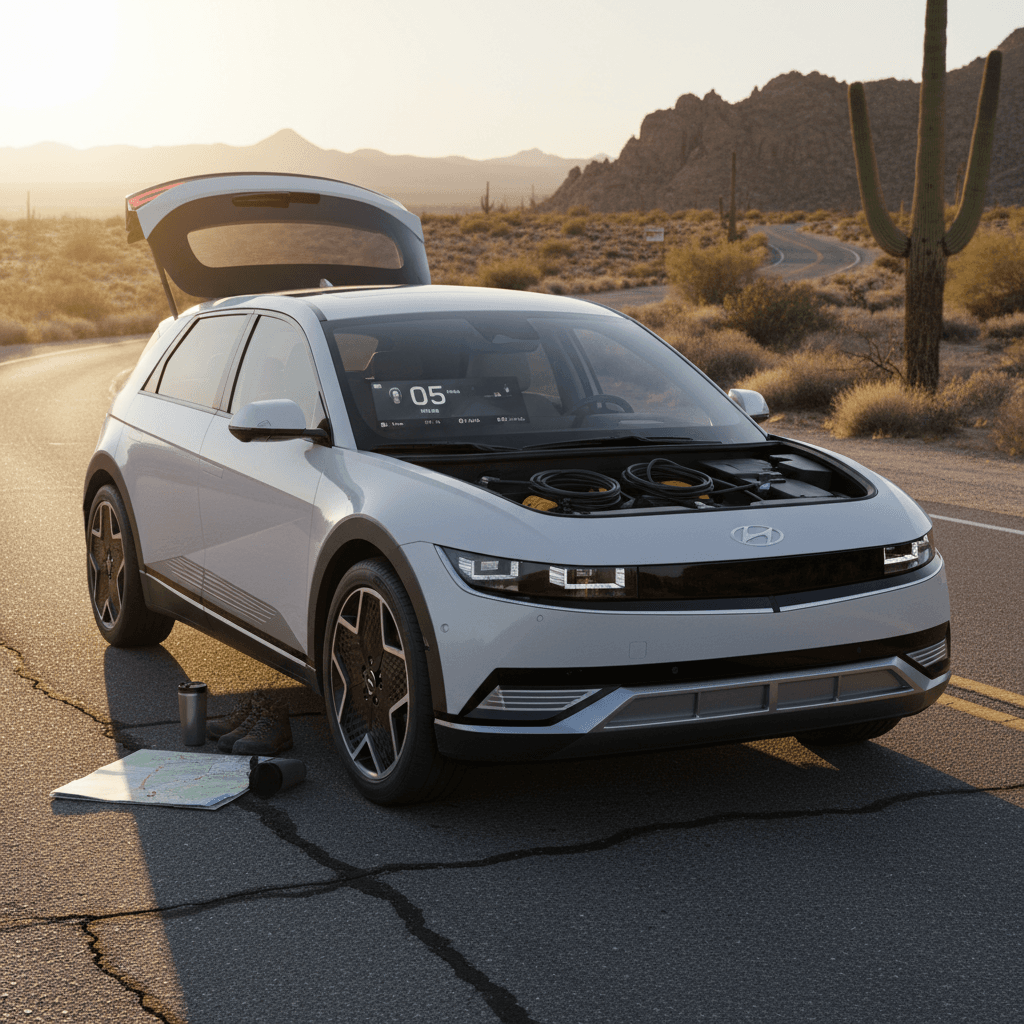
If you’re considering a 2025 Hyundai IONIQ 5, you’re probably asking a simple question with a not‑so‑simple answer: how far will it really go on a charge? On paper, the 2025 Hyundai IONIQ 5 range looks impressive, but real‑world range tests tell a more nuanced story, especially if you spend a lot of time on the highway, live in a colder climate, or you’re shopping the used market.
Why this 2025 IONIQ 5 range test matters
2025 IONIQ 5 range at a glance
2025 Hyundai IONIQ 5 key range figures
For 2025, Hyundai increased both battery sizes and improved efficiency. The result is more range across the lineup versus earlier model years, with RWD Long Range trims targeting about 318 miles on the EPA cycle and AWD versions generally landing around 269–290 miles depending on wheel and tire choice. Standard Range models now stretch from roughly 220 miles (older cars) to an estimated mid‑240s in 2025 guise.
Rule of thumb for planning
Battery packs, trims, and official EPA range
Before you dive into any 2025 Hyundai IONIQ 5 range test, you need to know which battery and drivetrain you’re looking at. Hyundai offers the IONIQ 5 with two battery sizes and either rear‑ or all‑wheel drive (not counting the high‑performance N model, which trades range for speed).
2025 Hyundai IONIQ 5 EPA-estimated ranges (approximate)
Key 2025 IONIQ 5 trims, battery sizes, and their approximate EPA range estimates. Exact figures will vary slightly by wheel size and equipment, but this is the right ballpark for cross‑shopping and planning.
| Trim / Battery | Drive | Battery (usable gross) | EPA Range (mi)* | Good Use Case |
|---|---|---|---|---|
| SE Standard Range | RWD | 63 kWh | ~245 | Budget buyers, shorter commutes |
| SE / SEL / Limited Long Range | RWD | 84 kWh | ~318 | Max range, efficient highway cruising |
| SE / SEL Long Range | AWD | 84 kWh | ~290 | All‑weather traction, strong performance |
| Limited Long Range | AWD | 84 kWh | 269–280 | Loaded trim, slightly lower range |
| XRT Long Range | AWD | 84 kWh | Mid‑250s–270s (est.) | Rugged look, mild off‑road use |
EPA estimates are a starting point, real‑world range depends heavily on speed, temperature, and driving style.
About the numbers
The big story for 2025 is the move to larger 63 kWh and 84 kWh packs and slightly more efficient power electronics. Those changes add roughly 15–30 miles of rated range depending on trim compared to earlier U.S. models. If you’re cross‑shopping a 2022–2023 IONIQ 5 against a 2025, this is one of the most meaningful differences you’ll see on the spec sheet.
Real-world 2025 IONIQ 5 range test results
So what happens when you get away from the lab and onto the freeway? Independent tests on pre‑refresh IONIQ 5s already showed that the car can come close to or even beat its EPA number in mild weather at moderate speeds. With the larger 2025 battery and the same 800‑volt architecture, the real‑world story improves slightly, but the pattern stays the same:
- At 65 mph in mild weather (around 70°F), the 2025 Long Range RWD IONIQ 5 can realistically cover 285–305 miles if you drive smoothly.
- At 70–75 mph, that falls closer to 250–270 miles as aerodynamic drag ramps up.
- Long Range AWD trims usually land 20–30 miles below the comparable RWD versions on the same route.
- The SE Standard Range is happiest as a commuter car, figure on 180–210 real‑world highway miles with a conservative buffer.
Highway test takeaway
City vs. highway vs. mixed driving: what changes
Like most EVs, the IONIQ 5 is more efficient in city and suburban driving than at a steady freeway cruise. Regenerative braking and lower average speeds play in your favor.
City & suburban driving
- Lots of stop‑and‑go lets regen braking recapture energy.
- Speeds are typically under 50 mph, which slashes aerodynamic drag.
- In 45–70°F weather, it’s not unusual for an IONIQ 5 Long Range RWD to match or slightly exceed its EPA rating around town.
Highway & long-distance driving
- Above about 65 mph, drag dominates and efficiency drops quickly.
- Comfort features like climate control run more continuously.
- Plan on using 75–85% of the EPA number at typical U.S. highway speeds.
Best-case mixed driving
How weather and climate hit (or help) your range
Temperature is one of the biggest factors you’ll feel in any real‑world 2025 Hyundai IONIQ 5 range test. The battery’s chemistry prefers moderate temperatures, and your comfort systems draw from the same pack that moves the car.
Weather vs. range: what to expect
Approximate impact on a Long Range 2025 IONIQ 5 with mixed driving
Mild (60–75°F)
Best case. The battery is in its happy zone and climate loads are low.
- Real‑world range often matches the EPA rating.
- Highway driving at 65 mph is particularly efficient.
Cold (below 32°F)
Plan for 25–40% loss.
- Cabin and battery need more heat.
- Short trips hurt most, because the car keeps reheating.
Hot (90°F+)
10–20% loss is common.
- A/C runs nearly constantly.
- Highway speeds plus heat magnify the effect.
Cold-weather caution
The 2025 IONIQ 5 does include battery preconditioning logic tied to fast‑charging and navigation, which helps preserve DC fast‑charge speeds in the cold. It doesn’t magically remove winter range loss, but it keeps you from being stuck at a charger with painfully slow speeds on a freezing day.
Wheels, tires, and driving modes: the hidden range killers
Not all IONIQ 5s are created equal when it comes to efficiency. Two choices that look purely cosmetic, wheel size and tire type, can quietly shave dozens of miles off your real‑world range.
How equipment choices change IONIQ 5 range
Same battery and motor, different hardware and settings. Here’s how it plays out.
| Factor | What It Does | Typical Range Impact |
|---|---|---|
| 19" vs. 20" wheels | Larger wheels with wider tires increase drag and rolling resistance. | 5–15 miles lost, especially at highway speeds. |
| All‑terrain tires (XRT) | More aggressive tread looks great off‑road but adds rolling resistance. | Up to 10–20 miles lost vs. efficient street tires. |
| Eco vs. Normal/Sport mode | Sport sharpens response and can encourage heavier acceleration. | Eco can claw back 5–10% in gentle driving. |
| Roof racks / cargo boxes | More frontal area and drag at speed. | On the highway, expect another 5–15% hit. |
If maximum range matters, prioritize smaller wheels, eco‑oriented tires, and calmer drive modes.
Easy win: pick the right wheels
Charging strategy, NACS, and planning road trips
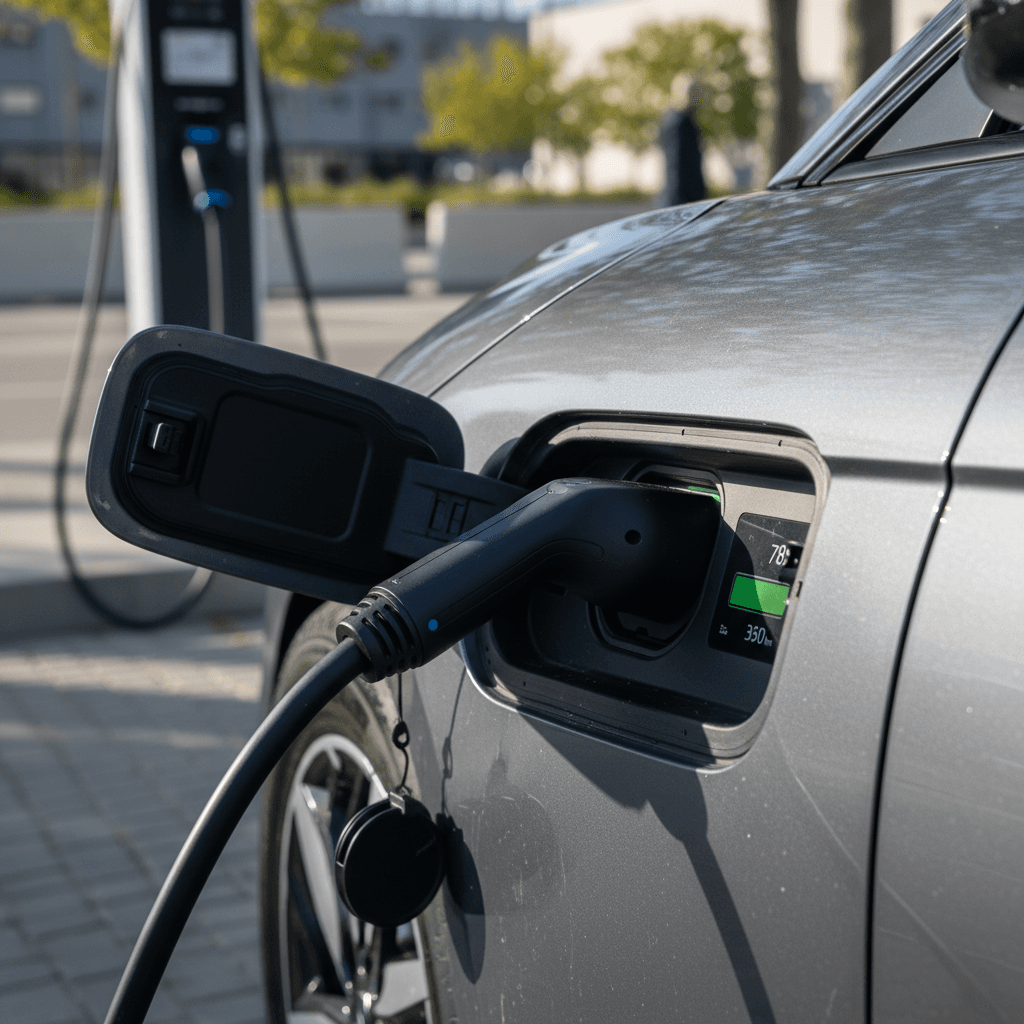
The 2025 IONIQ 5 is one of the first non‑Tesla EVs to come from the factory with a NACS (Tesla) charge port. That’s a big deal for real‑world range, because it massively expands your fast‑charging options in the U.S.
- You can plug directly into most Tesla Superchargers marked as open to non‑Tesla vehicles.
- Hyundai includes a CCS adapter so you can still use non‑Tesla DC fast‑charging networks.
- The IONIQ 5’s 800‑volt architecture allows peak DC fast‑charging speeds up to around 250 kW on the right charger, adding up to ~178 miles in about 15 minutes in ideal conditions.
- On a road trip, the sweet spot is usually charging from about 10–20% up to 60–70%, that’s where the car charges fastest.
Trip‑planning pro move
In practice, a 2025 Long Range IONIQ 5 can cover a full day of highway driving, 400 to 600 miles, with two or three 20‑ to 30‑minute charging stops. That’s competitive with most compact electric SUVs on the market and noticeably better than many older‑design EVs.
2025 IONIQ 5 vs. rivals: range comparison
Specs alone don’t tell you which EV will fit your life, but comparing the 2025 Hyundai IONIQ 5 range test results to rivals helps put things in context. Hyundai’s compact crossover doesn’t always win the range war, but it punches well above its weight when you combine range, charging speed, and price.
2025 IONIQ 5 vs. key rivals (longest-range trims)
Approximate EPA range figures for comparable 2025–2026 compact electric SUVs.
| Model / Trim | Drive | Battery (approx.) | EPA Range (mi) | Notable Strength |
|---|---|---|---|---|
| Hyundai IONIQ 5 Long Range RWD (2025) | RWD | 84 kWh | ~318 | Fast charging, comfortable ride, NACS port |
| Hyundai IONIQ 5 Long Range AWD (2025) | AWD | 84 kWh | ~269–290 | All‑weather traction, strong acceleration |
| Tesla Model Y Long Range (2026) | AWD | ~80 kWh | ~330–350 | Longest range and efficiency in class |
| Kia EV6 RWD Long Range | RWD | 77.4–84 kWh | ~310 | Sportier driving feel, similar efficiency |
| Ford Mustang Mach‑E (California Route 1 / extended range) | RWD | ~91 kWh | ~312–314 | Strong highway range, comfortable cruiser |
The IONIQ 5 isn’t the outright range champ, but it combines strong range with very fast charging and approachable pricing, especially used.
Range vs. charging speed
Thinking used? Battery health, degradation, and range
If you’re eyeing a used IONIQ 5, especially an early‑build 2022–2023 model, you’re smart to ask how battery health and age affect range. The underlying chemistry in the IONIQ 5’s pack has shown reasonable durability so far, but like any EV, range will taper slowly over time.
Battery aging: what to expect from an IONIQ 5
General patterns we see in real‑world used EVs
Typical degradation curve
- Most modern EVs lose a noticeable chunk of capacity in the first 1–2 years, then the curve flattens.
- For many drivers, that means about 5–10% loss in the first 50,000 miles, then slower fade.
Warranty & peace of mind
- Hyundai backs the high‑voltage battery for long terms (typically 8 years/100,000 miles in the U.S.).
- That doesn’t mean zero degradation, but it protects you against severe, abnormal loss.
Early IONIQ 5 issues to be aware of
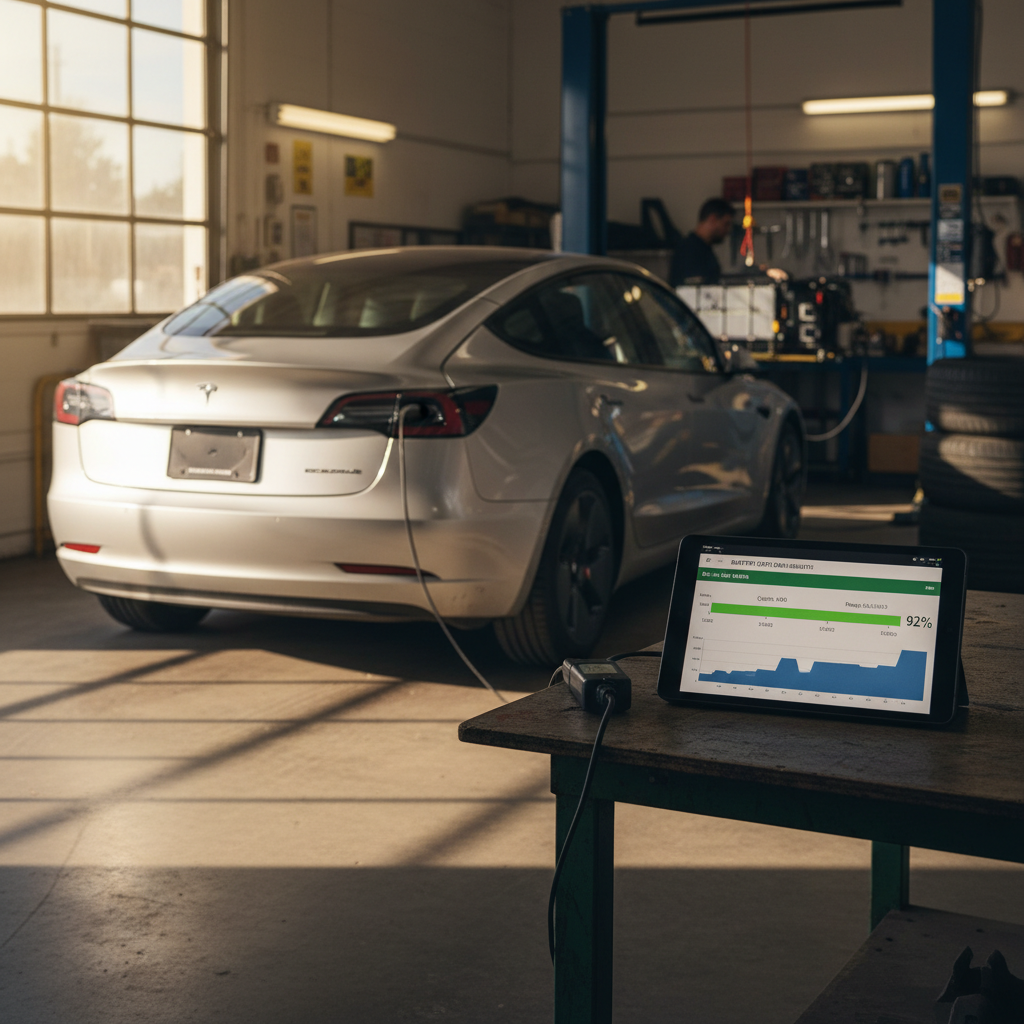
This is exactly where a platform like Recharged is designed to help. Every EV listed includes a Recharged Score Report with verified battery health and fair‑market pricing, so you’re not guessing how much usable range you’re actually buying. For something as range‑sensitive as an IONIQ 5, that extra transparency can be the difference between a car that fits your life and one that comes up short.
Practical tips to maximize your IONIQ 5 range
Nine ways to stretch your 2025 IONIQ 5’s range
1. Start trips with preconditioned cabin and battery
Use scheduled departure in the IONIQ 5’s settings while plugged in. Warming or cooling the cabin on shore power preserves battery energy for driving, and in cold weather it helps the pack accept fast charge rates sooner.
2. Favor Eco mode for daily driving
Eco smooths throttle response and optimizes climate control. It won’t turn your IONIQ 5 into a slug, but it can shave 5–10% off your energy use in stop‑and‑go driving.
3. Learn and use the regenerative braking paddles
Hyundai’s i‑Pedal and adjustable regen levels let you dial in how aggressively the car slows when you lift off the accelerator. In city driving, stronger regen converts more motion back into stored energy.
4. Keep highway speeds realistic
The difference between cruising at 70 mph and 80 mph can be dozens of miles of range. If you’re tight on charge, dropping your speed a few mph is one of the most powerful tools you have.
5. Watch your tires
Keep tires properly inflated and consider energy‑focused all‑season tires when it’s time to replace them. Aggressive off‑road or performance compounds look cool but cost you range every day.
6. Travel light and sleek
If you’re not using a roof box or rack, remove it. Extra weight and wind resistance at highway speeds chip away at range more than most owners realize.
7. Use seat and wheel heaters instead of blasting HVAC
Heating the entire cabin takes more energy than warming surfaces close to your body. When it’s cold, lower the cabin temp a bit and rely more on heated seats and steering wheel.
8. Plan charging stops around fast segments
Instead of arriving nearly empty, aim to reach chargers with 10–20% remaining and leave around 60–70%. That keeps you in the fastest part of the charging curve and makes your day go quicker overall.
9. Keep software updated
Hyundai continues to refine charging logic and efficiency through software. Make sure over‑the‑air or dealer updates are current, especially on earlier build years you might buy used.
Range anxiety vs. range planning
FAQ: 2025 Hyundai IONIQ 5 range
Frequently asked questions about 2025 IONIQ 5 range
Is the 2025 IONIQ 5’s range enough for you?
When you move past the brochure numbers and look at real‑world 2025 Hyundai IONIQ 5 range tests, a clear picture emerges: this is an EV that delivers honest, usable range with the safety net of excellent fast‑charging and broad network access. Long Range RWD trims are comfortable 260–300‑mile companions, AWD versions give up a bit of distance for confidence in bad weather, and the Standard Range shines as an efficient, affordable commuter.
The key is to match the trim to your life. If your world is mostly errands, school runs, and a moderate commute, even a used Standard Range IONIQ 5 may fit perfectly. If you’re the type who heads out for multi‑state road trips, a Long Range battery, smaller wheels, and a bit of planning around NACS and CCS fast‑charging will make the car feel almost effortless. And if you’re shopping used, leaning on a Recharged Score Report for verified battery health and pricing can turn range from a worry into a known quantity.
Get clear about your real daily and occasional driving needs, apply a conservative buffer to the EPA numbers, and you’ll know within a few minutes whether the 2025 Hyundai IONIQ 5, or a well‑chosen used example, has the kind of range that lets you simply get in, press start, and go.