If you own, or are considering, a 2024 Tesla Model 3, you’ve probably heard that Tesla leads the industry in recall counts. That can sound alarming, but it doesn’t automatically mean your car is unsafe or that you’re in for endless service visits. This guide walks through the most important items on the 2024 Tesla Model 3 recalls list, explains how Tesla’s over‑the‑air (OTA) fixes work, and gives you clear next steps whether you already own one or you’re shopping the used market.
A quick reality check
Why 2024 Tesla Model 3 recalls matter
Recalls are not optional. When regulators or Tesla identify a defect that affects safety or compliance, the company has a legal obligation to notify owners and provide a free remedy. For the 2024 Model 3, most issues are software‑centric, warning icons, driver‑assistance behavior, and control systems, rather than classic mechanical failures, but they can still increase crash risk if you ignore them.
- They can affect core safety systems such as steering assist, brake warnings, or visibility of critical icons.
- Unrepaired recalls may reduce resale value and make a car harder to insure or finance.
- If you’re buying used, open recalls are one of the easiest ways to separate well‑maintained cars from neglected ones.
Don’t confuse investigations with recalls
Quick overview of major 2024 Model 3 recalls
2024 Model 3 recalls at a glance (U.S. market)
Because recall campaigns often span multiple model years, a 2024 Model 3 can be covered by recalls that were technically opened in late 2023 or early 2025. What matters is whether your VIN is included, not the calendar date printed on the NHTSA notice.
Detailed 2024 Tesla Model 3 recalls list
Below are the most important recall themes that either directly include 2024 Model 3 sedans or are highly relevant to any buyer looking at this model year. Exact NHTSA recall numbers and VIN ranges change by market, so always verify against Tesla’s app or the NHTSA lookup tool.
Core 2024 Tesla Model 3 recall campaigns (U.S.)
Representative campaigns that can affect 2024 Model 3 vehicles in the U.S. market. Not every 2024 VIN is covered by every campaign.
| Recall theme | Approx. campaign timing | Likely fix type | Systems affected | Key risk if ignored |
|---|---|---|---|---|
| Instrument cluster warning icons size/visibility | Early 2024 | OTA software update | Dashboard warning lights, tell‑tales | Drivers may miss critical warnings (brake, ABS, airbags), increasing crash risk. |
| Autosteer / Autopilot driver‑monitoring improvements | Ongoing from late 2023 into 2024 | OTA software update | Autosteer engagement, driver attention checks | System may be easier to misuse, raising the risk of crashes when drivers aren’t paying attention. |
| Steering assist / power‑assist behavior (selected 3/Y) | 2024–2025 | Mix of OTA and possible component replacement | Steering feel, unexpected loss or change in assist | Heavier steering or unexpected changes in effort, which can surprise drivers and lead to loss of control. |
| Control unit / infotainment short‑circuit protection (select 2024–2025 builds) | Early 2025 | OTA software update and/or service inspection | Vehicle computer, rear camera display, driving aids | Loss of rear‑view camera and other displays, hurting visibility when reversing. |
| Regional campaigns (e.g., Japan/Europe spec details) | 2024–2025 | OTA update or localized service | Market‑specific safety or compliance items | Varies by country, often label or software‑configuration issues. |
Use this table as a starting point, then confirm open recalls by running your specific VIN.
Why this list isn’t “every single” recall number
1. Warning‑light readability and instrument cluster behavior
One high‑profile 2024 Tesla recall covered millions of vehicles, including many Model 3s, because some warning icons on the instrument cluster were too small to meet U.S. rules. This sounds trivial, but those icons communicate critical information about braking, airbags, or system failures. For most 2024 Model 3 owners, the remedy was an OTA software update that increased the symbol size and contrast.
Good news for owners
2. Autosteer / Autopilot driver‑misuse countermeasures
After years of pressure from regulators, Tesla has been forced to tighten how Autosteer and related driver‑assistance features supervise the driver. The big December 2023 campaign formally targeted earlier model years, but the logic and follow‑on revisions carried into 2024‑build Model 3s as well. Subsequent updates have continued to tweak how often the car nags you to keep hands on the wheel, where Autosteer will engage, and how quickly it disengages when conditions are outside the system’s design envelope.
- More frequent or stricter steering‑wheel torque checks.
- Clearer visual and audible alerts if your attention wanders.
- Changes to where Autosteer is allowed to activate (for example, limited on certain city streets).
Don’t treat recalls as “making Autopilot full self‑driving”
3. Steering assist behavior and defect probes
Throughout 2024, regulators logged thousands of complaints about stiff or inconsistent steering in Model 3 and Model Y vehicles. That prompted defect investigations and, for a subset of cars, recall campaigns aimed at addressing power‑assist behavior and potential component issues. A 2024 Model 3 built for the U.S. market may be under one of these campaigns depending on build date and steering component lot.
- Some cars receive an OTA software update that changes how assist is delivered.
- Others may require a steering rack or related hardware inspection at a Tesla service center.
- In rare cases, components are replaced if they fall within a suspect batch.
Red flags to take seriously
4. Control‑unit and camera display protection
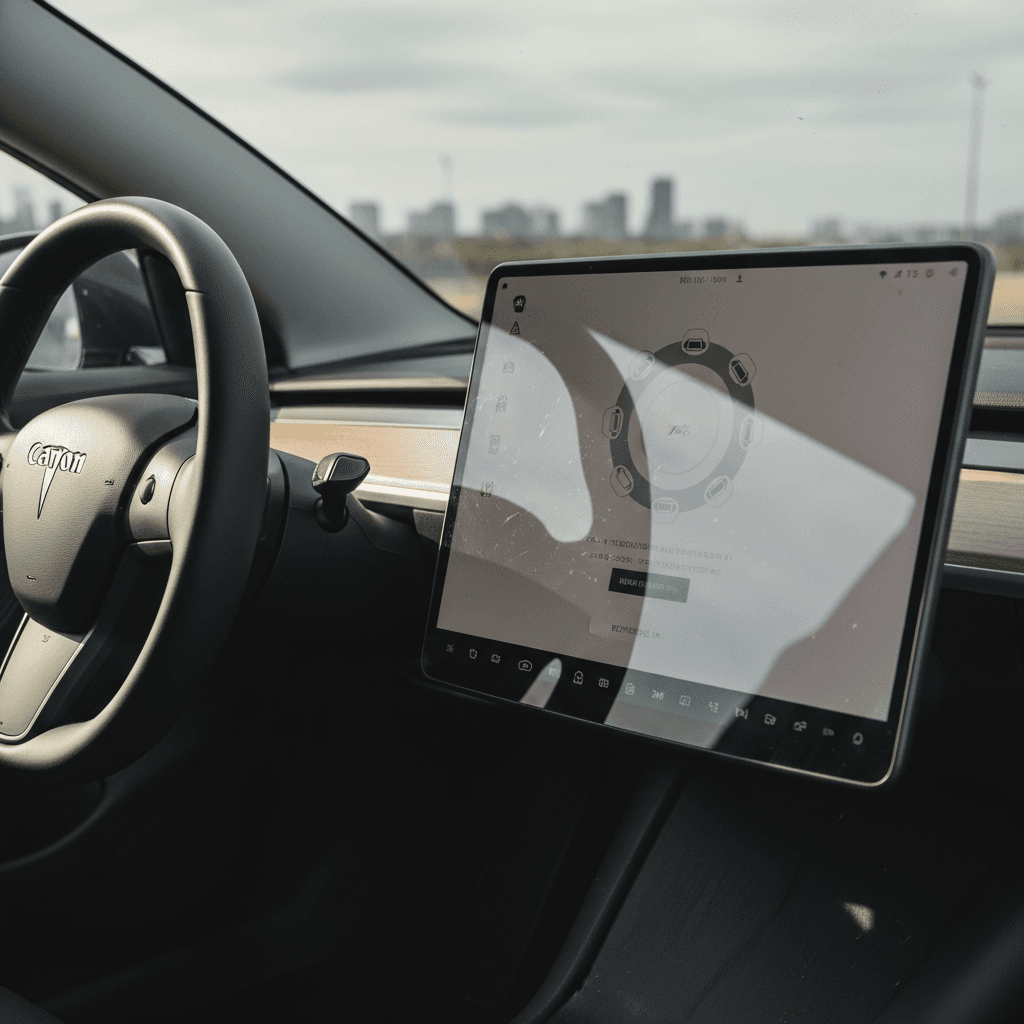
In early 2025, Tesla disclosed that certain 2024–2025 Model 3 vehicles could experience short‑circuit risks in the vehicle computer, potentially knocking out the center display and rear‑view camera. That’s a big problem in a car that relies on screens for everything from climate to visibility. The fix combines an OTA software patch, adjusting power‑management behavior, with inspections or hardware changes on affected VINs.
If you’re shopping a used 2024 Model 3, verify that the car has up‑to‑date software and ask for documentation showing that any control‑unit or display‑related recalls were addressed.
5. Regional and non‑U.S. 2024 Model 3 recalls
Outside the U.S., 2024 Model 3 sedans have been subject to additional, often smaller campaigns, especially in markets like Japan and the EU where regulators sometimes issue market‑specific notices for labeling, lighting, or localized software‑configuration issues. If you’re importing a car or buying one that spent time overseas, run the VIN through both local databases and Tesla’s own tools rather than assuming U.S. recall coverage tells the whole story.
Open investigations that could become recalls
Separate from formal recalls, NHTSA has ongoing engineering analyses into Full Self‑Driving (FSD) / FSD Supervised behavior, particularly in reduced‑visibility conditions like fog or sun glare, and various steering‑related complaints. Those probes cover vehicles up through the 2024 model year, including the Model 3. They could still result in additional recall campaigns affecting 2024 builds.
Investigation vs. recall: what’s the difference?
Understanding the alphabet soup can keep you ahead of potential issues.
Investigation (PE, EA)
Regulators gather data, complaints, and technical info. Your car may or may not have a problem, no fix is ordered yet.
Recall campaign
NHTSA and/or Tesla conclude there’s a safety defect. Tesla must notify owners and provide a free remedy, often via OTA.
Service action / TSB
Technical service bulletins (TSBs) or service campaigns may address issues that aren’t legally recalls but are still worth resolving.
Practical move for owners
How Tesla recalls work: OTA vs. service visits
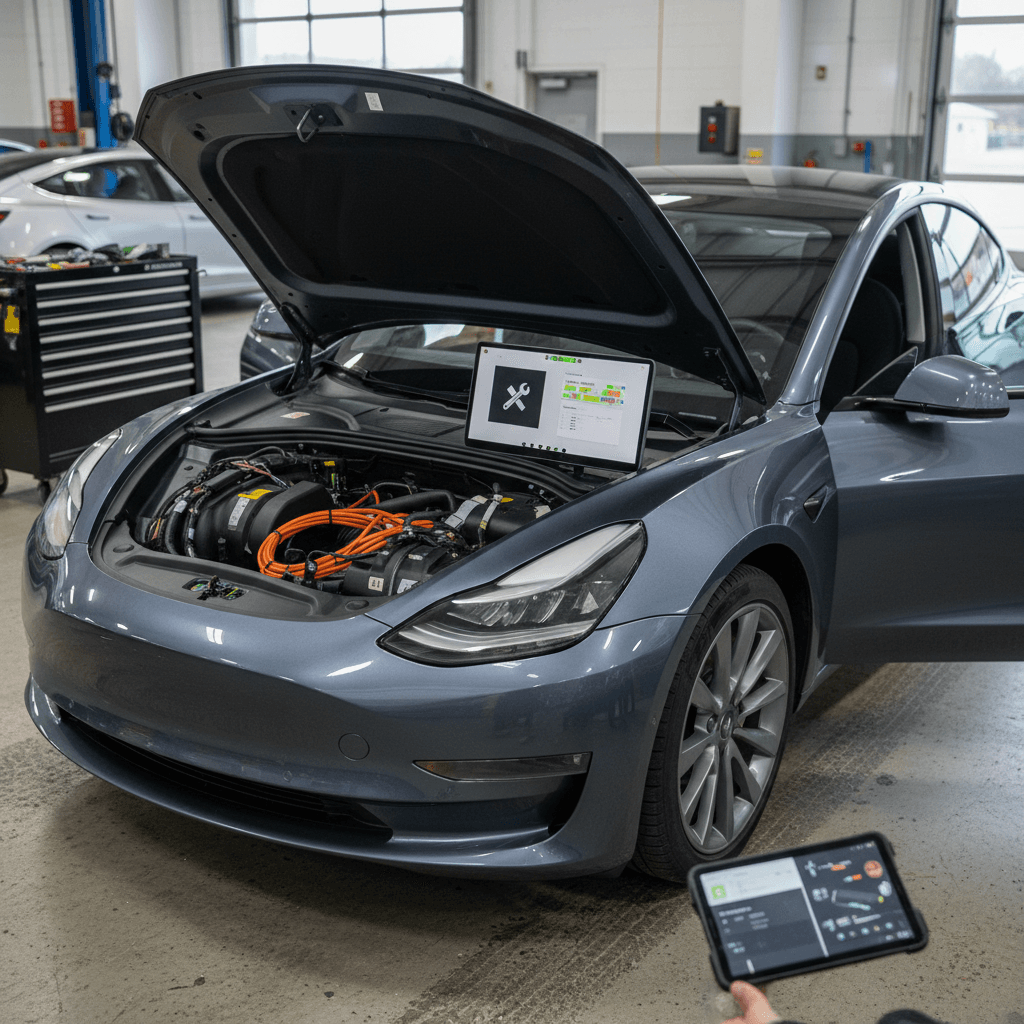
Over‑the‑air (OTA) recall fixes
- Download and install via Wi‑Fi or cellular, similar to a phone update.
- Usually take 10–20 minutes of parked time; you pick when to install.
- Common for software logic, warning‑light behavior, and Autosteer updates.
- No physical appointment or downtime beyond installation window.
Service‑center recall fixes
- Required when hardware must be inspected or replaced.
- Scheduled through the Tesla app; mobile service sometimes available.
- Typical for steering components, sensors, or physical wiring checks.
- Work is free, but you may be without the car for part of a day.
How you’ll know a recall applies
How to check if your 2024 Model 3 has open recalls
Step‑by‑step: confirm your 2024 Model 3 recall status
1. Grab your VIN
Your 17‑character VIN is visible at the base of the windshield on the driver’s side, on the door jamb label, and inside the Tesla app.
2. Check in the Tesla app
Open the Tesla app, tap your vehicle, and look for any <strong>Safety</strong> or <strong>Recalls</strong> section. If an OTA recall is pending, you’ll either see a notification or a specific software update labeled as a safety recall.
3. Run your VIN on NHTSA.gov
Go to NHTSA’s official recall lookup tool, enter your VIN, and confirm whether any <strong>open safety recalls</strong> remain. Closed recalls won’t appear here, so this is a good final safety net.
4. Confirm software is current
On the car’s touchscreen, go to <strong>Controls → Software</strong> and check for pending updates. If your car hasn’t installed updates in months, you might be sitting on an un‑applied recall fix.
5. Screenshot or save documentation
If you see recall notices or completion messages, grab screenshots or PDFs. They’re handy for future resale and for your own records.
Keep a simple recall log
Used 2024 Model 3: what shoppers should do
For used buyers, recalls aren’t a reason to avoid a 2024 Model 3; they’re an opportunity to judge how disciplined the previous owner was about maintenance and software updates. A well‑cared‑for car will typically have all recall campaigns closed and be running current software.
Smart recall checks before you buy a used 2024 Model 3
Protect yourself before signing anything, especially in a private sale.
Ask for the VIN early
Run the VIN through NHTSA’s recall lookup and confirm there are no open campaigns. If there are, ask the seller to resolve them before purchase.
Check in‑car software status
Sit in the car, open Controls → Software, and look for pending updates. A backlog of missed updates can be a red flag.
Request service history
Ask the seller for Tesla service invoices or screenshots from the app showing that recall work has been completed.
Test drive with attention to feel
On the drive, pay attention to steering weight, self‑centering, and whether Autosteer behaves consistently. Anything odd is worth a deeper look.
How Recharged handles recall checks
Ready to find your next EV?
Browse VehiclesHow recalls affect resale value and insurance
Tesla’s recall volumes sound scary in headlines, but for the 2024 Model 3 the market mostly distinguishes between unrepaired safety defects and properly updated cars. A car that shows all recalls closed and runs current software is far more attractive to buyers, lenders, and insurers than one that’s clearly been neglected.
Impact on resale value
- Open recalls can narrow your buyer pool and give shoppers leverage to negotiate price down.
- Cars with complete records, screenshots of closed recalls, documented service visits, and current software, tend to sell faster.
- Major structural or crash‑risk recalls (if they ever arise) could have a larger, lasting value impact than minor software fixes.
Impact on insurance and financing
- Most insurers focus on loss history and driver profile, not recall counts, but a car with unresolved safety defects may raise eyebrows.
- Lenders and leasing companies increasingly like to see verified maintenance and recall completion, especially for higher‑value EVs.
- Buying through a platform like Recharged, which surfaces recall and battery health status, can streamline underwriting and approval.
How Tesla’s OTA strategy changes the recall story
FAQ: 2024 Tesla Model 3 recalls
Frequently asked questions about 2024 Tesla Model 3 recalls
Bottom line on 2024 Model 3 recalls
The 2024 Tesla Model 3 sits at the intersection of software‑defined vehicles and old‑school safety regulation. That’s why you see so many headlines about recalls, and why a big share of those fixes are nothing more than carefully engineered software updates. For you as an owner or shopper, the real dividing line isn’t whether the car has ever been recalled, but whether those recalls have been properly resolved.
If you already own a 2024 Model 3, stay on top of updates, run your VIN through NHTSA’s tool once in a while, and document completed recall work. If you’re shopping used, treat recall and software history as part of the same due‑diligence process you’d use for any high‑tech asset. And if you’d rather not assemble all of that by yourself, looking at cars sold through Recharged, with a built‑in Recharged Score Report, battery‑health diagnostics, and expert EV support, can compress a lot of that homework into one transparent report.