If you’re eyeing a 2024 Rivian R1S, you’ve probably heard two things: owners adore it, and Consumer Reports treats Rivian’s reliability like a pop quiz the brand did not study for. The truth on the 2024 Rivian R1S reliability rating lives in the uncomfortable space between those two ideas, thrilling EV innovation wrapped in some still‑maturing quality control.
Quick verdict
Overview: 2024 Rivian R1S reliability rating in one glance
2024 Rivian R1S reliability at a glance
If you’re coming from a Toyota Highlander or Honda Pilot, the R1S’s reliability profile will feel edgy. If you’re coming from a first‑gen Tesla Model X, it may feel familiar: wildly capable, sometimes squeaky, occasionally needy, and supported by a young brand that’s still working out the kinks.
Key takeaway for shoppers
How the 2024 Rivian R1S reliability rating is actually measured
Before you can judge whether the 2024 R1S is “reliable,” you need to know what that word means in the hands of different organizations. Most of the headline reliability scores you see floating around the internet come from a small handful of sources, each with its own quirks.
- Consumer Reports gathers survey data from owners, then builds a predicted reliability score by tracking problems across 20+ trouble areas (from paint and trim to motors and electronics).
- JD Power looks more narrowly at problems per 100 vehicles within a given period, which can skew toward nuisance issues on tech‑heavy EVs.
- NHTSA and independent sites simply count hard events: recalls, technical service bulletins, investigations, and formal complaints.
- Independent analysts and lemon‑law firms slice all of this together into rankings like “cars to avoid” or “most reliable brands.”
Rivian, as a brand, currently sits near the bottom of Consumer Reports’ reliability rankings. That doesn’t mean every 2024 R1S is cursed; it means that, relative to established automakers, Rivian owners report more issues per vehicle, especially in areas like body hardware, electronics, and trim.
Consumer Reports, surveys and owner satisfaction
On paper, Rivian’s predicted reliability for the R1T and R1S is poor. In recent reliability round‑ups, Consumer Reports places Rivian near the bottom of 20‑plus brands, ahead only of a few legacy laggards. The R1T and R1S are flagged for above‑average issues in exterior hardware, in‑car electronics and body integrity.
Yet owner satisfaction tells a different story. In large EV‑owner surveys, Rivian drivers routinely give the brand top‑tier scores for comfort, styling, safety features and overall satisfaction. In one 2024 EV driver report, the R1S scored above 80 out of 100 on overall satisfaction, with especially strong marks for cargo space and safety feel. Many owners say, in effect, “Yes, it’s been in the shop, and yes, I’d absolutely buy it again.”
How to read these mixed signals
2024 R1S recalls, complaints and safety campaigns
For a brand‑new platform, a cluster of recalls isn’t surprising. The question is whether they’re catastrophic (battery fires, loss of steering) or more bureaucratic (labels, lighting). The 2024 R1S has seen a mix of both hard safety items and softer NVH or quality fixes.
Selected 2022–2024 Rivian R1S recalls and campaigns
This is not an exhaustive list, but it covers the types of issues affecting reliability perception for the 2024 model year.
| Issue type | Model years affected | What goes wrong | How it’s fixed | Impact on reliability perception |
|---|---|---|---|---|
| Headlight alignment / FMVSS 108 | 2023–2024 | Headlights may be misaligned, reducing visibility or dazzling other drivers. | Dealer adjusts or replaces components to bring headlights into spec. | Annoying but fixable; more about quality control than durability. |
| Airbag / label compliance | 2023–2024 | Airbag warning labels or instructions may not meet regulatory requirements. | Updated labels or documentation installed by service center. | Minimal practical impact, but adds to recall count. |
| Seat‑belt anchor bolts | 2022–2024 | Seat‑belt D‑ring bolts may not be torqued correctly. | Inspection and re‑torque or replacement of bolts. | Legit safety concern; a must‑fix, but once done, it’s not a chronic issue. |
| HVAC / A/C line noise | 2022–2024 | Customers report excessive cabin noise or vibration from A/C compressor and lines. | Rivian adds brackets, reroutes harnesses in a customer satisfaction campaign. | Impacts perceived quality and NVH, not fundamental safety. |
| Interior amplifier / sound system | 2022–2024 | Some vehicles built with incorrect amplifier; audio performance or noise issues. | Retrofit correct amplifier under service campaign. | Affects premium feel more than hard reliability. |
Always run the VIN through NHTSA’s recall checker before you buy any R1S, especially used.
Complaint and recall aggregators show a growing but still modest number of 2024 R1S complaints, mostly echoing what you see on owner forums: suspension noises, software warnings, HVAC quirks and occasional 12‑volt battery or air‑suspension faults. That’s typical first‑gen EV territory, annoying, sometimes trip‑ruining, but rarely life‑threatening.
Don’t ignore safety recalls
Most common 2024 Rivian R1S problems so far
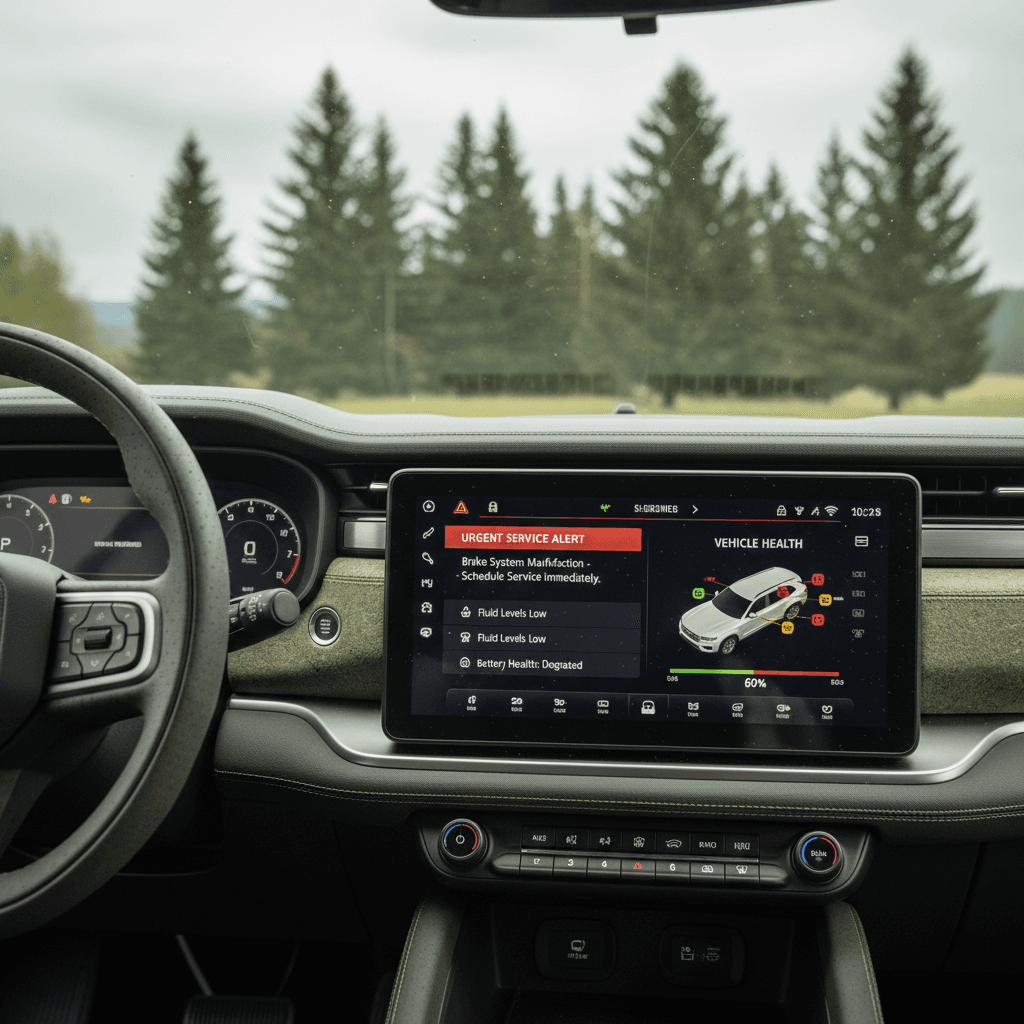
Where the 2024 R1S tends to misbehave
Based on owner reports, complaint data and early service campaigns.
Suspension noises & ride quality
Owners frequently report squeaks, clunks or chirps at low speeds, especially over driveways or speed bumps.
- Often traced to control‑arm bushings or links.
- Can reappear after simple lubes; real fix may require part updates.
- More common on early builds but not absent on 2024s.
HVAC & cabin noise
The R1S’s heat pump and A/C system have been the subject of service campaigns.
- Excessive compressor noise or vibration in the cabin.
- Occasional HVAC faults or reduced performance.
- Addressed with bracket retrofits, re‑routed lines and software updates.
Wind noise & body hardware
Some owners describe substantial wind noise around the driver’s door at highway speeds, plus occasional tailgate or door alignment tweaks.
- Door seals and window alignment are recurring service items.
- Not dangerous, but erodes luxury‑SUV expectations.
12‑volt battery and “brick” events
A minority of owners have had premature 12‑volt battery failures leading to no‑start or “vehicle needs service” warnings.
- Typically covered under warranty and handled by mobile service.
- Rivian has run service campaigns to proactively replace some units.
Center screen glitches & sensors
The R1S lives and dies by its screens.
- Intermittent reboots after over‑the‑air updates.
- Occasional stuck or false alerts from parking and driver‑assist sensors.
- Usually resolved with software patches, but can be unnerving.
Charging & DC fast‑charge quirks
Fundamental charging reliability is good, but:
- Occasional DC fast‑charging handshake failures at third‑party stations.
- Software updates have improved compatibility, but road‑trippers still report the odd stalled session.
Nothing in that list is unique to Rivian, early‑run Teslas and German luxury SUVs share similar war stories, but it does mean the R1S is not a low‑maintenance appliance. Expect the first year of ownership to include at least a couple of service appointments, even if they’re just to chase squeaks and software gremlins.
Battery and high‑voltage reliability on the R1S
Here’s the good news: the scary, high‑dollar part of any EV, the drive battery, has been relatively drama‑free on the R1S so far. There are anecdotal reports of modules or packs being replaced under warranty, but no systemic rash of pack failures or thermal events specific to 2024 R1S models.
What Rivian guarantees
- Early data on R1S battery degradation suggests modest, Tesla‑like capacity loss over the first 50,000–80,000 miles when owners avoid chronic fast‑charging and high‑state‑of‑charge storage.
- Most high‑voltage issues reported for 2024s involve sensors, contactors or software logic rather than failed cells, problems that can often be fixed without replacing the entire pack.
- Rivian has issued over‑the‑air updates to improve thermal management and charging behavior, which should help long‑term health.
If you’re shopping used, the big questions are: How has this particular pack been treated? and What does its current health look like, not just its warranty coverage? That’s where third‑party diagnostics, like the Recharged Score battery health report, matter more than any brand‑level reliability score.
Software, infotainment and over‑the‑air fixes
The 2024 R1S is less a truck with a computer than a computer with a truck attached. Locks, lights, HVAC, drive modes, driver assists, almost everything routes through software. That’s fantastic when Rivian pushes a feature update overnight; it’s less charming when a new build leaves you with a Christmas tree of warnings.
Why software is a reliability blessing
- OTA fixes mean many bugs are squashed without a dealer visit.
- Rivian has already improved charging behavior, ride tuning and UI logic via updates.
- New features, like revised off‑road modes or enhanced driver aids, arrive post‑purchase, extending the vehicle’s sense of freshness.
Why it can feel like a curse
- Some updates have introduced temporary regressions: new warnings, sensor glitches or UI lag.
- Hard resets or service visits may be needed if an update goes sideways.
- Because everything runs through the screen, even minor bugs feel major.
Smart way to live with OTA updates
What this reliability picture means if you’re buying a used R1S
On the used market, the 2024 R1S is the automotive equivalent of a high‑performance startup, big upside, a few rough edges, and a story your neighbor’s Camry will never have. The trick is separating a well‑sorted, updated truck from one that’s still working through first‑owner teething pains.
Pros and cons of a used 2024 Rivian R1S
Why some buyers should run toward it, and a few should walk away.
When a used R1S makes sense
- You want a three‑row EV with real off‑road chops and you’re willing to tolerate some service visits.
- You value long‑term software support and OTA improvements more than bulletproof simplicity.
- The specific vehicle shows clean service history, completed recalls and healthy battery diagnostics.
When you should avoid it
- You need set‑and‑forget reliability with minimal downtime (rideshare, rural, one‑car household).
- You don’t live near a Rivian service center or mobile coverage zone.
- The truck’s history is patchy: repeated no‑start events, unresolved suspension noise, or open seat‑belt/headlight recalls.
In short: a sorted 2024 R1S with documented fixes, completed campaigns and a strong battery report can be a fantastic used buy. A mystery‑history truck with warning lights in the photos? That’s someone else’s adventure.
How Recharged evaluates 2024 Rivian R1S reliability
Because Rivian is still so new, the usual shorthand, brand reputation, decade‑long data sets, doesn’t tell you much. At Recharged, we lean on vehicle‑specific data instead of vibes. Every Rivian R1S we list goes through a structured evaluation that feeds into its Recharged Score Report.
- Battery health diagnostics: We run high‑voltage diagnostics to estimate usable capacity and check for fault codes, rather than just trusting range estimates on the dash. That report lives inside the Recharged Score, so you see how this pack compares to similar‑age R1S models.
- Charging behavior checks: We verify that AC and DC fast‑charging work properly, check for handshake issues, and confirm the vehicle takes a reasonable rate at Level 2 and DC stations.
- Recall and campaign status: We pull the VIN against recall databases and confirm whether headlight, seat‑belt, HVAC and other campaigns have been completed, or we get them done before the vehicle is delivered.
- Suspension and NVH inspection: Our inspectors listen for the trademark Rivian squeaks, clunks and chirps at low speeds and over broken pavement, then document any findings and recommended fixes.
- Software and feature functionality: We verify that screens, cameras, driver‑assist systems and key vehicle settings behave correctly on the current software build.
- Fair‑market pricing: Because Rivian resale is still volatile, we benchmark each R1S against national transaction and listing data to price it fairly for its condition, mileage and equipment.
Why this matters more than a single score
Ready to find your next EV?
Browse VehiclesPre‑purchase checklist for a 2024 Rivian R1S
11 things to do before buying a 2024 R1S
1. Run the VIN for recalls
Use NHTSA’s online tool or ask the seller for a printout showing that headlight, seat‑belt, airbag‑label and HVAC campaigns are completed. Open recalls should be a condition of sale.
2. Verify battery warranty start date
Confirm the in‑service date so you know exactly how much of the <strong>8‑year/175,000‑mile</strong> high‑voltage warranty is left. A late‑registered 2024 can give you several extra years of coverage.
3. Get a real battery health report
Don’t rely on the dash range alone. Ask for third‑party diagnostics, such as a Recharged Score report, showing estimated usable capacity and any pack‑related fault codes.
4. Inspect suspension for squeaks and clunks
During the test drive, crawl over speed bumps and broken pavement with the windows down. Note any chirps, clunks or groans from the front or rear, then get them checked.
5. Check for wind noise and door alignment
At 60–70 mph, listen for loud wind rush near the driver’s door or A‑pillar. Inspect door seals, window alignment and tailgate fit; misalignment is fixable but should be documented.
6. Stress‑test screens and controls
Spend time living in the UI: adjust climate, drive modes, seat settings, navigation, audio. Look for freezes, reboots or unresponsive touch areas.
7. Confirm OTA update history
Ask the seller which software version the truck is on and when it last updated. A vehicle that’s missed several OTA updates may need a long service visit to catch up.
8. Test AC and heat thoroughly
Run HVAC on hot and cold settings while parked and driving. Listen for unusual compressor noise or vibration in the cabin; ask if any A/C or heat pump campaigns were performed.
9. Evaluate charging on Level 2
If possible, plug into a Level 2 station and confirm the vehicle charges at the expected rate. Watch for error messages or repeated disconnects.
10. Review service history
Ideally, you want records showing that early issues, 12‑volt battery alerts, sensors, trim fixes, were addressed under warranty, not ignored. Multiple repeat visits for the same concern are a red flag.
11. Consider your distance to service
Before you fall in love, map your nearest Rivian service center and confirm mobile service coverage. With any early‑generation EV, proximity to service is part of your reliability equation.
FAQ: 2024 Rivian R1S reliability questions, answered
Common questions about 2024 Rivian R1S reliability
Bottom line: Should you worry about 2024 R1S reliability?
If your definition of reliability is “gas, tires, oil changes and nothing else,” the 2024 Rivian R1S will disappoint you. It is an early‑generation, software‑dense luxury EV built by a young automaker; there will be recalls, and it will occasionally wake up on the wrong side of an over‑the‑air update.
But if your definition of reliability is broader, a vehicle that does what you bought it to do, with a manufacturer that stands behind it, the picture is less grim. Rivian has been unusually aggressive about fixing issues, extending campaigns and pushing updates, and owners routinely say they’d buy the R1S again, warts and all.
The smart play is not to chase a mythical perfect R1S. It’s to find one with documented fixes, a clean battery bill of health, completed campaigns and plenty of warranty left, then go enjoy the only seven‑seat electric adventure SUV that feels as at home at REI as it does in a valet line.
If you’d like help finding that needle‑in‑a‑haystack truck, Recharged exists for exactly this moment: used EVs that are brilliant, complicated and too new for traditional buyer’s guides. With transparent Recharged Scores, fair‑market pricing, financing and nationwide delivery, we can help you decide whether a 2024 Rivian R1S is the right kind of wild for your driveway.