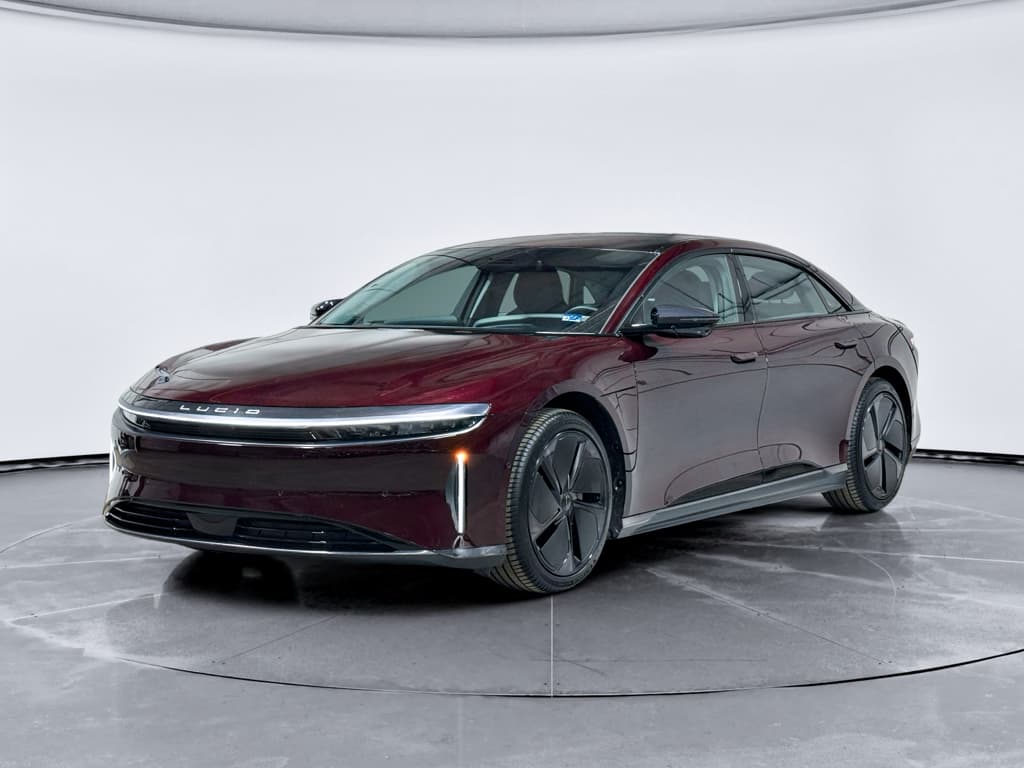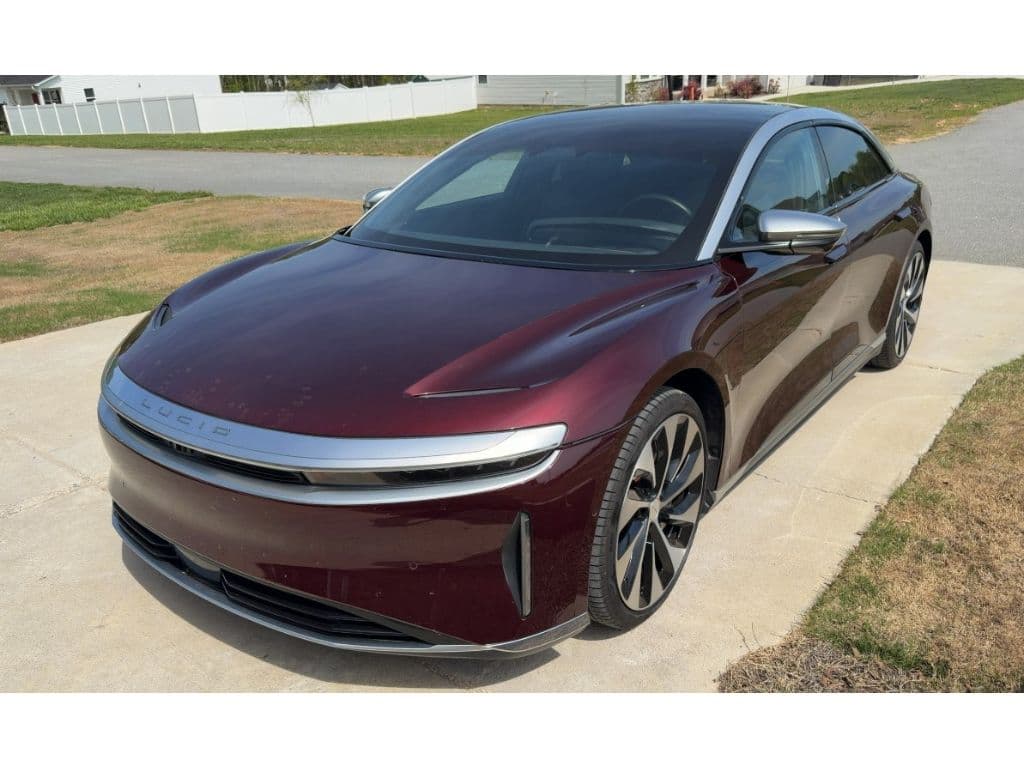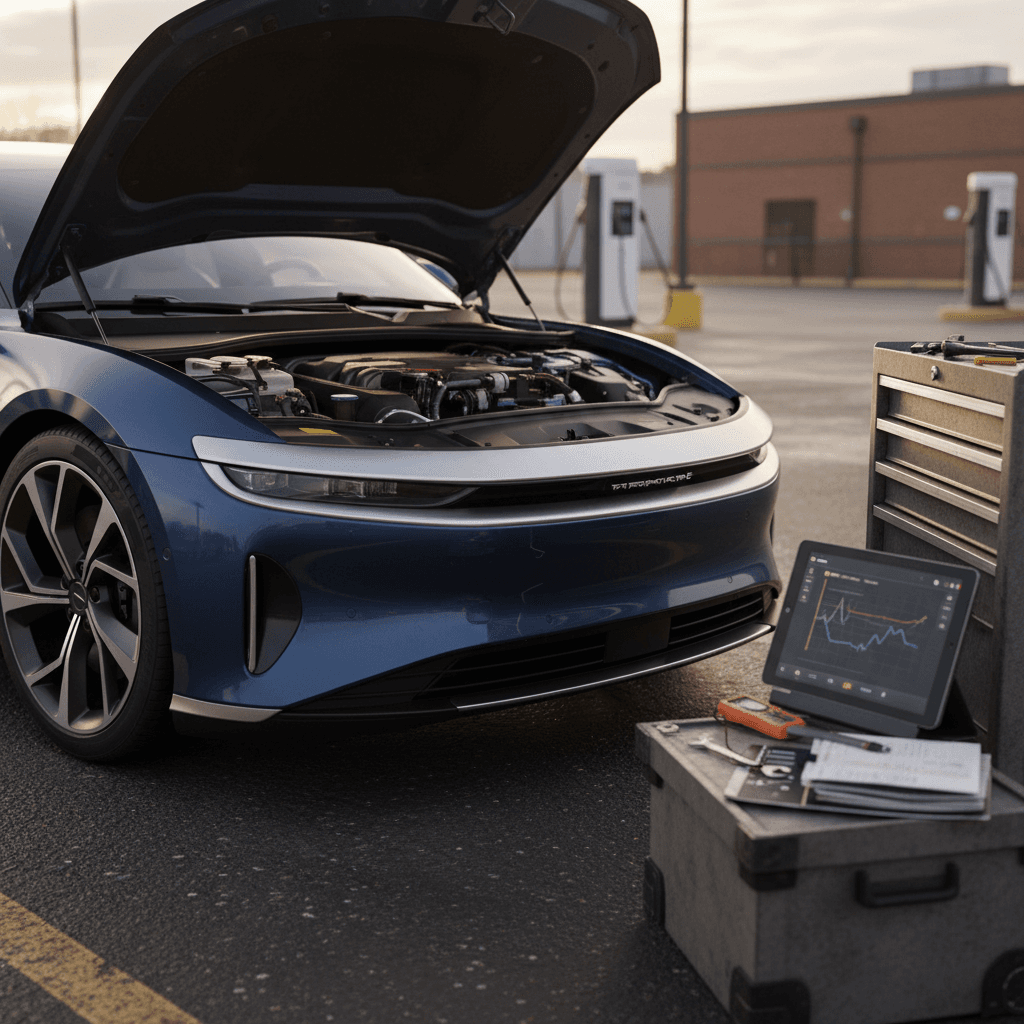
If you’re eyeing a 2024 Lucid Air, or already own one, it’s natural to wonder how many of the early Lucid headaches still apply. Search “2024 Lucid Air problems and fixes” and you’ll see everything from horror stories about bricked cars to owners who’ve driven tens of thousands of miles with only minor quirks. This guide cuts through the noise so you know what actually tends to go wrong on 2024 cars, what has been addressed by recalls, and what you can realistically fix or manage as an owner.
Big picture on 2024 Lucid Air reliability
2024 Lucid Air problems: what’s actually going wrong?
Public recall data and owner reports show a clear pattern: most 2024 Lucid Air issues cluster around software, electronics, and minor build quality, rather than catastrophic hardware failures. Think blacked‑out screens, glitchy key and app behavior, warning messages that clear with a reboot, and the occasional squeak, rattle, or misaligned panel.
Lucid Air issues snapshot (through early 2026)
None of this means every 2024 Air will be a problem child, far from it. Many owners report essentially trouble‑free experiences. But if you’re considering a used 2024, you need to understand which issues are annoyances you can live with, and which ones require dealer-level diagnostics or recall work before you sign anything.
Is the 2024 Lucid Air better than earlier years?
Where 2024 Air is clearly better
- Maturing software: Many of the worst early bugs (frequent reboots, unusable navigation, constant error chimes) are less common by 2024, thanks to multiple OTA cycles.
- Refined hardware: Later cars typically show fewer basic assembly issues, fewer loose trims, better panel alignment, and quieter cabins than some 2022–2023 builds.
- Improved charging behavior: DC fast‑charging logic and route planning have both seen meaningful updates since launch.
Where problems still linger
- Electronics gremlins: Owners of 2024–2025 cars still report occasional black screens, non‑responsive buttons, and random warnings that require a reboot or visit to service.
- Service and parts delays: Lucid’s small service footprint and parts pipeline can turn simple fixes into multi‑week visits, depending on your region.
- Recall hangover: Some 2022–2023 high‑voltage issues are still being chased via updated software, investigations, and follow‑up campaigns that may touch later builds.
Don’t generalize from 2022–2023 horror stories
Software and infotainment issues on the 2024 Lucid Air
If there’s a single defining problem area for the Lucid Air, especially 2024 cars, it’s software. Owners regularly report issues that don’t show up in traditional reliability surveys for legacy brands, because a software‑defined car like the Air can misbehave in ways that look minor on paper but feel major in daily use.
Most common 2024 Lucid Air software complaints
What owners describe, and what usually fixes it
Black or frozen screens
Instrument cluster or main infotainment screen goes dark, freezes, or shows a spinning wheel.
- Often fixed with a soft reset (steering‑wheel button combo).
- Sometimes requires a full power cycle or OTA update.
- Rarely, car needs a service visit if it won’t reboot.
Key, app, and lock glitches
Car fails to recognize key fob or phone key, doors don’t unlock, or the app can’t connect.
- Much improved on later software releases but still a hot topic among owners.
- Often resolved by re‑pairing keys, reinstalling the app, or applying the latest OTA.
Navigation and driver‑assist bugs
Navigation freezes mid‑route, or driver‑assist prompts/warnings don’t match road reality.
- Most issues clear with a reset or the next OTA.
- Persistent behavior usually requires a log pull and review by Lucid service.
Owner playbook for Air software weirdness
- Verify your 2024 Air is on the latest software release (check the car and the Lucid app).
- Perform a soft reset of the screen that’s misbehaving (following the procedure in the owner’s manual).
- If the issue persists, try a full vehicle sleep cycle by locking the car and leaving it undisturbed for 15–20 minutes.
- Open a case with Lucid support through the app or by phone and attach screenshots or video evidence.
- If you bought used, confirm that all past OTA campaigns and software‑based recalls have been successfully applied.
Powertrain, drivability, and high-voltage issues
Compared with some early recalls that involved sudden loss of power or high‑voltage contactor failures on 2022–2023 cars, the 2024 Lucid Air’s core powertrain has been relatively calmer. You still see occasional stories of drive‑system warnings or limp‑mode incidents, but they’re less common and more often tied to software logic, sensor readings, or thermal‑management software than to hardware breaking in half.
Common drivability complaints on newer Lucid Airs
Symptoms you might see on a 2024 Air and what they usually mean
| Symptom | What owners report | Likely cause | Typical fix |
|---|---|---|---|
| Drive system warning message | Yellow or red warnings about the drive system, sometimes with reduced power. | Sensor data or software interpretation issue; occasionally an HV component fault. | Pull over safely, reboot. If warning persists, schedule service; don’t ignore repeated alerts. |
| Unusual brake feel or noises | Clicks or scraping noises from brake pedal or front end, especially at low speeds. | Pad movement, regen‑to‑friction hand‑off behavior, or a loose/contaminated component. | Have service inspect brakes and front suspension; document conditions when it occurs. |
| Temporary power reduction | Car limits power output, especially after hard driving or repeated fast charges. | Battery or motor thermal limits, or conservative protection logic after software update. | Allow cool‑down, check for software updates; persistent behavior may need calibration at service. |
Always treat new noises, warnings, or performance changes as a reason to stop and assess before continuing your trip.
When to stop driving immediately
Build quality, noises, and trim problems
The 2024 Air doesn’t live in the same neighborhood as early‑2000s economy cars, but it’s also not the vault‑solid benchmark you might expect given its price. Owner reports point to inconsistent cosmetic quality control and a handful of recurring mechanical annoyances.
Typical 2024 Lucid Air build-quality complaints
Mostly annoying rather than catastrophic, but worth checking before you buy
Squeaks, clunks, and rattles
Noise from the front suspension over uneven pavement, or rattles near the dash and mirror area.
Often cured with revised fasteners, lubrication, or adjusted trim pieces at service.
Door & frunk alignment
Misaligned doors, inconsistent gaps, or frunks that don’t latch reliably (especially front passenger‑side latch).
Lucid can typically re‑align and adjust latches, but some cars require more than one attempt.
Interior fit and finish nits
Loose trim pieces, creaky center consoles, or small cosmetic defects in leather and stitching.
Most are addressable under warranty but can take time if parts need to be ordered.
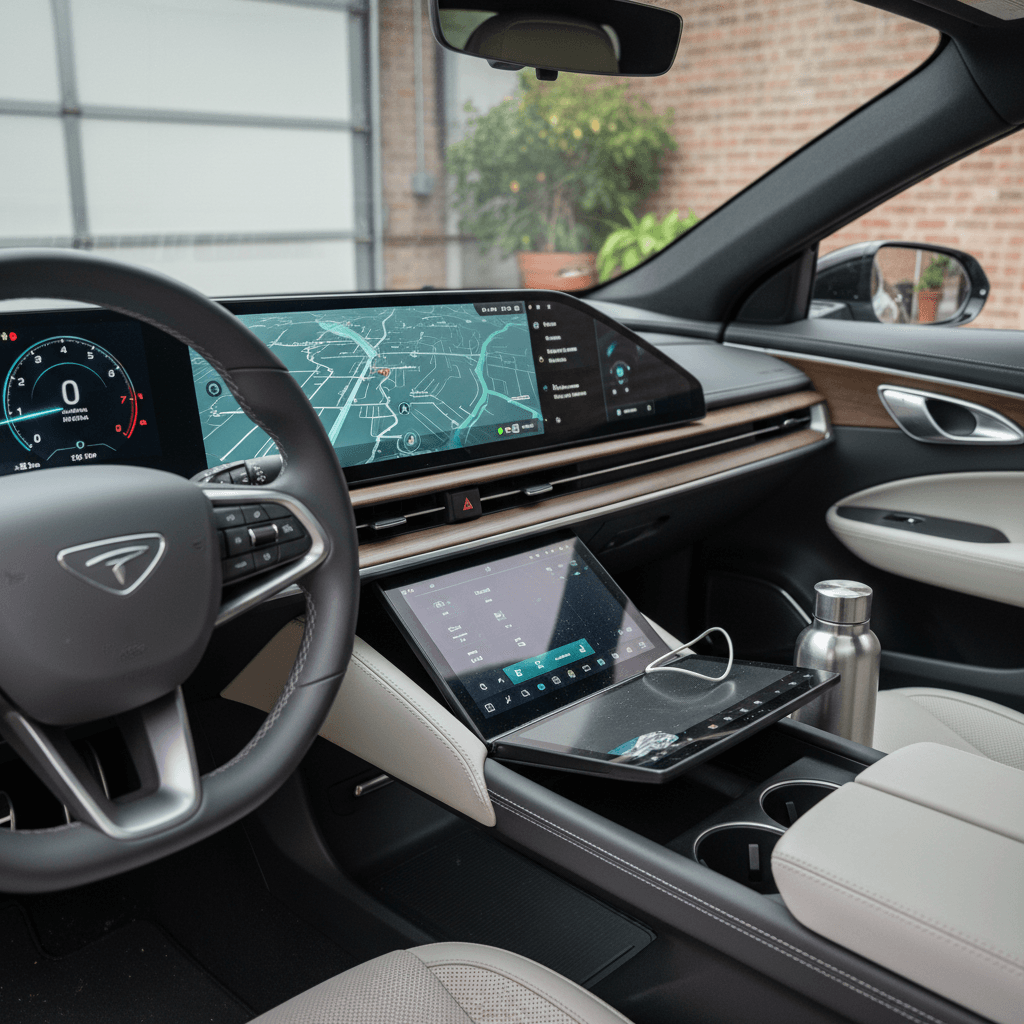
Quick driveway inspection for a used 2024 Lucid Air
1. Walk the body lines in good light
Look along both sides for waves, inconsistent panel gaps, or doors that sit slightly proud or recessed. Pay extra attention to the front hood and frunk area.
2. Open and close every closure
Cycle all four doors, trunk, and frunk multiple times. They should latch confidently without slamming or double‑pulls, and release smoothly from all buttons and inside handles.
3. Test for rattles on a rough road
On a test drive, find a patch of broken pavement. Listen for clunks from the front end, buzzes near the mirror, or creaks from the dash and console.
4. Inspect interior trims and stitching
Gently press on door panels, dash trim, and console surfaces. Look for loose pieces, popped clips, or obvious cosmetic defects Lucid hasn’t yet addressed.
Charging, range, and battery-related quirks
The 2024 Lucid Air remains one of the most efficient EVs on sale, and its huge battery options mask a lot of small sins. But owners do report a few recurring charging and range behaviors you should understand going in.
Charging and range issues 2024 Air owners talk about
Most aren’t defects, but they can surprise first-time EV drivers
DC fast-charging inconsistency
Some owners see slower‑than‑expected charging speeds or early tapering, especially in cold weather or at non‑preferred networks.
- Precondition the battery when navigating to a charger.
- Use stations known to play nicely with Lucid’s hardware and software.
- Make sure your car has the latest charging firmware.
Range estimates that swing
The Air’s range estimator (like most EVs) is sensitive to your last few drives, speed, and climate control use.
Use the energy graph and consumption view rather than fixating on the raw miles, and expect lower range at 75+ mph or in deep winter.
High-voltage heater and defrost issues
Key recalls that can affect a 2024 Lucid Air
Lucid’s recall history is complex because multiple campaigns span 2022 through 2024 model years. For a 2024 Air, the main themes are high‑voltage safety (interlock and contactors), defroster performance, and traction‑battery software calibrations that can reduce power to protect the pack.
Major recall themes touching 2024 Lucid Airs
Exact applicability depends on VIN, build date, and configuration. Always verify with NHTSA and Lucid before purchase.
| Recall theme | Affected years | Risk if ignored | Owner remedy |
|---|---|---|---|
| High-voltage interlock / contactors | Primarily 2022–2023, with some campaigns opened or updated in 2024 | Sudden loss of motive power, car may not start or may shut down while driving in rare cases. | OTA software plus hardware inspection/repair at Lucid service if needed. |
| High-voltage coolant heater / defrost | 2022–2024 coverage in multiple actions and investigations | Loss of windshield defrost/defog, which can severely reduce visibility in cold or wet weather. | Software updates to detect failures; heater replacement if the component is faulty. |
| Traction-battery software calibration | 2023–2024 | Reduced power availability, aggressive protection behavior, or unexpected performance limits. | OTA calibration update; possible service visit if faults are stored in the battery‑management system. |
| Various minor electronics/lighting issues | 2022–2024 | Reduced visibility or warning‑light compliance issues. | Typically quick service fixes; some can be remedied via OTA updates. |
Use the VIN on the driver’s door jamb or registration to search NHTSA and Lucid’s own recall lookup before you buy.
How to check a 2024 Air’s recall status
DIY fixes vs. when to call Lucid service
Because the Lucid Air is so software‑heavy, many of the most frustrating problems are also the easiest to fix, at least temporarily. At the same time, you don’t want to treat serious high‑voltage or brake issues as weekend‑project material. The art here is knowing what’s safe to handle yourself and when it’s time to hand the keys to Lucid.
Reasonable DIY or owner-level fixes
- Screen glitches and slow UI: Try soft resets, full power cycles, and checking for pending OTA updates.
- Key/App weirdness: Re‑pair your phone key, delete and reinstall the app, replace key‑fob batteries, and double‑check privacy and Bluetooth settings.
- Minor interior noises: You can use felt tape or silicone lubricant on obvious squeak sources, though keep documentation in case you later seek warranty help.
- Charging inconsistency at a single station: Try another stall or another network before assuming your car is at fault.
Problems that demand professional service
- Any high‑voltage or drive‑system warning that recurs, especially with reduced power or unusual noises.
- Persistent brake feel changes or grinding sounds, even if stopping distance seems normal.
- Repeat frunk/door latch failures that prevent secure closure.
- Failed or repeatedly failing OTA updates that leave the car undriveable or missing key functions.
High‑voltage, brake, and airbag systems are not DIY territory. Let Lucid or an EV‑trained independent shop take the risk, not you.
How Recharged helps with problem triage
Ready to find your next EV?
Browse VehiclesChecklist before buying a used 2024 Lucid Air
If you’re shopping for a used 2024 Air, you’re trying to hit a tricky sweet spot: newer than the glitchiest early builds, but still early in Lucid’s lifecycle as a company. This is where a disciplined, EV‑specific inspection can save you from inheriting someone else’s service drama.
Pre-purchase checklist: 2024 Lucid Air
1. Pull the full recall and OTA history
Use the VIN to check NHTSA and Lucid’s recall databases. Ask the seller for service invoices and screenshots of the current software version so you can confirm OTA campaigns have been applied.
2. Inspect build quality in person
Walk the car in good light, check all panels and closures, and look for evidence of repainting or bodywork that might hide prior damage. Don’t buy sight‑unseen unless a trusted third party has done this for you.
3. Test every screen and major feature
Spend at least 20–30 minutes parked with the car on. Run navigation, audio, climate, driver‑assist menus, seat adjustments, and profiles. Watch for freezes, error messages, or unresponsive controls.
4. Do a cold start and a hot restart
Arrive when the car has been sitting, then pay attention to how quickly screens and systems wake. After a thorough drive, shut down and restart to see if any warnings appear once components are hot.
5. Fast-charge during your test drive (if possible)
If you can, stop at a DC fast charger for 10–15 minutes. Confirm that the car initiates the session quickly, reaches reasonable power levels for its state of charge, and doesn’t throw charging errors.
6. Get an independent EV inspection or Recharged Score
A <strong>Recharged Score Report</strong> or independent EV inspection with access to diagnostic data is ideal. You want confidence in the battery, the high‑voltage system, and the recall/OTA status, not just how the car feels on a 10‑minute loop.
2024 Lucid Air problems: FAQ
Frequently asked questions about 2024 Lucid Air problems
Bottom line: should you avoid the 2024 Lucid Air?
If you want an ultra‑efficient, incredibly fast, genuinely distinctive luxury EV, the 2024 Lucid Air still belongs on your short list. The car’s biggest liabilities are software maturity and service infrastructure, not its underlying engineering. That means a smart buyer doesn’t automatically walk away, they prepare: verify recalls, scrutinize software and charging behavior, and get independent data on the battery and high‑voltage system.
For some shoppers, the extra effort and occasional glitch will be a fair trade for the Air’s range, performance, and design. For others, a more conservative EV from a legacy brand will feel like a better match. If you land in the first camp, consider shopping through Recharged, where every Lucid Air includes a Recharged Score Report, EV‑specialist guidance, and a buying process designed around transparency, not surprises.