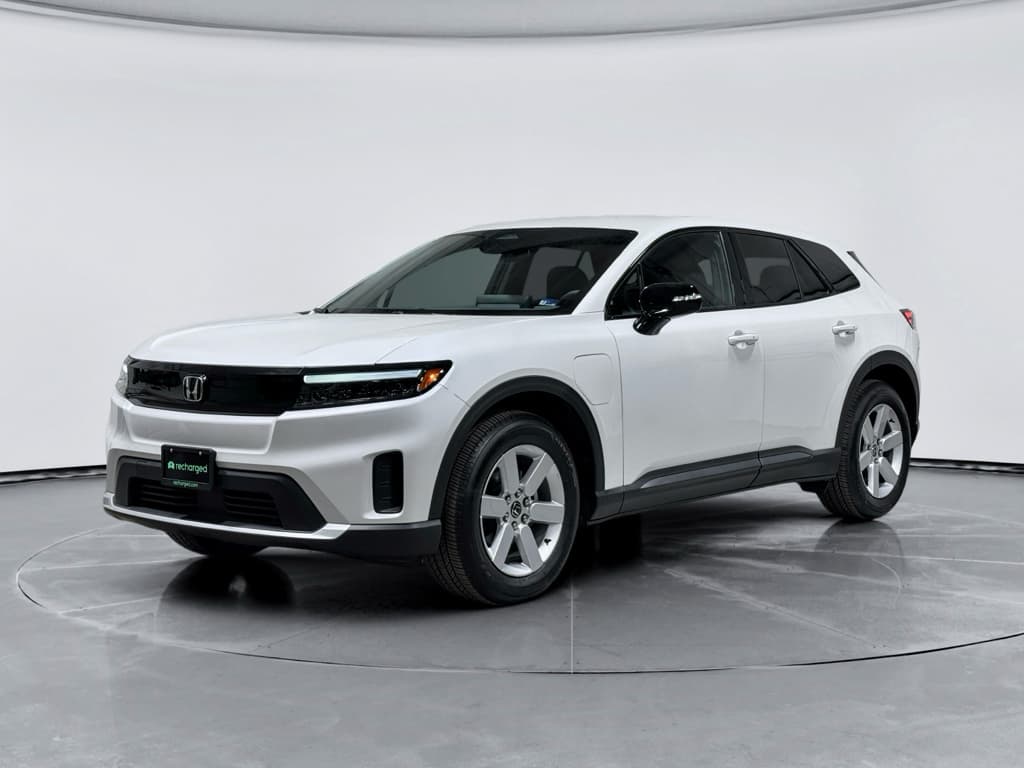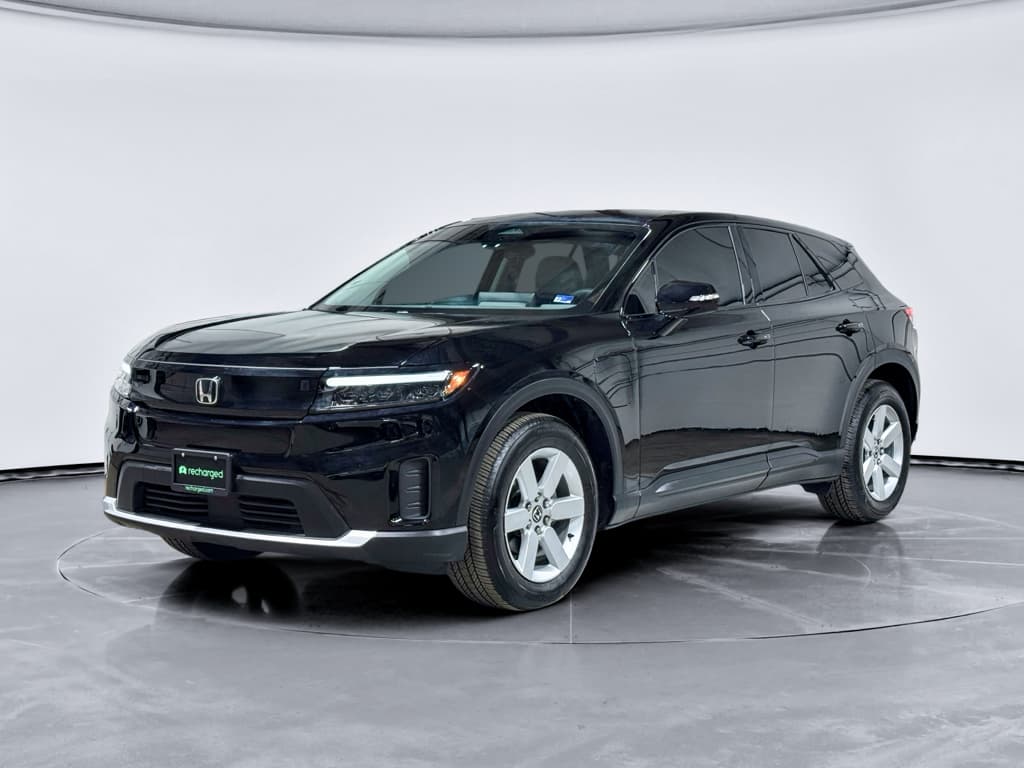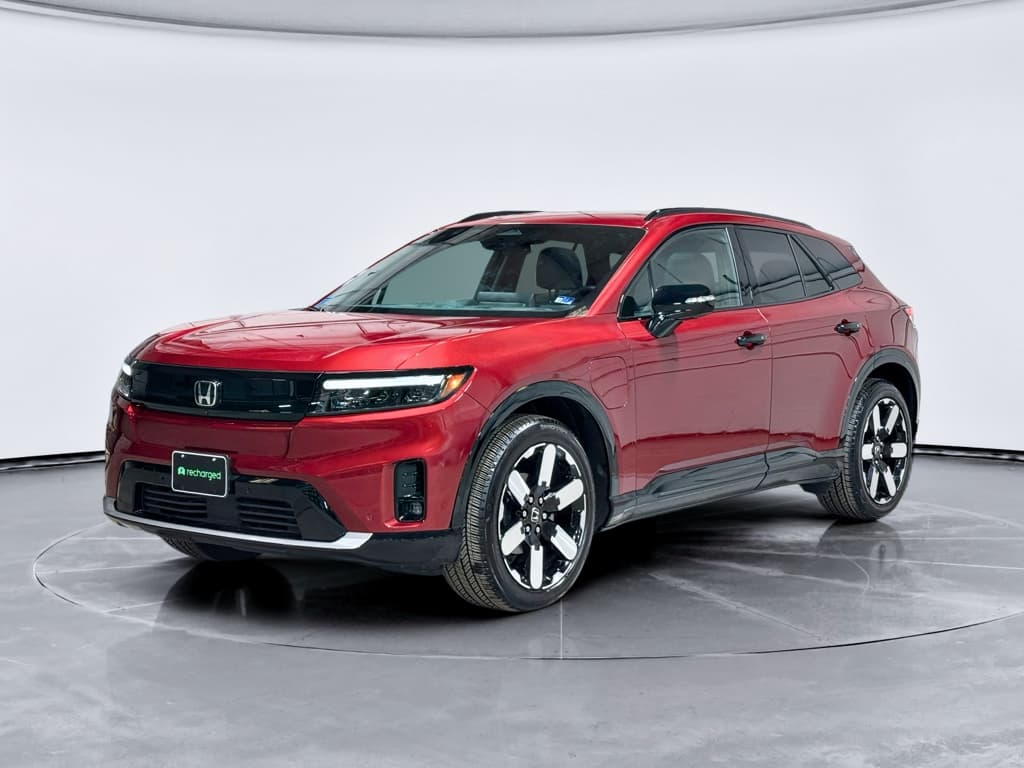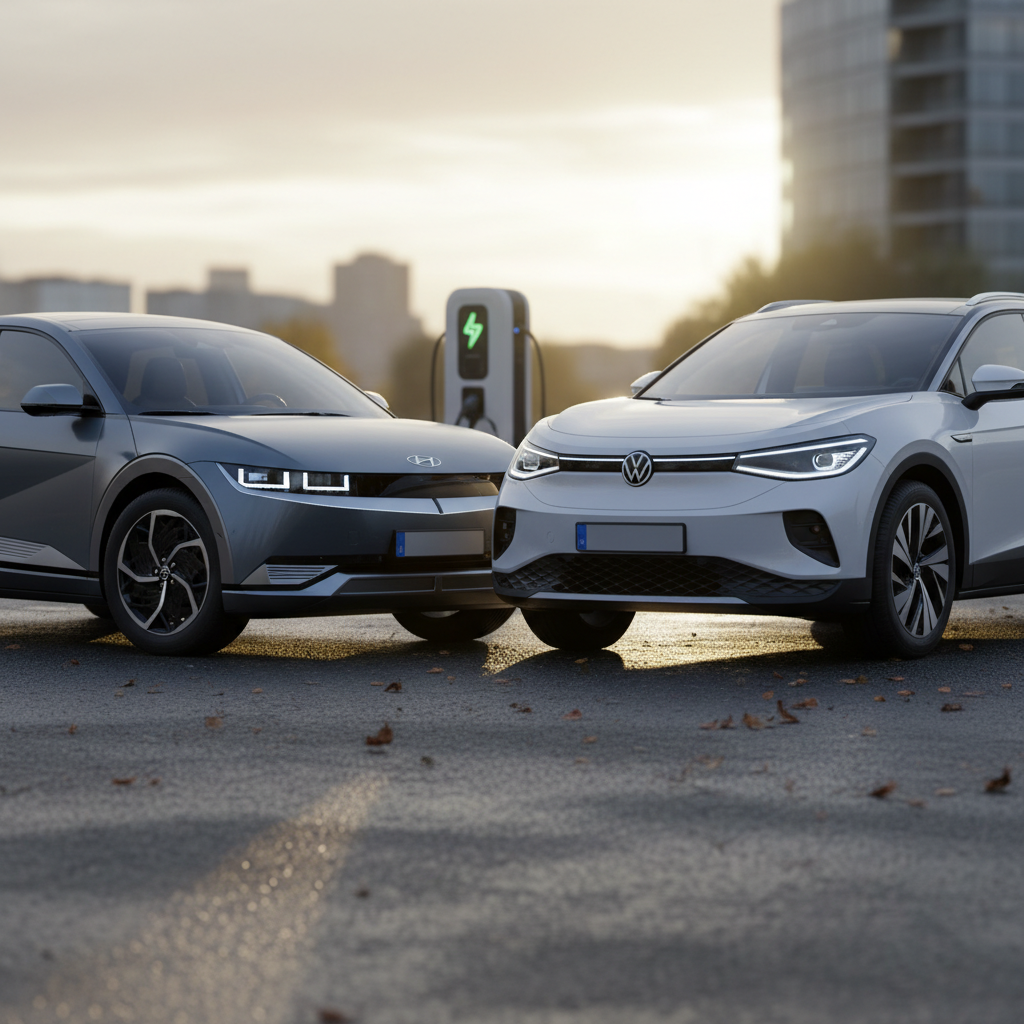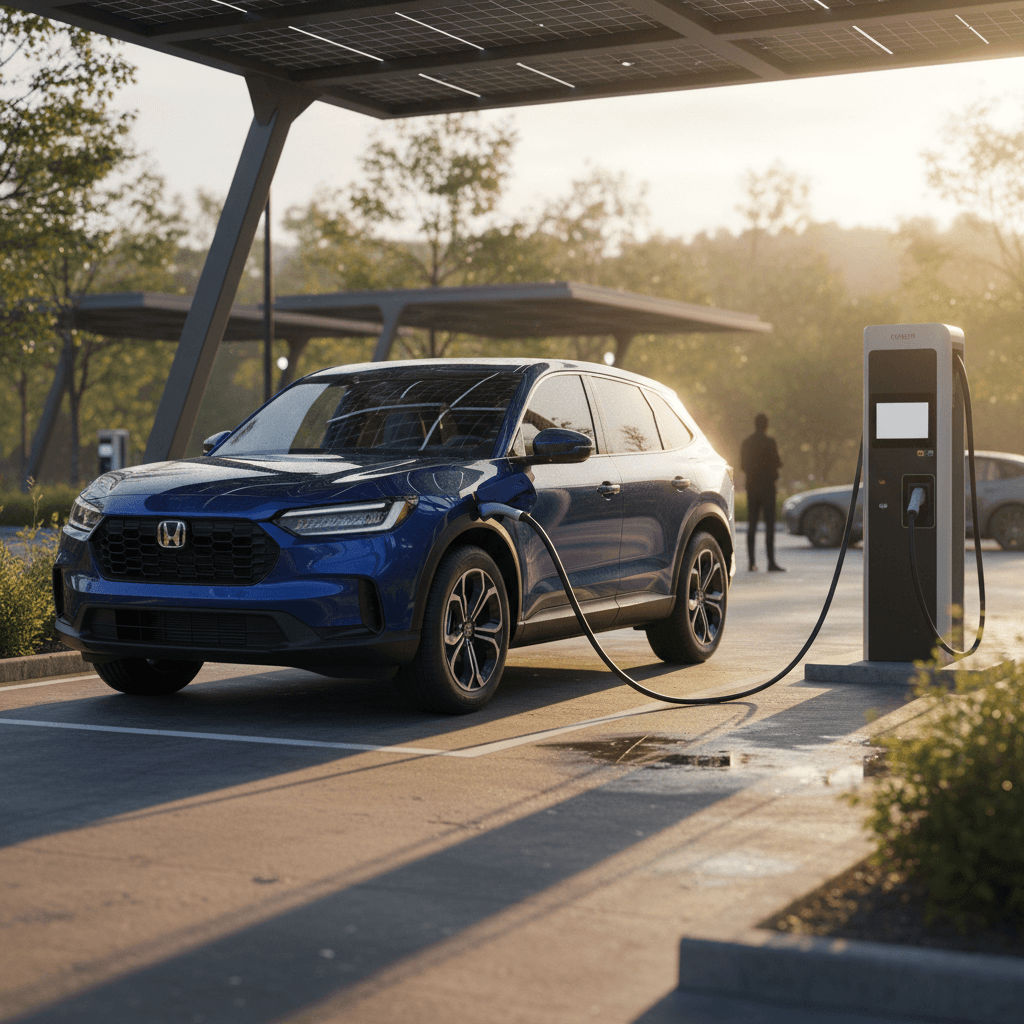
The 2024 Honda Prologue is Honda’s first serious, mainstream electric SUV for the U.S., built on GM’s Ultium platform and sized right in the sweet spot of the compact-to-midsize family SUV segment. In this 2024 Honda Prologue review, we’ll dig into real-world range, charging performance, trims, pricing, and how it stacks up against EV staples like the Tesla Model Y and Hyundai Ioniq 5, plus what to keep in mind if you’re eyeing a used Prologue through a marketplace like Recharged.
At a glance
2024 Honda Prologue review: what you need to know
Key 2024 Honda Prologue numbers
Honda keeps the Prologue lineup straightforward: three trims, EX, Touring, and Elite. EX and Touring can be had with single‑motor front‑wheel drive (FWD) or dual‑motor all‑wheel drive (AWD); Elite is AWD only. All versions use an 85‑kWh battery pack and top out at an EPA‑rated 296 miles of range in FWD form.
Quick verdict
Powertrain, battery and real-world range
Battery and motors
Every 2024 Honda Prologue uses an 85‑kWh lithium‑ion battery (usable capacity) on GM’s Ultium architecture. Motor output depends on drivetrain:
- FWD (EX & Touring): single motor, 212 hp, 236 lb‑ft
- AWD (EX, Touring, Elite): dual motors, 288 hp, 333 lb‑ft
On paper, those numbers won’t scare a Tesla Model Y Performance, but they’re right in line with mainstream EV SUVs. AWD models feel notably punchier around town and add all‑weather confidence, but they do shave a bit off total range.
EPA range by trim
2024 Honda Prologue EPA range and efficiency
Official EPA range estimates by trim and drivetrain. All use the same 85-kWh pack; wheel size and dual motors mainly drive the differences.
| Trim | Drive | Wheels | EPA Range (mi) | Combined MPGe |
|---|---|---|---|---|
| EX | FWD | 19-in | 296 | 99 |
| Touring | FWD | 19-in | 296 | 99 |
| EX | AWD | 19-in | 281 | 95 |
| Touring | AWD | 19-in | 281 | 95 |
| Elite | AWD | 21-in | 273 | 92 |
Honda Prologue range is competitive but not class‑leading, especially compared with Tesla.
How that translates day to day
Efficiency and highway reality
On the EPA cycle, the most efficient Prologue trims hit just under 100 MPGe combined, which works out to around 3.1–3.3 miles per kWh when you factor in charging losses. In independent tests, the Elite AWD has been measured around 2.7 miles per kWh combined, reasonable for a tall, dual‑motor SUV, but behind the better‑slippery Tesla Model Y.
At steady 70–75 mph, expect range to drop 10–20 percent versus the rated figure, depending on weather and wheel choice. If you plan a lot of long‑distance interstate driving, that makes the Prologue “good enough,” but not the road‑trip champ of the class.
Charging: home, public, and road trips
DC fast charging performance
On paper, the 2024 Honda Prologue peaks around 150–155 kW on a DC fast charger. In practice, you’re looking at roughly 10–80% in 30–35 minutes on a healthy high‑power station, adding about 200 miles of range in that window under ideal conditions.
- 400‑V architecture with up to ~150–155 kW peak
- Best to charge from ~10–15% to 70–80% for time efficiency
- Pre‑conditioning via the navigation system can warm the pack for faster charging in cold weather at compatible stations
Network matters more than the spec sheet
Level 2 home and workplace charging
The Prologue includes an onboard 11.5‑kW AC charger. On a 48‑amp Level 2 unit, that’s roughly an 8–9 hour full charge from empty to 100%, and more realistically 6–7 hours to top up from 10–80% overnight. For most households, that means you can plug in when you get home and wake up to a full battery every morning.
Home charging checklist for Prologue owners
1. Confirm electrical capacity
Have a licensed electrician confirm your panel can handle a 40–60A circuit before installing a Level 2 charger. A dedicated 240‑V line is strongly recommended.
2. Choose the right Level 2 charger
Look for a 40–48A Level 2 unit with Wi‑Fi or Bluetooth monitoring. If you plan to move or charge multiple EVs, a plug‑in wall unit offers more flexibility than a hard‑wired one.
3. Use scheduled charging
Use Honda’s app or the in‑car scheduler to charge in off‑peak hours if your utility offers cheaper, time‑of‑use rates, this can materially cut your monthly energy cost.
4. Protect your battery
For daily use, try to keep the battery between roughly 20% and 80%. Save full 0–100% charges for road trips to help reduce long‑term degradation.
If you’re buying used, ask the seller how they’ve been charging the SUV. A Prologue that mostly lived on home Level 2 charging and occasional fast‑charge road trips is likely to have a healthier battery than one that relied heavily on DC fast charging.
How Recharged can help with charging setup
Trims, pricing, and value for money
Trim walk: EX, Touring, Elite
2024 Honda Prologue trims in plain English
Main equipment differences between EX, Touring, and Elite trims.
| Trim | Drive | Highlights |
|---|---|---|
| EX | FWD or AWD | 19" wheels, heated front seats, dual‑zone climate, 10‑way power driver’s seat, wireless Apple CarPlay & Android Auto, Google built‑in, Honda Sensing safety tech |
| Touring | FWD or AWD | Adds leather seating, front/rear parking sensors, upgraded Bose audio, more comfort touches |
| Elite | AWD only | Adds 21" wheels, head‑up display, ventilated front seats, more premium trim details |
All trims share the same battery; you’re mainly choosing comfort, tech, and driven wheels.
MSRP vs likely used pricing
When new, the Prologue lines up in the upper‑$40,000s to just under $60,000 before destination and incentives. Typical MSRP ranges at launch:
- Prologue EX FWD: around $48,800
- Prologue EX AWD: around $51,800
- Prologue Touring FWD: around $53,100
- Prologue Touring AWD: around $56,100
- Prologue Elite AWD: around $59,300
Because SUVs in this class depreciate quickly in the first few years, especially newer EV nameplates without a long resale track record, the Prologue is already showing up on used‑vehicle lists at a substantial discount versus original MSRP. That puts a lightly used EX or Touring squarely in the crosshairs of shoppers stepping up from a CR‑V or Pilot who want to keep payments manageable.
Where the value is
Driving impressions: comfort, handling, and refinement
Ride and handling
Behind the wheel, the Prologue feels more like a traditional Honda SUV than a tech toy. Steering is light but accurate, body motions are well‑controlled, and the suspension tuning leans toward comfort rather than sport. That’s a deliberate contrast with the firmer, more playful tuning you’ll find in some EV rivals.
AWD models have strong, confident launches and plenty of passing power; FWD versions feel more modest off the line but are still more than adequate for merging and everyday traffic. Brake‑pedal feel is reasonably natural for a blended friction/regenerative system, though one‑pedal driving isn’t as polished as the best in class.
Noise and refinement
Ultium plus Honda: any compromises?
Because the Prologue rides on GM hardware, some control logic, particularly around charging behavior, battery management, and how quickly DC fast‑charge speeds taper, is more GM than Honda in flavor. For most owners, that’s invisible. Enthusiasts who’ve driven both the Prologue and the Chevrolet Blazer EV will notice similar underlying characteristics, even though the Honda’s tuning is calmer and its interface more straightforward.
Interior, tech, and practicality
Cabin design and space
Inside, the 2024 Honda Prologue plays it conservative: a horizontal dash, physical climate controls, and a mix of digital screens and real buttons that will feel familiar if you’re coming from a CR‑V or Passport. Materials are competitive for the price point, nicer in Touring and Elite, but not especially flashy.
- Plenty of adult‑friendly space in both rows
- Flat floor makes the center rear seat more usable
- Cargo area is competitive with other electric SUVs, though Honda doesn’t offer a large front trunk like Tesla
Tech stack: Google built in, plus phone mirroring
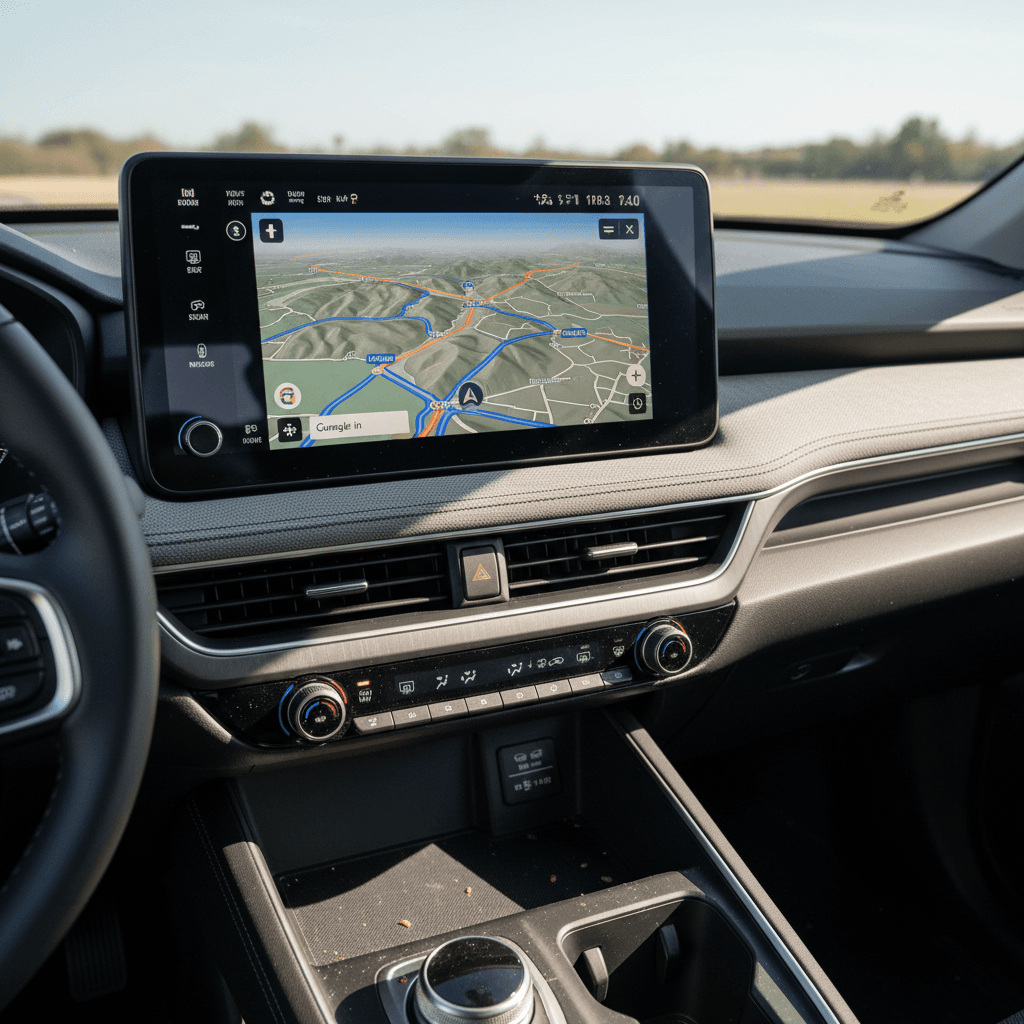
Every Prologue gets a digital instrument cluster and a large central touchscreen with Google built‑in. That means native Google Maps, Assistant, and Play Store apps, plus over‑the‑air updates. Importantly, you still have wireless Apple CarPlay and Android Auto, which some rival EVs lack.
Honda’s ADAS suite (Honda Sensing) brings adaptive cruise control, lane‑centering, blind‑spot monitoring, and more. It’s one of the more conservative driver‑assist systems on the market, less hands‑off than some rivals but also less prone to sudden, confidence‑sapping behavior.
Family‑friendly tech picks
2024 Honda Prologue vs Tesla Model Y and Ioniq 5
How the Prologue stacks up against key rivals
Looking at range, charging, and ownership experience in the real world.
vs Tesla Model Y
Pros for Tesla: More range in most trims, better efficiency, broader DC fast‑charging coverage via Superchargers, stronger performance options.
Pros for Honda: More conventional interior with physical controls, standard phone mirroring, and a dealer and service network that many buyers already trust.
vs Hyundai Ioniq 5
Pros for Hyundai: Much faster DC fast charging (800‑V system), available vehicle‑to‑load (V2L) for powering tools or camping gear, striking design.
Pros for Honda: Simpler trim strategy, a more traditional SUV feel, and Honda brand familiarity that will appeal to longtime owners.
Where the Prologue fits
The Prologue lands in the middle: charging is quicker than older EVs but slower than the very best, range is solid but not class‑leading, and pricing undercuts some style‑oriented rivals when similarly equipped.
Know your priorities
Who the 2024 Honda Prologue is (and isn’t) for
Great fit if…
- You already like Honda SUVs and want your first EV to feel familiar.
- You can install reliable Level 2 home charging and mostly drive locally or regionally.
- You value comfort, quietness, and intuitive controls over track‑day performance.
- You prefer a traditional dealer network for service and support.
Probably not your best match if…
- You want the fastest possible DC fast‑charging for frequent long road trips.
- You’re chasing maximum efficiency or range per dollar (a Tesla Model Y still wins here for many drivers).
- You’re after cutting‑edge features like vehicle‑to‑load power outlets or a big front trunk.
Urban vs suburban owners
Buying a used Honda Prologue: what to watch for
Because the 2024 Prologue is the first model year and early depreciation is steep on most new EVs, it’s likely to become a compelling used buy faster than many shoppers expect. That makes due diligence on battery health, charging history, and software especially important.
Key checks before you buy a used Prologue
1. Verify battery health
Ask for a recent battery health report. Marketplaces like <strong>Recharged</strong> include a Recharged Score Report with verified battery diagnostics, so you’re not guessing about remaining capacity or past abuse.
2. Review charging history
Ideally, the prior owner mostly charged on Level 2 at home or work and only used DC fast charging for trips. Heavy fast‑charging use isn’t a deal‑breaker, but it can accelerate degradation over time.
3. Confirm software and recalls
Make sure all software updates and any open recalls have been completed. OTA updates can improve charging curves, range estimates, and driver‑assist behavior.
4. Inspect tires and brakes
Electric SUVs are heavy; they can be harder on tires and pads. Pay attention to tread depth, uneven wear from aggressive regen, and the cost of replacing 21‑inch rubber on Elite trims.
5. Evaluate home charging options
Before you sign, be realistic about how you’ll charge. If you can’t install Level 2, consider whether your local DC fast‑charging options are robust enough for your lifestyle.
Why shop a Prologue on Recharged
Ready to find your next EV?
Browse Vehicles2024 Honda Prologue FAQ
Frequently asked questions about the 2024 Honda Prologue
Bottom line: is the 2024 Honda Prologue a good EV SUV?
The 2024 Honda Prologue isn’t trying to win headline drag races or charging‑time bragging rights. Instead, it delivers a calm, comfortable, and familiar EV experience wrapped in Honda styling, with competitive range, solid tech, and a straightforward trim walk. Its Ultium underpinnings give it modern fundamentals, while Honda’s tuning and interface make it approachable for buyers moving out of gasoline CR‑Vs and Pilots.
If you want maximum range, blistering fast charging, or the deepest EV ecosystem, Tesla and Hyundai still hold meaningful advantages. But if you’re after a no‑drama electric SUV from a brand you already know, and you plan to lean on home Level 2 charging more than public fast chargers, the Prologue makes a compelling case, especially as a used buy with verified battery health from a retailer like Recharged.