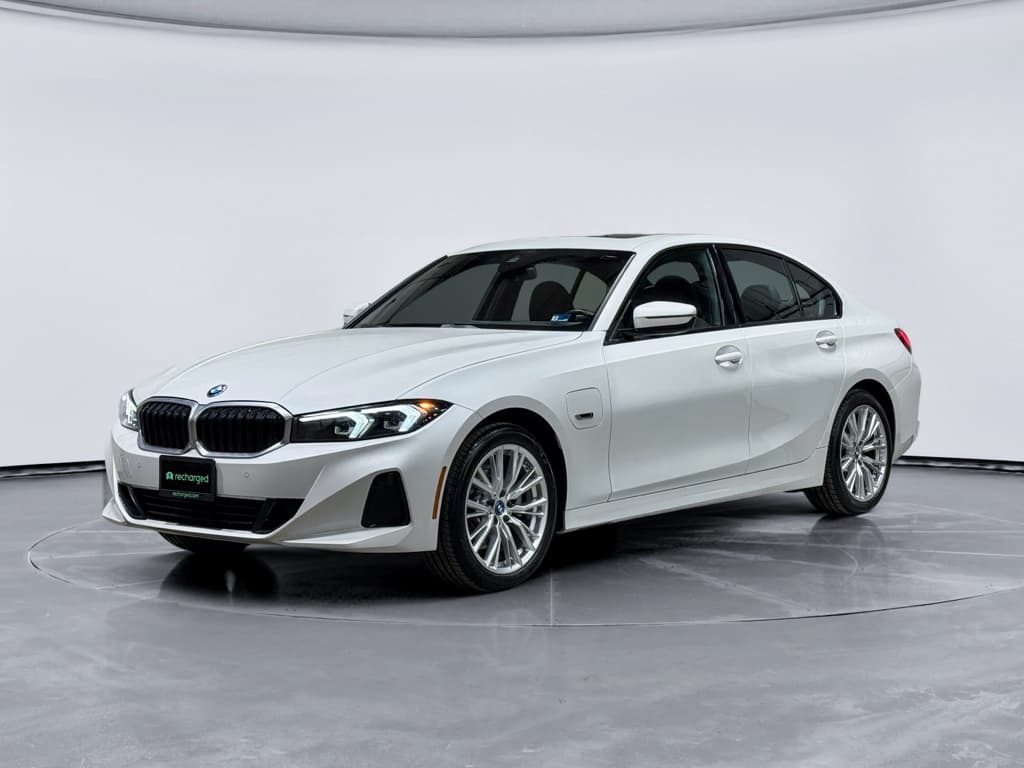
If you’re driving a 2024 BMW i4, you’ve already discovered how refined, quick, and quiet a modern luxury EV can be. But when it’s time to trade up, maybe to an SUV, a longer‑range EV, or simply to lower your payment, the big question becomes: what’s my 2024 BMW i4 trade-in value really worth?
Quick context
2024 BMW i4 trade-in value at a glance
Realistic 2024 BMW i4 value snapshot (spring 2026, U.S.)
Those numbers aren’t official quotes, they’re realistic ranges based on current pricing data, public guides, and what we see in the used EV marketplace. For example, one major valuation guide shows a current trade-in value around the high-$20,000s for a typical 2024 i4, after an initial MSRP in the low‑to‑mid‑$50,000s. Another major site shows used 2024 i4 values roughly $22,000–$39,000 depending on trim, mileage, and condition. Your exact number will move up or down based on the details we’ll walk through next.
How much is my 2024 BMW i4 worth today?
Let’s start with a simple reality check. When it was new, a 2024 BMW i4 typically stickered at:
2024 BMW i4 original MSRP ballpark (U.S.)
Approximate starting MSRP before options and destination charges.
| Trim | Drivetrain | Approx. 2024 MSRP* |
|---|---|---|
| i4 eDrive35 | RWD | ≈ $52,000–$53,000 |
| i4 eDrive40 | RWD | ≈ $57,000–$58,000 |
| i4 xDrive40 | AWD | ≈ $61,000–$62,000 |
| i4 M50 | AWD | ≈ $69,000–$72,000 |
Exact original MSRP depends on options, packages, and your specific build.
Don’t forget incentives
By spring 2026, a typical 2024 BMW i4 has already done most of its steep early depreciation. Real‑world guides peg a representative 2024 i4 at roughly $27,000–$31,000 as a trade-in depending on condition and miles, with exceptionally clean, well‑optioned M50 and xDrive40 cars landing higher and high‑mileage base cars slipping lower.
- If a guide shows a trade-in value around $27,000 for a 2024 i4 in "good" condition, a dealer might start below that to leave room for reconditioning and profit.
- A clean, low‑mile 2024 i4 M50 with desirable packages could still attract mid‑$30,000s or better in a more competitive selling channel.
- Heavily optioned cars that were discounted heavily when new may *feel* like they’ve lost a lot on paper, but compared to what you actually paid, the hit may be less painful.
Use guides as a starting line, not the finish line
What drives 2024 BMW i4 trade-in value up or down
Key factors that shape your 2024 i4 trade-in offer
You can’t control the model year, but you can control how your specific car looks to a buyer.
Mileage & usage
Most value guides assume about 12,000–15,000 miles per year. If your 2024 i4 is under 20,000 miles right now, you’re in great shape. Once you’re much above that, expect offers to move down a tier.
Condition & cosmetics
Curbed wheels, scraped bumpers, worn tires, or interior stains all chip away at trade-in value. A clean, well‑detailed i4 can literally be worth thousands more than the same car neglected.
Options & packages
Features like Driving Assistance Pro, premium audio, HUD, and larger wheels help with desirability. They don’t return dollar‑for‑dollar what you paid, but they can keep you at the top of the value range instead of the bottom.
Battery health & warranty
Most buyers want reassurance that the high‑voltage battery is healthy and under BMW’s 8‑year/100,000‑mile warranty. Clean diagnostics can be a real value booster in an EV transaction.
Your region & timing
In EV‑dense markets, California, the Northeast, parts of Texas, demand for used BMW i4s is stronger. In regions with less charging infrastructure, dealers may bid more cautiously.
Market & incentives
When BMW offers big discounts or lease support on new i4s, used prices adjust downward. That doesn’t mean your car is bad; it means shoppers are anchoring on those new‑car numbers.
Red flags that hurt value fast
Do trim and options change BMW i4 trade-in value?
Short answer: yes, but not always how owners expect. A 2024 i4 M50 with dual motors and performance hardware clearly starts from a higher baseline than an eDrive35. However, thick factory discounts and heavy incentives on highly optioned cars have compressed the used‑market spread.
How 2024 BMW i4 trim can influence trade-in value
Very rough relative guidance based on typical pricing patterns as of 2026. Your actual numbers will vary.
| Trim (2024) | Original role | Relative trade-in band vs eDrive35 |
|---|---|---|
| eDrive35 | Entry luxury EV | Baseline |
| eDrive40 | Longer-range RWD | ≈ +$1,500–$3,000 |
| xDrive40 | AWD, more power | ≈ +$3,000–$5,000 |
| M50 | Performance flagship | ≈ +$5,000–$9,000 |
Within each row, low‑mileage, well‑equipped examples will be toward the top of the range; higher‑mile, base‑spec cars toward the bottom.
Options: help on demand, not just on paper
How the 2024 BMW i4 holds value vs other luxury EVs
Luxury EVs get hit harder
Across the market, early‑adopter electric luxury cars, think large sedans and premium crossovers, have seen steeper depreciation than bread‑and‑butter gas vehicles. High MSRPs, rapidly improving tech, and waves of incentives have combined to push many 3–5‑year‑old luxury EVs down 50–65% from sticker.
The BMW i4, positioned between a 3 Series and 4 Series Gran Coupe in size and mission, tends to behave more like other luxury compact EV sedans such as the Tesla Model 3 or Polestar 2. It won’t be the rock‑star of resale, but it isn’t at the bottom of the heap either.
Where the i4 typically lands
- Better than some big luxury EVs: Flagship sedans often suffer the worst depreciation. The i4’s more attainable price and BMW badge keep demand steadier.
- Roughly in line with other luxury compacts: In many cost‑to‑own studies, an i4’s 5‑year depreciation looks broadly similar to a well‑equipped gas 3 Series or comparable EVs.
- Behind the very strongest value-holders: A few smaller or mass‑market EVs hold value better because they started cheaper and have broader appeal.
The upshot: if you’re trading a 2024 i4 now, much of the initial drop is behind you. The next few years are likely to see a more gradual decline, especially if you keep miles and condition in check.
7 steps to maximize your 2024 BMW i4 trade-in offer
Pre-trade checklist for a stronger 2024 i4 offer
1. Document your car like an appraiser
Gather your original window sticker or build sheet, maintenance records, tire receipts, and any warranty or recall paperwork. Having everything in a single folder or PDF makes you look like a serious, low‑risk seller, and dealers notice.
2. Get a real picture of current value
Run your VIN through at least two major pricing guides to get a <strong>trade-in, private-party, and retail</strong> range. Then check actual listings for similar 2024 i4s in your region. This gives you a realistic bracket before you talk numbers.
3. Have the EV-specific story ready
Be prepared to answer questions about <strong>home charging, fast‑charging habits, and average daily usage</strong>. Light, consistent use with mostly Level 2 charging typically reassures buyers and can support a better offer.
4. Detail the car inside and out
A deep clean, paint decontamination, and minor touch‑ups can significantly improve first impressions. Fix inexpensive issues, headlight bulbs, wiper blades, missing key fobs, before any appraisal. A car that looks "lot ready" is easier to value generously.
5. Address obvious cosmetic dings
Small wheel scuffs, bumper scrapes, or paintless dent repair often cost less than the hit a dealer will assume. If a $250 repair lets them rate the car as "very good" instead of "fair," you can easily come out ahead.
6. Get multiple, apples-to-apples offers
Don’t stop at a single dealership number. Compare at least one local BMW store, a national car‑buying site, and a used‑EV specialist like <strong>Recharged</strong>. Different buyers have different tolerance for EV inventory, and that can show up as real money.
7. Consider a specialist used-EV marketplace
Generalist dealers sometimes undervalue EVs because they’re still learning the segment. A platform like <strong>Recharged</strong> focuses only on used EVs, uses <strong>battery health diagnostics</strong>, and markets your car directly to EV‑interested shoppers, which can support a stronger sale price than a quick trade-in alone.
Trade in vs sell: Which is smarter for a 2024 i4?
You essentially have three ways to monetize a 2024 BMW i4: trade it to a dealer, sell it outright to a car‑buying service, or market it to end buyers through a specialist like Recharged. Each path balances convenience, price, and risk a little differently.
Trade-in vs sell: pros and cons for a 2024 BMW i4
How common selling paths compare for a nearly-new BMW i4.
| Option | Typical price outcome | Pros | Cons |
|---|---|---|---|
| Traditional dealer trade-in | Lowest or mid-range | Fast, easy, can save on sales tax in many states | Often conservative on EVs; limited understanding of battery value |
| Cash offer from national buyer | Low to mid-range | Simple process, quick funding, they handle paperwork | Offers can be algorithmic and slow to react to EV niches |
| Sell via specialist used-EV marketplace (like Recharged) | Mid to top of range | EV‑savvy buyers, battery health verified, expert guidance; more competitive pricing | Takes a bit more time than a same‑day dealer trade-in |
Tax rules vary by state, always confirm how trade-in credits work where you live.
Where Recharged fits in
Ready to find your next EV?
Browse VehiclesWhy battery health matters, and how Recharged measures it

When a dealer gives you a trade-in quote, they’re usually looking at three things: book value, auction history, and what similar cars are sitting on their lot. What they often aren’t doing is any meaningful check of high‑voltage battery health, even though that’s the most expensive component in your 2024 i4.
- A healthy battery with low degradation supports stronger pricing and future demand.
- Aggressive DC fast-charging habits or high annual mileage can accelerate wear.
- Buyers increasingly ask for proof that an EV’s battery is in good shape before they commit.
What the Recharged Score adds
Best timing to trade or sell your 2024 BMW i4
Luxury EVs like the BMW i4 have a distinctive depreciation curve: big drop early, then a more gradual slide. As of 2026, your 2024 car is sitting in a sweet spot, new enough to feel current, but old enough that the steepest part of the curve is behind you.
Smart timing strategies for a 2024 i4
Think in terms of mileage bands and model years, not just calendar dates.
Trade before big mileage milestones
Used buyers think in round numbers. Crossing 30,000 or 40,000 miles can nudge offers down a notch. If your 2024 i4 is near one of those thresholds, it’s often worth exploring offers now.
Watch new model incentives
When BMW ramps up support on new i4s, big rebates, attractive leases, used values usually soften. If you know a major incentive push is coming, consider listing or trading before it hits in earnest.
Seasonal & regional factors
In colder states, EV interest sometimes tapers during harsh‑weather months, but in dense metro areas demand is relatively steady. In sun‑belt markets, spring and early summer are strong seasons to list an EV.
Rule of thumb
2024 BMW i4 trade-in value FAQs
Frequently asked questions about 2024 BMW i4 trade-in value
Bottom line: Getting a fair deal for your 2024 BMW i4
The 2024 BMW i4 has taken a bigger early hit than many owners expected, not because it’s a bad car, but because EV incentives, fast‑moving tech, and a still‑maturing used market have reset expectations. The key is to understand where your specific i4 sits within the current value bands, then present it so that any buyer can see why it deserves to be at the top of that range, not the bottom.
Do your homework with pricing guides and local listings, tidy up the details that matter, and get multiple offers, ideally including at least one from a used‑EV specialist. If you decide to explore selling or trading your 2024 BMW i4 through Recharged, you’ll have access to expert EV guidance, transparent battery health reporting, and a fully digital experience that’s built around the realities of the modern EV market, not yesterday’s rules for gas sedans.