If you own, or are shopping for, a 2023 Tesla Model 3, you’ve probably heard a lot about recalls. The good news: most of the issues on the 2023 Tesla Model 3 recalls list are software‑related and fixed over the air. The bad news: there are several campaigns to understand, and not every car will have had all of them completed yet.
Quick reality check
Overview: How many recalls affect the 2023 Tesla Model 3?
By April 2026, a typical 2023 Tesla Model 3 may be covered by half a dozen or more recall campaigns, depending on build date, options, and software version history. These include high‑profile actions related to driver‑assist software, steering feel, seat belt warning logic, and camera visibility. Because Tesla leans heavily on software, many recalls are fixed via an over‑the‑air (OTA) update with no service visit required.
2023 Tesla Model 3 recalls at a glance
Major 2023 Tesla Model 3 recall campaigns
Below are the big‑ticket recall themes that commonly apply to the 2023 Model 3 in the U.S. Exact NHTSA campaign numbers can vary, and new actions can be added, but this gives you a practical, owner‑oriented rundown.
1. Autosteer / Full Self‑Driving (FSD) behavior software recalls
Several recall campaigns have targeted how Autosteer and Full Self‑Driving (FSD) Beta behave in specific situations, intersections, speed limit transitions, yellow lights, and other edge cases. For 2023 Model 3 sedans equipped with FSD or Enhanced Autopilot, these recalls required Tesla to adjust how the car handles lane‑keeping and driver monitoring. Owners typically saw a notification that a “Safety‑related” update was available, and the vehicle installed new software to satisfy NHTSA’s requirements.
Important nuance
2. Power steering assist / steering effort recall (2023 builds)
In late 2024 and early 2025, Tesla issued a steering‑related recall that included certain 2023 Model 3 sedans running earlier software. Under specific conditions, an overvoltage breakdown in the steering control electronics could make steering feel unexpectedly heavy or cause a momentary loss of power assist. Drivers could still steer manually, but with much more physical effort, especially at low speeds.
Tesla’s remedy was a software update that changes how the steering module manages power and fault detection. In some cases, Tesla also inspects steering components if the car has logged related fault codes. If you’ve ever seen a warning about steering assist or noticed the wheel suddenly get heavier, double‑check that your car has this recall marked as completed.
3. Seat belt reminder / occupant detection software recall
In 2024, Tesla launched a major recall to fix the seat belt reminder system on vehicles including the 2017–2023 Model 3. Certain software logic combinations could fail to trigger the audible and visual warning if the driver’s seat belt wasn’t buckled, even though the car was in a driving state. That’s a direct hit on a core safety system, so regulators took it seriously.
Again, the fix is software: newer firmware updates change how the car cross‑checks seat occupancy and belt‑latch status. Once the update is installed, your Model 3 should reliably chime and display a warning any time you try to drive unbelted.
4. Warning light / telltale visibility recalls
Several recalls have centered on instrument‑cluster warning symbols, for example, icons that were too small or didn’t meet U.S. visibility rules when certain modes were enabled. On a Tesla, that “cluster” is the main center screen, so small design choices can suddenly become recall issues. From an owner’s point of view, these fixes mostly feel like minor visual tweaks after a software update: icons move, grow, or change color so they satisfy the letter of the regulation.
5. Driver-assistance / Autopilot safety enhancement recalls
Beginning in late 2023 and stretching through 2024, NHTSA pushed Tesla to improve driver monitoring and Autopilot safeguards. Some of those actions were classified as recalls, covering millions of vehicles including the 2023 Model 3. Updates increased how often the car checks for steering‑wheel torque, adjusted how quickly it disengages assistance when you ignore alerts, and refined lane‑keep and collision‑avoidance behavior in tricky traffic patterns.
If you’ve noticed your 2023 Model 3 nagging you more often to apply torque to the wheel, or kicking Autosteer off more aggressively, that behavior is likely tied to one of these recall campaigns.
6. Camera and visibility–related recalls
Some later Tesla recalls have involved rearview camera and exterior lighting behavior. Affected Model 3 vehicles might briefly fail to display the backup camera image or could show it with a delay, which doesn’t meet the requirement for consistent visibility when the car is in Reverse. Tesla’s standard fix here has been, you guessed it, another targeted software update to change how quickly and reliably the camera feed loads when you shift into R.
Bottom line for owners
2023 Tesla Model 3 recalls list (quick table)
This table summarizes the main recall themes that typically touch the 2023 Model 3. NHTSA campaign numbers and exact dates are simplified here, your car may be covered by more than these, and additional recalls may appear after April 2026.
Key recall themes for 2023 Tesla Model 3 (U.S.)
High-level summary of major recall types that commonly apply to the 2023 Tesla Model 3. Always confirm vehicle‑specific status by VIN.
| Recall theme | Typical model years covered | Primary issue | Usual fix type | Owner action |
|---|---|---|---|---|
| Autosteer / FSD behavior | Multiple, incl. 2023 Model 3 | Driver‑assist behavior at intersections, speed changes, lane‑keeping | OTA software update | Install update, review release notes, test in familiar area |
| Autopilot safety enhancements | Wide range incl. 2023 | Stronger driver monitoring and disengagement rules | OTA software update | Accept updates; expect more frequent attention checks |
| Seat belt reminder logic | 2017–2023 Model 3 and others | Seat belt chime/indicator may not trigger correctly | OTA software update | Install update; verify chime and icon work as expected |
| Steering assist / effort | Certain 2023 Model 3 and Y | Possible sudden increase in steering effort in rare cases | OTA update + component check if needed | Install update; schedule service if steering ever feels abnormal |
| Warning light / telltale visibility | Multiple years | Instrument‑panel icons not meeting visibility rules | OTA software update | Install update; icons may look slightly different |
| Camera / visibility behavior | Subset of late‑model Teslas | Backup camera image may be delayed or fail to display | OTA software update | Install update; test backup camera in safe area |
For exact recall numbers and wording, check the Tesla or NHTSA VIN lookup using your specific 17‑digit VIN.
Don’t rely on model year alone
How Tesla handles recalls: software vs service visits
If you’re coming from a traditional brand, the way Tesla deals with recalls can feel unusual, in mostly good ways. Instead of mailing you a postcard and asking you to take a weekday afternoon off for the dealership, Tesla leans heavily on over‑the‑air updates and mobile service.
Two ways your 2023 Model 3 gets recall fixes
Most issues are software, some still need hands‑on inspection.
1. Over‑the‑air (OTA) software updates
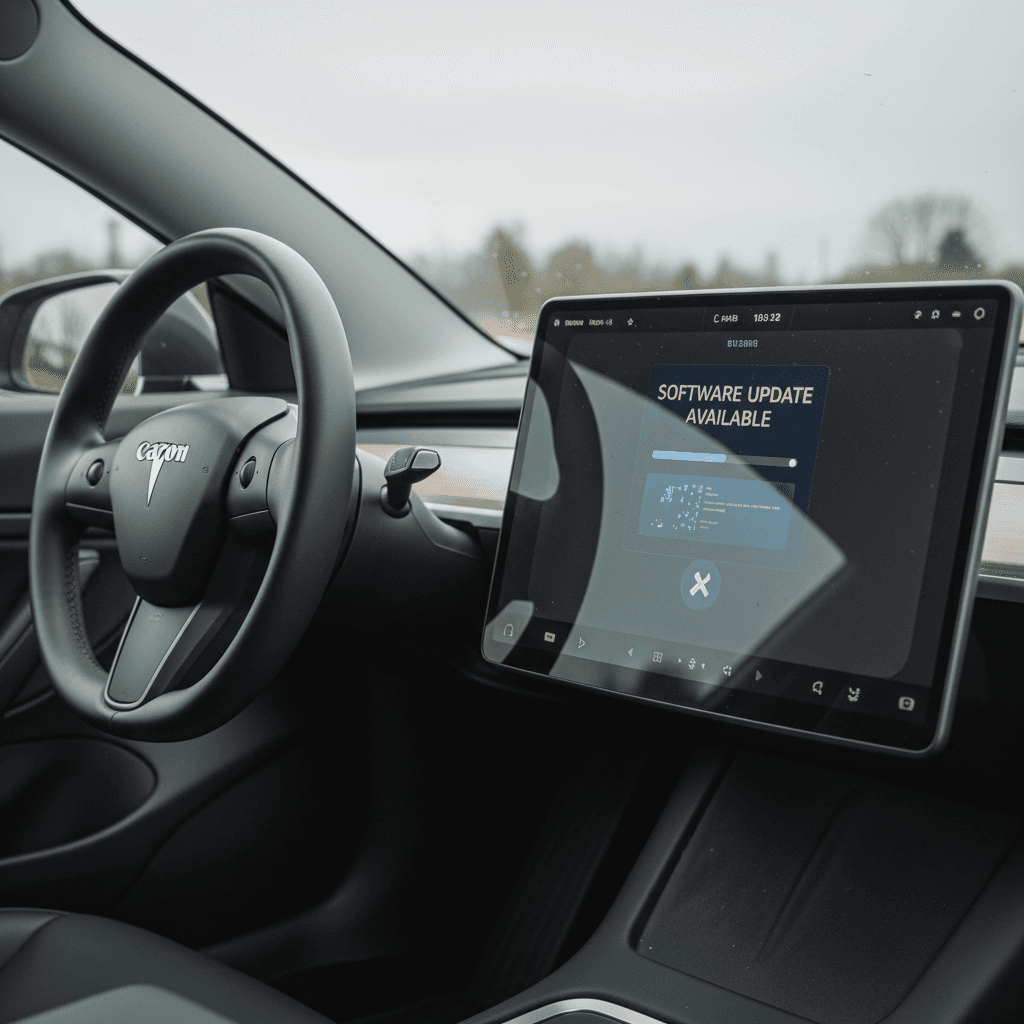
This is Tesla’s signature move. When a recall can be solved in software, your 2023 Model 3 simply downloads new code via Wi‑Fi or cellular and installs it while parked.
- You’ll see a notification on the center screen and in the Tesla app.
- You choose an install time (often 15–30 minutes).
- No visit to a service center is required.
For many 2023 Model 3 recalls, Autopilot tuning, seat belt reminders, warning icon tweaks, this is the entire remedy.
2. Service center or mobile service visits
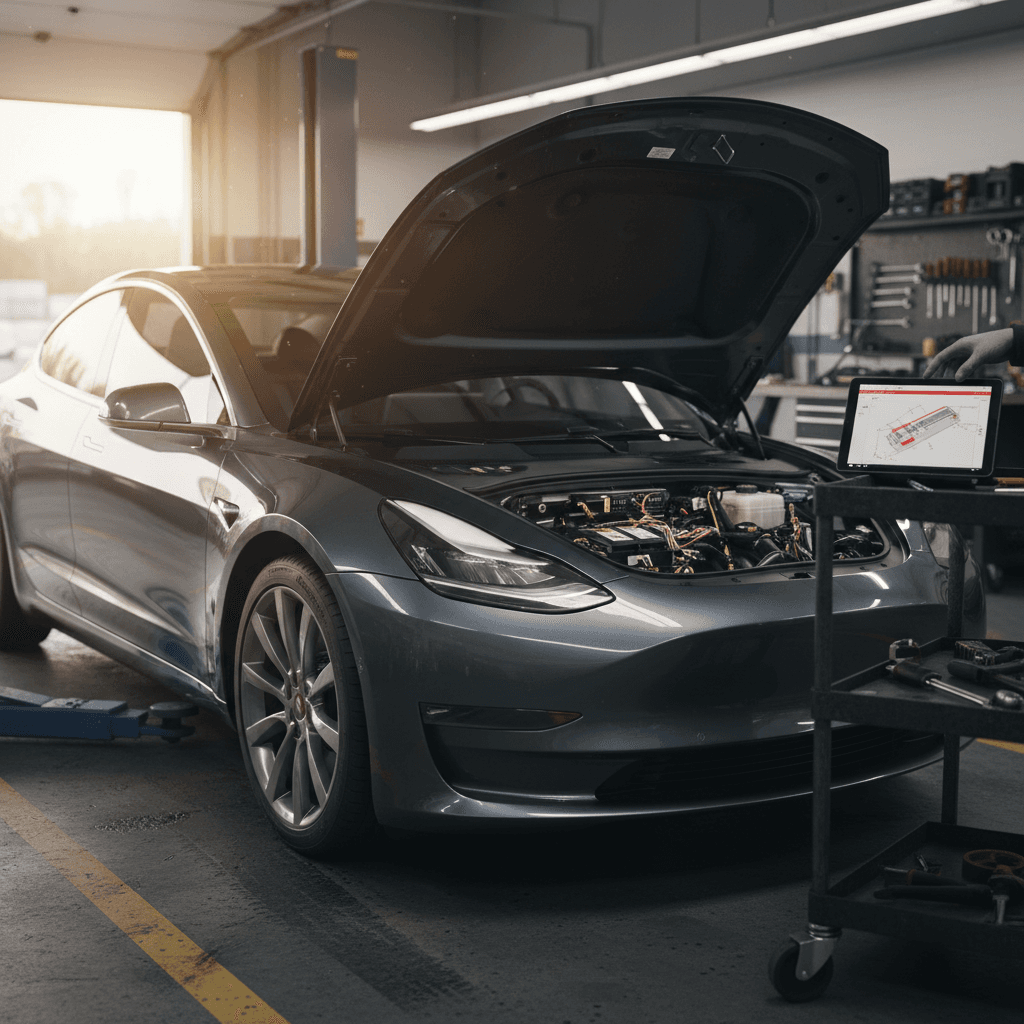
For issues that involve hardware, like possible wear in a steering component, Tesla may ask you to schedule a service appointment.
- Most bookings happen through the Tesla app, not by phone.
- In some areas, a mobile technician can come to your home or office.
- All recall work is free, though you may spend some time waiting.
Hardware‑heavy recalls are less common on the 2023 Model 3 than software ones, but they do exist, especially around steering or structural concerns.
Pro tip for updates
What current 2023 Model 3 owners should do
Recalls sound scary, but the real question is simple: Is my specific car up to date? Here’s how to answer that confidently.
5 steps to stay on top of 2023 Model 3 recalls
1. Run your VIN through official tools
Open the Tesla account portal or support site and use the VIN recall checker, then cross‑check with the official NHTSA VIN lookup. If both say you’re clear, you’re in good shape for the recalls published so far.
2. Read your software release notes
Every time your car updates, skim the release notes. Tesla doesn’t always label changes as “recall remedies” on the consumer screen, but safety‑related tweaks often appear as small driving‑behavior or interface changes.
3. Don’t postpone safety updates
It’s tempting to hit “Install later” forever, especially if you’re in a rush. For recall‑related updates, pick a time that works, overnight, during dinner, or while you’re parked at work, and just let it run.
4. Pay attention to new alerts
After a recall fix, you may notice more frequent Autopilot nags, new seat belt chimes, or brighter warning icons. That’s usually the point. Give yourself a few days to get used to the changes before judging them.
5. Log issues in the Tesla app
If something still feels off, steering effort, unexplained warnings, or camera glitches, open a service request in the app and describe it clearly. Tesla can see your car’s logs and tell you if it’s tied to an open or completed recall.
No recall? Still worth checking periodically
Used 2023 Model 3 buyers: recall checklist
If you’re shopping used, the 2023 Model 3 is one of the sweet spots in the lineup, modern enough to feel current, old enough that prices are more approachable. Recalls don’t have to scare you off, but you should treat them as a fact‑finding mission before you sign anything.
Questions to ask the seller
- “Are all recalls up to date?” Ask to see a screenshot from the Tesla or NHTSA VIN tool showing no outstanding recalls.
- “When was the last software update?” A car that hasn’t updated in months may have missed campaign fixes.
- “Any issues with steering or Autopilot?” Press for real‑world examples: heavy steering, sudden nags, or odd behavior.
- “Service history?” Tesla service records live in the app, so ask the current owner to show visit summaries.
What Recharged does for you
When you shop a used 2023 Model 3 through Recharged, you’re not starting from zero. Every vehicle comes with a Recharged Score Report that includes:
- Verified battery health and charging history insights.
- A check of outstanding recalls and safety campaigns.
- Pricing compared to fair‑market data so you know you’re not overpaying.
- Access to EV specialists who can walk you through what each recall actually means.
You’ll still see Tesla’s recall notices directly as the next owner, but you won’t be guessing about the car’s starting point.
Watch for these red flags when buying used
Are these recalls a dealbreaker for a 2023 Model 3?
Put bluntly: no modern EV is recall‑free, and Tesla’s software‑heavy approach makes their recalls more visible than most. The 2023 Model 3 sits in the thick of Tesla’s transition to more advanced driver‑assist behavior and stricter U.S. oversight, so it ends up in the crosshairs of many large campaigns.
- On the downside, you’ll see more notifications and occasional behavior changes after software updates.
- On the upside, many problems are corrected long before you notice them, without a single trip to a service bay.
- Because campaigns cover millions of cars, individual 2023 Model 3s aren’t singled out as “lemons” just for having recall history.
If you’re comfortable with a car that evolves constantly, and you’re willing to stay engaged with software updates and safety alerts, the recall record on a well‑maintained 2023 Model 3 is not a reason to walk away by itself. The key is documentation: know what’s open, what’s done, and how the car drives today.
Where a partner like Recharged earns its keep is in that translation layer. Instead of staring at a government PDF and a string of software version numbers, you get a clear explanation of what matters, what’s been fixed, and what you should still pay attention to. That’s how a dense 2023 Tesla Model 3 recalls list turns back into what it should be: one more tool to help you drive farther, safer, and with fewer surprises.