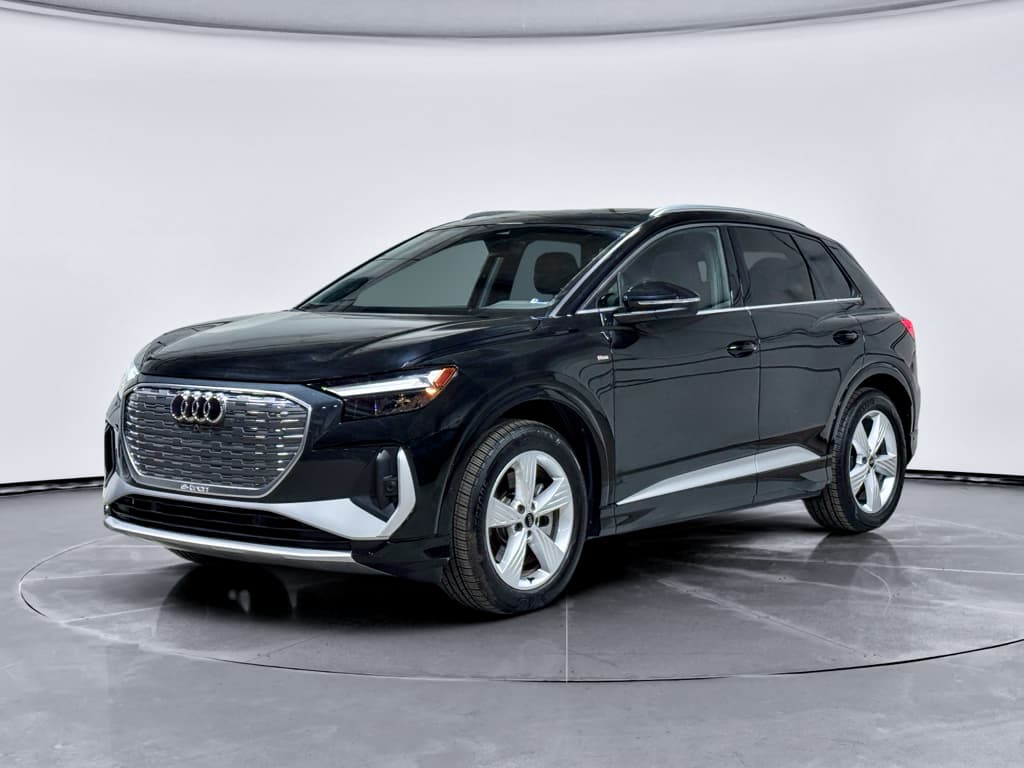
If you’re eyeing a **2023 Audi Q4 e-tron**, you’ve probably heard two very different stories. On paper, it’s a handsome, compact luxury EV with Audi badges and German credibility. In owner forums, it’s a mixed bag of solid mechanicals wrapped in occasionally glitchy software. This guide breaks down the 2023 Audi Q4 e-tron reliability rating, real-world issues, and exactly what to watch for if you’re shopping used.
Quick takeaway
2023 Audi Q4 e-tron reliability at a glance
2023 Q4 e-tron reliability snapshot
So where does that leave you? In reliability terms, the 2023 Q4 e-tron sits **solidly in the middle** of the EV pack. It isn’t a disaster-prone lemon, but it’s not a Toyota RAV4 Prime either. Think of it as a very modern Audi with a VW Group software hangover: the underlying hardware is generally stout; the digital layer can be flaky.
Set your expectations
Official reliability ratings: J.D. Power and beyond
When shoppers search for a **2023 Audi Q4 e-tron reliability rating**, they usually land on J.D. Power, Consumer Reports, and owner reviews. The big theme? **“Fair, not flawless.”**
- J.D. Power assigns the 2023 Q4 e-tron an overall score around the low 70s out of 100, with a **Quality & Reliability sub-score in the low 60s**, squarely in the “fair” bracket.
- The same dataset gives the Q4 a strong **Resale** score in the mid‑80s, suggesting the market doesn’t see it as a problem child.
- Consumer-facing owner review sites paint a similar picture: lots of owners who “love the way it drives” but gripe about infotainment freezing, sensor warnings, or dealer back-and-forth on software fixes.
How to read those scores
If you’re coming from a bulletproof Japanese crossover, that may feel like a step down. If you’ve lived with European luxury cars before, this will feel…familiar. The 2023 Q4 e-tron behaves like a typical modern Audi: **mechanically competent, digitally moody**.
Common 2023 Q4 e-tron problems
The 2023 Q4 e-tron is built on Volkswagen Group’s MEB platform, the same basic architecture as the VW ID.4. That’s good for parts sharing, but it also means the Audi inherits some of the platform’s software and electronics baggage. Here are the issues that surface most often in 2023 owner reports.
Most-reported 2023 Q4 e-tron issues
What owners complain about, and how serious it really is
1. Infotainment & software glitches
By far the most common theme. Owners report:
- Frozen or black infotainment screens
- Slow boot‑up times
- CarPlay/Android Auto dropouts
- Random driver‑assist warnings or features temporarily unavailable
Most of this is fixable with **software updates or module resets**. Annoying, yes; mechanically dangerous, usually no.
2. Charging quirks
Some 2023 Q4 drivers see:
- Interrupted DC fast‑charging sessions
- Charge doors that refuse to lock or unlock
- Inconsistent behavior with certain public chargers
These issues are typically **communication problems between car and charger**, not battery defects. Still, they can ruin a road trip if you’re not prepared with backup charging options.
3. 12‑volt battery warnings
Like many EVs, the Q4 uses a conventional 12V battery to power control modules. A weak 12V can trigger:
- "Electrical system malfunction" warnings
- No‑start conditions
- Random error messages
Often resolved under warranty with a new 12V battery, but it’s unnerving when it happens on a nearly new luxury SUV.
4. Squeaks, rattles & trim quality
Owners occasionally note:
- Creaks from interior trim over bumps
- Wind noise from door seals at highway speeds
- Some plastics that feel more VW than Audi
These are **perceived-quality issues** more than strict reliability problems, but they matter in a premium EV that’s supposed to feel bank-vault solid.
Emerging pattern: climate system issues
Importantly, what you *don’t* see much of yet are reports of traction-battery failures or motor replacements at scale. For a first‑wave compact Audi EV, that’s encouraging. The headaches are mostly in the **brains and trim**, not the **battery and brawn**.
Recalls and technical service bulletins
No modern EV escapes recalls, and the 2023 Q4 e-tron is no exception. It shares several campaigns with the VW ID.4 because they ride on the same MEB platform.
Key recall themes for 2022–2023 Q4 e-tron
Exact recall coverage depends on VIN and build date. Always run a VIN check on NHTSA.gov or with a dealer.
| Issue | What’s affected | Why it matters | Fix |
|---|---|---|---|
| Potential rollaway / gear indication | 2022–2023 Q4 e-tron and Sportback (and VW ID.4) | The car may not clearly indicate it’s in neutral, increasing rollaway risk in certain scenarios. | Dealer software update to the transmission control / display logic. |
| Control-module software faults | Select 2022–2023 builds | Faulty logic can trigger error messages or limit functions such as driver-assist systems. | Updated control-unit software via TSB-driven campaign. |
| Misc. safety and labeling issues | Smaller VIN-specific campaigns | Typically minor but must be addressed for full compliance. | Dealer checks; parts replacement or reprogramming if needed. |
Representative recall topics for the 2023 Audi Q4 e-tron in the U.S.
Before you buy: run the VIN
Beyond formal recalls, Audi has issued **technical service bulletins (TSBs)** covering software updates (for example, ME 3.x bundles), infotainment quirks, and charging behavior. TSBs aren’t recalls, owners usually have to complain before the fix is applied, so a well-documented service history is worth real money on a used Q4.
Battery health and range longevity
Underneath all the software melodrama, the 2023 Q4 e-tron’s **82 kWh gross battery pack** has been aging relatively gracefully so far. Early owner reports and third‑party tracking tools suggest **roughly mid‑single‑digit percent degradation** after the first couple of years and 20,000–30,000 miles when used normally.
What owners report so far
- Many 2023 owners with 20k–35k miles still see usable range close to original EPA estimates in mild weather.
- Thanks to strong regen and relatively modest curb weight for a luxury EV, brake wear is low; 40k–50k miles on original pads is common.
- Anecdotally, battery health readings around 94–97% after two years are not unusual, assuming gentle DC fast‑charging habits.
Where things get tricky
- Like other MEB‑platform EVs, the Q4 can see **reduced power in very cold weather** if the pack is not preconditioned, leading to “turtle mode” complaints.
- Charging speeds can be inconsistent at older DC fast‑chargers, which some owners interpret as battery trouble when it’s usually station‑side or software‑side.
- Battery-module parts can be **slow to source** if you are unlucky enough to need one under warranty.
Winter behavior isn’t a defect
From a used‑EV buyer’s perspective, the Q4’s big-ticket component, the high‑voltage battery, looks **respectably stable** so far. The smart move is to insist on a **battery health report**, not just a salesperson’s verbal assurance. Every Recharged vehicle includes a **Recharged Score battery analysis**, so you can see how the pack has actually aged before you sign anything.
What it’s like to live with a 2023 Q4 e-tron
Long-term owner reviews of the 2023 Q4 e-tron tend to split into two camps: people who quietly pile on miles without incident, and people who spend too much time arguing with warning lights and service advisors.
Owner experience: the good and the bad
Why some drivers love their Q4, and others swear it off
What owners like
- Smooth, quiet powertrain with enough punch in dual‑motor trims to feel premium.
- Comfortable ride and compact‑SUV footprint that’s easier to live with than a full‑size e-tron/Q8 e-tron.
- Low routine operating costs: no oil changes, less brake wear, and home charging that undercuts gas by a wide margin.
- Classic Audi styling that still reads as “nice car” in the office parking lot.
What drives them crazy
- Touchscreen‑heavy controls that make simple tasks feel fiddly vs. older Audis with physical switches.
- Infotainment bugs that **recur even after updates**, leading to repeat dealer visits.
- Inconsistent dealer EV expertise, some stores have great high‑voltage techs, others are learning on your car.
- Interior materials in spots that feel more “VW Tiguan” than “Audi Q5.”
The sweet spot owner
How the 2023 Q4 e-tron compares to rivals
Cross-shopping a Q4 e-tron usually means looking at **Tesla Model Y**, **Hyundai Ioniq 5**, **Kia EV6**, and sometimes the **Volvo C40/EX30**. Reliability-wise, the 2023 Audi doesn’t top the class, but it’s not the villain of the story either.
2023 compact luxury EVs: reliability flavor
High-level comparison of reliability reputation in the 2023 model year
| Model | Reliability vibe | Typical issues | Who it suits |
|---|---|---|---|
| Audi Q4 e-tron | Middle of the pack | Software glitches, occasional 12V and trim niggles, some recalls | Buyers who want Audi feel and a comfortable ride more than bleeding‑edge tech. |
| Tesla Model Y | Drivetrain strong, build quality mixed | Panel gaps, interior rattles, some suspension and alignment complaints; software generally robust | Drivers prioritizing range, charging network, and OTA software over traditional luxury refinement. |
| Hyundai Ioniq 5 | Generally above-average so far | Occasional 12V battery issues, some charging quirks, early build recalls | Shoppers who want bold design, very fast DC charging, and a long warranty. |
| Kia EV6 | Similar to Ioniq 5 | Electronics bugs, sporadic charging problems, some wind noise reports | Drivers who like a sportier feel and are okay owning a newer‑to‑EV brand. |
| Volvo C40/EX30 | Mixed early reports | Software teething issues, dealer familiarity varies | Style‑focused buyers who accept some first‑gen growing pains. |
Always check by specific trim and build date; this table is a directional guide, not a guarantee.
Audi vs. Tesla on reliability
Buying a used 2023 Q4 e-tron: reliability checklist
If you’re hunting for a **used 2023 Audi Q4 e-tron**, the trick is filtering out the problem children, cars that have bounced between dealers or racked up unresolved warnings. Here’s a focused checklist to separate the great ones from the ones that will make you hate group texts from your service advisor.
Pre-purchase reliability checklist for a 2023 Q4 e-tron
1. Pull a full service & recall history
Ask for dealer service records, not just Carfax summaries. Look for <strong>closed recalls</strong> and completed software updates rather than repeated “could not duplicate” notes for the same concern.
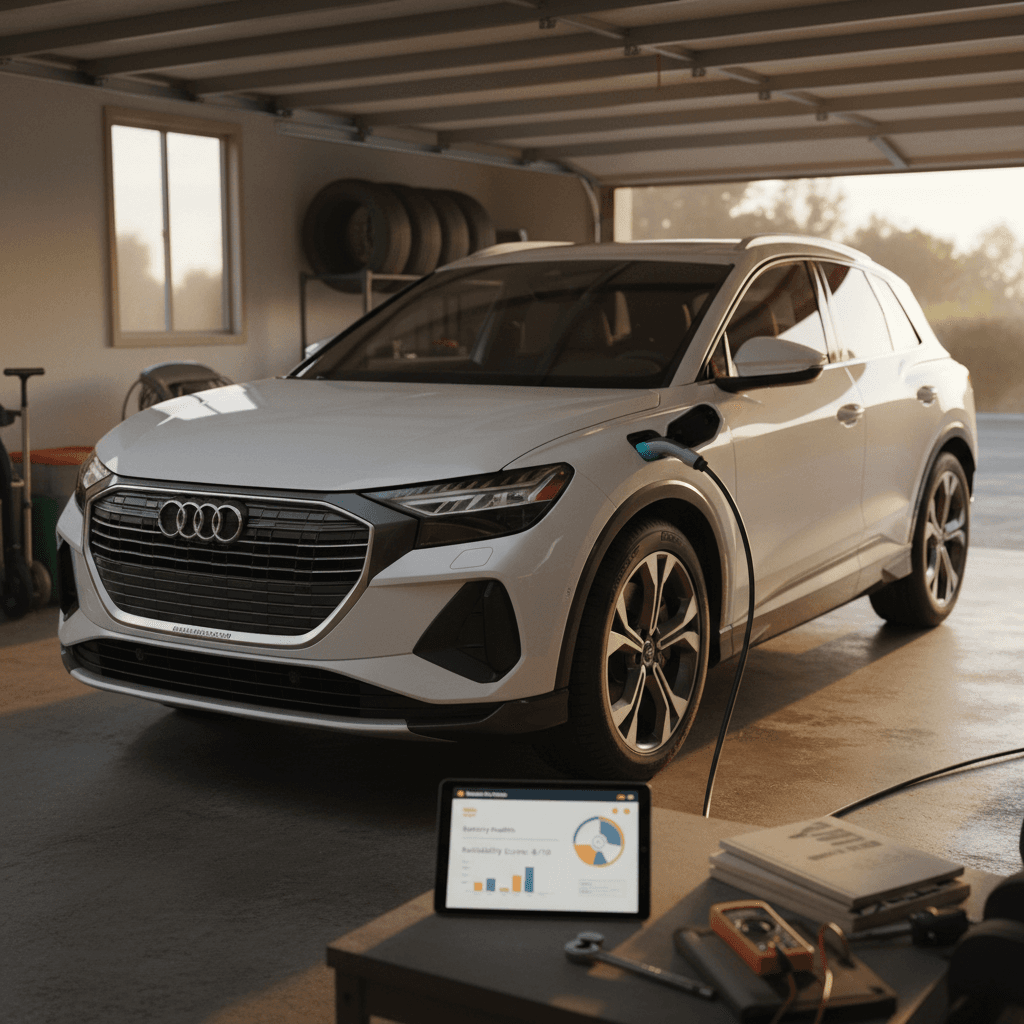
2. Demand a battery health report
You want more than range guesses from the dash. At Recharged, every Q4 gets a <strong>Recharged Score battery diagnostic</strong> that quantifies usable capacity and flags abnormal degradation before it’s ever listed.
3. Stress-test the infotainment
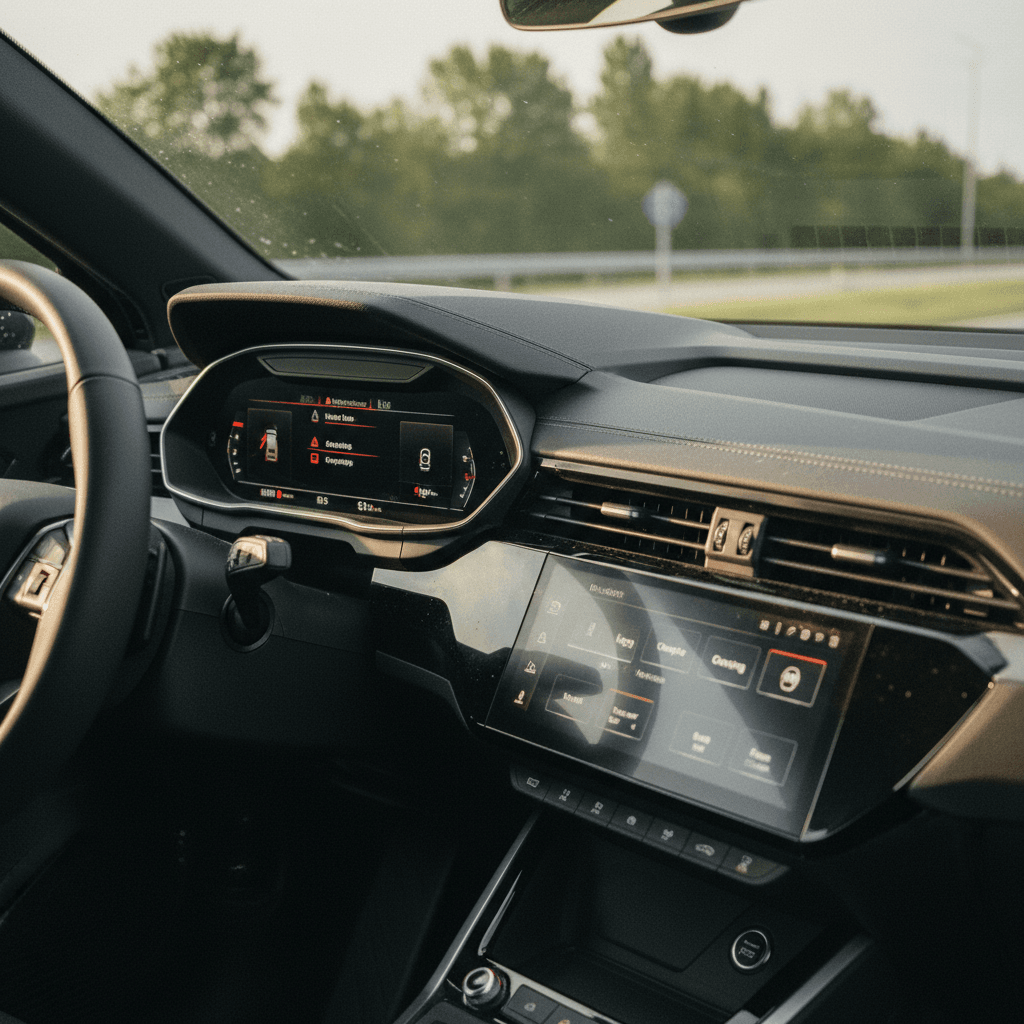
Plan on a long test drive. Connect your phone via CarPlay/Android Auto, run navigation, stream audio, and use driver-assist features. Watch for freezes, reboots, or warning messages that hint at deeper module issues.
4. Check charging behavior at home and DC fast
If possible, plug into a Level 2 charger and at least one DC fast‑charger. Confirm the car reaches expected charge speeds and does not drop the session unexpectedly without a clear reason like station fault or cold battery.
5. Inspect for trim rattles and wind noise
On a highway drive, listen around the doors, dash, and panoramic roof area. Persistent rattles and wind hiss are fixable but can be hard to chase; they also say a lot about how carefully the car’s been treated.
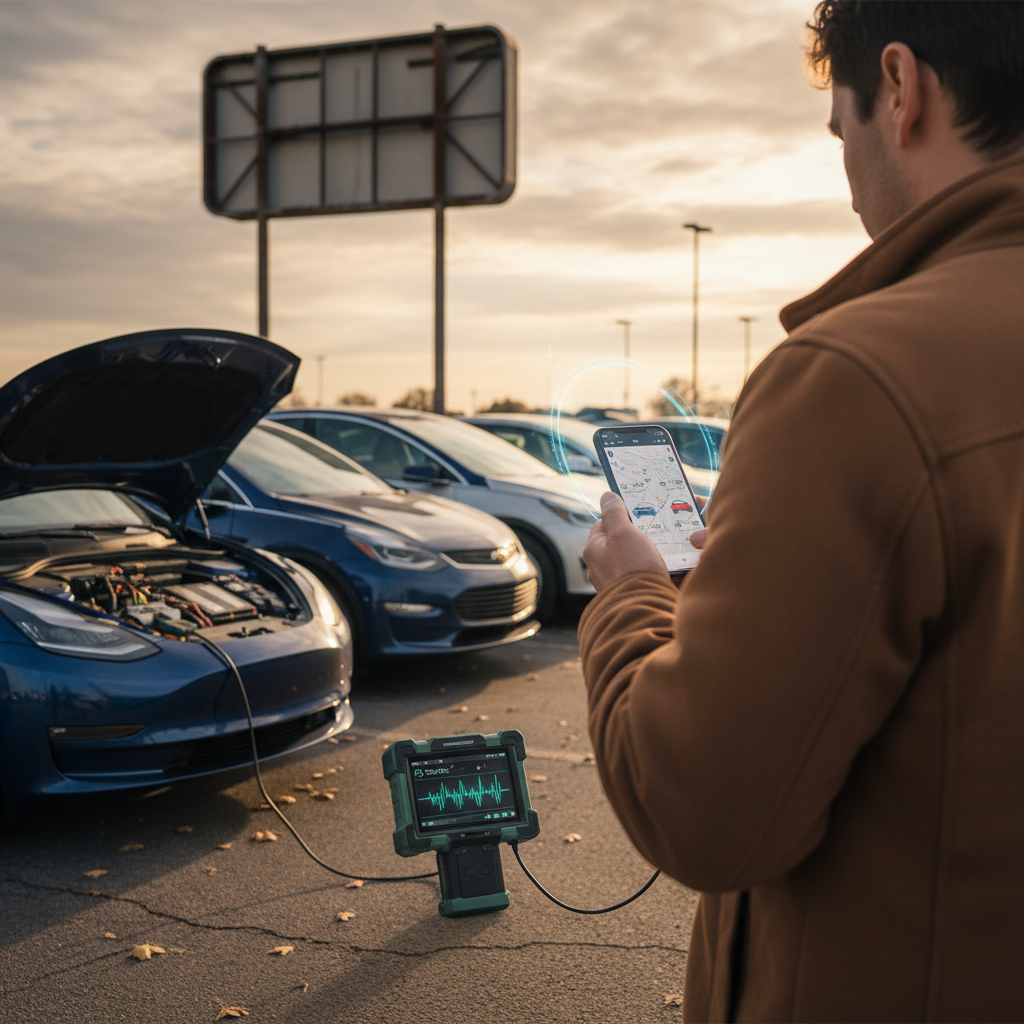
6. Scan for warning lights and stored codes
Before you buy, have the car scanned for stored fault codes, even if no check lights are active. A shop familiar with Audi EVs can spot patterns (repeated 12V low‑voltage events, for example) that predict future headaches.
7. Confirm warranty coverage and terms
Audi’s high‑voltage battery warranty and basic coverage can vary by region and in‑service date. Make sure you know <strong>exactly</strong> how many years/miles of coverage remain on the car you’re considering.
Make the paperwork work for you
When a 2023 Q4 e-tron is a good buy
So, should you actually buy a 2023 Q4 e-tron? In the used market, the answer is often yes, **if the car checks out on the items above and you price in a little software drama.** Depreciation has already taken a bite out of MSRP, and J.D. Power’s strong resale outlook suggests continued demand for clean examples.
Signs it’s a smart purchase
- All recalls and major TSB updates documented as complete.
- Battery health report showing only modest degradation and no out‑of‑family cells.
- Owner history that suggests gentle use (commuter duty, regular maintenance, no repeated “electrical system malfunction” visits).
- Price that reflects its “fair” reliability record compared with rivals, i.e., a meaningful discount vs. new.
Red flags to walk away from
- Multiple visits for the same unresolved software or charging issue.
- Incomplete recall status or an owner who “never got around” to updates.
- Any sign of high‑voltage battery work without crystal‑clear documentation.
- A dealer or seller unwilling to provide a scan report or third‑party battery health check.
How Recharged can help
Ready to find your next EV?
Browse VehiclesFAQ: 2023 Audi Q4 e-tron reliability
Frequently asked questions about 2023 Q4 e-tron reliability
The 2023 Audi Q4 e-tron is not the indestructible EV some shoppers hope for, but it’s also far from a rolling catastrophe. Its **official reliability rating is merely fair**, yet the fundamentals, battery, motors, chassis, look promising, and many owners quietly rack up miles with minimal drama. If you walk in with clear eyes about the software quirks, lean on data rather than anecdotes, and insist on a thorough health check, a 2023 Q4 e-tron can be a savvy used EV buy rather than an expensive science experiment.