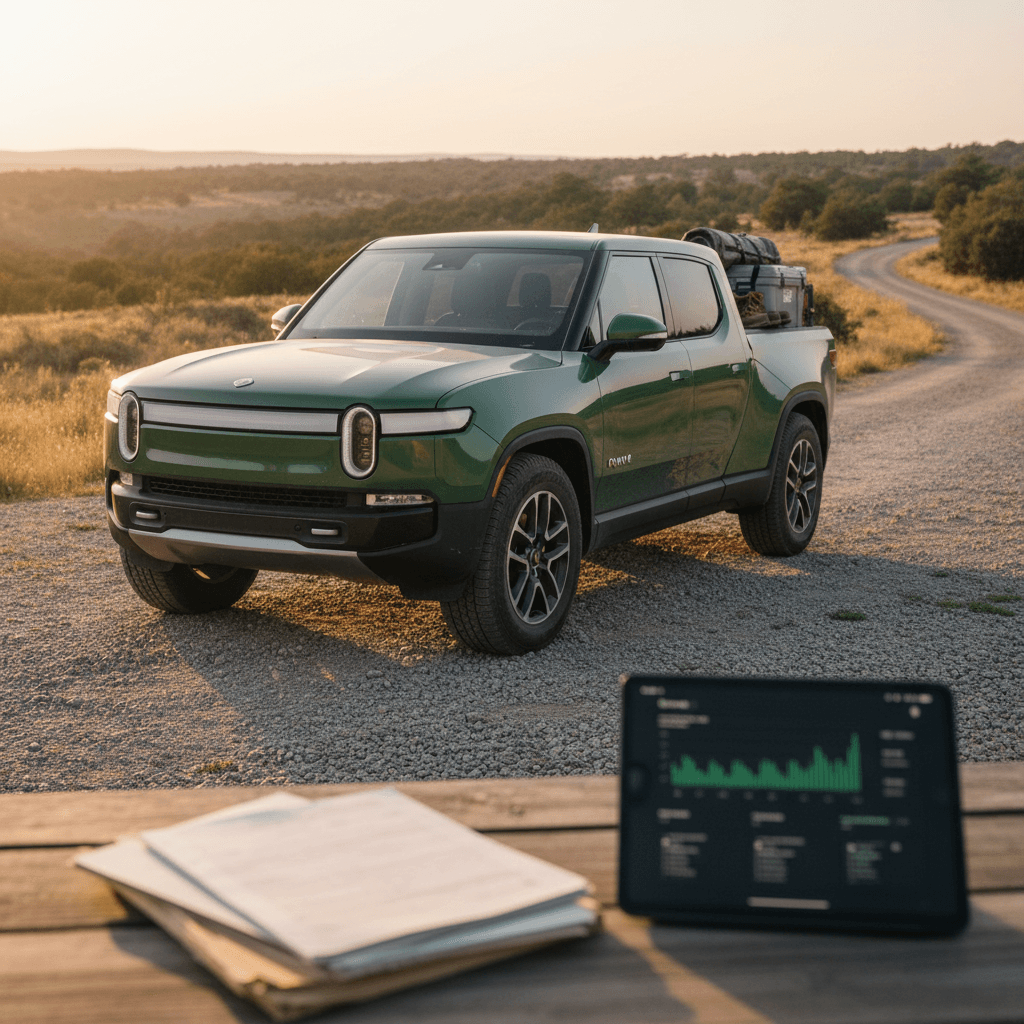
If you’re considering a used 2022 Rivian R1T, reliability is probably your biggest question. Early builds from a brand‑new automaker can be magical… or maddening. The reality with the 2022 R1T is somewhere in between: not bulletproof like a decade‑old Toyota pickup, but better than many people assume and improving as Rivian matures.
Where the 2022 R1T stands today
2022 Rivian R1T reliability overview
2022 R1T reliability at a glance
Looking across owner reviews, long‑term media tests, and recall history, a pattern emerges. The 2022 R1T is mechanically solid at its core, battery, motors, and chassis, but wrapped in first‑generation software and trim that can be fussy. If you want total appliance‑like predictability, a conventional half‑ton will still be less drama. If you’re okay with the occasional service visit or software bug in exchange for a unique driving experience, the R1T can be a satisfying long‑term truck.
Early‑production vs. later‑production 2022 trucks
How the 2022 R1T has performed in the real world
What owners and testers report
Balancing glowing reviews with real frustrations
Day‑to‑day reliability
Software & UX bugs
Road‑trip experience
In a 40,000‑mile long‑term test, a 2022‑spec R1T racked up miles with minimal hard failures. The big takeaways: tires wear quickly on this heavy, high‑performance truck; minor rattles and squeaks increase over time; and a few hardware items (like key fobs) prove more fragile than you’d expect. But the electric drivetrain and air‑suspension hardware have, so far, held up better than many skeptics predicted.
How to read online reliability stories
Recalls and known campaigns for 2022 R1T
Like most all‑new vehicles, the R1T has seen a steady stream of recalls and service campaigns. That’s not inherently a red flag, recalls are how modern automakers quietly iterate in the field, but you should understand what’s been addressed on any 2022 truck you’re considering.
Major recall themes affecting 2022 R1T trucks
This is a high‑level view; always run a VIN through NHTSA and Rivian to confirm completion status.
| Area | Model years affected | Issue type | Typical fix |
|---|---|---|---|
| Steering & suspension | 2022–2025 | Improper reassembly of rear toe link after suspension service may lead to separation and loss of control in extreme cases. | Inspection of rear toe links and replacement using updated procedure and hardware where needed. |
| Airbags & safety systems | 2022+ | Typical early‑production calibration or component issues (airbag warning lights, seat sensors). | Software update or replacement of affected sensor/modules. |
| Body & trim | 2022 | Tonneau cover malfunctions, loose underbody panels, wind noise from window seals. | Revised tonneau cover, refastened panels, updated seals or alignment. |
| Software & driver assist | Primarily 2023+ but software also runs on earlier trucks | Driver‑assist glitches (hands‑free assist mis‑detecting vehicles, for example) fixed via OTA updates. | Over‑the‑air update to latest software; no hardware replacement in most cases. |
Ask the seller for documentation showing these campaigns have been completed.
Don’t ignore recall history
Common 2022 R1T issues to know about
The good news: there’s no single catastrophic flaw that makes the 2022 R1T a “do not buy.” Instead, you see a cluster of recurring annoyances, especially on early‑build trucks and those used hard off‑road or for heavy towing.
Most frequently reported 2022 R1T problems
What you’re most likely to encounter on a used truck
Suspension noises & half‑shafts
Wind noise & glass issues
Trim and body hardware
Software glitches & key fobs
The upside of an early‑adopter truck
Battery and drivetrain reliability
For a used EV, long‑term battery health is the core of reliability. So far, 2022 R1T battery packs and motors are holding up well relative to their performance envelope.
High‑voltage battery
- Real‑world range tests around 250 miles at 75 mph for large‑pack trucks align reasonably well with Rivian’s early claims.
- Most 2022 owners reporting into forums and reviews are seeing modest degradation so far, often in the single‑digit percentage range after tens of thousands of miles.
- Thermal management is aggressive, which helps longevity but can increase energy use in very hot or cold weather.
As with any EV, frequent DC fast charging at very high states of charge and sustained high‑speed towing are the main stress multipliers.
Motors & drive units
- The quad‑motor setup has proven robust in long‑term testing, with no pattern of widespread motor failures emerging yet.
- Most “drivetrain” complaints are really suspension or half‑shaft related, noise and vibration when putting 800+ horsepower to the ground.
- Because there’s no engine oil, spark plugs, or transmission fluid to service, powertrain maintenance is minimal compared with an ICE truck.
Focus your inspection on how the truck drives, smooth power delivery, no shuddering under acceleration, and no warning lights.
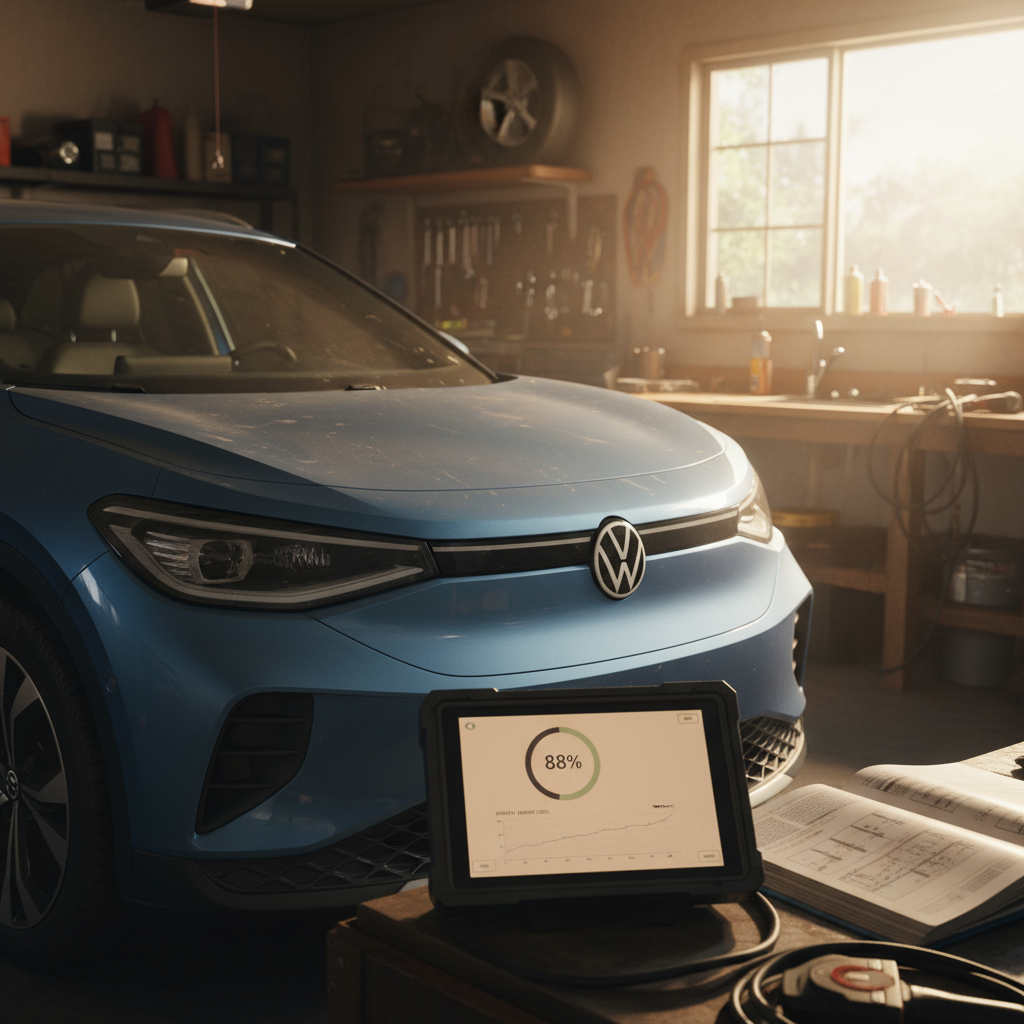
Battery health is measurable
Ownership costs and downtime risk
Reliability isn’t just about whether the truck breaks; it’s about what it costs you, money, time, and stress, when something does go wrong. With the 2022 R1T, there are three big levers to think about: running costs, warranty coverage, and service access.
- Running costs: No oil changes, no transmission service, and fewer wear items than a gas truck. Your main consumables are tires (which wear faster on a 7,000‑lb performance EV), brake fluid, and cabin air filters.
- Warranty safety net: Rivian’s battery and drivetrain warranty provides long coverage, and many 2022 trucks are still under bumper‑to‑bumper coverage as of 2026. That makes now a relatively low‑risk window to own one, if you buy the right truck.
- Service availability: Owners in major metros with Rivian service centers report smooth experiences, including mobile service for some fixes. In more remote areas, long wait times for appointments or parts can turn minor issues into significant downtime.
Factor in service geography
What to check when buying a used 2022 R1T
Shopping for a used 2022 R1T isn’t about avoiding the model entirely; it’s about finding a truck that’s already had its rough edges smoothed off. Here’s how to stack the odds in your favor.
Pre‑purchase checklist for a 2022 R1T
1. Verify recall and service history
Ask for a full service history from Rivian or the seller. Confirm that any suspension, steering, airbag, and software campaigns are completed. If the truck has had rear suspension work, make sure it has the updated toe‑link parts and procedures documented.
2. Inspect suspension and steering
On a test drive, listen for clunks, pops, or creaks over speed bumps and tight turns. Feel for vibration under hard acceleration. Underneath, look for fresh, high‑quality work on control arms, half‑shafts, and dampers, not just quick patches.
3. Check glass, seals, and body alignment
Look for multiple windshield replacements, excessive chips, or poorly aligned glass and doors. Drive at highway speeds to check for wind noise from the A‑pillars, triangle windows, and door seals, fixable, but worth negotiating over.
4. Test all software‑driven features
Cycle the key fobs, phone key, cameras, parking sensors, and driver‑assist systems. Make sure the infotainment boots quickly and doesn’t throw repeated error messages. Ask the owner how often the truck has needed “reboots” to clear glitches.
5. Evaluate battery health and charging behavior
Check recent range at a known state of charge and driving pattern. If possible, review a recent battery health report or have a third‑party diagnostic run. Confirm the truck can charge normally on both Level 2 and DC fast chargers without derating.
6. Look underneath for off‑road abuse
A lot of 2022 R1Ts have seen real trail time. Skid plates and underbody panels should show normal wear, not severe impacts, cracks, or missing fasteners. Excessive underbody damage is a good reason to keep shopping.
Use issues as leverage, not deal‑breakers
How R1T reliability compares to other EV trucks
EV pickups are all early in their life cycles, and none of them are paragons of old‑school simplicity. But there are some meaningful differences in how the 2022 R1T stacks up against key alternatives.
2022 R1T vs. other early EV trucks (reliability lens)
High‑level, qualitative comparison focused on reliability themes rather than specs.
| Model | Launch timing | Recall intensity | Typical issues | Best fit buyer |
|---|---|---|---|---|
| Rivian R1T (2022) | Startup, first model year | Moderate–high for a new vehicle; around eight recalls so far. | Suspension noises, trim and seal issues, software quirks; core battery/drivetrain strong so far. | Drivers who value adventure capability and design, comfortable with some early‑adopter rough edges. |
| Ford F‑150 Lightning (2022) | Legacy brand, electric variant of existing truck | High; dozens of recalls across model years as Ford iterates. | Mix of software bugs, charging issues, and traditional truck problems (engine‑bay components, hardware). | Truck traditionalists who want Ford’s dealer network and familiar truck ergonomics. |
| Tesla Cybertruck (early builds) | New platform, new manufacturing approach | Also launched with multiple recalls in its first year. | Panel fit, trim quality, steering and pedal issues early on; OTA software still maturing. | Buyers who prioritize Tesla ecosystem and Supercharger integration over conventional truck practicality. |
You’re choosing between different flavors of “complex new vehicle,” not between flawless and flawed.
New tech means more recalls, for everyone
How Recharged evaluates a used Rivian R1T
Because a 2022 R1T’s story is written in its usage and service history, not just its odometer, we take a different approach than a traditional dealer when we bring one into the Recharged marketplace.
What’s in a Recharged Score for a 2022 R1T
Going beyond a basic visual inspection
Deep battery health diagnostics
Underbody & suspension check
Software & recall status
Ready to find your next EV?
Browse VehiclesEvery used EV on Recharged comes with transparent pricing, optional financing, and nationwide delivery. If you’re trading out of a gas truck or another EV, we can also provide an instant offer or consignment options so you don’t have to juggle multiple transactions while you evaluate a 2022 R1T.
FAQ: 2022 Rivian R1T reliability
Frequently asked questions about 2022 R1T reliability
Is a 2022 Rivian R1T a good used buy?
If your priority is the lowest‑risk, lowest‑drama truck ownership experience, a new or late‑model gas half‑ton will still beat a first‑year EV pickup. But if you’re drawn to the 2022 Rivian R1T’s combination of design, performance, and off‑road capability, the reliability story isn’t a reason to run, it’s a reason to shop carefully.
The core battery and drivetrain appear robust, and many of the teething issues that surfaced on early 2022 trucks have already been addressed through recalls, updated parts, and software. Your job as a used buyer is to make sure you’re getting one of those sorted trucks, not the outlier that’s still waiting for its turn in the service bay.
That’s where a structured evaluation, battery health diagnostics, underbody and suspension inspection, and a deep dive into software and recall history, pays off. Whether you buy through Recharged or bring us a truck you’ve found elsewhere for a pre‑purchase assessment, taking the time to understand a 2022 R1T’s reliability profile up front can turn an early‑adopter gamble into a confident, long‑term ownership bet.