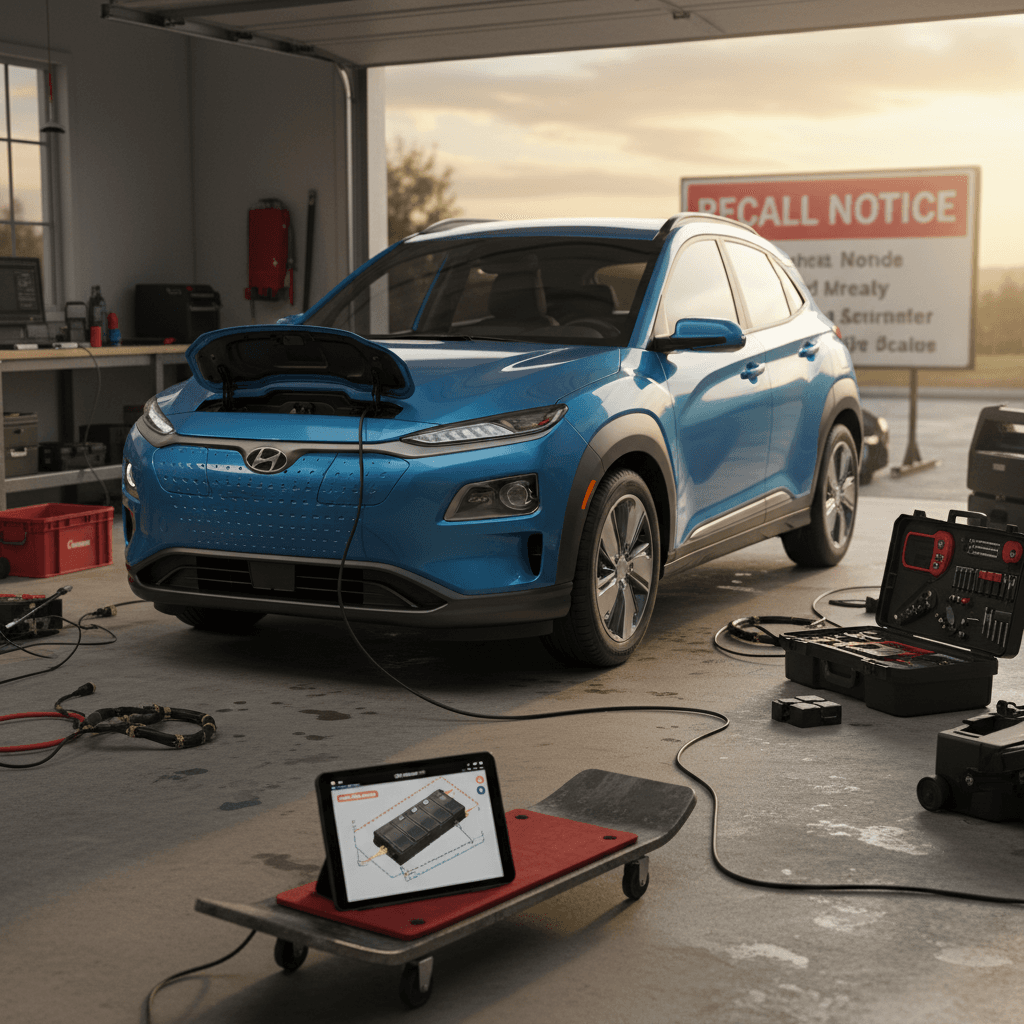
If you own or are shopping for a 2022 Hyundai Kona Electric, it’s smart to ask about recalls. Earlier Kona EVs (2019–2020) were part of a high‑profile battery fire recall, and by 2022 Hyundai had redesigned the pack and rolled out new software and coolant campaigns. This guide pulls together the most important information into a clear 2022 Hyundai Kona Electric recalls list and explains what each campaign means for safety, range, and used‑car value.
Good news for 2022 Kona Electric owners
Overview: 2022 Kona Electric recalls at a glance
Kona Electric recalls in context
Hyundai has continued to refine the Kona Electric platform as more real‑world data arrives. For 2022 models, that’s turned into a few targeted recalls and service campaigns, plus the usual run of technical service bulletins (TSBs) that dealers use to address recurring customer complaints. You don’t need to memorize campaign codes, but it helps to understand the broad categories: battery monitoring software, coolant system updates, and general electrical/charging behavior.
Recall vs. TSB: don’t mix them up
2022 Hyundai Kona Electric recalls list
Hyundai and NHTSA don’t publish model‑year‑specific lists in one neat place; instead, they attach campaigns to specific VIN ranges and build dates. That said, based on what’s been issued for Kona Electric through early 2026, here’s what a typical 2022 Kona Electric recalls list looks like in practice. Your individual car may have more or fewer open items depending on when and where it was built and sold.
Common recall & campaign types affecting 2022 Kona Electric
Typical campaigns that 2022 Kona Electric owners are likely to see when they check their VIN. Exact applicability depends on build date, market, and prior repairs.
| Campaign type | What it targets | Typical symptom or risk | Applies to 2022?* |
|---|---|---|---|
| High‑voltage battery fire recall (early LG packs) | Defective cell manufacturing in early‑build Kona EV batteries | Risk of internal short circuit and fire while parked, charging, or driving | Mostly 2019–2020; generally not 2022 |
| Battery management system (BMS) software update | Improved detection of thermal anomalies and more conservative charging control | Reduced risk of overheating; may slightly change charging behavior | Yes, on some 2021–2022 cars |
| Coolant / low‑conductivity fluid service campaign | Replacement or testing of special battery coolant in earlier designs | Addresses long‑term risk of internal short from coolant contamination | Often marked for 2020–2022, including some 2022 VINs |
| On‑board charger / charging control update | Communication and fault‑handling logic for AC and DC charging | Occasional charge interruptions, warning lights, or reduced charge rate | Possible on 2022 depending on region |
| General electrical / 12‑volt battery wiring campaign | Improved routing or shielding of low‑voltage wiring in the front compartment | Mitigates risk of shorts or no‑start conditions after specific events | Seen mainly on gas Konas; rarely on Kona Electric |
Always confirm open recalls using your specific VIN; this table is a guide, not a substitute for an official lookup.
Why the table says “applies to 2022?*”
If you’re coming from headlines about Kona EV battery fires, the big distinction is that the original fire‑risk recall was aimed squarely at 2019–2020 vehicles with specific LG‑supplied battery packs. By 2022, production had moved to updated hardware, so the likelihood of a 2022 car needing a full pack replacement under that original campaign is low. Instead, you’re more likely to see software and coolant‑related campaigns that further lower risk and improve long‑term durability.
Software, battery and coolant campaigns explained
Battery management software updates
Hyundai has issued several updates for the Kona Electric’s battery management system (BMS). These updates improve how the car:
- Monitors individual cells for abnormal voltage or temperature
- Limits charge rates if the pack is getting hotter than expected
- Logs fault data so engineers can spot patterns early
After an update, you might notice slightly different charging behavior, like a more gradual ramp‑up or an earlier taper at high state of charge. That’s the system choosing caution over a few minutes of speed.
Coolant and low‑conductivity fluid campaigns
Earlier Kona Electric packs used a special low‑conductivity coolant that flows near high‑voltage components. Hyundai has run campaigns to:
- Test coolant condition and replace it if it no longer meets spec
- Update service procedures to reduce contamination risk
- In some cases, switch to revised cooling hardware or fluids
For you, this usually means a dealer visit where the pack is inspected, coolant is tested or replaced, and software is brought up to the latest level.
Ask the service advisor one specific question
How to check your 2022 Kona EV for open recalls
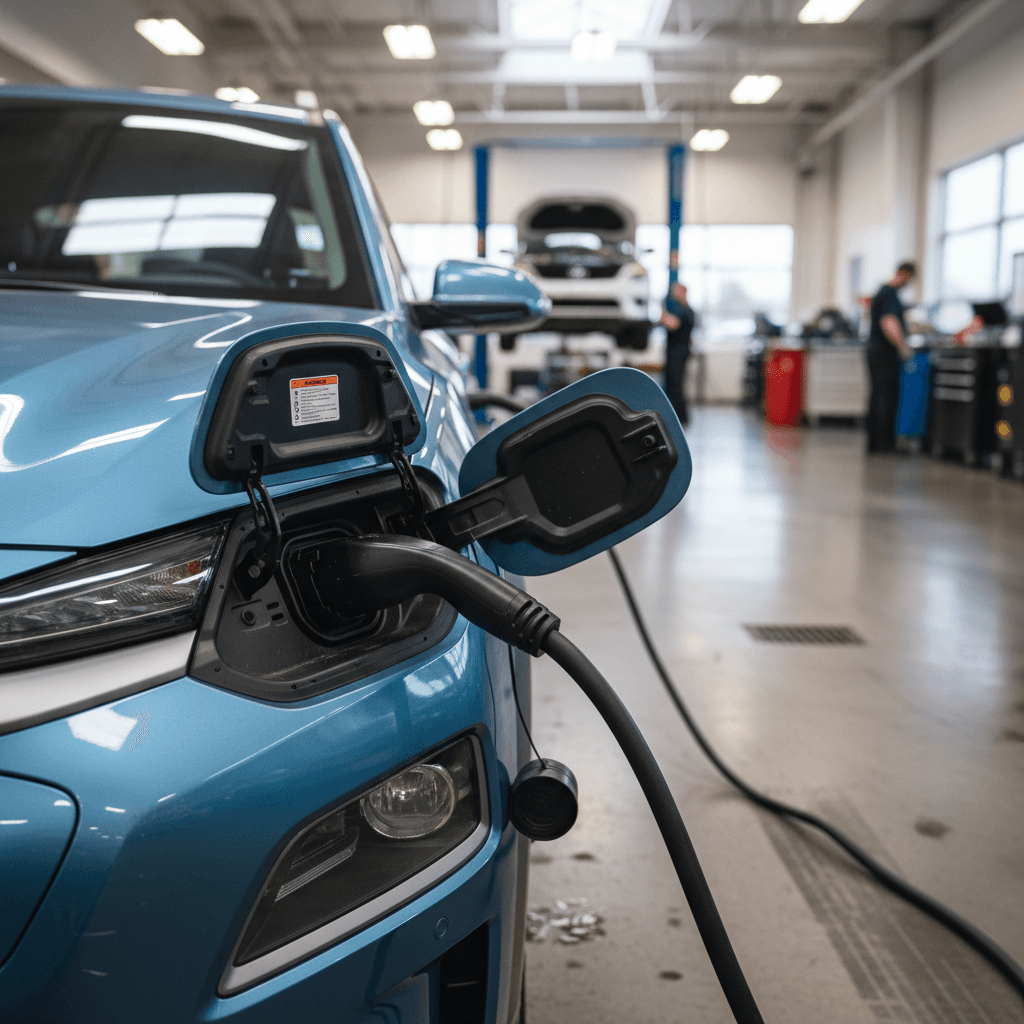
Because recall eligibility is tied to VIN, not just model year, the most reliable way to build a personalized 2022 Hyundai Kona Electric recalls list is to run your 17‑digit VIN through official tools. Set aside five minutes and follow these steps before you buy, or before your next road trip if you already own the car.
Step‑by‑step: checking your 2022 Kona Electric for recalls
1. Locate your 17‑digit VIN
You’ll find the VIN at the base of the windshield on the driver’s side, on the driver‑door jamb sticker, and on your registration or insurance card. Snap a photo so you don’t have to keep walking back to the car.
2. Search the NHTSA recall tool
Go to the NHTSA recall lookup site or use their SaferCar app. Enter your VIN and review any open recalls. This database is U.S.‑specific and focuses strictly on safety campaigns.
3. Check Hyundai’s owner site or app
Hyundai’s own owner portal and mobile app can show campaigns that may not appear instantly in NHTSA’s tool, including service campaigns and software updates. Create an account, add your vehicle, and review the “recalls and service campaigns” section.
4. Call a Hyundai EV‑certified dealer
Give the service department your VIN and ask them to read back all open recalls and campaigns. Confirm whether parts are in stock and whether they have EV‑certified technicians on staff.
5. Schedule recall work as soon as possible
Recall work and safety campaigns are free, and many dealers will combine them into a single visit. Ask about a loaner or shuttle if repairs are expected to take more than a couple of hours.
6. Keep paperwork with your service records
After the work is done, keep copies of recall repair orders. They’re proof your car is up to date, helpful for your peace of mind today and for resale value down the road.
Used‑car tip
What these recalls mean for safety and fire risk
When a vehicle nameplate like Kona Electric is associated with fire headlines, it’s easy to lump all model years together. That’s not accurate, and it can cause shoppers to overlook what is, in many respects, a well‑sorted, efficient EV by the time you get to 2022.
How 2022 Kona Electric recall work affects real‑world safety
Understanding the practical impact makes it easier to decide whether this EV is right for you.
Lower fire risk vs. early years
Most documented Kona EV fires involved pre‑2021 battery packs that were later replaced or addressed by recall. By the 2022 model year, Hyundai was building cars with updated packs and running additional monitoring software.
More conservative charging behavior
BMS and charging‑logic updates may dial back peak charge rates under certain conditions. You trade a few minutes at the plug for better thermal control and pack longevity.
Improved long‑term durability
Coolant and monitoring campaigns are about catching rare issues before they become a problem. Done on time, they help keep the high‑voltage system stable deep into a car’s second and third owners.
Charging in a garage? Pay attention to recalls.
Shopping used 2022 Kona Electric: what to look for
From a shopper’s standpoint, the 2022 Kona Electric sits in a sweet spot: updated battery hardware, mature software, and prices that can look very attractive next to new‑car MSRPs. The key is separating clean, well‑maintained examples with completed recalls from cars that still have unanswered questions about their high‑voltage systems.
- Verify all open recalls and campaigns are completed, especially anything involving the high‑voltage battery, BMS software, or coolant system.
- Review service records for regular maintenance and any high‑voltage or charging‑system repairs.
- Test DC fast charging and Level 2 charging if possible to confirm normal behavior and speeds.
- Check for warning lights or stored error codes related to the EV system before you buy.
- Ask whether the car has ever had its traction battery replaced under warranty or recall, this can be a positive, but you’ll want documentation.
How Recharged helps with recall and battery questions
Strengths of a good 2022 Kona Electric
- Compact footprint with strong efficiency and solid real‑world range
- Updated battery pack design compared with troubled early years
- Plenty of availability on the used market at approachable prices
- Standard DC fast‑charging capability for road‑trip flexibility
Reasons to walk away from a specific car
- Open high‑voltage or coolant campaigns the seller won’t address
- Evidence of neglected maintenance or ignored warning lights
- Strange charging behavior the dealer can’t reproduce or explain
- Reluctance to share full service history or recall paperwork
Ownership tips after recall repairs are done
Once you’ve confirmed that your 2022 Kona Electric is up to date on recalls, the focus shifts to living with the car day‑to‑day. The same habits that help any EV battery age gracefully apply here as well, and they complement the safety margins Hyundai has added through software and coolant campaigns.
Smart ownership habits for a 2022 Kona Electric
These practices support battery health and keep small issues from turning into big ones.
Charge moderately at home
Use Level 2 home charging where possible and avoid running the battery to 0% or sitting at 100% for days. A routine 20–80% or 30–90% window is a comfortable sweet spot.
Watch temps in extreme weather
In very hot or very cold conditions, give the car a few minutes to precondition while plugged in and don’t push back‑to‑back DC fast‑charge sessions unless you really need to.
Stay current on software updates
Ask your dealer at each visit whether any new software campaigns apply. Small updates over time can improve stability, efficiency, and even charging compatibility.
Planning to sell or trade later?
FAQ: 2022 Hyundai Kona Electric recalls
Frequently asked questions about 2022 Kona Electric recalls
Bottom line on 2022 Kona Electric recalls
The 2022 Hyundai Kona Electric sits on the far side of the model’s most serious recall chapter. While early Kona EVs deserved the fire‑risk headlines they got, by 2022 Hyundai had moved to updated packs and layered in more conservative software and coolant strategies. That doesn’t mean you can ignore recalls, quite the opposite. A quick VIN check and one or two dealer visits to complete campaigns are the price of admission for a compact EV that can serve you well for years.
If you already own a 2022 Kona Electric, treat recall letters and software‑update notices as invitations to free risk reduction. If you’re shopping used, build your own 2022 Hyundai Kona Electric recalls list from VIN data, pair it with solid battery‑health information, and negotiate from a position of knowledge. And if you’d rather have an expert do the heavy lifting, Recharged can help you find, finance, and ship a thoroughly vetted used EV, Kona Electric included, backed by transparent diagnostics and support from EV‑savvy specialists.