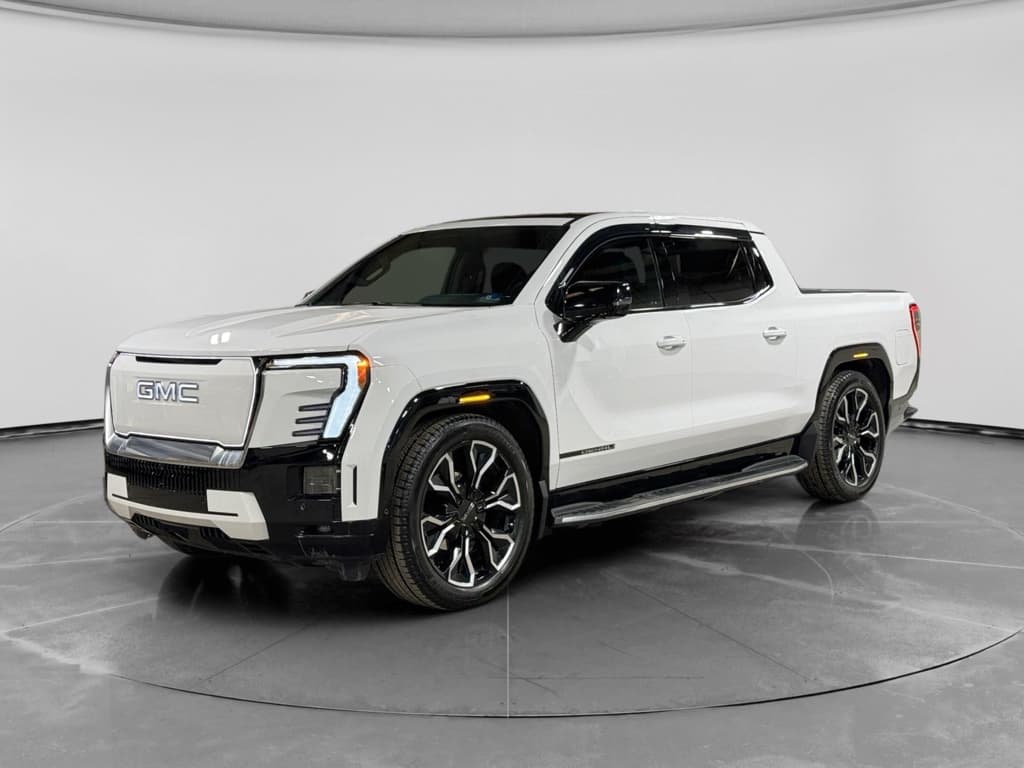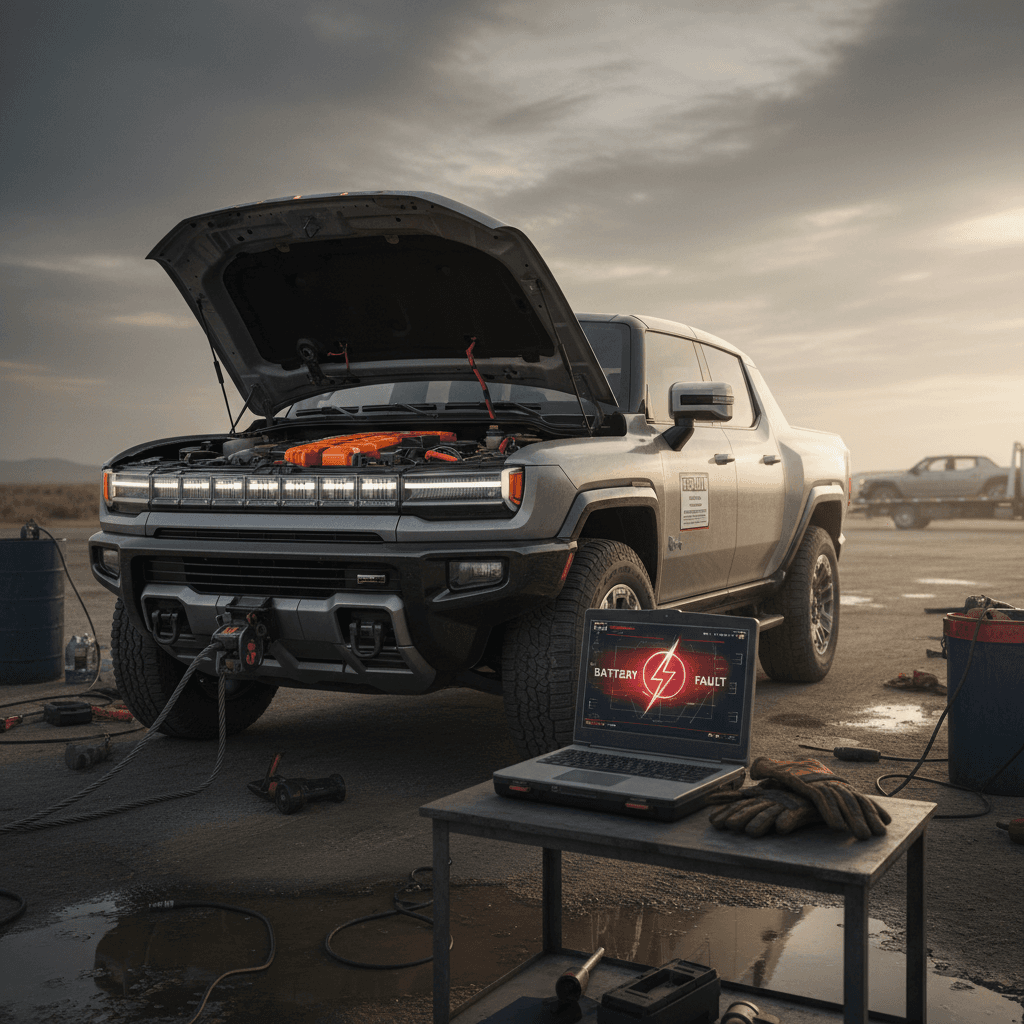
If you’re considering a **2022 GMC Hummer EV**, you’ve probably heard about eye‑watering weight, wild off‑road party tricks…and some real reliability questions. Early‑build EVs often have growing pains, and the first model year of the Hummer EV is no exception. This guide walks you through the most common 2022 Hummer EV problems, how serious they really are, and what to look for if you’re shopping used.
First year of an all-new EV
Overview: How Worried Should You Be About 2022 Hummer EV Problems?
The headline is that **serious, well‑documented failures are concentrated in a few key areas**: high‑voltage battery packs on a limited number of vehicles, taillight software, and various software glitches that can trigger multiple warning messages at once. Beyond that, many owner gripes are about minor tech annoyances rather than catastrophic failures.
2022 GMC Hummer EV Problem Snapshot
So the 2022 Hummer EV is **not a rolling disaster**, but it *is* a highly complex, first‑year luxury off‑roader where the stakes are high if something goes wrong. If you’re evaluating a used one, you want to understand the big problem buckets and verify that recall work and updates are complete.
Low volume hides patterns
Major 2022 GMC Hummer EV Recalls You Should Know About
Before we get into day‑to‑day owner complaints, it’s worth starting with the **official recalls** that affect the 2022 Hummer EV. These are safety‑related defects that GMC has acknowledged and is obligated to fix at no cost to the owner.
Key 2022 Hummer EV Recalls & Service Actions
Always run the VIN through GMC or NHTSA to confirm these have been completed on any 2022 Hummer EV you’re considering.
| Issue | Symptoms | Fix | Why It Matters |
|---|---|---|---|
| High-voltage battery connections | Possible loss of drive power, warning lights, reduced performance | Dealer inspects high‑voltage battery pack; if defects are found, pack is replaced | Battery work is extremely expensive out of warranty, this recall is a big deal for buyers. |
| Tail lamp software defect | Taillights may go dark or stay partially lit all the time | Dealers inspect and replace one or both taillamp assemblies | Non‑functional or stuck‑on lights are a safety risk and can get you pulled over. |
| Labeling error on 12V cut loop | Incorrect emergency cut‑loop label on 12‑volt negative cable | Dealer removes incorrect label; correct label remains in proper location | Primarily a first‑responder safety and compliance issue, not a drivability problem. |
| Misc. software updates | Warning messages, driver-assist or suspension features misbehaving | Software reflash / OTA updates and, in some cases, module replacement | Improves stability of driver‑assist, suspension, and charging behavior over time. |
Recall campaigns evolve, so verify status with a GMC dealer using the truck’s VIN.
VIN check is non‑negotiable
Battery & Charging Problems on the 2022 Hummer EV
Given the Hummer EV’s **massive Ultium pack** and replacement costs, anything battery‑related belongs at the top of your risk list. There are two distinct buckets here: the **official high‑voltage battery recall** and a separate stream of **battery conditioning / thermal management issues** reported by some owners.
- High-voltage pack manufacturing defects that can cause a loss of drive power (covered by recall).
- Battery conditioning or thermal management faults that trigger “Service EV” warnings and reduced performance.
- Charging‑related glitches, especially at DC fast chargers, sometimes blamed on the charger and sometimes on the truck.
In owner forums you’ll find cases where a Hummer EV had its **entire battery pack replaced under recall**, only for the driver to later see new error codes tied to the battery conditioning system. Dealers sometimes struggle to diagnose these issues quickly, and it’s not unusual to see trucks in the shop for **weeks at a time** while parts, engineering guidance, or both catch up.
Why battery faults are high‑stakes
Battery red flags when test driving
- Persistent “Service EV” or battery‑related warnings on the cluster.
- Charging that stalls frequently or refuses multiple DC fast chargers.
- Cooling fans blasting loudly at modest ambient temperatures.
- Truck limiting power or range without obvious cause.
Questions to ask the seller
- Has the high‑voltage battery recall been completed? When?
- Any prior pack replacements or major battery repairs?
- Service records showing battery conditioning or DC fast‑charge complaints?
- How often is it DC fast‑charged vs. Level 2 at home?
How Recharged de‑risks Hummer EV batteries
Software Glitches & Driver-Assist Warnings
The Hummer EV is a rolling tech demo: Ultium drive units, four‑wheel steering, advanced drive modes, Super Cruise, giant screens, and constant over‑the‑air updates. That complexity has led to **a particular flavor of problem** owners talk about a lot: cascading warning messages and features dropping offline, only to come back after a restart.
- Clusters of warnings like “one‑pedal driving unavailable,” “service ESC,” “4WD unavailable,” “service active steering system,” and “service driver assist system” all appearing at once.
- Temporary loss or limitation of driver‑assist features (Super Cruise), trailer brake controls, or one‑pedal driving.
- Issues where dealers can’t reproduce the fault reliably and send the truck back with software updates but no clear root cause.
Owners describe scenarios where they’re stopped at a light, the truck is holding on a grade, and then **half the dashboard lights up** with errors. In some cases, cycling the power clears everything; in others, the truck goes back to the dealer and technicians work through GM’s remote guidance step by step.
Normal EV quirk vs. real problem
Quick software health check on a test drive
1. Start with a cold boot
Unlock the truck after it’s been sitting, power it up normally, and watch for any persistent warnings that stay on the cluster after a few seconds.
2. Toggle key features
Engage and disengage one‑pedal driving, change drive modes, and if the road allows, briefly try Super Cruise. Features should enable cleanly and consistently.
3. Cycle the truck once
After a short drive, fully power the truck down, open and close the door, then restart. Re‑check for new or recurring warnings.
4. Ask about OTA history
Have the seller show that the truck has been receiving and installing over‑the‑air updates. A truck stuck on very early software is more likely to be glitchy.
Suspension, Steering & CrabWalk-Related Quirks
Another recurring thread in owner stories involves the **air suspension and four‑wheel steering**, including the Hummer’s headline ‘CrabWalk’ feature. When everything works, the truck feels almost impossibly maneuverable for something this big. When things act up, you’ll see error messages and temporarily lose features.
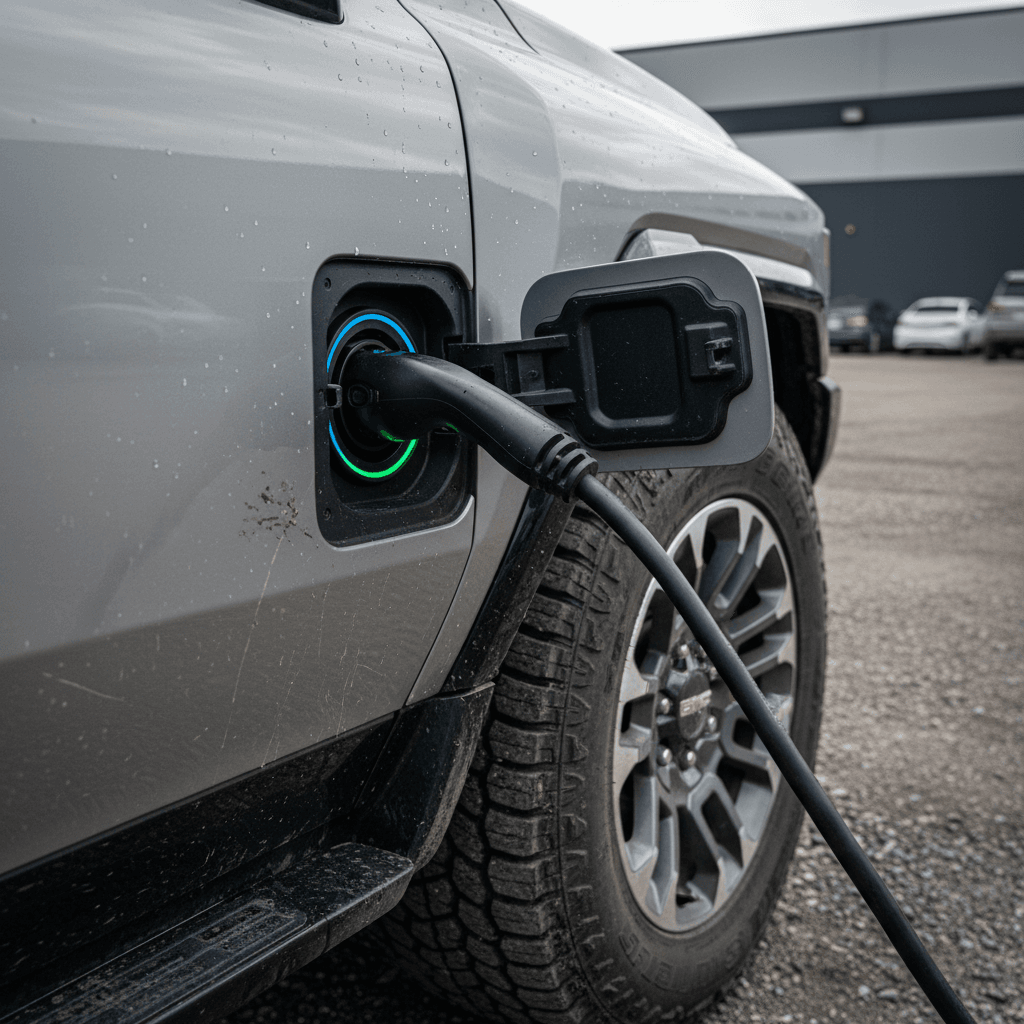
- “Service Leveling System” messages that temporarily disable height adjustment until the truck is restarted or software is updated.
- CrabWalk or four‑wheel steering refusing to engage, usually tied to preconditions (speed, steering angle) or software hiccups.
- Steering feel changes when multiple systems throw errors at once, especially unsettling on a vehicle this large and heavy.
Use, but don’t abuse, CrabWalk on a test drive
What’s usually fixable
- Software updates to the air‑suspension controller.
- Recalibration of height sensors or steering angle sensors.
- Isolated component replacements (valves, lines, or tanks) if leaks are found.
What should make you pause
- Repeated “Service Leveling System” messages despite prior dealer visits.
- Any documented history of suspension component failures on a low‑mileage truck.
- Owner describing the vehicle as “always throwing new codes” in this area.
Build Quality, Interior Tech & Minor Niggles
Beyond the headline‑grabbing battery and software stories, everyday 2022 Hummer EV ownership looks a lot like other early‑cycle GM EVs: mostly solid, but with **rough edges in the software experience** and some scattered build‑quality gripes.
Common “Living With It” Complaints
Annoying more than dangerous, but still worth knowing about.
Inconsistent app behavior
Infotainment lag & bugs
Small fit-and-finish issues
Don’t over‑weight app problems
How Serious Are These Problems for Long-Term Ownership?
On paper, the 2022 Hummer EV combines **complex hardware** (air suspension, four‑wheel steering, massive pack) with **complex software** (Ultium controls, drive modes, Super Cruise, OTA updates). That’s a recipe for teething issues. The question is whether these rise to the level of threatening long‑term ownership.
High-consequence issues
- High‑voltage battery recall or any history of pack replacement.
- Persistent multi‑system warning clusters (EV system, steering, braking, driver assist).
- Repeated suspension or steering faults in a short mileage window.
- Extended dealer stays with vague or no documented root cause.
Annoying but manageable
- One‑off software glitches resolved by subsequent updates.
- Infotainment or app bugs that don’t affect safety or drivability.
- Minor trim, rattle, or cosmetic issues typical of a niche halo truck.
- Occasional suspension or CrabWalk warnings that disappear and stay gone after an update.
Warranty timing matters
Shopping for a Used 2022 Hummer EV: What to Check
If the Hummer EV fits your lifestyle and you’re comfortable with its size and efficiency, the key is to **buy the right example**. That means verifying the known problem areas and doing enough due diligence that you’re not gambling on a six‑figure experiment.
Pre‑purchase checklist for a 2022 Hummer EV
1. Confirm recall completion
Use the VIN to verify that high‑voltage battery, taillight, and labeling recalls or service campaigns have all been completed. Ask for dealer documentation if possible.
2. Pull full service history
Look for repeated visits for the same complaint, especially around the battery, suspension, or multi‑system warnings. A clean, boring history is what you want.
3. Get objective battery health data
Don’t rely on the dashboard estimate alone. A professional battery health report can flag abnormal degradation or past abuse that isn’t obvious on a test drive.
4. Test all drive modes & features
On the test drive, methodically try one‑pedal driving, multiple drive modes, height settings, four‑wheel steering, and CrabWalk. Note any warnings or refusals.
5. Inspect tires, brakes & underbody
At more than 9,000 pounds, the Hummer EV is hard on consumables. Uneven tire wear, tired brakes, or underbody damage suggest rough use or alignment issues.
6. Evaluate charging behavior
If possible, plug into both Level 2 AC and a DC fast charger. Watch for handshake issues, repeated errors, or unusually slow charging relative to state of charge.
Consider an independent EV inspection
How Recharged Helps You Navigate 2022 Hummer EV Risks
If you like what the Hummer EV offers but aren’t eager to play unpaid beta‑tester, the way you buy matters. Recharged was built specifically to make **used EV ownership more transparent**, and that’s especially valuable on a complex, first‑year truck like the 2022 Hummer EV.
Why shop a 2022 Hummer EV through Recharged?
We focus on battery health, fair pricing, and expert guidance, so you’re not flying blind.
Recharged Score battery diagnostics
Fair market pricing
EV‑specialist support
Ready to find your next EV?
Browse VehiclesYou can browse and buy **100% online**, arrange **financing**, get an **instant offer or consignment option** for your current vehicle, and have a Hummer EV **delivered nationwide**, or visit the Recharged Experience Center in Richmond, VA if you’d rather see vehicles in person.
FAQs: 2022 GMC Hummer EV Problems & Reliability
Frequently Asked Questions About 2022 Hummer EV Problems
Bottom Line: Should You Buy a 2022 GMC Hummer EV?
A 2022 GMC Hummer EV isn’t a rational appliance. It’s a statement piece with super‑truck capability, enormous weight, and enough software complexity to keep a small development team busy. That inevitably brings some **2022 Hummer EV problems**, from battery‑related recalls to suspension warnings and software quirks. But with careful shopping, prioritizing clean histories, completed recalls, and verified battery health, you can dramatically tilt the odds in your favor.
If you’re drawn to the Hummer EV’s combination of off‑road talent and sci‑fi theatrics, the smart move is to de‑risk the buy: demand documentation, test everything, and lean on specialists who live and breathe used EVs. That’s exactly what Recharged was built for, so you can enjoy the ridiculous parts of Hummer EV ownership, without gambling blindly on the expensive ones.